Ski gear for a 6 to 11 year old, and what changes at this age
Old enough to ski properly, young enough to grow out of everything. This is the age where the buy-or-rent answer flips item by item rather than all at once.
By Sawyer V. · Published
We have not tested this gear. Everything below is compiled from published specifications and published safety standards, and the arithmetic is public so you can check it. This page carries affiliate links: if you buy through one we earn a commission at no extra cost to you, and it does not change the order of the picks. Full disclosure.
The short answer
Buy the four things that touch the body; rent the two that cost the most. At six to eleven, buy a certified helmet, goggles, outerwear and socks - they fit for more than one winter, they transfer to sledding and snow days, and rental shops size them badly. Rent or lease skis and boots, because a foot at this age moves a size a year and a junior lease re-sizes both every visit. The one thing that changes from the toddler years is that the child now steers the ski themselves, so boot fit stops being a comfort question and becomes a control question. Buy nothing big except the jacket.
| # | Pick | Best for | Score | Price |
|---|---|---|---|---|
| 1 | OutdoorMaster Falcon Kids A first goggle, or a spare in the car for the one that gets lost | $3.00 a dayon snow | 5.8/10 | $24.99 - View on Amazon |
| 2 | Smith Glide Jr. Mips A child who complains about the weight of a helmet | $11 a dayon snow | 4.8/10 | $102.97 - View on Amazon |
| 3 | Arctix Kids Insulated Bib Overalls A child who wrecks the ankles of every pair of snow pants they own | Not publishedon snow | 0.0/10 | $34.99 - View on Amazon |
| 4 | Darn Tough Kids Polar Patroller Over-the-Calf Ski Socks A child whose shins hurt after an afternoon in ski boots | Not publishedon snow | 0.0/10 | $23.95 - View on Amazon |
Prices last verified October 19, 2026. Prices move constantly; the figure on Amazon at the moment you click is the real one.
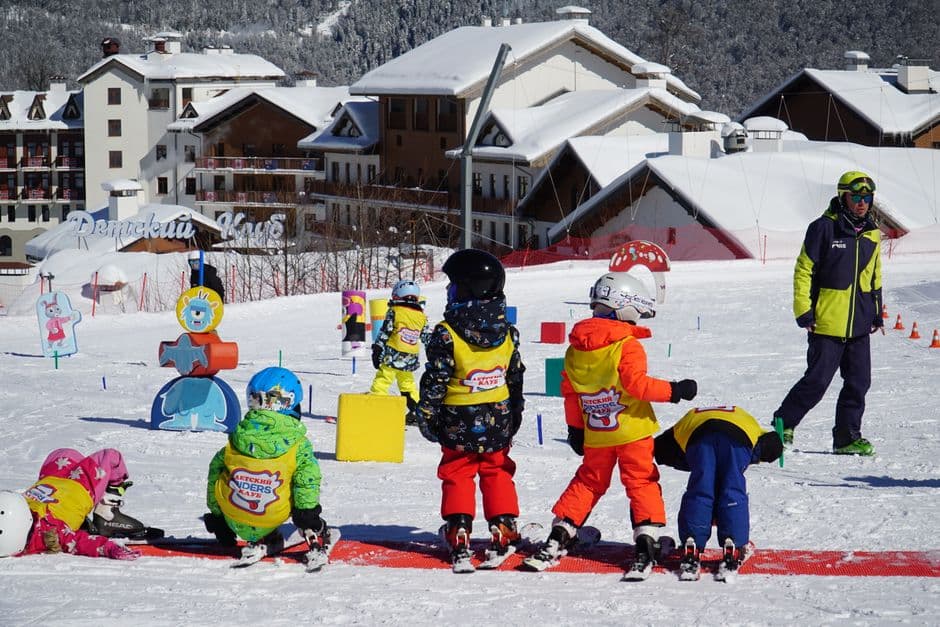
What actually changes at six
We have a page for two to five year olds and a page for teenagers, and the years in between behave differently from both. Three things change at around six, and all three change what you buy.
- They start steering the ski rather than being steered. At three, a ski day is a sledding day with skis attached. At six to seven, a child in lessons begins to make the ski turn deliberately - and a loose boot stops being uncomfortable and starts being the reason they cannot do it.
- They can manage their own clothing, mostly. Which is why the one-piece snowsuit stops being the right answer - the toddler snowsuit page puts the switch at about five, and from then on a jacket and bib are better because the jacket comes off indoors.
- They grow on a schedule you cannot plan around. A six-year-old typically goes up a shoe size a year and a clothing size every year or two, and not in step with each other. That is the whole reason the buy-or-rent answer at this age is item by item.
The buy, rent and skip list
| Item | Buy, rent or skip | Why, at this age |
|---|---|---|
| Helmet | Buy | A dial covers roughly one size band; rental fit is poor and you cannot buy this used |
| Goggles | Buy | Face shape, not size, decides the fit - a rental shop does not fit goggles at all |
| Jacket | Buy, one size up | The one item growing room genuinely works on |
| Bib or snow pants | Buy | Cheap, and a bib keeps snow out of a child who still sits down a lot |
| Base layer and mid layer | Buy | Cheap, worn off the mountain too, and warmth is where the day is won |
| Ski socks | Buy two pairs | One thin pair per day; a wet sock is tomorrow's cold foot |
| Mittens or gloves | Buy two pairs | They get wet by lunch and there is no drying them on a mountain |
| Skis and bindings | Rent or season lease | Length follows height every single year |
| Ski boots | Rent, lease, or buy an adjustable shell | A size a year, and fit now affects control |
| Poles | Skip until they ask | Most children at this age are better off without them |
| Ski harness or tip connector | Skip | If they need steering by a strap, they are not ready to ski |
| Impact shorts | Skip | Snow pants already pad a light child; spend it on a lesson |
The pattern is worth stating because it is not obvious: you buy the cheap things that touch the body and rent the expensive things that have to match a measurement. Most families do the opposite - they buy skis because skis feel like the real purchase, then put the child in rental goggles that do not seal.
Boots: the one decision that is genuinely difficult
Everything else on the list has a clear answer. Boots do not, because at this age a boot is simultaneously the item that matters most for control and the item the child outgrows fastest.
- Three to five days a season: rent. The shop re-sizes every visit and you pay nothing for growth.
- Five to ten days: buy an adjustable shell. Roces publishes a 6-in-1 system covering up to six sizes in one shell, which is the only honest way to buy growing room into a ski boot - kids’ ski boots, and the shells that grow six sizes.
- More than ten days, or a child in a lesson program: a fitted boot. An adjustable shell is softer and vaguer, and a child who can link turns will feel it.
- Either way: measure, do not guess. A ski boot is sized on foot length in centimeters - the kids’ boot chart and how to measure a foot properly.
- Never size up a fitted ski boot. It is the hardest “never” on the site, and it is the reason the growing-room page exists.
A season lease is the answer most families in this bracket should look at first and most have never heard of: a shop rents skis and boots for the whole winter for roughly the cost of four or five day rentals, and swaps the size when the child grows. Seasonal leases: the option between renting daily and buying.
What to size up, and what never to
Growing room is not one rule, it is three, and getting them the wrong way round is the commonest expensive mistake at this age.
- Size up: the jacket. One size, not two. A jacket with long sleeves is a minor nuisance for one winter and a correct fit the next, and cuffs can be rolled.
- Size up cautiously: the bib or pants. Adjustable suspenders buy you a year, but a hem that drags under a boot heel wears through and lets snow in.
- Do not size up: the helmet. A dial adjuster covers one size band, and a loose helmet moves on impact, which is the whole point of the thing.
- Do not size up: the goggles. Frame size has to match the face or the foam does not seal, and a gap is cold and fogs - why a small adult frame is not the answer.
- Do not size up: boots, of any kind. See above.
- Do not size up: socks. A bunched sock in a ski boot is a cold foot and a blister. Why the thick ones make feet colder.
The four purchases, with published figures
These are the four buy-rows from the table, and all four already appear elsewhere on the site with their published specifications.
Smith Glide Jr. Mips
The helmet, and the one row on the list where we would spend over the budget option. Smith publishes ASTM F2040 and CE EN 1077:2007 Class B - both the US and European standards - a Mips rotational liner, three youth sizes across 48-59 cm, and a three-year limited warranty, at a published $110.
Three published size bands across 48-59 cm is what makes it a six-to-eleven purchase rather than a one-season one: a head at the bottom of that range grows into the middle of it. Measure first - the kids’ helmet size chart - and compare it against the Giro and Retrospec options in the kids’ helmet roundup. If the goggles have to be bought the same week, a certified set is a legitimate first-season alternative.
OutdoorMaster Falcon Kids
The goggle, at a published $29.99, and the item most likely to be skipped and most likely to ruin an afternoon. A child without goggles squints, stops looking where they are going, and is sunburned round the eyes by lunch - and on a flat-light day they simply cannot see the terrain.
What to check is fit rather than price: frame size against the face, no gap at the nose, and the strap sitting over the helmet shell under the rear clip. The kids’ goggle roundup compares the two specs that matter, and if the child wears glasses you need a published OTG frame - goggles that fit over glasses.
Arctix Kids Insulated Bib Overalls
The bib, and the right lower half for this age bracket specifically. A six-year-old still sits in the snow often enough that the waistband gap matters, and a bib closes it without the all-or-nothing undressing problem of a one-piece. Arctix publishes a ThermaLock coated shell with 85 g ThermaTech insulation and 600-denier ballistic reinforced ankle, scuff and hem guards - which is the detail that decides how long a child's pants survive an edge - plus adjustable suspenders, which is a year of growth built into the garment. It publishes no waterproof rating in millimeters, unlike the adult women's bib in the same range.
The kids’ pants roundup covers the alternatives and the ankle detail that decides how long they last, and pants against bibs makes the general case. Pair it with a jacket bought one size up.
Darn Tough Kids Polar Patroller Over-the-Calf Ski Socks
Two pairs, and the cheapest row on the list that changes a day. One thin pair per ski day, over the calf so the boot cuff never touches skin, and a dry pair for the second day because there is no drying a sock properly in a hotel room.
The rule parents reliably get backward: thinner socks make warmer feet, because insulation works by trapping air and a thick sock in a fitted boot compresses the foot and cuts circulation. The best kids’ ski socks, and the rule parents get backward and why feet get cold skiing, in the order that works.
What the whole kit costs
Four purchases at published prices, with the hardware rented. We have put the real arithmetic elsewhere rather than repeat it here - the useful comparisons are:
- Kids ski gear on a budget: the whole kit for under $200 - helmet, goggles, jacket, pants and gloves, with the constraint honestly enforced and a note on the one item where we think you should spend more.
- Outfitting a family of four, with every number shown - the version where the child is not the only person being kitted out.
- How much ski gear costs, item by item - published prices against rental day rates, which is the calculation that decides the boot row.
- What to buy first, second and last - the order to spend in if you cannot do it all at once.
If they want to snowboard instead
Six to eleven is also the age the question gets asked, and the honest answer is that under about eight, skiing is the easier start - ski or snowboard first, the honest comparison. If they are set on a board, the list changes in three places: boots become the purchase worth owning first, wrist guards go near the top of the list, and the clothing is slightly different because a rider spends the day sitting down - what to wear snowboarding and kids snowboard gear: what to buy, rent and add.
Getting through the day
- Three things end a day early at this age, and they are cold hands, hunger and boredom - skiing with kids, and the three things that end the day early.
- Dress them one step warmer than you dress yourself. They stand still more during lessons and will not say they are cold until the day is over - layering a child, and checking it is working and what to wear by the number on the forecast.
- Sunscreen, including under the nose and on the lips. Snow throws light upward - the places people actually burn.
- Pack it by bag, not by person. The family ski packing list, organized by bag.
Every pick, with the working
Each entry shows the published inputs, the axis scores they produce, and what you give up. The order is the computed order, not a commercial one, and the arithmetic is open underneath each score.
1 · A first goggle, or a spare in the car for the one that gets lost
OutdoorMaster Falcon Kids
The cheapest published price here that still carries 100% UV protection and an anti-fog coating, which are the only two specs that matter on a child's first goggle. Everything above this price is buying optics, not safety.
- Published price
- $29.99
- Cost per day on snow
- $3.00 a day
- Amortized over
- 2 seasons (10 days)
- Certified to
- Not published
- UV protection
- 100% published
- Anti-fog
- Anti-fog coating
- Lenses included
- 1
- Published sizes
- Kids
- Warranty
- No term published for goggles
What it gets right
- 100% UV protection and an anti-fog coating at a published $29.99
- Cheap enough that losing it on a chairlift is annoying rather than expensive
What you give up
- No published VLT figure
- Single lens, no interchange system
The working behind the 5.8
- Cost per day on snow: 8.9
- $29.99 over 2 seasons at 5 days each = 10 days = $3.00 a day
- Published protection: 6.0
- 100% UV protection published (+4); no published impact standard (+0); anti-fog treatment published (+2); single lens (+0)
- Size availability: not scored
- Sold in one size, so size availability does not apply.
- Warranty and support: 0.0
- no published term (0 of 6); no published crash replacement (+0); no published repair route (+0)
Axes with unpublished inputs are dropped and the remaining weights re-normalized, so a product is not punished for a manufacturer’s silence. Specifications compiled September 3, 2026 from OutdoorMaster published specifications.
2 · A child who complains about the weight of a helmet
Smith Glide Jr. Mips
350 g in youth medium is the lightest published weight of any helmet in this ledger, and weight is the single thing that decides whether a six-year-old keeps a helmet on all day. Three youth sizes cover 48-59 cm, and the warranty runs three years.
- Published price
- $110
- Cost per day on snow
- $11 a day
- Amortized over
- 2 seasons (10 days)
- Certified to
- ASTM F2040, CE EN 1077:2007 Class B
- Rotational system
- Mips
- Published sizes
- Youth XS, S and M, 48-59 cm
- Weight
- 350 g
- Warranty
- Smith 3-year limited warranty
What it gets right
- 350 g published in youth medium, well under any adult helmet here
- ASTM F2040 and CE EN 1077:2007 Class B with a Mips liner
- Three youth sizes spanning 48-59 cm, the widest youth range Smith publishes
- Three-year warranty
What you give up
- $110 for a helmet a child will outgrow, which on our two-season convention is $11 a day on snow
- In-mold construction is lighter than a hard shell but less tolerant of being thrown in a car trunk
The working behind the 4.8
- Cost per day on snow: 3.0
- $110 over 2 seasons at 5 days each = 10 days = $11 a day
- Published protection: 9.0
- ASTM F2040 (+4); CE EN 1077 (+2); Mips rotational system (+3)
- Size availability: 4.9
- 3 published sizes (3.4 of 8.5); continuous in-size adjuster published (+1.5); range: Youth XS, S and M, 48-59 cm
- Warranty and support: 2.5
- 3 yr (2.5 of 6); no published crash replacement (+0); no published repair route (+0)
Axes with unpublished inputs are dropped and the remaining weights re-normalized, so a product is not punished for a manufacturer’s silence. Specifications compiled September 3, 2026 from Smith published specifications.
3 · A child who wrecks the ankles of every pair of snow pants they own
Arctix Kids Insulated Bib Overalls
The same 85 g insulation as the adult Essential bib with 600-denier ballistic reinforcement at the ankle, scuff and hem, which is precisely where a child's snow pants die. Adjustable shoulder straps mean one pair genuinely covers two winters of growing.
- Published price
- Not published
- Cost per day on snow
- Not published
- Amortized over
- 2 seasons (10 days)
- Certified to
- Not published
- Waterproof rating
- Not published
- Published sizes
- Published in youth sizes; no numeric size list published on the product page
- Warranty
- No term published; Arctix states a satisfaction guarantee
Arctix lists this across sizes and colorways rather than publishing one MSRP, so the cost-per-day axis is not scored.
What it gets right
- 600-denier ballistic reinforcement published at ankle, scuff and hem, the three places a ski edge cuts
- 85 g ThermaTech insulation with a ThermaLock coated shell
- Adjustable shoulder straps and an elastic back waist, so it grows with the child
- Boot gaiters with grippers and articulated knees both published
What you give up
- No published numeric size list on the product page
- No published waterproof rating in millimeters for the kids version
- A bib is slow at a bathroom stop, and children do not plan ahead
The working behind the 0.0
- Cost per day on snow: not scored
- No manufacturer-published price, so this axis is not scored.
- Published protection: not scored
- No waterproof rating or seam construction published.
- Size availability: not scored
- Sold in one size, so size availability does not apply.
- Warranty and support: 0.0
- no published term (0 of 6); no published crash replacement (+0); no published repair route (+0)
Axes with unpublished inputs are dropped and the remaining weights re-normalized, so a product is not punished for a manufacturer’s silence. Specifications compiled September 12, 2026 from Arctix published specifications.
4 · A child whose shins hurt after an afternoon in ski boots
Darn Tough Kids Polar Patroller Over-the-Calf Ski Socks
Merino wool, midweight, over-the-calf at a published 13 inches heel to cuff, with a shin pad where a ski boot presses — and the same unconditional lifetime guarantee as the adult range, on a sock for a child who will outgrow it. That guarantee is the only published warranty on anything in this ledger that a child wears.
- Published price
- Not published
- Cost per day on snow
- Not published
- Amortized over
- 1 season (5 days)
- Certified to
- Not published
- Published sizes
- Published kids sizes; over-the-calf, about 13 in heel to cuff
- Warranty
- Unconditional lifetime guarantee
What it gets right
- Unconditional lifetime guarantee published, which on a child's sock is close to absurd and entirely real
- Merino wool, so it keeps insulating when damp and does not smell after three days
- Published shin pad, which is the specific fix for boot-cuff pressure on a child's leg
- Over-the-calf at a published 13 in, so the sock covers the whole boot cuff
What you give up
- Midweight in a category where thinner is usually better inside a fitted boot
- Expensive per pair against a supermarket multipack, and children lose socks
- Kids sizes are published as ranges, so a child between sizes has to pick one
The working behind the 0.0
- Cost per day on snow: not scored
- No manufacturer-published price, so this axis is not scored.
- Published protection: not scored
- Socks carry no protective standard, so this axis does not apply.
- Size availability: not scored
- Sold in one size, so size availability does not apply.
- Warranty and support: 0.0
- no published term (0 of 6); no published crash replacement (+0); no published repair route (+0)
Axes with unpublished inputs are dropped and the remaining weights re-normalized, so a product is not punished for a manufacturer’s silence. Specifications compiled September 12, 2026 from Darn Tough published kids ski sock specifications.
Prices last verified October 19, 2026. Prices move constantly; the figure on Amazon at the moment you click is the real one.
Questions people actually ask
What ski gear should I buy for a 7 year old?
Buy the four cheap things that touch the body: a certified helmet, goggles, outerwear (a jacket one size up plus a bib) and two pairs of thin ski socks. Rent or season-lease the skis and boots, because both have to match a measurement that changes every year. Skip poles, harnesses and impact shorts entirely at this age.
Should I buy or rent ski gear for a child?
Item by item rather than all at once. Buy the helmet, goggles, outerwear and socks - they fit for more than one winter, they get used on snow days too, and rental shops size them badly or not at all. Rent the skis and boots: length follows height and shoe size moves roughly a size a year. A season lease sits between the two and is what most families in this bracket should look at first.
Do 6 to 11 year olds need ski poles?
Not until they ask for them, which is usually around nine or ten. Poles are for timing and balance in linked turns, and a child who is still learning to steer is better off with both hands free - they are also one more thing to carry, drop and lose. When they do start, length matters more than price.
What size ski jacket should I buy for a growing child?
One size up, not two. The jacket is the single item on a child’s ski kit where growing room genuinely works: long sleeves can be rolled for a winter and the fit is right the next. Do not apply the same logic to a helmet, goggles, boots or socks - all four have to fit now.
Is a snowsuit or jacket and pants better for a 6 year old?
Jacket and bib from about five onward. A one-piece is the right answer for a toddler because it closes every gap, but once a child can manage their own clothing the one-piece becomes the problem - they cannot take a jacket off indoors without undressing completely. A bib keeps the waistband gap closed without that trade.
How many pairs of ski socks does a child need?
Two, and one thin pair per day. A sock that was damp yesterday is a cold foot today and there is no drying one properly in a hotel room. Never two pairs at once and never a thick pair - insulation works by trapping air, and a compressed foot in a fitted boot has neither air nor circulation.
Sources
- Smith published Glide Jr. Mips certifications, Mips liner, youth size bands across 48-59 cm and three-year warranty
- OutdoorMaster published Falcon Kids goggle specification and price
- Arctix published Kids Insulated Bib Overalls: ThermaLock coated shell, 85 g ThermaTech insulation, 600-denier reinforced ankle, scuff and hem guards
- Darn Tough published Kids Polar Patroller over-the-calf ski sock composition and cushioning