Ski gear for a two to five year old, and what to skip
At this age the gear that decides the day is the mittens and the snack, not the skis. Here is the short list worth owning and the longer list worth ignoring.
By Sawyer V. · Published
We have not tested this gear. Everything below is compiled from published specifications and published safety standards, and the arithmetic is public so you can check it. This page carries affiliate links: if you buy through one we earn a commission at no extra cost to you, and it does not change the order of the picks. Full disclosure.
The short answer
For a toddler, buy five things: a correctly sized helmet with a dial adjuster, a waterproof jacket and snow pants, two pairs of mittens rather than gloves, one thin pair of wool socks, and goggles with published UV protection. Rent or lease everything with a binding on it. At this age the equipment that ends the day early is almost always wet hands, not the skis.
| # | Pick | Best for | Score | Price |
|---|---|---|---|---|
| 1 | OutdoorMaster Falcon Kids A first goggle, or a spare in the car for the one that gets lost | $3.00 a dayon snow | 5.8/10 | $24.99 - View on Amazon |
| 2 | Retrospec Comstock Kids A first helmet for a toddler who may not ski again | $4.00 a dayon snow | 5.0/10 | $39.99 - View on Amazon |
| 3 | Arctix Kids Insulated Snow Pants A beginner who will spend a large part of the day sitting down | $4.00 a dayon snow | 4.7/10 | $34.49 - View on Amazon |
| 4 | Arctix Kids Jackalope Insulated Jacket A first trip where nobody knows whether this will become a hobby | $5.50 a dayon snow | 4.3/10 | $79.99 - View on Amazon |
| 5 | N'Ice Caps Kids Thinsulate Waterproof Gloves A child who will put both hands in the snow within ten minutes | Not publishedon snow | 3.4/10 | $19.99 - View on Amazon |
Prices last verified October 20, 2026. Prices move constantly; the figure on Amazon at the moment you click is the real one.
The honest bit first: should they be skiing yet?
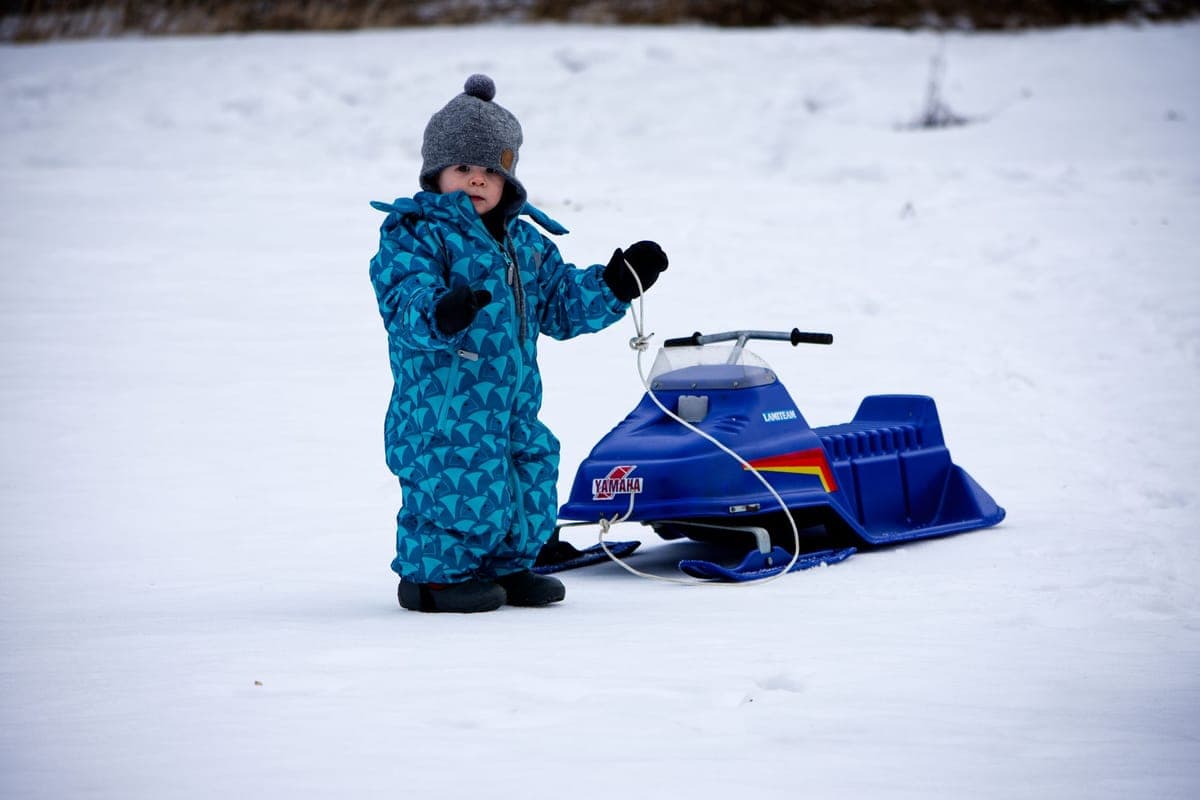
Most ski schools take children from three, some from two and a half, and a handful not until four. Below about three, what happens on the snow is not really skiing: it is a child being held up, sliding a short distance, and deciding whether snow is fun. That is a completely legitimate thing to spend a morning doing, and it needs almost none of the equipment a ski shop will try to sell you.
The strong version of this argument is that for a two or three year old, an hour of sledding and a hot chocolate produces a child who wants to come back, and a full day of lessons produces one who does not. The sledding page covers doing that safely, and it costs a fraction of a lift ticket. If your child is three or under and this is a first trip, spend the money on the clothing and not on the skiing.
The five things worth owning
| Item | Own or rent | Why |
|---|---|---|
| Helmet | Own | Rental fleets are thin at the smallest sizes and fit is the entire point |
| Jacket and snow pants | Own | Worn all winter at home too, so cost per day is not a ski number |
| Mittens (two pairs) | Own | Wet by lunch; the spare pair is the item that saves the afternoon |
| Wool socks (one thin pair) | Own | Cheap, and a thick sock makes a small boot colder and looser |
| Goggles | Own | Published UV protection matters; snow reflects hard |
| Skis, boots, poles | Rent or lease | Outgrown in a season; a seasonal lease usually wins outright |
That split is not arbitrary. Everything in the own column either has to fit a specific child, or has a life outside skiing, or is cheap enough that a spare is sensible. Everything in the rent column is expensive, outgrown quickly, and available in the child’s exact size at the resort. The seasonal lease page runs the arithmetic, and for this age band it is unusually clear-cut.
Helmet: the only item where fit is a safety question
Buy the helmet, size it to the head the child has today, and buy one with a dial adjuster. Those three sentences are the whole recommendation. A helmet bought two sizes up so it lasts does not sit where its certification testing assumed, which makes it decorative.
Measure the head with a soft tape a centimeter above the eyebrows and use the kids helmet size chart. The smallest published adult sizes generally start around 51 to 55 cm, so a small child needs a genuine kids or youth shell rather than the bottom of an adult run. The Retrospec kids helmet in this ledger publishes a kids XS at 48 to 51 cm and a youth at 52 to 55 cm, both with a dial, which is the shape of thing to look for.
A dial is what buys you a second season honestly: it takes up about a centimeter of slack inside one shell, so a head that grows through the middle of a band stays correctly fitted. The fit systems comparison explains what a dial does and does not do.
Mittens, not gloves, and buy two pairs
This is the single most useful piece of advice on this page. For a small child, mittens are meaningfully warmer than gloves at the same insulation, because fingers share heat rather than each losing it separately. They are also far easier for a three year old to put on, which matters more than any specification when you are trying to get out of a lodge.
Buy two pairs. A toddler’s hands go in the snow within ten minutes and stay there, the mittens are soaked by lunch, and there is no drying them on a mountain. A dry second pair in your jacket pocket is the difference between an afternoon and a tantrum. Look for a long knitted cuff, which is the detail that actually keeps snow out of a sleeve.
Do not size up. A loose mitten is a cold mitten for the same reason a loose boot is a cold boot: your child is heating the air inside it, and there should not be much of it. The sizing page has the method, and it takes one measurement.
Clothing: warm, waterproof, and worn at home too
Toddler outerwear is the easiest purchase on the list, because a waterproof insulated jacket and snow pants get worn every cold day of the winter regardless of whether anyone skis. That changes the arithmetic entirely: the cost per day is spread over a whole winter of playgrounds, not five days on snow.
- Bib-style snow pants if you can find them. A bib does not gap at the back when a child bends over, which is where snow goes.
- One thin wool base layer. Not cotton, which stays wet and cold. The base layer page explains why in detail.
- One thin pair of wool socks. One pair, not two, and thin. Two pairs or one thick pair makes a rented boot tighter and colder. Ski socks, explained.
- A neck gaiter rather than a scarf. A scarf on a ski lift is a genuine hazard; a gaiter is not. Face protection options.
- Nothing cotton anywhere. The what-not-to-wear page is blunt about it.
One size of growing room in outerwear is fine and normal, especially in a jacket with roll-back cuffs. The growing-room page draws the line between items where that works and items where it does not.
Goggles, and the sunscreen nobody packs
Small children squint, cry, and rub their eyes in bright snow, and a parent usually diagnoses that as cold. Snow reflects a large fraction of the light hitting it, so eye protection matters at this age even on a cloudy day. Buy a kids frame with published UV protection and an anti-fog coating; those are the only two specifications that matter on a first goggle, and the kids goggle roundup ranks the field on exactly that.
A kids frame, not a small adult one. An adult frame on a toddler gaps under the cheekbones and pushes the helmet up at the back. The goggle fit guide has the three checks. And pack sunscreen: a face at altitude, in reflected light, for three hours, burns in conditions where nobody thinks to apply any.
The one thing on this list a toddler wears all day, on and off the snow, is boots. The kids’ snow boot roundup is ranked on published temperature ratings, and it leads with the strap a small child can actually fasten alone.
What to skip entirely
- Buying skis. A very small ski is outgrown in one or two seasons. Even the shortest published lengths in this ledger start at 70 cm and cover a narrow age band; a lease costs a fraction of that per season.
- Poles. Children at this age do not use them and cannot carry them. The pole page explains when they start to matter.
- A harness or leash. Popular and contested. If the child needs to be steered by a strap, they are not skiing yet, and a morning of sledding would be more fun for everyone.
- Anything branded as a toddler ski trainer with a tip connector. Ski school instructors use the technique they prefer; buying the gadget in advance usually means carrying it.
- A second jacket for the mountain. The winter coat you already bought is the mountain coat, provided it is waterproof.
What this actually adds up to
Helmet, jacket, pants, two pairs of mittens, socks and goggles is a short list, and with the exception of the helmet every item on it gets used away from the mountain. The kids budget kit page works through the numbers with published prices, and the full cost page puts it next to the lift tickets and the lessons, which is where the real money is.
Every pick, with the working
Each entry shows the published inputs, the axis scores they produce, and what you give up. The order is the computed order, not a commercial one, and the arithmetic is open underneath each score.
1 · A first goggle, or a spare in the car for the one that gets lost
OutdoorMaster Falcon Kids
The cheapest published price here that still carries 100% UV protection and an anti-fog coating, which are the only two specs that matter on a child's first goggle. Everything above this price is buying optics, not safety.
- Published price
- $29.99
- Cost per day on snow
- $3.00 a day
- Amortized over
- 2 seasons (10 days)
- Certified to
- Not published
- UV protection
- 100% published
- Anti-fog
- Anti-fog coating
- Lenses included
- 1
- Published sizes
- Kids
- Warranty
- No term published for goggles
What it gets right
- 100% UV protection and an anti-fog coating at a published $29.99
- Cheap enough that losing it on a chairlift is annoying rather than expensive
What you give up
- No published VLT figure
- Single lens, no interchange system
The working behind the 5.8
- Cost per day on snow: 8.9
- $29.99 over 2 seasons at 5 days each = 10 days = $3.00 a day
- Published protection: 6.0
- 100% UV protection published (+4); no published impact standard (+0); anti-fog treatment published (+2); single lens (+0)
- Size availability: not scored
- Sold in one size, so size availability does not apply.
- Warranty and support: 0.0
- no published term (0 of 6); no published crash replacement (+0); no published repair route (+0)
Axes with unpublished inputs are dropped and the remaining weights re-normalized, so a product is not punished for a manufacturer’s silence. Specifications compiled September 3, 2026 from OutdoorMaster published specifications.
2 · A first helmet for a toddler who may not ski again
Retrospec Comstock Kids
Skip this one. If the child is going to ski more than one weekend, the extra $70 for a Mips youth helmet works out at about $3.50 per day on snow on our two-season convention. That is a small number for the one feature this helmet lacks.
Properly certified, dial-adjusted and $39.99, which makes it the cheapest legitimate route to getting a small child into a helmet. It has no rotational-impact liner, and on a two-season horizon the Mips helmets are only about three dollars a day more.
- Published price
- $39.99
- Cost per day on snow
- $4.00 a day
- Amortized over
- 2 seasons (10 days)
- Certified to
- ASTM F2040, CE EN 1077 Class B
- Rotational system
- None published
- Published sizes
- Kids XS 48-51 cm and Youth 52-55 cm
- Warranty
- Limited warranty; no term published
What it gets right
- ASTM F2040 and CE EN 1077 Class B at $39.99
- ErgoKnob dial adjuster
- Covers 48-55 cm, which reaches younger than most youth helmets
What you give up
- No rotational-impact system
- No published warranty term
The working behind the 5.0
- Cost per day on snow: 8.1
- $39.99 over 2 seasons at 5 days each = 10 days = $4.00 a day
- Published protection: 6.0
- ASTM F2040 (+4); CE EN 1077 (+2); no rotational-impact system (+0)
- Size availability: 3.2
- 2 published sizes (1.7 of 8.5); continuous in-size adjuster published (+1.5); range: Kids XS 48-51 cm and Youth 52-55 cm
- Warranty and support: 0.0
- no published term (0 of 6); no published crash replacement (+0); no published repair route (+0)
Axes with unpublished inputs are dropped and the remaining weights re-normalized, so a product is not punished for a manufacturer’s silence. Specifications compiled September 3, 2026 from Retrospec published specifications.
3 · A beginner who will spend a large part of the day sitting down
Arctix Kids Insulated Snow Pants
Reinforced where a learning child actually wears a pair of snow pants out: Arctix publishes 600-denier ballistic nylon at the ankles, scuff guards and hem, which is the ankle-first failure pattern rather than the seat everyone expects. On a two-season clock that is $4 a day on snow.
- Published price
- $39.99
- Cost per day on snow
- $4.00 a day
- Amortized over
- 2 seasons (10 days)
- Certified to
- Not published
- Waterproof rating
- 3,000 mm
- Published sizes
- XS through XL youth
- Warranty
- No term published on the product page
What it gets right
- 600-denier ballistic nylon published at the ankles, scuff guards and hem - the three places a ski edge actually cuts a child's pants
- 85 g ThermaTech insulation published to -20F to +35F, with reinforced and sealed seams
- $39.99 published, which is around one day of a children's clothing rental at many resorts
What you give up
- 3,000 mm is the entry level for waterproofing
- Critical seams only
The working behind the 4.7
- Cost per day on snow: 8.1
- $39.99 over 2 seasons at 5 days each = 10 days = $4.00 a day
- Published protection: 2.0
- 3,000mm waterproof rating (0.0 of 6); critically taped or untaped seams (+0); insulation or shell construction published (+2)
- Size availability: 6.8
- 5 published sizes (6.8 of 8.5); no continuous adjuster published (+0); range: XS through XL youth
- Warranty and support: 0.0
- no published term (0 of 6); no published crash replacement (+0); no published repair route (+0)
Axes with unpublished inputs are dropped and the remaining weights re-normalized, so a product is not punished for a manufacturer’s silence. Specifications compiled October 16, 2026 from Arctix published specifications.
4 · A first trip where nobody knows whether this will become a hobby
Arctix Kids Jackalope Insulated Jacket
$55 for an insulated, critically sealed children's snow jacket is the lowest published figure here, which on a two-season clock is $5.50 a day. For a child who may decide after one trip that they hate skiing, that is the right amount of money to risk.
- Published price
- $55
- Cost per day on snow
- $5.50 a day
- Amortized over
- 2 seasons (10 days)
- Certified to
- Not published
- Waterproof rating
- Not published
- Published sizes
- XS through XL youth
- Warranty
- No term published on the product page
What it gets right
- $55 published, the cheapest children's jacket here by a wide margin
- ThermaTech insulation with critical seams sealed
- Five youth sizes
What you give up
- No published waterproof rating
- Single-layer insulated construction, so it is one jacket for one temperature band
The working behind the 4.3
- Cost per day on snow: 7.0
- $55 over 2 seasons at 5 days each = 10 days = $5.50 a day
- Published protection: 2.0
- no published waterproof rating (0 of 6); critically taped or untaped seams (+0); insulation or shell construction published (+2)
- Size availability: 6.8
- 5 published sizes (6.8 of 8.5); no continuous adjuster published (+0); range: XS through XL youth
- Warranty and support: 0.0
- no published term (0 of 6); no published crash replacement (+0); no published repair route (+0)
Axes with unpublished inputs are dropped and the remaining weights re-normalized, so a product is not punished for a manufacturer’s silence. Specifications compiled September 3, 2026 from Arctix published specifications.
5 · A child who will put both hands in the snow within ten minutes
N'Ice Caps Kids Thinsulate Waterproof Gloves
Named Thinsulate insulation and a long knitted cuff, which is the detail that keeps snow out of a child's sleeve. Buy two pairs: a child's gloves get wet by lunch and there is no drying them on a mountain.
- Published price
- Not published
- Cost per day on snow
- Not published
- Amortized over
- 1 season (5 days)
- Certified to
- Not published
- Waterproof rating
- Not published
- Published sizes
- Toddler through youth
- Warranty
- No term published
N'Ice Caps publishes no MSRP of its own; retail prices vary by size and colorway, so the cost-per-day axis is not scored.
What it gets right
- 3M Thinsulate insulation named on the specification rather than unspecified fill
- Long knitted cuff, which is what actually stops snow going up a sleeve
- Sold across toddler and youth sizes
What you give up
- No published waterproof rating and no published MSRP
- A second pair is effectively part of the purchase
The working behind the 3.4
- Cost per day on snow: not scored
- No manufacturer-published price, so this axis is not scored.
- Published protection: not scored
- No waterproof rating or seam construction published.
- Size availability: 6.8
- 5 published sizes (6.8 of 8.5); no continuous adjuster published (+0); range: Toddler through youth
- Warranty and support: 0.0
- no published term (0 of 6); no published crash replacement (+0); no published repair route (+0)
Axes with unpublished inputs are dropped and the remaining weights re-normalized, so a product is not punished for a manufacturer’s silence. Specifications compiled September 3, 2026 from N'Ice Caps published product specification.
Prices last verified October 20, 2026. Prices move constantly; the figure on Amazon at the moment you click is the real one.
Questions people actually ask
What age can a child start skiing?
Most ski schools take children from three, some from about two and a half, and some not until four. Below three, what happens is closer to sliding while being held than to skiing, which is a fine way to spend a morning but does not need much equipment. Half days are the near-universal recommendation at this age.
Should I buy skis for a toddler?
Usually not. A very small ski covers a narrow age band and is outgrown in one or two seasons, so the cost per day on snow is high. A seasonal lease or daily rental is normally cheaper and always the right size. Buy the helmet, clothing and mittens instead.
Are mittens or gloves better for toddlers?
Mittens. At the same insulation they are warmer, because fingers share heat rather than each losing it separately, and a small child can get them on without help. Buy two pairs: the first is usually wet by lunchtime and cannot be dried on a mountain.
Does a toddler need ski goggles?
Yes. Snow reflects a large share of the light hitting it, so a small child in bright conditions is squinting into glare from below as well as above. Buy a kids frame with published UV protection and an anti-fog coating; an adult frame will not seal on a small face.
Can a toddler wear a helmet a size too big?
No. A helmet is certified as a model in its published sizes and performs as tested only when it sits correctly on the head. Size it to the head today and buy one with a dial adjuster, which takes up about a centimeter of slack and is what genuinely buys a second season.
Sources
- Retrospec published kids helmet size range and dial adjuster
- Arctix published Jackalope kids jacket insulation and size run
- Arctix published kids insulated snow pants specification
- N'Ice Caps published kids glove insulation and knitted cuff
- OutdoorMaster published Falcon Kids goggle UV protection and anti-fog