Kids' ski boots, and the shells that grow six sizes
A child's foot outgrows a ski boot long before the boot wears out. Two makers publish a way around that, and one publishes a flex number instead.
By Sawyer V. · Published
We have not tested this gear. Everything below is compiled from published specifications and published safety standards, and the arithmetic is public so you can check it. This page carries affiliate links: if you buy through one we earn a commission at no extra cost to you, and it does not change the order of the picks. Full disclosure.
The short answer
Buy an adjustable shell, not a fitted boot, unless the child skis more than about ten days a season. Roces publishes a 6-in-1 system that covers up to six sizes in one shell - the Idea Up at 19.0-22.0 mondo (EU 30-35, published as ages 5-10) and the Idea Free at 22.5-25.5 mondo (EU 35.5-40, published as age 10 and over). A child who skis properly wants the Rossignol Comp J4 instead: flex 50 published, four buckles, mondo 22.0-26.5. Prices below are live; published figures are as of October 7, 2026. If they ski one weekend a year, rent.
| # | Pick | Best for | Score | Price |
|---|---|---|---|---|
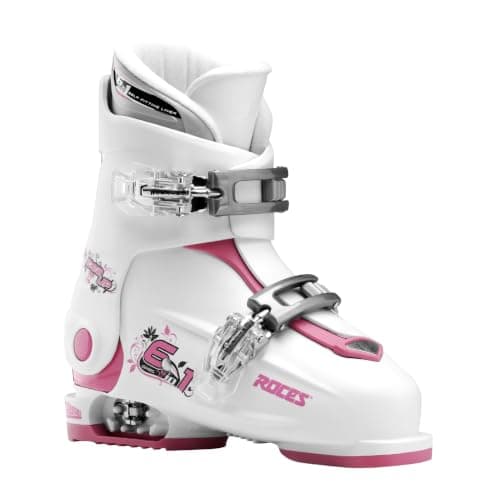
| 1 | Roces Idea Up Adjustable Kids Ski Boots, 19.0-22.0 MP A 5 to 10 year old skiing a handful of days a season on their own boots | Not publishedon snow | 5.0/10 | $129.99 - View on Amazon |
| 2 | Roces Idea Free Adjustable Junior Ski Boots, 22.5-25.5 MP A 10 to 14 year old whose feet are still moving two sizes a year | Not publishedon snow | 5.0/10 | $174.95 - View on Amazon |
| 3 | Rossignol Comp J4 Kids Ski Boots A child who skis enough days that a soft adjustable shell is holding them back | Not publishedon snow | 4.3/10 | $123.47 - View on Amazon |
Prices last verified October 19, 2026. Prices move constantly; the figure on Amazon at the moment you click is the real one.
Who each of these is for, and who should skip it
This is the whole decision, and it is not about the boot. It is about how many days a year the child will ski.
- Under about five days a season: rent, or buy the adjustable shell. A junior rental package is cheap and the shop re-sizes it every visit. Our rent-or-buy page on boots says rent harder here than anywhere else on the site, and for a child it says it louder.
- Five to ten days, ages 5-10: the Roces Idea Up. Published to cover up to six sizes across 19.0-22.0 mondo, so one purchase covers several winters of a foot that grows a size a year.
- Five to ten days, age 10 and over: the Roces Idea Free. Same published adjustment, one band up at 22.5-25.5 mondo. This is the band where a fitted boot becomes a three-figure purchase that lasts one season.
- More than ten days, or a child in lessons who is linking turns: the Rossignol Comp J4. A soft adjustable shell is genuinely holding back a child who can ski, and this is the only boot here with a published flex index.
- Skip all three if they are under five. At two to five the boot is not the deciding purchase - the mittens and the snack are.
What this page ranks on
Children’s ski boots are a category where makers publish less than they do for adults, so the number of comparable figures is small. These are the ones that exist.
- 1. Published size range, in mondopoint. Mondo is the length of the foot in centimeters and it is the only ski boot measurement that means anything. A boot published as a band - 19.0-22.0 - is telling you how many winters it covers. The kids’ ski boot size chart converts a measured foot into that number.
- 2. Whether the shell adjusts, and by how much. Roces publishes “up to 6 sizes” per shell. Nothing else in this category publishes an adjustment range at all.
- 3. Published flex index. One boot here publishes one. Flex is how hard the cuff resists a forward lean, and a number is the only way to compare two boots on it - what the flex number actually means.
- 4. Published sole standard. Alpine junior (ISO 5355) or GripWalk, because a boot that does not match the binding does not go on the ski. The compatibility check nobody mentions.
The three, compared
| Roces Idea Up | Roces Idea Free | Rossignol Comp J4 | |
|---|---|---|---|
| Mondo range | 19.0-22.0 | 22.5-25.5 | 22.0-26.5 |
| EU equivalent | 30-35 published | 35.5-40 published | Not published |
| Age band published | 5-10 years | 10 years and over | Not published |
| Shell adjusts | Up to 6 sizes | Up to 6 sizes | No |
| Flex index | Not published | Not published | 50 |
| Buckles | Micrometric, count not published | Not published | 4 MACRO |
| Shell material | Polypropylene | Polypropylene | Polyolefin |
| Sole / binding standard | Not published | Not published | GripWalk compatible |
| Warranty | Not published | Not published | Not published |
| Maker's own price | EUR 119,00 | EUR 139,00 | GBP 130.00 |
Read that table and the shape of the decision is obvious. The two Roces boots publish a range and no performance figure. The Rossignol publishes a performance figure and no range. There is no boot in this category that publishes both, and anyone who tells you otherwise is describing a boot that does not exist.
The picks
Roces Idea Up, 19.0-22.0 MP
The answer for most families with a primary-school-age skier. Roces publishes a patented 6-in-1 system that it states lets one shell grow up to six sizes, and publishes this shell as 19.0-22.0 MP, EU 30-35, for ages 5 to 10. The adjustment is published as covering length, width and cuff height rather than length alone, which matters because a child’s foot gets wider as well as longer.
Three construction details are published and all three are about keeping a five-year-old dry and willing: a self-positioning liner tongue, a self-settling shell wrap that Roces states wraps the shell to resist water getting in, and slow memory recovery foam in the liner padding. The buckles are published as micrometric in aluminum and polycarbonate, which is a real specification rather than “durable plastic”.
Honest cons. No flex index is published, so you cannot compare it with a fitted boot on stiffness - and an adjustable two-piece shell is softer and less precise than a fitted boot, which a child notices the week they start carving. It is heavier for the same reason. Roces publishes no warranty term and no US price. And polypropylene is a durable shell material, not a performance one.
Roces Idea Free, 22.5-25.5 MP
The same published argument one size band up, and arguably the band where it matters most. Roces publishes this shell as 22.5-25.5 MP, EU 35.5-40, for age 10 and over, again stated as covering up to six sizes. Same published polypropylene shell, same Lycra easy-entry liner system.
Why this band is the expensive one: between about ten and fourteen a foot arrives at nearly adult length, and a fitted boot at that size costs adult money while lasting a single season. The teen gear page covers the rest of that size cliff, and the growing-room page draws the line between items you buy big and items you never do - ski boots being the hardest “never” on the site, which is exactly why a published adjustment range is worth paying for here.
Honest cons. The missing flex index matters more at this age than at five, because a twelve-year-old who skis will out-ski an adjustable shell before they out-grow it. The buckle count is not published for this model. No warranty term, no US price. If the child is in a race program or skiing twenty days a year, this is the wrong boot and the Rossignol is the right one.
Rossignol Comp J4
The fitted boot, and the only one here with numbers you can argue about. Rossignol publishes flex 50 on a junior last it states addresses common problem fit areas, four MACRO buckles, a polyolefin shell chosen for lightness, and a published mondo range of 22.0 to 26.5 - ten half-sizes, covering the whole upper half of childhood.
It is also published as GripWalk compatible, which is the single most useful thing on this page for anyone buying boots and skis separately. GripWalk soles are rockered and grippier to walk in, and they need a binding that accepts them. Our page on sole standards explains why this is the check that ruins afternoons when it is skipped, and the bindings page covers the other half.
Honest cons, and they are why this carries the skip note. One size, no growing room - this is a boot you replace, not extend. Rossignol publishes no warranty term and no US price for it, and no weight, so you cannot compare how much boot a child is actually lifting. And the GripWalk soles are published as sold separately, which is a second purchase nobody mentions in the shop.
How to size one without a shop visit
A ski boot is sized on the length of the foot in centimeters, not on a shoe size, and this is the one measurement worth doing properly at the kitchen table.
- Measure heel to longest toe, standing, in the sock they will ski in. One thin ski sock. Never two, and never a thick one - a thick sock makes a foot colder, not warmer, and in a ski boot it also ruins the fit.
- Measure both feet and use the longer one. Then read the number straight off the kids’ ski boot size chart - a foot measuring 21.4 cm is a mondo 21.5, not a “size 2”.
- Do not add growing room to a fitted boot. A loose ski boot is not a minor nuisance like a loose snow boot; the foot slides, the child cannot steer, and the day ends early. This is the entire argument for an adjustable shell: it is the only honest way to buy growing room in a ski boot.
- With an adjustable shell, set it to the measured size and leave it. The point of the mechanism is that you move it next winter, not that you ski the whole range at once.
- Check the shell length before the first day. Toes should brush the front when standing upright and pull back when the child bends their knees. If they are crushed standing up, it is too small whatever the chart said.
Why an adjustable shell is softer, and why that is fine
Worth understanding before you spend the money, because the trade is real and nobody selling either boot explains it.
A fitted boot is one molded shell. An adjustable boot is two pieces that slide against each other, with a mechanism in between. Every mechanism is a place where force gets absorbed instead of transmitted, which is why an adjustable boot feels vaguer underfoot and why no maker publishes a flex index for one - the number would not mean the same thing.
For a child on a learning slope that vagueness is close to irrelevant. They are not loading the cuff hard enough to notice, and the boot that actually fits beats the boot that transmits well. The crossover comes when they can link turns on a blue run and are skiing enough days to want more from the equipment - which, for most families on this site, is a conversation for a later season than the one where they bought their first boots.
What the boots have to work with
Boots are one of two components that have to match each other, and the other one is the ski.
- Skis with bindings. Kids’ skis with bindings from 70 cm up - a junior system binding adjusts across a range of boot sole lengths, which is what makes a growing boot workable at all.
- The right ski length. The kids’ ski size chart, which is sized on height rather than on the boot.
- Socks, and only one pair. The best kids’ ski socks, and the rule parents get backward.
- Somewhere to dry them. A wet liner is a cold foot the next morning - boot dryers and the free condo method.
Every pick, with the working
Each entry shows the published inputs, the axis scores they produce, and what you give up. The order is the computed order, not a commercial one, and the arithmetic is open underneath each score.
1 · A 5 to 10 year old skiing a handful of days a season on their own boots
Roces Idea Up Adjustable Kids Ski Boots, 19.0-22.0 MP
The only ski boot in this ledger that publishes a growing range rather than a size: Roces states its patented 6-in-1 system lets one shell cover up to 6 sizes, and publishes this shell as 19.0-22.0 MP, EU 30-35, ages 5 to 10. For a foot that grows a size a winter that is the difference between one purchase and three.
- Published price
- Not published
- Cost per day on snow
- Not published
- Amortized over
- 2 seasons (10 days)
- Certified to
- Not published
- Published sizes
- 19.0-22.0 MP published as one shell covering up to 6 sizes, stated as EU 30-35 and ages 5-10
- Warranty
- No term published on the product page
Roces publishes EUR 119,00 on its own European store and no US MSRP, so the cost-per-day axis is not scored against a dollar list price.
What it gets right
- Published 6-in-1 adjustment covering up to 6 sizes in one shell, so the boot lasts several winters
- Published MP band 19.0-22.0 with the EU equivalent (30-35) and an age band stated alongside it
- Self-positioning liner tongue and a self-settling shell wrap published, which is what stops snow and water getting in at the cuff
- Slow memory recovery foam published in the liner padding
- Micrometric buckles published in aluminum and polycarbonate rather than unspecified plastic
What you give up
- An adjustable shell is heavier and less precise than a fitted boot, which matters the moment a child starts carving
- No flex index published, so it cannot be compared with a fitted junior boot on stiffness
- No warranty term and no US price published
- Polypropylene shell: durable, but not a performance material
The working behind the 5.0
- Cost per day on snow: not scored
- No manufacturer-published price, so this axis is not scored.
- Published protection: not scored
- Boots carry no US protective standard, so this axis is not scored. On a winter boot the published temperature rating is the figure that matters; on a snowboard or nordic boot it is the sole standard and the fit.
- Size availability: 10.0
- 6 published sizes (8.5 of 8.5); continuous in-size adjuster published (+1.5); range: 19.0-22.0 MP published as one shell covering up to 6 sizes, stated as EU 30-35 and ages 5-10
- Warranty and support: 0.0
- no published term (0 of 6); no published crash replacement (+0); no published repair route (+0)
Axes with unpublished inputs are dropped and the remaining weights re-normalized, so a product is not punished for a manufacturer’s silence. Specifications compiled October 7, 2026 from Roces published Idea Up 19.0-22.0 specifications.
2 · A 10 to 14 year old whose feet are still moving two sizes a year
Roces Idea Free Adjustable Junior Ski Boots, 22.5-25.5 MP
The same published 6-size adjustment one band up, covering 22.5-25.5 MP - EU 35.5 to 40, published as age 10 and over. This is the band where a child's foot is nearly adult and a fitted boot becomes a three-figure purchase they outgrow in a season, which is exactly when an adjustable shell earns its keep.
- Published price
- Not published
- Cost per day on snow
- Not published
- Amortized over
- 2 seasons (10 days)
- Certified to
- Not published
- Published sizes
- 22.5-25.5 MP published as one shell covering up to 6 sizes, stated as EU 35.5-40 and ages 10 and over
- Warranty
- No term published on the product page
Roces publishes EUR 139,00 on its own European store and no US MSRP, so the cost-per-day axis is not scored against a dollar list price.
What it gets right
- Published to cover up to 6 sizes in one shell across 22.5-25.5 MP
- Published EU band 35.5-40 with the age band stated, which is the size run between youth and adult boots
- Same published polypropylene shell and Lycra easy-entry liner as the smaller Idea Up, so the fit logic carries across
- Reaches into adult mondo sizes, so it does not strand a teenager mid-size-run
What you give up
- No flex index published, which matters more at this age than at five
- A teenager who skis properly will out-ski an adjustable shell before they out-grow it
- No warranty term and no US price published
- Buckle count is not published for this model
The working behind the 5.0
- Cost per day on snow: not scored
- No manufacturer-published price, so this axis is not scored.
- Published protection: not scored
- Boots carry no US protective standard, so this axis is not scored. On a winter boot the published temperature rating is the figure that matters; on a snowboard or nordic boot it is the sole standard and the fit.
- Size availability: 10.0
- 6 published sizes (8.5 of 8.5); continuous in-size adjuster published (+1.5); range: 22.5-25.5 MP published as one shell covering up to 6 sizes, stated as EU 35.5-40 and ages 10 and over
- Warranty and support: 0.0
- no published term (0 of 6); no published crash replacement (+0); no published repair route (+0)
Axes with unpublished inputs are dropped and the remaining weights re-normalized, so a product is not punished for a manufacturer’s silence. Specifications compiled October 7, 2026 from Roces published Idea Free 22.5-25.5 specifications.
3 · A child who skis enough days that a soft adjustable shell is holding them back
Rossignol Comp J4 Kids Ski Boots
Skip this one. Skip it unless the child skis enough days to notice the difference. It is the better boot - flex 50 published, four MACRO buckles, a junior-specific last and published GripWalk compatibility - and it is also a boot with no growing room at all, bought for a foot that will be a size bigger next winter. For a child who skis three days a year that is the wrong way round: buy the adjustable shell and put the difference toward lessons.
The fitted alternative, and the only kids' boot here that publishes a flex index: Rossignol states flex 50 on a junior last, four MACRO buckles and a polyolefin shell across a published 22.0-26.5 mondo range. It is also published as GripWalk compatible, which is the compatibility check that catches people buying boots and skis separately.
- Published price
- Not published
- Cost per day on snow
- Not published
- Amortized over
- 2 seasons (10 days)
- Certified to
- Not published
- Published sizes
- 22.0 to 26.5 mondo published
- Warranty
- No term published on the product page
Rossignol publishes GBP 130.00 on its own store and no US MSRP for this model, so the cost-per-day axis is not scored against a dollar list price.
What it gets right
- Flex 50 published, so it can actually be compared with other fitted boots on stiffness
- Four MACRO buckles published, against two on the adjustable shells
- Junior-specific last published as addressing common problem fit areas
- GripWalk compatible per Rossignol, so the sole standard is stated rather than left to guess
- Published mondo range 22.0-26.5 covers the whole upper half of childhood
What you give up
- One size, no growing room: this is a boot you replace rather than extend
- No warranty term and no US price published
- No published weight, so it cannot be compared on how much a child is lifting
- GripWalk soles are published as sold separately, which is a second purchase nobody mentions
The working behind the 4.3
- Cost per day on snow: not scored
- No manufacturer-published price, so this axis is not scored.
- Published protection: not scored
- Boots carry no US protective standard, so this axis is not scored. On a winter boot the published temperature rating is the figure that matters; on a snowboard or nordic boot it is the sole standard and the fit.
- Size availability: 8.5
- 10 published sizes (8.5 of 8.5); no continuous adjuster published (+0); range: 22.0 to 26.5 mondo published
- Warranty and support: 0.0
- no published term (0 of 6); no published crash replacement (+0); no published repair route (+0)
Axes with unpublished inputs are dropped and the remaining weights re-normalized, so a product is not punished for a manufacturer’s silence. Specifications compiled October 7, 2026 from Rossignol published Comp J4 specifications.
Prices last verified October 19, 2026. Prices move constantly; the figure on Amazon at the moment you click is the real one.
Questions people actually ask
Should I buy or rent ski boots for my child?
Rent if they ski fewer than about five days a season - a junior rental or season lease re-sizes the boot every visit, which is exactly what a growing foot needs. Buy an adjustable shell at five to ten days, because one shell published to cover six sizes spans several winters. Buy a fitted boot only above about ten days a season, when a soft adjustable shell is genuinely holding the child back.
Do adjustable kids ski boots actually work?
Yes, with one trade. Roces publishes a 6-in-1 system it states grows one shell up to six sizes, adjusting length, width and cuff height, and that is a published range rather than a marketing rounding. The trade is precision: a two-piece shell absorbs some of the force a one-piece shell transmits, which is why no maker publishes a flex index for an adjustable boot. For a child on a learning slope that matters very little.
What size ski boots does my child need?
Measure the longer foot heel to longest toe, standing, in one thin ski sock, and read the centimeter figure as a mondopoint size - 21.4 cm is a mondo 21.5. Never size up for growing room in a fitted boot: a loose ski boot means the child cannot steer. Our kids’ ski boot size chart has the conversion and the measuring method.
Can kids wear snow boots to ski?
No. A ski binding only accepts a boot built to a published sole standard - alpine junior (ISO 5355) or GripWalk - and a snow boot has neither the sole shape nor the rigid cuff that lets a child steer a ski. Snow boots are for everything that happens off the skis, which is most of a ski day for a child.
What is GripWalk, and does my child's boot need it?
GripWalk is a rockered, rubberised boot sole that is much easier to walk in than a flat alpine sole, and it needs a binding that is built to accept it. Rossignol publishes the Comp J4 as GripWalk compatible, with the soles sold separately. If you are buying boots and skis separately, check the binding accepts the sole standard on the boot before you buy either.
How many seasons should a pair of kids ski boots last?
A fitted boot usually lasts one to two seasons before the foot outgrows it - the shell is nowhere near worn out, which is the whole frustration of this category. An adjustable shell published to cover six sizes can reasonably span three or four winters of growth, which is what makes it the cheaper purchase even when the sticker is higher.
Sources
- Roces published Idea Up 19.0-22.0 specifications: 6-in-1 system, up to 6 sizes, EU 30-35, ages 5-10, polypropylene shell, micrometric buckles, EUR 119,00
- Roces published Idea Free 22.5-25.5 specifications: up to 6 sizes, EU 35.5-40, age 10 and over, polypropylene shell, EUR 139,00
- Rossignol published Comp J4 specifications: flex 50, 4 MACRO buckles, polyolefin shell, junior last, mondo 22.0-26.5, GripWalk compatible, GBP 130.00