Ski goggles that fit over glasses, and the three other options
Over-the-glasses goggles, prescription inserts, contacts and visor helmets. What each costs, what each solves, and the picks with published specs.
By Sawyer V. · Published
We have not tested this gear. Everything below is compiled from published specifications and published safety standards, and the arithmetic is public so you can check it. This page carries affiliate links: if you buy through one we earn a commission at no extra cost to you, and it does not change the order of the picks. Full disclosure.
The short answer
Yes, you can ski in glasses, with a goggle marked OTG (over the glasses). OTG frames are cut deeper at the temples so the arms of your glasses sit inside without being pressed into your head. The alternatives are prescription inserts that clip into a standard goggle, contact lenses, or a visor helmet, and the right answer depends mostly on how large your glasses are.
| # | Pick | Best for | Score | Price |
|---|---|---|---|---|
| 1 | OutdoorMaster PRO Magnetic A skier who wants to change lenses without taking gloves off | $2.00 a dayon snow | 6.1/10 | $39.99 - View on Amazon |
| 2 | Bolle Y7 OTG A skier who wears glasses and does not want contacts | $3.60 a dayon snow | 5.5/10 | Check price on Amazon |
| 3 | Bolle Nevada Junior A child between the junior and adult goggle sizes | $4 a dayon snow | 5.4/10 | $31.95 - View on Amazon |
| 4 | Smith Daredevil OTG A child who wears glasses | $5 a dayon snow | 5.1/10 | $60.00 - View on Amazon |
Prices last verified October 19, 2026. Prices move constantly; the figure on Amazon at the moment you click is the real one.
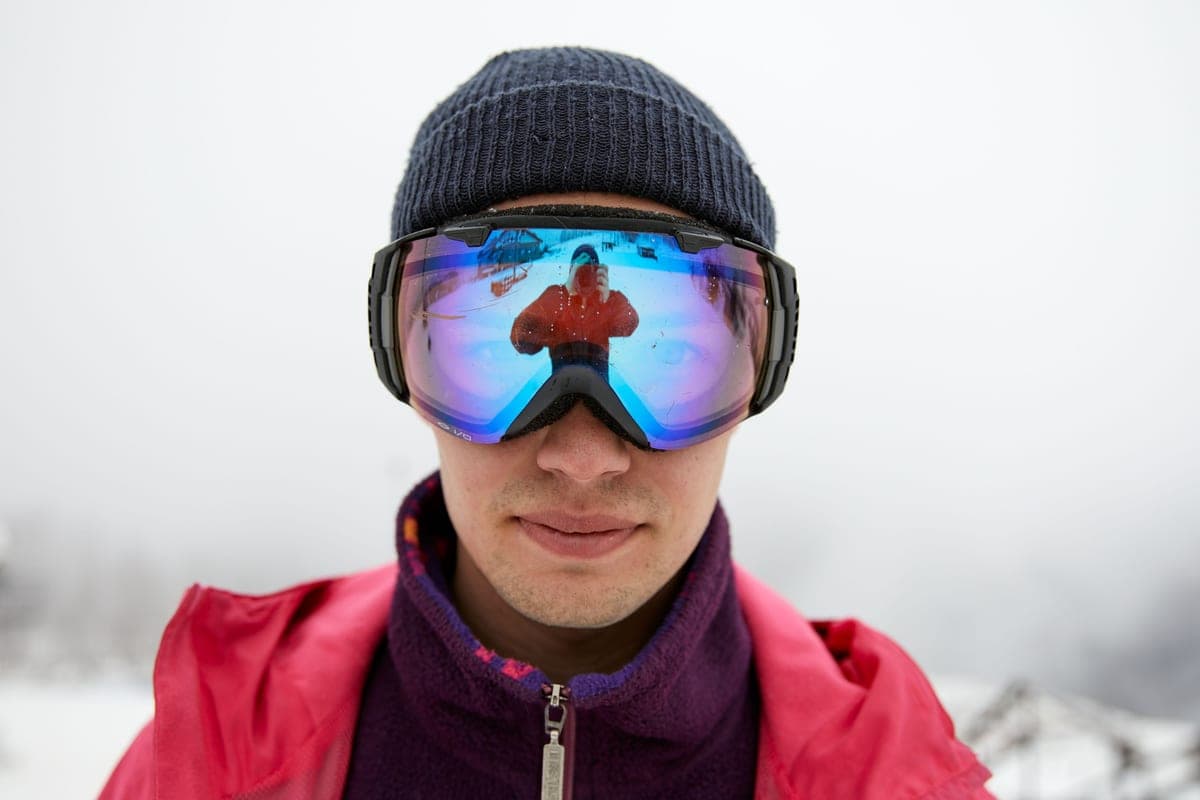
What OTG actually changes
Two things, and neither is the lens. An over-the-glasses frame is deeper front to back, so there is room between the goggle lens and your face for your glasses, and it has channels or cutouts at the temples so the arms of your glasses pass through the face foam rather than being crushed against your temples by it.
That second part is the one that matters after twenty minutes. Any goggle can be worn over glasses briefly. An OTG goggle can be worn over them all day without a headache, and the difference is the temple channel.
The four ways to do this
| Option | Roughly what it costs | Best for | The catch |
|---|---|---|---|
| OTG goggles | $50 to $90 | Most people, most glasses | Bulkier under a helmet brow; very large frames may still not fit |
| Prescription insert | Varies by optician | People with large glasses, or anyone who already owns a goggle | A separate optical order, and it has to match your goggle model |
| Contact lenses | Whatever yours cost | Anyone who already wears them comfortably | Cold, dry, windy air is hard on contacts; carry a spare pair and glasses |
| Visor helmet | Helmet money | People who dislike goggle foam entirely | Thin US market, one lens, expensive to replace if scratched |
The visor helmet route has its own page, including why we are not currently ranking visor models.
Fitting OTG goggles over your actual glasses
Bring the glasses you will ski in. Frame width and arm thickness vary far more than goggle dimensions do, and a goggle that is OTG in principle can still be wrong for a specific pair.
- Glasses on first, then the goggle over them. If you have to fight them in, they are too big for the frame.
- No pressure at the temples. If you can feel the arms of your glasses against your head, that is a headache by lunchtime.
- Lenses not touching. Your glasses should not be pressed against the inside of the goggle lens. Contact means scratches on both, and it blocks the air gap that stops fogging.
- Foam still sealing. Check the seal at the nose especially, which is where glasses most often lift the goggle away from your face.
- Then check the helmet. A deeper frame is more likely to leave a gap at the brow. The check is here.
Glasses fog more, and here is what to do about it
Two lenses in front of your face means two surfaces for condensation, and your glasses sit closest to the warm damp air coming off your skin. Everything on the anti-fog page applies with more force:
- Keep the goggle vents clear. A neck gaiter pulled up over the nose funnels warm breath directly into the goggle and is the single biggest cause.
- Do not park the goggles on your forehead on the lift. That is where the warmest air on your body is.
- Never wipe either inner surface with a glove. Goggle anti-fog treatment comes off permanently; glasses coatings are not much tougher.
- Anti-fog spray or wipes made for eyeglasses are worth carrying, applied to the glasses only.
Children who wear glasses
Buy a youth OTG goggle rather than a small adult one, and note that youth OTG frames frequently cost the same as the standard versions, which makes the decision free. The children’s goggle picks mark which are OTG, and the helmet picks are worth reading alongside, because the two have to fit together.
The short verdict
If your glasses are ordinary in size, buy a purpose-built OTG goggle and stop thinking about it. If they are large, or you have tried OTG goggles and found them uncomfortable, ask an optician about an insert before you spend more on goggles. Contacts are the best answer for anyone who already wears them, with glasses in a pocket as a backup.
Whatever you choose, check it against your helmet indoors before the tags come off, and check whether you need to be buying at all first.
Every pick, with the working
Each entry shows the published inputs, the axis scores they produce, and what you give up. The order is the computed order, not a commercial one, and the arithmetic is open underneath each score.
1 · A skier who wants to change lenses without taking gloves off
OutdoorMaster PRO Magnetic
Skip this one. It publishes an over-the-glasses frame and it is the cheapest adult option here, but a frame designed to do two jobs fits glasses less deeply than one built only for them. If your glasses are large or you have found OTG goggles pinch before, spend the extra on a purpose-built frame.
A magnetic lens swap at a published $49.99, with 100% UV400 and an over-the-glasses frame. Spare lenses are a separate purchase, so the real cost of a two-lens setup lands closer to the Smith than the sticker suggests.
- Published price
- $49.99
- Cost per day on snow
- $2.00 a day
- Amortized over
- 5 seasons (25 days)
- Certified to
- Not published
- UV protection
- 100% published
- Anti-fog
- Anti-fog coating
- Lenses included
- 1
- Published sizes
- One size
- Warranty
- No term published for goggles
What it gets right
- Magnetic lens change, workable in gloves on a lift
- 100% UV400 protection and an anti-fog coating
- Over-the-glasses frame at a published $49.99
What you give up
- One lens included; the interchangeable system only pays off after you buy another
- No published impact standard
The working behind the 6.1
- Cost per day on snow: 9.6
- $49.99 over 5 seasons at 5 days each = 25 days = $2.00 a day
- Published protection: 6.0
- 100% UV protection published (+4); no published impact standard (+0); anti-fog treatment published (+2); single lens (+0)
- Size availability: not scored
- Sold in one size, so size availability does not apply.
- Warranty and support: 0.0
- no published term (0 of 6); no published crash replacement (+0); no published repair route (+0)
Axes with unpublished inputs are dropped and the remaining weights re-normalized, so a product is not punished for a manufacturer’s silence. Specifications compiled September 3, 2026 from OutdoorMaster published specifications.
2 · A skier who wears glasses and does not want contacts
Bolle Y7 OTG
Built around the frame depth that lets a pair of glasses sit inside without the arms pressing, which is the only thing that actually distinguishes an over-the-glasses goggle. Double lens, treated inner surface, 100% UV.
- Published price
- $90
- Cost per day on snow
- $3.60 a day
- Amortized over
- 5 seasons (25 days)
- Certified to
- Not published
- UV protection
- 100% published
- Anti-fog
- Anti-fog and anti-scratch lens treatment
- Lenses included
- 1
- Published sizes
- One size
- Warranty
- No term published for goggles
Bolle publishes several Y7 OTG lens variants; the photochromic version is published at a higher price.
What it gets right
- Purpose-built over-the-glasses frame depth rather than a normal goggle sold as OTG
- 100% UV protection with anti-fog and anti-scratch lens treatment
- Double lens with vents top and bottom, the construction that resists fogging
What you give up
- One lens in the box, so flat-light days mean buying a second
- Deeper frame is bulkier against a helmet brow than a standard goggle
The working behind the 5.5
- Cost per day on snow: 8.4
- $90 over 5 seasons at 5 days each = 25 days = $3.60 a day
- Published protection: 6.0
- 100% UV protection published (+4); no published impact standard (+0); anti-fog treatment published (+2); single lens (+0)
- Size availability: not scored
- Sold in one size, so size availability does not apply.
- Warranty and support: 0.0
- no published term (0 of 6); no published crash replacement (+0); no published repair route (+0)
Axes with unpublished inputs are dropped and the remaining weights re-normalized, so a product is not punished for a manufacturer’s silence. Specifications compiled September 3, 2026 from Bolle published specifications.
3 · A child between the junior and adult goggle sizes
Bolle Nevada Junior
An over-the-glasses junior frame with vented anti-fog construction at forty dollars, ten under the non-OTG Smith, which makes the glasses question free rather than a premium.
- Published price
- $40
- Cost per day on snow
- $4 a day
- Amortized over
- 2 seasons (10 days)
- Certified to
- Not published
- UV protection
- 100% published
- Anti-fog
- Anti-fog inner lens coating with Flow-Tech venting
- Lenses included
- 1
- Published sizes
- Junior
- Warranty
- No term published for goggles
What it gets right
- Over-the-glasses junior frame with an anti-fog inner coating and Flow-Tech venting
- 100% UV protection and an anti-scratch coating
- Double-density face foam with a fleece lining, which is the part children complain about
What you give up
- Single lens included
- Bolle publishes no VLT figure for the junior colorways we could read, so you cannot match it to conditions in advance
The working behind the 5.4
- Cost per day on snow: 8.1
- $40 over 2 seasons at 5 days each = 10 days = $4 a day
- Published protection: 6.0
- 100% UV protection published (+4); no published impact standard (+0); anti-fog treatment published (+2); single lens (+0)
- Size availability: not scored
- Sold in one size, so size availability does not apply.
- Warranty and support: 0.0
- no published term (0 of 6); no published crash replacement (+0); no published repair route (+0)
Axes with unpublished inputs are dropped and the remaining weights re-normalized, so a product is not punished for a manufacturer’s silence. Specifications compiled September 3, 2026 from Bolle published specifications.
4 · A child who wears glasses
Smith Daredevil OTG
The same published fifty dollars as the Snowday, in a frame cut deep enough for a child's glasses to sit inside. If your child wears glasses this is not a preference, it is the entire decision.
- Published price
- $50
- Cost per day on snow
- $5 a day
- Amortized over
- 2 seasons (10 days)
- Certified to
- Not published
- UV protection
- 100% published
- Anti-fog
- Fog-X anti-fog inner lens
- Lenses included
- 1
- Published sizes
- Youth, cut for glasses underneath
- Warranty
- No term published for goggles
What it gets right
- Over-the-glasses youth frame at the same published $40 as the standard youth goggle
- 100% UV protection with a Fog-X treated inner lens
What you give up
- Single lens included
- The deeper frame is unnecessary bulk for a child who does not wear glasses
The working behind the 5.1
- Cost per day on snow: 7.4
- $50 over 2 seasons at 5 days each = 10 days = $5 a day
- Published protection: 6.0
- 100% UV protection published (+4); no published impact standard (+0); anti-fog treatment published (+2); single lens (+0)
- Size availability: not scored
- Sold in one size, so size availability does not apply.
- Warranty and support: 0.0
- no published term (0 of 6); no published crash replacement (+0); no published repair route (+0)
Axes with unpublished inputs are dropped and the remaining weights re-normalized, so a product is not punished for a manufacturer’s silence. Specifications compiled October 18, 2026 from Smith published specifications.
Prices last verified October 19, 2026. Prices move constantly; the figure on Amazon at the moment you click is the real one.
Questions people actually ask
Can you wear glasses with ski goggles?
Yes, with an OTG (over the glasses) goggle, which is cut deeper and has channels at the temples for the arms of your glasses. A standard goggle over glasses is fine for a few minutes and uncomfortable for a day.
What does OTG mean on ski goggles?
Over The Glasses. It means the frame is built with the depth and the temple channels to fit prescription glasses inside it without pressing on them.
Are prescription ski goggles worth it?
A prescription insert that clips into a goggle you already own is usually better value than a fully prescription goggle, and most opticians can discuss it. It also survives you changing goggles later, which a bonded prescription lens does not.
Why do my goggles fog up more when I wear glasses?
Two lens surfaces instead of one, and your glasses sit closest to the warm damp air off your skin. Keep the vents clear, keep a neck gaiter off your nose, and never wipe the inside of either lens.
Can kids wear glasses under ski goggles?
Yes. Youth OTG frames exist and frequently cost the same as the non-OTG version, so it costs nothing extra. The children’s picks.