Skiing with kids, and the three things that end the day early
Almost every family ski day that goes wrong goes wrong for the same three reasons, and all three are solvable before you leave the house.
By Sawyer V. · Published
We have not tested this gear. Everything below is compiled from published specifications and published safety standards, and the arithmetic is public so you can check it. This page carries affiliate links: if you buy through one we earn a commission at no extra cost to you, and it does not change the order of the picks. Full disclosure.
The short answer
Family ski days almost always end early for one of three reasons: cold hands, a badly fitting boot, or no plan for food and warming up. None of them is about skiing ability, and all three are fixable before you leave the house. Pack a second pair of gloves, get the boot fitted properly, and book the middle of the day as an indoor break rather than treating it as a failure.
| # | Pick | Best for | Score | Price |
|---|---|---|---|---|
| 1 | OutdoorMaster Kids 3M Thinsulate Waterproof Ski Gloves A child old enough to want fingers rather than mittens | $6.00 a dayon snow | 4.7/10 | Check price on Amazon |
| 2 | Arctix Kids Insulated Snow Pants A beginner who will spend a large part of the day sitting down | $4.00 a dayon snow | 4.7/10 | $34.49 - View on Amazon |
| 3 | N'Ice Caps Kids Thinsulate Waterproof Gloves A child who will put both hands in the snow within ten minutes | Not publishedon snow | 3.4/10 | $19.99 - View on Amazon |
Prices last verified October 19, 2026. Prices move constantly; the figure on Amazon at the moment you click is the real one.
One: cold hands
Children get cold hands faster than adults for a physical reason: they have more surface area relative to their body volume, so they shed heat faster. Then they put both hands in the snow, repeatedly, because that is how learning to ski works. By late morning the gloves are wet, and a wet glove is worse than no glove.
The fix is a second pair in the bag. Not warmer gloves, not more expensive gloves: a dry pair. There is no drying a wet glove on a mountain, and swapping takes ten seconds. For a young child, mittens beat gloves because fingers share heat rather than each losing it separately. The comparison is here.
Two: the boot
A ski boot is a steering control, and a boot that does not fit turns skiing into an argument with the equipment. Too big and the foot slides, the ski does not respond and the child concludes they are bad at this. Too small and it hurts, which ends the day faster than anything else on this page.
Two things prevent it, and both happen before you get to the hill. Measure the foot properly, in millimeters, standing up, in the sock they will ski in: the boot size chart has the method. And put them in a thin ski sock, because a thick one takes space the boot needs and makes feet colder, not warmer.
Three: no plan for the middle of the day
Adults ski until they are tired. Children get cold, hungry and overwhelmed on a much shorter clock, and they rarely announce it until it is already a problem. A family day that is planned around one long indoor break in the middle goes far better than one that treats stopping as giving up.
| When | What | Why |
|---|---|---|
| First hour | Lesson or easy terrain | Cold and fresh is the best combination for learning |
| Mid-morning | Hot drink, glove swap | Catches wet gloves before they become a problem |
| Late morning | Second session, shorter | Attention is already declining |
| Lunch | Long, indoors, boots off | Boots off for twenty minutes resets a child's whole afternoon |
| Afternoon | One or two runs, then stop early | Ending while it is still fun is what makes them ask to come back |
What to actually carry
- A spare pair of gloves or mittens per child. The highest-value item in the bag.
- Snacks that survive a pocket. Children run out of fuel long before adults notice, and a cold child who is also hungry is done.
- A spare pair of ski socks. Cheap, and a wet sock is a finished day.
- Sunscreen and lip balm. Snow reflects a lot of sunlight and burns catch families out on overcast days especially.
- A photo of each child on your phone, taken that morning. If they get separated, describing what they are wearing to a lift attendant is suddenly easy. Costs nothing.
Getting the layers right for a child who stands still
Beginners spend more of the day standing than moving, so they get colder than their parents at the same air temperature. Dress a learning child slightly warmer than you would dress yourself, and give them a layer that can come off if they get going.
The layering system is the same as for adults, and the base layer is the piece that matters most: never cotton, against the skin. The full what-to-wear guide is here, with a temperature table.
Pants take the damage
A learning child spends a genuinely large share of the day sitting in snow, so look for reinforcement at the seat, knees, ankles and the inside edge where a boot scuffs. One of the picks below publishes 600-denier reinforcement at exactly those four points, which is not marketing: it is where a pair of children’s snow pants actually wears out.
On lessons
We do not sell lessons and earn nothing from them, so: book the lesson. Teaching your own child to ski is a well-known way to spend a morning being the least popular person on the mountain. An instructor is a stranger, and children behave better for strangers, which is unfair and entirely reliable.
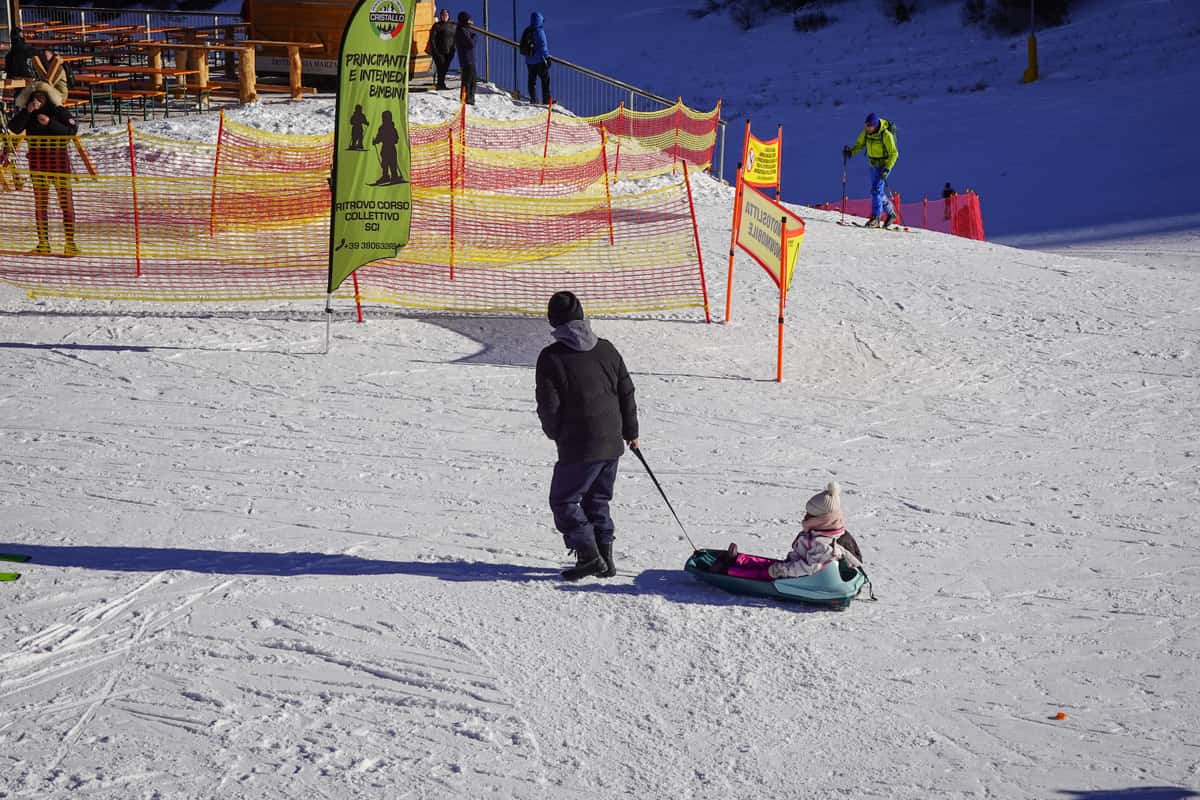
And if the day is going badly, the honest answer is often that it is not a gear problem or a teaching problem. A four-year-old who wants to go inside wants to go inside. Sledding still counts as a good day on snow, and it costs a fraction of a lift ticket.
Every pick, with the working
Each entry shows the published inputs, the axis scores they produce, and what you give up. The order is the computed order, not a commercial one, and the arithmetic is open underneath each score.
1 · A child old enough to want fingers rather than mittens
OutdoorMaster Kids 3M Thinsulate Waterproof Ski Gloves
Named insulation and a published two-year warranty on a children's glove, which almost nothing in this category offers. Buy two pairs anyway: a child's gloves are wet by lunch and there is no drying them on a mountain.
- Published price
- $29.99
- Cost per day on snow
- $6.00 a day
- Amortized over
- 1 season (5 days)
- Certified to
- Not published
- Waterproof rating
- Not published
- Published sizes
- Three published youth sizes
- Warranty
- OutdoorMaster 2-year warranty
What it gets right
- Two-year published warranty on a children's item
- 3M Thinsulate insulation named on the specification
- $29.99 published
What you give up
- Gloves are colder than mittens for a small child at the same insulation
- No published waterproof rating
The working behind the 4.7
- Cost per day on snow: 6.7
- $29.99 over 1 season at 5 days each = 5 days = $6.00 a day
- Published protection: not scored
- No waterproof rating or seam construction published.
- Size availability: 3.4
- 3 published sizes (3.4 of 8.5); no continuous adjuster published (+0); range: Three published youth sizes
- Warranty and support: 2.5
- 2 yr (2.5 of 6); no published crash replacement (+0); no published repair route (+0)
Axes with unpublished inputs are dropped and the remaining weights re-normalized, so a product is not punished for a manufacturer’s silence. Specifications compiled September 3, 2026 from OutdoorMaster published specifications.
2 · A beginner who will spend a large part of the day sitting down
Arctix Kids Insulated Snow Pants
Reinforced where a learning child actually wears a pair of snow pants out: Arctix publishes 600-denier ballistic nylon at the ankles, scuff guards and hem, which is the ankle-first failure pattern rather than the seat everyone expects. On a two-season clock that is $4 a day on snow.
- Published price
- $39.99
- Cost per day on snow
- $4.00 a day
- Amortized over
- 2 seasons (10 days)
- Certified to
- Not published
- Waterproof rating
- 3,000 mm
- Published sizes
- XS through XL youth
- Warranty
- No term published on the product page
What it gets right
- 600-denier ballistic nylon published at the ankles, scuff guards and hem - the three places a ski edge actually cuts a child's pants
- 85 g ThermaTech insulation published to -20F to +35F, with reinforced and sealed seams
- $39.99 published, which is around one day of a children's clothing rental at many resorts
What you give up
- 3,000 mm is the entry level for waterproofing
- Critical seams only
The working behind the 4.7
- Cost per day on snow: 8.1
- $39.99 over 2 seasons at 5 days each = 10 days = $4.00 a day
- Published protection: 2.0
- 3,000mm waterproof rating (0.0 of 6); critically taped or untaped seams (+0); insulation or shell construction published (+2)
- Size availability: 6.8
- 5 published sizes (6.8 of 8.5); no continuous adjuster published (+0); range: XS through XL youth
- Warranty and support: 0.0
- no published term (0 of 6); no published crash replacement (+0); no published repair route (+0)
Axes with unpublished inputs are dropped and the remaining weights re-normalized, so a product is not punished for a manufacturer’s silence. Specifications compiled October 16, 2026 from Arctix published specifications.
3 · A child who will put both hands in the snow within ten minutes
N'Ice Caps Kids Thinsulate Waterproof Gloves
Named Thinsulate insulation and a long knitted cuff, which is the detail that keeps snow out of a child's sleeve. Buy two pairs: a child's gloves get wet by lunch and there is no drying them on a mountain.
- Published price
- Not published
- Cost per day on snow
- Not published
- Amortized over
- 1 season (5 days)
- Certified to
- Not published
- Waterproof rating
- Not published
- Published sizes
- Toddler through youth
- Warranty
- No term published
N'Ice Caps publishes no MSRP of its own; retail prices vary by size and colorway, so the cost-per-day axis is not scored.
What it gets right
- 3M Thinsulate insulation named on the specification rather than unspecified fill
- Long knitted cuff, which is what actually stops snow going up a sleeve
- Sold across toddler and youth sizes
What you give up
- No published waterproof rating and no published MSRP
- A second pair is effectively part of the purchase
The working behind the 3.4
- Cost per day on snow: not scored
- No manufacturer-published price, so this axis is not scored.
- Published protection: not scored
- No waterproof rating or seam construction published.
- Size availability: 6.8
- 5 published sizes (6.8 of 8.5); no continuous adjuster published (+0); range: Toddler through youth
- Warranty and support: 0.0
- no published term (0 of 6); no published crash replacement (+0); no published repair route (+0)
Axes with unpublished inputs are dropped and the remaining weights re-normalized, so a product is not punished for a manufacturer’s silence. Specifications compiled September 3, 2026 from N'Ice Caps published product specification.
Prices last verified October 19, 2026. Prices move constantly; the figure on Amazon at the moment you click is the real one.
Questions people actually ask
What age can kids start skiing?
Most resort ski schools take group lessons from around three or four, and some run shorter private sessions younger. We do not have a view worth publishing on readiness, but we do on gear: it has to fit properly at any age, and a badly fitting boot is the most common reason a small child asks to stop.
How long should a kids ski day be?
Shorter than you think, and structured around a long indoor lunch with boots off. Two shorter morning sessions and one or two afternoon runs is a full day for most young children.
What should I pack for skiing with kids?
A spare pair of gloves per child above everything else, plus spare socks, pocket snacks, sunscreen and lip balm. The full trip list is on the family packing list.
Is it worth buying gear for a child who might only ski once?
Buy the things that get worn anyway: socks, base layers, gloves, a jacket. Rent the skis and boots. A helmet is the borderline case and usually still worth buying because rental helmets fit worst of all rental items. The arithmetic is here.