Kids snowboard gear: what to buy, what to rent, what to add
Snowboarding punishes wrists and tailbones in the first three days in a way skiing does not. The buying order that follows from that is not the one a shop will give you.
By Sawyer V. · Published
We have not tested this gear. Everything below is compiled from published specifications and published safety standards, and the arithmetic is public so you can check it. This page carries affiliate links: if you buy through one we earn a commission at no extra cost to you, and it does not change the order of the picks. Full disclosure.
The short answer
Buy in this order: helmet, wrist guards, padded shorts, waterproof outerwear, goggles, gloves with a long cuff. Rent the board, bindings and boots for at least the first season. A learning snowboarder spends the first days falling backward onto the tailbone and forward onto the hands, which is why two of the first three items are protective rather than performance gear.
| # | Pick | Best for | Score | Price |
|---|---|---|---|---|
| 1 | OutdoorMaster Falcon Kids A first goggle, or a spare in the car for the one that gets lost | $3.00 a dayon snow | 5.8/10 | $24.99 - View on Amazon |
| 2 | Retrospec Comstock Kids A first helmet for a toddler who may not ski again | $4.00 a dayon snow | 5.0/10 | $39.99 - View on Amazon |
| 3 | OutdoorMaster Kids 3M Thinsulate Waterproof Ski Gloves A child old enough to want fingers rather than mittens | $6.00 a dayon snow | 4.7/10 | Check price on Amazon |
| 4 | Arctix Kids Insulated Snow Pants A beginner who will spend a large part of the day sitting down | $4.00 a dayon snow | 4.7/10 | $34.49 - View on Amazon |
Prices last verified October 20, 2026. Prices move constantly; the figure on Amazon at the moment you click is the real one.
Why the list differs from skiing
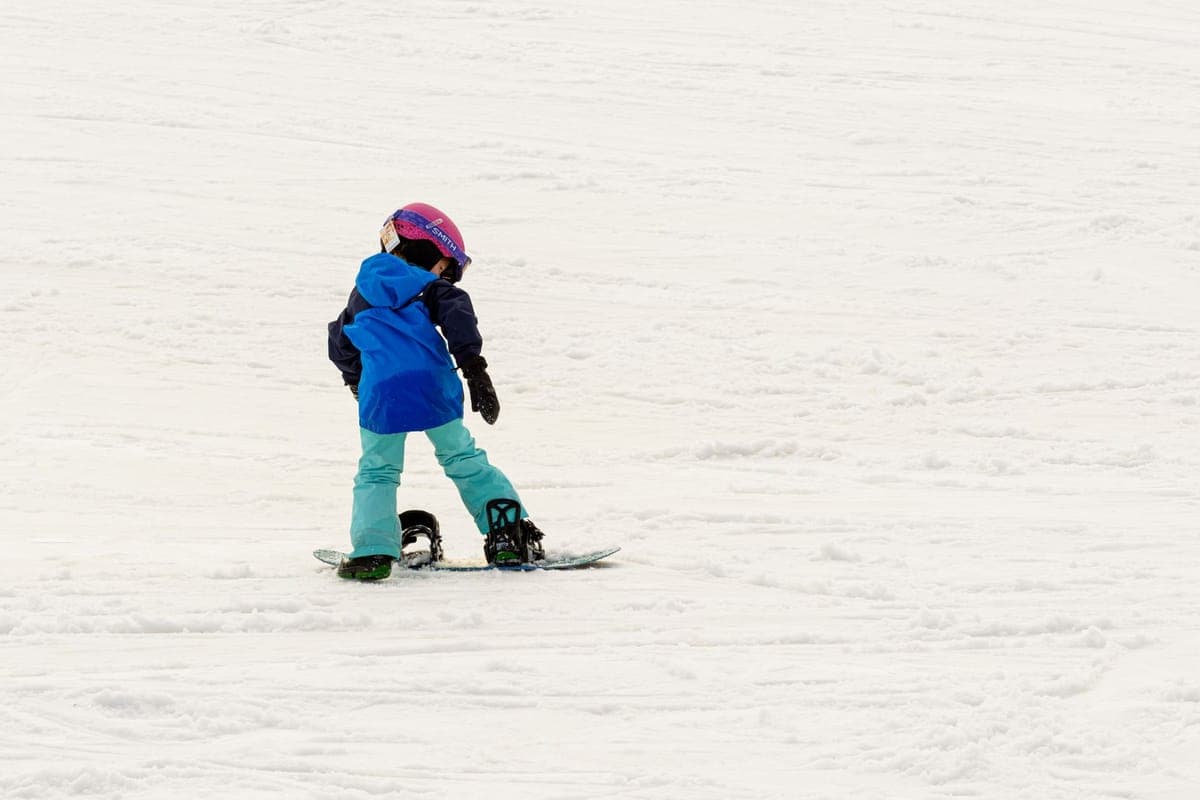
Almost everything a family already owns for skiing carries straight over to snowboarding: the helmet, the goggles, the jacket, the snow pants, the base layers. What changes is the shape of a beginner day. A learning skier falls sideways at low speed with legs that separate. A learning snowboarder is strapped to a single plank with both feet, so a fall goes straight down, backward onto the tailbone or forward onto outstretched hands.
That is the whole reason this page exists as something separate from the skiing-with-kids page. The equipment priorities follow the falls, and the falls are different. Wrist injuries are the signature beginner snowboard injury, which is why wrist guards sit above almost everything else in the buying order.
The protective kit, in order
| Item | Priority | Why it comes where it does |
|---|---|---|
| Helmet | First, always | Backward falls put the back of the head down; a certified helmet is not optional |
| Wrist guards | Second | Forward falls land on outstretched hands; this is the classic beginner injury |
| Padded shorts | Third | Tailbone impacts are what makes a child refuse day two |
| Waterproof pants and jacket | Fourth | A snowboarder sits in the snow constantly, so seam sealing matters more |
| Goggles | Fifth | Same requirement as skiing: published UV and anti-fog |
| Gloves with a long cuff | Sixth | Hands are in the snow far more than on skis |
| Board, bindings, boots | Rent for the first season | Sizing changes with the child and with their stance preference |
Two items on that list are snowboard-specific and are the ones families skip: wrist guards and padded shorts. Both are inexpensive relative to a lift ticket and both directly address what actually happens in the first three days. Buy them before you buy anything that makes the child faster.
The helmet is the same helmet
There is no meaningful safety difference between a ski helmet and a snowboard helmet at this level, and the comparison page goes through the marketing claims. What you want is a certified shell in the child’s actual size with a dial adjuster. The Retrospec kids helmet in this ledger publishes a kids XS at 48 to 51 cm and a youth shell at 52 to 55 cm, both with a dial.
Measure the head rather than guessing; the kids helmet chart has the bands. Do not buy up a size to last: a helmet that moves is not doing the job its certification describes, and a dial only buys about a centimeter.
Clothing: the one place snowboarding is genuinely harder on gear
A snowboarder sits down. On a learning slope a child sits down to strap in, sits down after a fall, and sits down to rest, which means the seat of the pants is wet all day. Two consequences follow.
- Seam sealing matters more than for skiing. Critical seams sealed means the upper body is taped and the lower seams are not, which is exactly the wrong way round for someone sitting in snow. The jacket features page explains what each seam description means.
- A published waterproof rating earns its money. The Arctix kids snow pants publish 3,000 mm, which is the bottom of the useful range and fine in cold dry snow. What the millimeter figure means is worth two minutes before buying.
- Gloves need a long cuff and a spare pair. Snowboard hands are in the snow constantly. Two pairs, and a cuff that goes over or seals properly against the sleeve. Sizing method here.
Board, bindings and boots: rent them
Snowboard hardware is the clearest rental case in this whole site, and it is not only about growth. A first-season child does not yet know whether they ride with the left foot forward or the right, which changes how the bindings are mounted. They do not know what stance width suits them. And board length is set from height and weight, both of which move.
This ledger contains adult snowboard packages and no children’s board we could compile published specifications for, and we are not going to recommend one we have not read a specification on. That is a real gap rather than an editorial position, and it points at the same answer: rent or lease. The seasonal lease page covers how those programs work, including the mid-season size swap, which is the feature that makes them worth it for a growing child.
If you buy one piece of hardware, buy boots
Same logic as skiing: boots are the item where fit is personal. A snowboard boot is softer and more forgiving than a ski boot, and a child in a rental boot that is a size too big will spend the day with a heel lifting inside it, which makes turning by ankle pressure impossible. If the child is going to snowboard more than a handful of days, boots are the first thing to own and the board is the last.
What carries over from skiing, and what does not
| Item | Carries over? |
|---|---|
| Helmet | Yes, directly |
| Goggles | Yes, directly |
| Jacket | Yes |
| Snow pants | Yes, though seam sealing matters more |
| Base layers and socks | Yes |
| Gloves | Yes, but expect them to get wetter |
| Ski boots | No, snowboard boots are a different item entirely |
| Poles | No, and this is the one thing snowboarding removes |
For a family where one child skis and one snowboards, that table is quietly good news: everything expensive except the hardware is shared. It also means the decision about which to learn is less financially loaded than it looks, which is the argument on the ski-or-snowboard comparison.
If you are buying rather than leasing the hardware, size it from weight first and height second - the kids’ snowboard sizing page has the bands, the boot-width check, and why the chin-height rule is a sanity check rather than a method.
Book the lesson before you buy anything
Snowboarding is the discipline where a lesson pays for itself fastest, because the first day is genuinely hard and the difference between a good and a bad first day is entirely instruction. A ski school will also tell you which foot the child naturally leads with, which is the one piece of information you need before you would ever buy bindings.
Rent the hardware through the resort for the first season, buy the six items in the priority list above, and revisit the purchase question next winter when you know whether the child liked it. That order costs the least and wastes the least, which is the whole argument of the when-to-buy page.
Every pick, with the working
Each entry shows the published inputs, the axis scores they produce, and what you give up. The order is the computed order, not a commercial one, and the arithmetic is open underneath each score.
1 · A first goggle, or a spare in the car for the one that gets lost
OutdoorMaster Falcon Kids
The cheapest published price here that still carries 100% UV protection and an anti-fog coating, which are the only two specs that matter on a child's first goggle. Everything above this price is buying optics, not safety.
- Published price
- $29.99
- Cost per day on snow
- $3.00 a day
- Amortized over
- 2 seasons (10 days)
- Certified to
- Not published
- UV protection
- 100% published
- Anti-fog
- Anti-fog coating
- Lenses included
- 1
- Published sizes
- Kids
- Warranty
- No term published for goggles
What it gets right
- 100% UV protection and an anti-fog coating at a published $29.99
- Cheap enough that losing it on a chairlift is annoying rather than expensive
What you give up
- No published VLT figure
- Single lens, no interchange system
The working behind the 5.8
- Cost per day on snow: 8.9
- $29.99 over 2 seasons at 5 days each = 10 days = $3.00 a day
- Published protection: 6.0
- 100% UV protection published (+4); no published impact standard (+0); anti-fog treatment published (+2); single lens (+0)
- Size availability: not scored
- Sold in one size, so size availability does not apply.
- Warranty and support: 0.0
- no published term (0 of 6); no published crash replacement (+0); no published repair route (+0)
Axes with unpublished inputs are dropped and the remaining weights re-normalized, so a product is not punished for a manufacturer’s silence. Specifications compiled September 3, 2026 from OutdoorMaster published specifications.
2 · A first helmet for a toddler who may not ski again
Retrospec Comstock Kids
Skip this one. If the child is going to ski more than one weekend, the extra $70 for a Mips youth helmet works out at about $3.50 per day on snow on our two-season convention. That is a small number for the one feature this helmet lacks.
Properly certified, dial-adjusted and $39.99, which makes it the cheapest legitimate route to getting a small child into a helmet. It has no rotational-impact liner, and on a two-season horizon the Mips helmets are only about three dollars a day more.
- Published price
- $39.99
- Cost per day on snow
- $4.00 a day
- Amortized over
- 2 seasons (10 days)
- Certified to
- ASTM F2040, CE EN 1077 Class B
- Rotational system
- None published
- Published sizes
- Kids XS 48-51 cm and Youth 52-55 cm
- Warranty
- Limited warranty; no term published
What it gets right
- ASTM F2040 and CE EN 1077 Class B at $39.99
- ErgoKnob dial adjuster
- Covers 48-55 cm, which reaches younger than most youth helmets
What you give up
- No rotational-impact system
- No published warranty term
The working behind the 5.0
- Cost per day on snow: 8.1
- $39.99 over 2 seasons at 5 days each = 10 days = $4.00 a day
- Published protection: 6.0
- ASTM F2040 (+4); CE EN 1077 (+2); no rotational-impact system (+0)
- Size availability: 3.2
- 2 published sizes (1.7 of 8.5); continuous in-size adjuster published (+1.5); range: Kids XS 48-51 cm and Youth 52-55 cm
- Warranty and support: 0.0
- no published term (0 of 6); no published crash replacement (+0); no published repair route (+0)
Axes with unpublished inputs are dropped and the remaining weights re-normalized, so a product is not punished for a manufacturer’s silence. Specifications compiled September 3, 2026 from Retrospec published specifications.
3 · A child old enough to want fingers rather than mittens
OutdoorMaster Kids 3M Thinsulate Waterproof Ski Gloves
Named insulation and a published two-year warranty on a children's glove, which almost nothing in this category offers. Buy two pairs anyway: a child's gloves are wet by lunch and there is no drying them on a mountain.
- Published price
- $29.99
- Cost per day on snow
- $6.00 a day
- Amortized over
- 1 season (5 days)
- Certified to
- Not published
- Waterproof rating
- Not published
- Published sizes
- Three published youth sizes
- Warranty
- OutdoorMaster 2-year warranty
What it gets right
- Two-year published warranty on a children's item
- 3M Thinsulate insulation named on the specification
- $29.99 published
What you give up
- Gloves are colder than mittens for a small child at the same insulation
- No published waterproof rating
The working behind the 4.7
- Cost per day on snow: 6.7
- $29.99 over 1 season at 5 days each = 5 days = $6.00 a day
- Published protection: not scored
- No waterproof rating or seam construction published.
- Size availability: 3.4
- 3 published sizes (3.4 of 8.5); no continuous adjuster published (+0); range: Three published youth sizes
- Warranty and support: 2.5
- 2 yr (2.5 of 6); no published crash replacement (+0); no published repair route (+0)
Axes with unpublished inputs are dropped and the remaining weights re-normalized, so a product is not punished for a manufacturer’s silence. Specifications compiled September 3, 2026 from OutdoorMaster published specifications.
4 · A beginner who will spend a large part of the day sitting down
Arctix Kids Insulated Snow Pants
Reinforced where a learning child actually wears a pair of snow pants out: Arctix publishes 600-denier ballistic nylon at the ankles, scuff guards and hem, which is the ankle-first failure pattern rather than the seat everyone expects. On a two-season clock that is $4 a day on snow.
- Published price
- $39.99
- Cost per day on snow
- $4.00 a day
- Amortized over
- 2 seasons (10 days)
- Certified to
- Not published
- Waterproof rating
- 3,000 mm
- Published sizes
- XS through XL youth
- Warranty
- No term published on the product page
What it gets right
- 600-denier ballistic nylon published at the ankles, scuff guards and hem - the three places a ski edge actually cuts a child's pants
- 85 g ThermaTech insulation published to -20F to +35F, with reinforced and sealed seams
- $39.99 published, which is around one day of a children's clothing rental at many resorts
What you give up
- 3,000 mm is the entry level for waterproofing
- Critical seams only
The working behind the 4.7
- Cost per day on snow: 8.1
- $39.99 over 2 seasons at 5 days each = 10 days = $4.00 a day
- Published protection: 2.0
- 3,000mm waterproof rating (0.0 of 6); critically taped or untaped seams (+0); insulation or shell construction published (+2)
- Size availability: 6.8
- 5 published sizes (6.8 of 8.5); no continuous adjuster published (+0); range: XS through XL youth
- Warranty and support: 0.0
- no published term (0 of 6); no published crash replacement (+0); no published repair route (+0)
Axes with unpublished inputs are dropped and the remaining weights re-normalized, so a product is not punished for a manufacturer’s silence. Specifications compiled October 16, 2026 from Arctix published specifications.
Prices last verified October 20, 2026. Prices move constantly; the figure on Amazon at the moment you click is the real one.
Questions people actually ask
What gear does a child need to start snowboarding?
A certified helmet, wrist guards, padded shorts, waterproof jacket and pants, goggles with published UV protection, and gloves with a long cuff. Rent the board, bindings and boots for the first season. The protective items come first because beginner snowboard falls land on wrists and tailbones.
Do kids need wrist guards for snowboarding?
They are the most commonly recommended addition for beginners, because forward falls land on outstretched hands and wrist injuries are the signature beginner snowboard injury. They are inexpensive relative to a lift ticket and they matter most in the first few days, which is exactly when families have not bought them yet.
Can a child use a ski helmet for snowboarding?
Yes. There is no meaningful safety difference at this level; the same certifications apply and most models are sold for both. What matters is that it is the right size for the head today and has a dial adjuster.
Should I buy my child a snowboard?
Not in the first season. Board length depends on height and weight, both of which change, and the binding setup depends on which foot the child leads with, which they will not know until they have had a lesson. Rent or lease the hardware and buy boots first if you buy anything.
Does ski gear work for snowboarding?
Most of it. Helmet, goggles, jacket, base layers, socks and gloves all transfer directly. Ski boots do not, because snowboard boots are a completely different item, and poles are simply not used. Snow pants transfer, though seam sealing matters more because a snowboarder sits in the snow far more often.