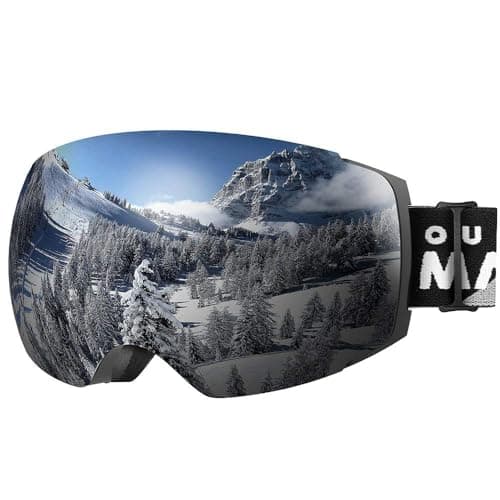
Best all-round goggle
The best ski goggles, ranked on what is actually published
Three goggles from $49.99 to $155, with the real two-lens cost of each and what the published specs do and do not tell you.
Top pick: OutdoorMaster PRO Magnetic
Lens tint, light transmission, glasses compatibility and fog. The specs that matter are published, and most of the ones people shop on are not.
Nothing here has been tested by us. How we pick · Who writes this · How we earn
In this section
Sizing charts and cost arithmetic are free to read and always will be. The ranked picks carry affiliate links.
Best all-round goggle
Three goggles from $49.99 to $155, with the real two-lens cost of each and what the published specs do and do not tell you.
Top pick: OutdoorMaster PRO Magnetic
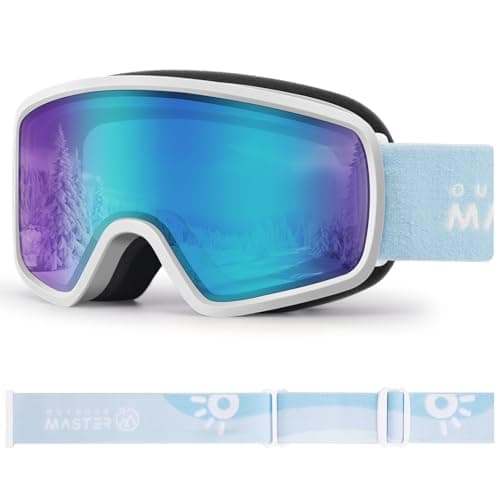
Best kids' goggle
Four youth goggles from $29.99 to $40, two of them over-the-glasses, ranked on published UV and anti-fog construction.
Top pick: OutdoorMaster Falcon Kids
Best goggle for glasses
OTG picks for adults and children, plus the prescription-insert route almost nobody mentions.
Top pick: OutdoorMaster PRO Magnetic
Head to head
The conditions where sunglasses are genuinely fine, the ones where they are not, and why children are a different answer entirely.
Guide
The VLT band table, what lens tint actually changes, and the single best choice for a family that skis whatever weather the trip brings.
Guide
The four habits that cause most fogging, what a double lens and a coating actually do, and the mid-run recovery.
Guide
How to clean, dry and store goggles, what destroys the anti-fog coating, and when a lens is worth replacing.
Best lens-swap goggle
Magnetic against clip-in against a second lens in the box, with the honest answer about whether one lens is enough.
Top pick: OutdoorMaster PRO Magnetic
Guide
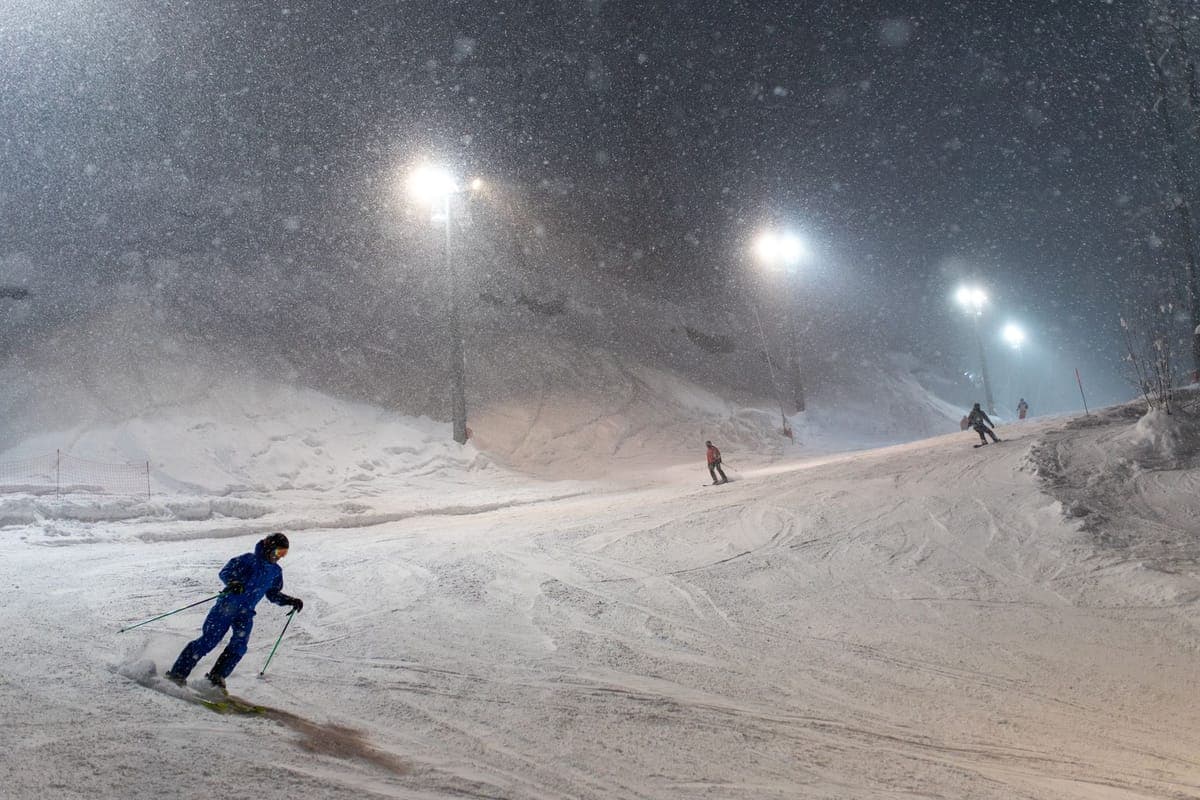
Why a dark lens fails under floodlights, which light transmission figure to look for, and the three ways to solve it without buying two goggles.
Sizing chart
The three fit checks that decide whether a goggle works on your face, plus what junior, youth and small-fit frames actually mean.
Head to head
What each technology does, the ice-visibility trade-off with polarization, and the cheaper alternative that solves the same problem.

Guide
What snow blindness is and when it appears, why tint and UV protection are unrelated, and the one specification to check on any goggle.
Best flat-light goggle
What flat light actually does to your vision, the published VLT band that helps, and the cheapest way to fix it if you already own goggles.
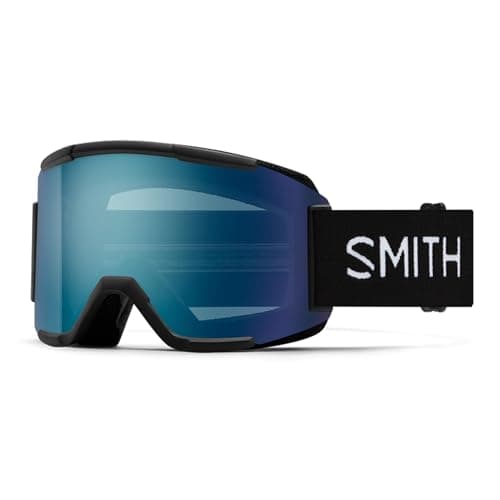
Top pick: Smith Squad ChromaPop
Best women's goggle
What a women's goggle actually changes, why frame size is the real specification, and the published VLT figures to shop on.
Top pick: Smith Squad ChromaPop
Head to head
Which goggle specifications are identical at both price points, which are not, and the published figure budget models tend to leave out.
Best snowboard goggles
Snowboard goggles compared on published UV, anti-fog and lens count, with the two things that genuinely differ from skiing.
Top pick: OutdoorMaster PRO Magnetic
Head to head
Why the two categories are the same product, the specs that genuinely differ, and how to buy one pair for both sports.

Guide
The three gaps a too-large frame leaves, the fit check that finds them, and the published small-fit frames worth trying.
Guide
What can and cannot be fixed, how to check lens availability before buying a goggle, and the arithmetic on a spare lens.
Best goggles under $50
Goggles at or under $50 compared on published UV, anti-fog and VLT figures, for adults and children.
Top pick: OutdoorMaster PRO Magnetic
Best snow sunglasses
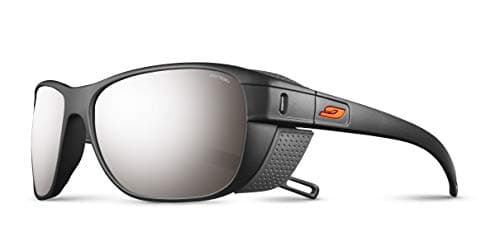
Three snow sunglasses compared on published VLT and lens category, which is right for cross-country, snowshoeing and spring, and when you still need goggles.
Top pick: Julbo Camino, Spectron 4 Lens
Prices last verified October 19, 2026. Prices move constantly; the figure on Amazon at the moment you click is the real one.
VLT stands for visible light transmission, and it is the percentage of light the lens lets through. A 10% lens is a dark lens for a bright day. A 60% lens is a pale lens for a snowstorm or a night session. It is printed on the box and on the maker’s page, and it tells you more about whether a goggle will work on your trip than the price does.
The mistake almost every first buyer makes is buying the darkest, most mirrored lens on the shelf, then finding they cannot see the difference between a bump and a shadow on an overcast morning. Most family ski days in the US are not bright. A mid-range lens somewhere around 25% to 45% is the single most useful choice, and one of our picks publishes 36% for exactly that reason. The lens color and VLT guide maps every band to the conditions it is for.
Goggles fog when warm damp air from your face meets a cold lens. Two things in the published specification address it: a double lens with an air gap between the two panes, which keeps the inner pane closer to your face temperature, and an anti-fog treatment bonded to that inner pane.
There is a third thing, and it is free: never wipe the inside of a goggle lens. The anti-fog treatment is a coating, and a glove wipes it off permanently. If the inside is wet, shake the water out and let it air dry. The anti-fog guide covers the rest, including the vent-blocking mistakes that cause most of it.
Over-the-glasses goggles, usually written OTG, are cut deeper at the temples so the arms of your glasses sit inside without being pressed into your head. Any goggle can be worn over glasses for ten minutes; an OTG goggle can be worn over them all day. Two of the picks in this section publish OTG frames, and one of them is a youth model at the same price as the non-OTG version, which makes the decision free for a child who wears glasses. The full guide to goggles over glasses covers the alternatives too.
The gap between the top of the goggle frame and the brow of the helmet is called gaper gap, and it is not only a styling problem: it is a strip of bare forehead in the wind. Not every goggle fits every helmet, and the only reliable check is to hold them together. Our guide to fitting a helmet and goggles together explains how to check it before you take the tags off.
A child’s goggle needs to fit a small face, survive being dropped on a lift, and cost little enough that losing it is annoying rather than expensive. The specifications that matter shrink to two: 100% UV protection, and an anti-fog inner lens. Everything above about thirty dollars in the children’s market is buying optical quality, not safety. The children’s picks are here, and they start at a published $29.99.
Sunglasses work for a warm spring afternoon on groomed runs at low speed and nothing else. They do not seal against wind, they let snow into your eyes, and they come off in a fall. The full answer, including when sunglasses are genuinely the better choice, is on goggles versus sunglasses.
On published UV protection, whether an impact standard is published, whether an anti-fog treatment is published, how many lenses come in the box, and cost per day on snow. Nothing here is scored on optical quality, because we have not looked through any of them and any claim we made about it would be invented. The method is published in full.
Bright sun is the easy case and almost any lens copes. Flat light - overcast, snowing, dusk - is where the wrong lens genuinely stops you seeing the terrain, and it is the condition most people own no answer to. The flat-light roundup ranks on published VLT and lens count, and it is honest that the cheapest fix is usually a spare light lens rather than a second goggle.
Two pages cover the questions that come up once the lens is understood. Women’s goggles is really a page about frame size - the one dimension makers do not publish - and how to check it against your own face. Cheap against expensive sets out what is identical at both ends of the price range, which is more than people expect, and what the money genuinely buys.
There is no such thing as a snowboard goggle in any technical sense - no separate construction, no separate standard, and the same frames sold with different graphics. Two things do genuinely matter more for snowboarding, and the snowboard goggles page covers both: you will scratch a lens sooner, so easy lens replacement is worth more, and you spend a lot of the day looking up the hill from a seated position, so the gap between goggle and helmet is in your eyeline far more than it is for a skier.
Three fit questions come up more than any others. Ski versus snowboard goggles settles whether the label means anything (mostly it does not). Goggles for small faces covers the gap under the eyes that no strap tension fixes, and the children’s size chart is the same problem one size down.
When a lens is scratched, replacing a goggle lens is often cheaper than a new pair - and often not, which that page is honest about. If you are starting from nothing, the best ski goggles under $50 is the budget end compared on published specs.
VLT is visible light transmission: the percentage of available light the lens lets through. Low numbers, around 5-20%, are for bright sun. High numbers, 50% and up, are for snowfall, fog and night skiing. Around 25-45% is the most generally useful range for a family that skis whatever weather the trip brings.
Yes. There is no meaningful difference between goggles sold for skiing and goggles sold for snowboarding: the same lenses, the same frames, the same standards. The category names are marketing.
Snug enough that they do not move when you shake your head, loose enough that they leave no red mark after a run and do not squash the foam flat against your face. Foam compressed too hard blocks the vents, which is a common cause of fogging.
For a family skiing a week a year, one mid-range lens is usually enough. Interchangeable-lens systems make sense when you actually own the second lens, which is a separate purchase on most of them, so compare the real two-lens price rather than the sticker price.