Snow pants or bibs: the gap at your waist against every bathroom stop
Bibs solve the one problem that ruins a beginner day, and create a smaller problem that recurs several times a day. Here is which trade suits whom.
By Sawyer V. · Published
We have not tested this gear. Everything below is compiled from published specifications and published safety standards, and the arithmetic is public so you can check it. This page carries affiliate links: if you buy through one we earn a commission at no extra cost to you, and it does not change the order of the picks. Full disclosure.
The short answer
Bibs extend up the chest with shoulder straps and remove the gap at your waist entirely, which is where snow gets in when you fall or sit. Buy them if you are a beginner who falls, a snowboarder, or someone who skis deep snow. Buy pants if you value simple bathroom stops, want to buy one garment that also works for sledding and shoveling, or if the budget is tight - pants are the cheaper and more common option.
| # | Pick | Best for | Score | Price |
|---|---|---|---|---|
| 1 | Arctix Men's Insulated Snowsports Cargo Pants A cold, dry resort week where the snow does not turn to rain | $2 a dayon snow | 5.2/10 | $64.99 - View on Amazon |
| 2 | Columbia Men's Bugaboo IV Pants Anyone between two inseams, which is most people | $4.80 a dayon snow | 4.8/10 | $130.00 - View on Amazon |
| 3 | Arctix Kids Insulated Snow Pants A beginner who will spend a large part of the day sitting down | $4.00 a dayon snow | 4.7/10 | $34.49 - View on Amazon |
Prices last verified October 22, 2026. Prices move constantly; the figure on Amazon at the moment you click is the real one.
The problem bibs solve
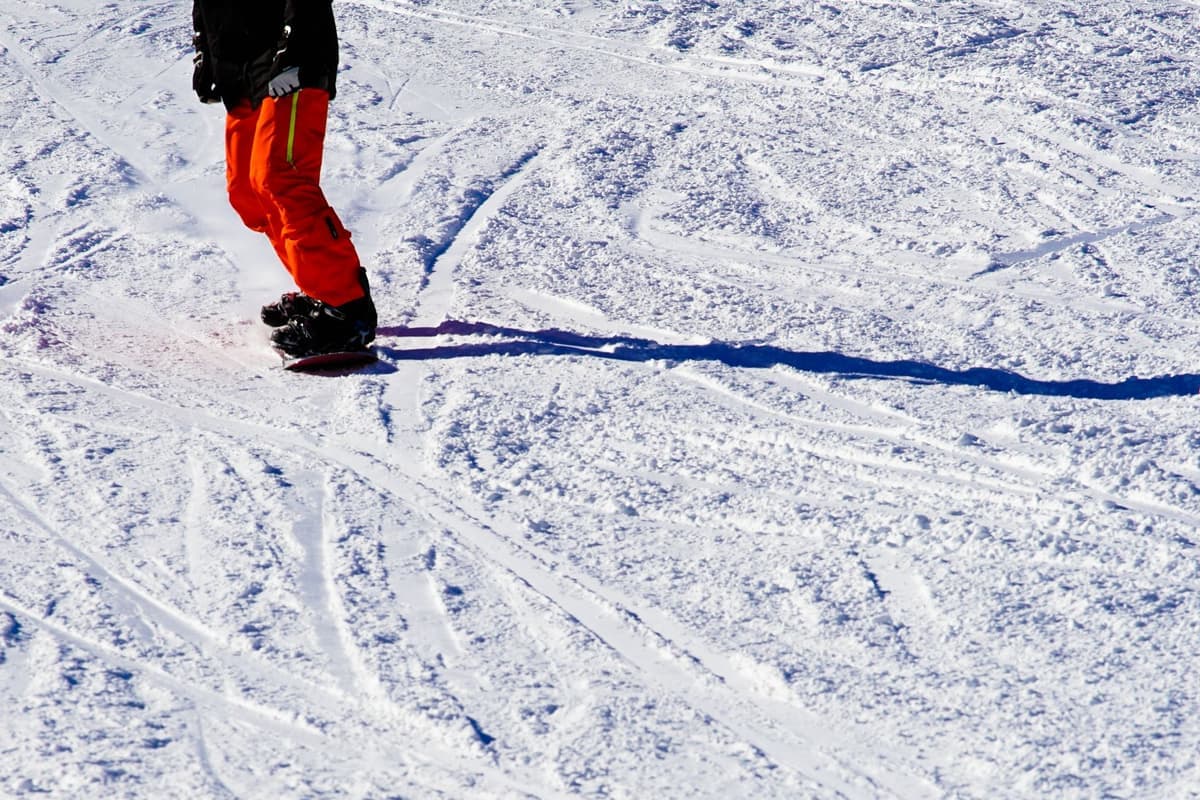
Snow pants and a jacket meet at your waist, and that junction is a gap. It is closed by a powder skirt if the jacket has one, by a long jacket hem, and by luck. When you fall - and a beginner falls a great deal - snow travels up under the jacket and down into the waistband, and then you spend the afternoon with snow melting into your base layer at the small of your back.
A bib removes the junction. The waterproof fabric continues up your chest and back to shoulder straps, so there is no waistband for snow to get past. It is a structural fix rather than a feature that has to work correctly, which is why it is more reliable than a powder skirt.
The honest comparison
| Snow pants | Bibs | |
|---|---|---|
| Snow at the waist | Relies on a powder skirt and a long jacket hem | Structurally impossible |
| Bathroom stops | Simple | Complicated; depends entirely on the zip design |
| Warmth | Normal | Slightly warmer, because the chest panel is another layer |
| Venting when warm | Easier; drop a layer above | Harder; the bib stays on unless the jacket comes off |
| Layering underneath | Straightforward | The base layer has to go under the bib, so plan the order |
| Use off the mountain | Works for sledding, shoveling, dog walking | Works, and looks like ski gear |
| Availability and price | The default; more models, lower prices | Fewer models, generally more expensive |
| Fit adjustment | Waist and sometimes inseam | Shoulder straps adjust for torso length, which helps tall and short people |
The bathroom problem, taken seriously
It is the reason most people give for not buying bibs and it deserves a real answer rather than a joke. The experience varies enormously with the design.
- A full-length side zip that runs from the chest down past the hip is the design that works. You can open one side entirely without removing straps.
- A drop seat - a zip across the back - is the other good answer and is common on women’s bibs specifically.
- A short front zip only means taking the jacket off, dropping the straps and standing in a cold cubicle in a base layer. This is the design that gives bibs their reputation.
Check this before buying. It is the single feature that decides whether you will be happy with bibs, and it is easy to check and easy to overlook.
The case for pants
Pants are not the compromise option; they are the default for good reasons. They are cheaper, there are far more of them, they are easier to layer under, they vent more easily on a warm afternoon, and they get worn for sledding, shoveling and the school run in a way a bib does not.
The published options in this ledger show the two things worth shopping for in pants. The Arctix publishes a 3,000 mm waterproof rating with 85 g of insulation and three inseam lengths, which is unusual and genuinely useful; the Columbia publishes an adjustable inner leg length, which solves the same problem from the other direction. Inseam is where family sizing falls apart, because a household rarely contains four catalog inseams. The sizing page covers how long they should be.
If you buy pants, buy a jacket with a powder skirt and a hem that covers your waistband when your arms are overhead. Together those recover most of what a bib gives you. The jacket features page ranks the powder skirt highly for exactly this reason.
Who should buy which
- An adult beginner. Bibs, if the budget allows. You will fall more this season than in the rest of your skiing life combined.
- A snowboarder. Bibs. You sit in the snow to strap in, after every fall and to rest, and that is precisely the gap a bib closes.
- A child. Bibs, strongly, and it is barely a debate. A child bends over constantly, sits in the snow constantly, and cannot be relied on to notice snow going down their back. Bibs also stay up without a belt, which matters because a child’s waist is not a reliable anchor. The kids layering page has the rest.
- A confident skier on groomed runs. Pants. You rarely fall, you value the convenience, and the money is better spent on seam sealing.
- Anyone buying one garment for skiing and everything else. Pants.
- Someone tall or short in the torso. Bibs, because adjustable shoulder straps handle torso length in a way a waistband cannot.
What matters more than either
Seam sealing. A fully taped bib and a critical-seam-sealed bib are not the same product, and neither is a fully taped pant and a critical-seam one. Critical seams means the upper body is taped and the lower seams are not, which is the wrong half for a garment you sit down in. The waterproof ratings page explains what the published millimeter figure measures and which band suits which snow.
In order of importance for the lower half: taped seams, then a published waterproof rating, then bib or pant, then everything else. The ski pants roundup ranks the field on those published figures, the snowboard pants roundup does the same for the snowboard-cut options, and the rent-or-buy page on clothing covers whether to buy at all.
Every pick, with the working
Each entry shows the published inputs, the axis scores they produce, and what you give up. The order is the computed order, not a commercial one, and the arithmetic is open underneath each score.
1 · A cold, dry resort week where the snow does not turn to rain
Arctix Men's Insulated Snowsports Cargo Pants
The only garment in this ledger that publishes an actual waterproof number: a 3,000 mm ThermaLock coating with 85 g of insulation, at fifty dollars. 3,000 mm is the bottom of the useful range, and on a wet spring day you will find out where that bottom is.
- Published price
- $50
- Cost per day on snow
- $2 a day
- Amortized over
- 5 seasons (25 days)
- Certified to
- Not published
- Waterproof rating
- 3,000 mm
- Published sizes
- S through XXL, in 28, 32 and 34 inch inseams
- Warranty
- No term published on the product page
What it gets right
- Publishes a 3,000 mm waterproof rating, which most competitors at this price do not
- 85 g of ThermaTech insulation, warm enough for a beginner standing still on a learning slope
- Three published inseam lengths, which matters more in snow pants than in almost anything else
What you give up
- 3,000 mm is a coating, not a membrane, and heavy wet snow will eventually get through it
- Critical seams only, not fully sealed
The working behind the 5.2
- Cost per day on snow: 9.6
- $50 over 5 seasons at 5 days each = 25 days = $2 a day
- Published protection: 2.0
- 3,000mm waterproof rating (0.0 of 6); critically taped or untaped seams (+0); insulation or shell construction published (+2)
- Size availability: 6.8
- 5 published sizes (6.8 of 8.5); no continuous adjuster published (+0); range: S through XXL, in 28, 32 and 34 inch inseams
- Warranty and support: 0.0
- no published term (0 of 6); no published crash replacement (+0); no published repair route (+0)
Axes with unpublished inputs are dropped and the remaining weights re-normalized, so a product is not punished for a manufacturer’s silence. Specifications compiled September 3, 2026 from Arctix published specifications.
2 · Anyone between two inseams, which is most people
Columbia Men's Bugaboo IV Pants
The one pair here with an adjustable inner leg length, which quietly solves the problem of a family where nobody is a catalog size. Columbia publishes no hydrostatic number, so it cannot be compared numerically against the Arctix.
- Published price
- $120
- Cost per day on snow
- $4.80 a day
- Amortized over
- 5 seasons (25 days)
- Certified to
- Not published
- Waterproof rating
- Not published
- Published sizes
- S through XXL, with adjustable inner leg
- Warranty
- No term published on the product page
What it gets right
- Adjustable inner leg length, unusual at any price
- Omni-Tech waterproof-breathable fabric with critical seams sealed
- Thermal reflective lining published
What you give up
- $120, more than double the Arctix, with no published rating to justify it numerically
- Critical seams rather than fully sealed
The working behind the 4.8
- Cost per day on snow: 7.6
- $120 over 5 seasons at 5 days each = 25 days = $4.80 a day
- Published protection: 2.0
- no published waterproof rating (0 of 6); critically taped or untaped seams (+0); insulation or shell construction published (+2)
- Size availability: 8.3
- 5 published sizes (6.8 of 8.5); continuous in-size adjuster published (+1.5); range: S through XXL, with adjustable inner leg
- Warranty and support: 0.0
- no published term (0 of 6); no published crash replacement (+0); no published repair route (+0)
Axes with unpublished inputs are dropped and the remaining weights re-normalized, so a product is not punished for a manufacturer’s silence. Specifications compiled September 3, 2026 from Columbia published specifications.
3 · A beginner who will spend a large part of the day sitting down
Arctix Kids Insulated Snow Pants
Reinforced where a learning child actually wears a pair of snow pants out: Arctix publishes 600-denier ballistic nylon at the ankles, scuff guards and hem, which is the ankle-first failure pattern rather than the seat everyone expects. On a two-season clock that is $4 a day on snow.
- Published price
- $39.99
- Cost per day on snow
- $4.00 a day
- Amortized over
- 2 seasons (10 days)
- Certified to
- Not published
- Waterproof rating
- 3,000 mm
- Published sizes
- XS through XL youth
- Warranty
- No term published on the product page
What it gets right
- 600-denier ballistic nylon published at the ankles, scuff guards and hem - the three places a ski edge actually cuts a child's pants
- 85 g ThermaTech insulation published to -20F to +35F, with reinforced and sealed seams
- $39.99 published, which is around one day of a children's clothing rental at many resorts
What you give up
- 3,000 mm is the entry level for waterproofing
- Critical seams only
The working behind the 4.7
- Cost per day on snow: 8.1
- $39.99 over 2 seasons at 5 days each = 10 days = $4.00 a day
- Published protection: 2.0
- 3,000mm waterproof rating (0.0 of 6); critically taped or untaped seams (+0); insulation or shell construction published (+2)
- Size availability: 6.8
- 5 published sizes (6.8 of 8.5); no continuous adjuster published (+0); range: XS through XL youth
- Warranty and support: 0.0
- no published term (0 of 6); no published crash replacement (+0); no published repair route (+0)
Axes with unpublished inputs are dropped and the remaining weights re-normalized, so a product is not punished for a manufacturer’s silence. Specifications compiled October 16, 2026 from Arctix published specifications.
Prices last verified October 22, 2026. Prices move constantly; the figure on Amazon at the moment you click is the real one.
Questions people actually ask
Are bibs better than snow pants?
For beginners, snowboarders and children, yes: bibs remove the gap at the waist where snow gets in when you fall or sit, and they do it structurally rather than relying on a powder skirt. For a confident skier who values simple bathroom stops and wants one garment for everything, pants win.
How do you go to the bathroom in ski bibs?
It depends entirely on the design, which is why it is the feature to check before buying. A full-length side zip running from the chest past the hip works well, and a drop-seat zip across the back also works. A short front zip only means removing the jacket and dropping the straps.
Should kids wear bibs or snow pants?
Bibs, and it is barely a debate. Children bend over and sit in the snow constantly, will not notice snow going down their back until they are cold and miserable, and bibs stay up without relying on a waistband that does not fit a child’s shape well.
Are bibs warmer than snow pants?
Slightly, because the chest and back panel adds another layer over your core. The larger effect is indirect: no snow getting in at the waist means no damp base layer, and a dry base layer is worth far more than the panel itself.
What matters more than choosing bibs or pants?
Seam sealing. Critical seams sealed means the upper seams are taped and the lower ones are not, which is the wrong half for a garment you sit down in. Fully taped seams, then a published waterproof rating, then bib or pant, then everything else.