Kids' ski pants, and the ankle that decides how long they last
A child's snow pants almost never wear out in the seat. They wear out at the ankle, where a ski edge cuts them. Three compared on what the makers publish.
By Sawyer V. · Published
We have not tested this gear. Everything below is compiled from published specifications and published safety standards, and the arithmetic is public so you can check it. This page carries affiliate links: if you buy through one we earn a commission at no extra cost to you, and it does not change the order of the picks. Full disclosure.
The short answer
Buy a bib rather than pants for any child under about eight - no waistband gap, nothing to fall down. Look for reinforced ankle and hem guards, which is where a ski edge destroys them, and boot gaiters to keep snow out of the boot. Choose a growth system - adjustable straps or let-down hems - and size up one, never two.
| # | Pick | Best for | Score | Price |
|---|---|---|---|---|
| 1 | Arctix Kids Insulated Snow Pants A beginner who will spend a large part of the day sitting down | $4.00 a dayon snow | 4.7/10 | $34.49 - View on Amazon |
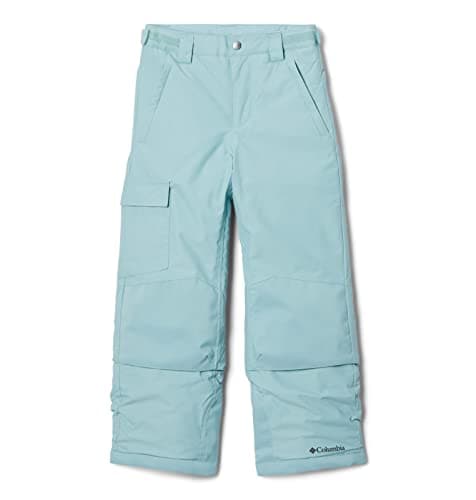
| 2 | Columbia Kids' Bugaboo II Pants A child growing fast enough that last year's pants are already short | Not publishedon snow | 1.1/10 | $43.45 - View on Amazon |
| 3 | Arctix Kids Insulated Bib Overalls A child who wrecks the ankles of every pair of snow pants they own | Not publishedon snow | 0.0/10 | $34.99 - View on Amazon |
Prices last verified October 19, 2026. Prices move constantly; the figure on Amazon at the moment you click is the real one.
Start at the ankle
Children’s snow pants fail in one place and it is not the seat. It is the inside of the ankle, where the metal edge of the other ski catches the fabric on every clumsy turn - and a beginner makes a lot of clumsy turns.
Which is why the specification worth reading first is whether the maker publishes reinforcement there. Arctix publishes 600-denier ballistic guards at the ankle, scuff and hem; Columbia publishes abrasion-resistant reinforcement at the seat, knees and cuffs on its suits. A pair with nothing published at the ankle will have a hole in it by the end of a learning week.
Bib or pants
For a child under about eight, a bib, without much argument. A waistband on a small child is a gap at the lower back that fills with snow the first time they sit down, and children sit down constantly. It is also something that slides down when they run.
For an older child who is actually skiing rather than falling, pants are fine and are faster at a bathroom stop. The full comparison covers both cases, and for the very youngest, a one-piece snowsuit removes even the bib’s shoulder gap.
The three, compared
| Arctix Kids Bib | Columbia Bugaboo II | Arctix Kids Pants | |
|---|---|---|---|
| Type | Bib overall | Pants | Pants |
| Published price | Not published | Not published | $39.99 |
| Waterproof rating | Not published | Not published | 3,000 mm |
| Insulation | 85 g ThermaTech | 100 g plus reflective lining | ThermaTech, weight not published |
| Seams | Not published | Critically sealed | Critically taped, not fully sealed |
| Ankle reinforcement | 600D ballistic guards | Abrasion-resistant cuffs | 600D ballistic guards |
| Boot gaiters | Published, with grippers | Not published | Published |
| Published sizes | Youth, no list | Youth, no list | 5 (XS to XL youth) |
| Growth system | Adjustable straps, elastic back | OUTGROWN let-down length | None published |
Note the last row. Two of these three publish a growth mechanism, and on a children’s garment that is the specification that changes the cost arithmetic more than anything else - because it turns a one-season purchase into a two-season one.
The picks
Arctix Kids Insulated Bib Overalls
The pick. It publishes the thing this page opened with: 600-denier ballistic reinforcement at the ankle, scuff and hem, which is precisely the three places a child’s snow pants die.
Behind that, 85 g of ThermaTech insulation under a ThermaLock coated shell - the same insulation weight as the adult Essential bib - plus boot gaiters with grippers, articulated knees and an elastic back waist.
The growth mechanism is adjustable shoulder straps, which genuinely buys a second winter: a bib that is too long in the body this year is the right length next year with the straps let out. What Arctix does not publish for the kids version is a waterproof rating in millimeters or a seam construction, both of which it publishes for the adult bibs, and that gap is worth knowing about.
Columbia Kids' Bugaboo II Pants
The pick if you want the longest usable life, because of one published feature: the OUTGROWN system lets the leg length down as the child grows.
That is a different approach from adjustable straps and arguably a better one, because leg length is what a child outgrows first. Combined with 100 g of insulation and a reflective lining, and an Omni-Tech waterproof-breathable shell that Columbia publishes honestly as critically seam sealed rather than fully sealed.
That honesty is worth a sentence. Critically sealed means the seams most likely to leak are taped and the rest are not, and on a child sitting in snow the seat seam is exactly where you would want full sealing. Columbia says what it does; other makers say “seam sealed” and leave you to guess. The waterproof ratings page explains what these terms are measuring.
Arctix Kids Insulated Snow Pants
Marked as the skip above, and only for the younger child. For a nine- or ten-year-old who skis rather than sits, ordinary snow pants are entirely correct and quicker to get in and out of.
They are also the only garment on this page with a published price, $39.99, and the only one publishing a waterproof rating - 3,000 mm, which is the bottom of the useful range and will be found out by a wet spring day. Five published youth sizes and the same 600-denier ballistic reinforcement as the bib.
The kids budget page builds a full kit around them.
Sizing, and the mistake everybody makes
Size up one, never two. A jacket or bib one size large is a garment with room to layer and a second winter in it. Two sizes large is a garment that hangs over the boots, catches an edge, and cannot be tightened enough to keep snow out.
The things you must never size up are boots, helmets and goggles - all three work by fitting. The growing-room page is explicit about which is which, and the helmet chart shows how to measure a head properly.
What goes underneath
A base layer, and that is all. The most common cause of a cold child is too much clothing under the snow pants rather than too little: a child in three layers of cotton leggings is a child who sweats, gets damp and then gets cold.
The kids base layer roundup covers merino and synthetic - and never cotton, which holds water against the skin. The kids layering page covers the whole system, and the what-to-wear-underneath page covers the adult version of the same mistake.
Thin socks, one pair. A thick sock in a fitted ski boot makes a foot colder, not warmer, and two pairs is worse than one. The kids ski socks roundup explains why.
Every pick, with the working
Each entry shows the published inputs, the axis scores they produce, and what you give up. The order is the computed order, not a commercial one, and the arithmetic is open underneath each score.
1 · A beginner who will spend a large part of the day sitting down
Arctix Kids Insulated Snow Pants
Skip this one. The right product for the wrong child. Ordinary snow pants with a waistband are fine for an older child who is skiing rather than sitting, and they are quicker at a bathroom stop than any bib. For a beginner, a snowboarder or anyone under about eight, the waistband gap is exactly where snow gets in, and a bib solves that for a similar price.
Reinforced where a learning child actually wears a pair of snow pants out: Arctix publishes 600-denier ballistic nylon at the ankles, scuff guards and hem, which is the ankle-first failure pattern rather than the seat everyone expects. On a two-season clock that is $4 a day on snow.
- Published price
- $39.99
- Cost per day on snow
- $4.00 a day
- Amortized over
- 2 seasons (10 days)
- Certified to
- Not published
- Waterproof rating
- 3,000 mm
- Published sizes
- XS through XL youth
- Warranty
- No term published on the product page
What it gets right
- 600-denier ballistic nylon published at the ankles, scuff guards and hem - the three places a ski edge actually cuts a child's pants
- 85 g ThermaTech insulation published to -20F to +35F, with reinforced and sealed seams
- $39.99 published, which is around one day of a children's clothing rental at many resorts
What you give up
- 3,000 mm is the entry level for waterproofing
- Critical seams only
The working behind the 4.7
- Cost per day on snow: 8.1
- $39.99 over 2 seasons at 5 days each = 10 days = $4.00 a day
- Published protection: 2.0
- 3,000mm waterproof rating (0.0 of 6); critically taped or untaped seams (+0); insulation or shell construction published (+2)
- Size availability: 6.8
- 5 published sizes (6.8 of 8.5); no continuous adjuster published (+0); range: XS through XL youth
- Warranty and support: 0.0
- no published term (0 of 6); no published crash replacement (+0); no published repair route (+0)
Axes with unpublished inputs are dropped and the remaining weights re-normalized, so a product is not punished for a manufacturer’s silence. Specifications compiled October 16, 2026 from Arctix published specifications.
2 · A child growing fast enough that last year's pants are already short
Columbia Kids' Bugaboo II Pants
The published OUTGROWN system is the reason this is here: the leg length lets out as the child grows, which turns a one-season garment into a two-season one and changes the cost arithmetic completely. Omni-Tech is critically seam sealed rather than fully sealed, and Columbia says so.
- Published price
- Not published
- Cost per day on snow
- Not published
- Amortized over
- 2 seasons (10 days)
- Certified to
- Not published
- Waterproof rating
- Not published
- Published sizes
- Published in youth sizes with the OUTGROWN adjustable-length system; no numeric list published
- Warranty
- No term published on the product page
Columbia lists this across sizes and colorways without publishing a single MSRP we could read, so the cost-per-day axis is not scored.
What it gets right
- OUTGROWN adjustable length published, which is a second season out of the same pants
- Omni-Tech waterproof-breathable shell with critically sealed seams, published honestly as critical rather than full
- 100 g insulation plus an Omni-Heat reflective lining published
What you give up
- Critically seam sealed, not fully sealed, which is where a sitting child gets wet
- No published waterproof rating in millimeters
- No single published price and no published warranty term
The working behind the 1.1
- Cost per day on snow: not scored
- No manufacturer-published price, so this axis is not scored.
- Published protection: 2.0
- no published waterproof rating (0 of 6); critically taped or untaped seams (+0); insulation or shell construction published (+2)
- Size availability: not scored
- Sold in one size, so size availability does not apply.
- Warranty and support: 0.0
- no published term (0 of 6); no published crash replacement (+0); no published repair route (+0)
Axes with unpublished inputs are dropped and the remaining weights re-normalized, so a product is not punished for a manufacturer’s silence. Specifications compiled September 12, 2026 from Columbia published specifications.
3 · A child who wrecks the ankles of every pair of snow pants they own
Arctix Kids Insulated Bib Overalls
The same 85 g insulation as the adult Essential bib with 600-denier ballistic reinforcement at the ankle, scuff and hem, which is precisely where a child's snow pants die. Adjustable shoulder straps mean one pair genuinely covers two winters of growing.
- Published price
- Not published
- Cost per day on snow
- Not published
- Amortized over
- 2 seasons (10 days)
- Certified to
- Not published
- Waterproof rating
- Not published
- Published sizes
- Published in youth sizes; no numeric size list published on the product page
- Warranty
- No term published; Arctix states a satisfaction guarantee
Arctix lists this across sizes and colorways rather than publishing one MSRP, so the cost-per-day axis is not scored.
What it gets right
- 600-denier ballistic reinforcement published at ankle, scuff and hem, the three places a ski edge cuts
- 85 g ThermaTech insulation with a ThermaLock coated shell
- Adjustable shoulder straps and an elastic back waist, so it grows with the child
- Boot gaiters with grippers and articulated knees both published
What you give up
- No published numeric size list on the product page
- No published waterproof rating in millimeters for the kids version
- A bib is slow at a bathroom stop, and children do not plan ahead
The working behind the 0.0
- Cost per day on snow: not scored
- No manufacturer-published price, so this axis is not scored.
- Published protection: not scored
- No waterproof rating or seam construction published.
- Size availability: not scored
- Sold in one size, so size availability does not apply.
- Warranty and support: 0.0
- no published term (0 of 6); no published crash replacement (+0); no published repair route (+0)
Axes with unpublished inputs are dropped and the remaining weights re-normalized, so a product is not punished for a manufacturer’s silence. Specifications compiled September 12, 2026 from Arctix published specifications.
Prices last verified October 19, 2026. Prices move constantly; the figure on Amazon at the moment you click is the real one.
Questions people actually ask
Should kids wear ski bibs or ski pants?
Bibs for any child under about eight. There is no waistband for snow to get past when they sit down and nothing to fall down when they run. Older children who are skiing rather than falling do fine in pants, which are faster at a bathroom stop.
What should I look for in kids' ski pants?
Reinforcement at the ankle and hem, because that is where a ski edge cuts them and where they fail. Then boot gaiters to keep snow out of the boot, then a growth system - adjustable straps or a let-down hem - and only then the insulation weight.
How much insulation do kids' ski pants need?
Around 85 to 100 g, which is what the pairs here publish. More than that and an active child overheats and sweats, and damp clothing is what makes a child cold. Warmth is better added with a proper base layer, which can be taken off.
Can I buy kids' ski pants a size too big?
One size, yes - it leaves room to layer and often buys a second winter. Two sizes, no: the cuffs hang over the boots where a ski edge will cut them and the waist cannot be tightened enough to keep snow out. Boots, helmets and goggles must never be sized up.
What do kids wear under ski pants?
One base layer, merino or synthetic, and nothing else. The most common cause of a cold child is too much underneath rather than too little - extra layers make them sweat, the damp cools them, and cotton leggings hold that damp against the skin.