Seasonal ski leases: the option between renting daily and buying
A season lease is one payment for the whole winter, with a size swap included. For a growing child it beats both alternatives, and for an adult it usually does not.
By Sawyer V. · Published
We have not tested this gear. Everything below is compiled from published specifications and published safety standards, and the arithmetic is public so you can check it. This page carries affiliate links: if you buy through one we earn a commission at no extra cost to you, and it does not change the order of the picks. Full disclosure.
The short answer
A seasonal lease is one payment covering skis, boots and poles for the whole winter, usually with a free size swap partway through. It normally beats daily rental somewhere around five to seven days on snow, and it beats buying outright for any child who will outgrow the gear. For an adult who has settled on a size and skis more than about fifteen days, buying wins. The swap clause is the feature to check.
| # | Pick | Best for | Score | Price |
|---|---|---|---|---|
| 1 | Retrospec Comstock Kids A first helmet for a toddler who may not ski again | $4.00 a dayon snow | 5.0/10 | $39.99 - View on Amazon |
| 2 | Rossignol Experience 76 skis with Xpress 10 bindings A smaller adult or a tall teenager on groomed runs | $18.00 a dayon snow | 2.3/10 | $479.95 - View on Amazon |
| 3 | Rossignol Sender Kid skis with bindings A first pair for a very small child who will ski a lot | $24.99 a dayon snow | 0.9/10 | $200.72 - View on Amazon |
Prices last verified October 21, 2026. Prices move constantly; the figure on Amazon at the moment you click is the real one.
What a seasonal lease actually is
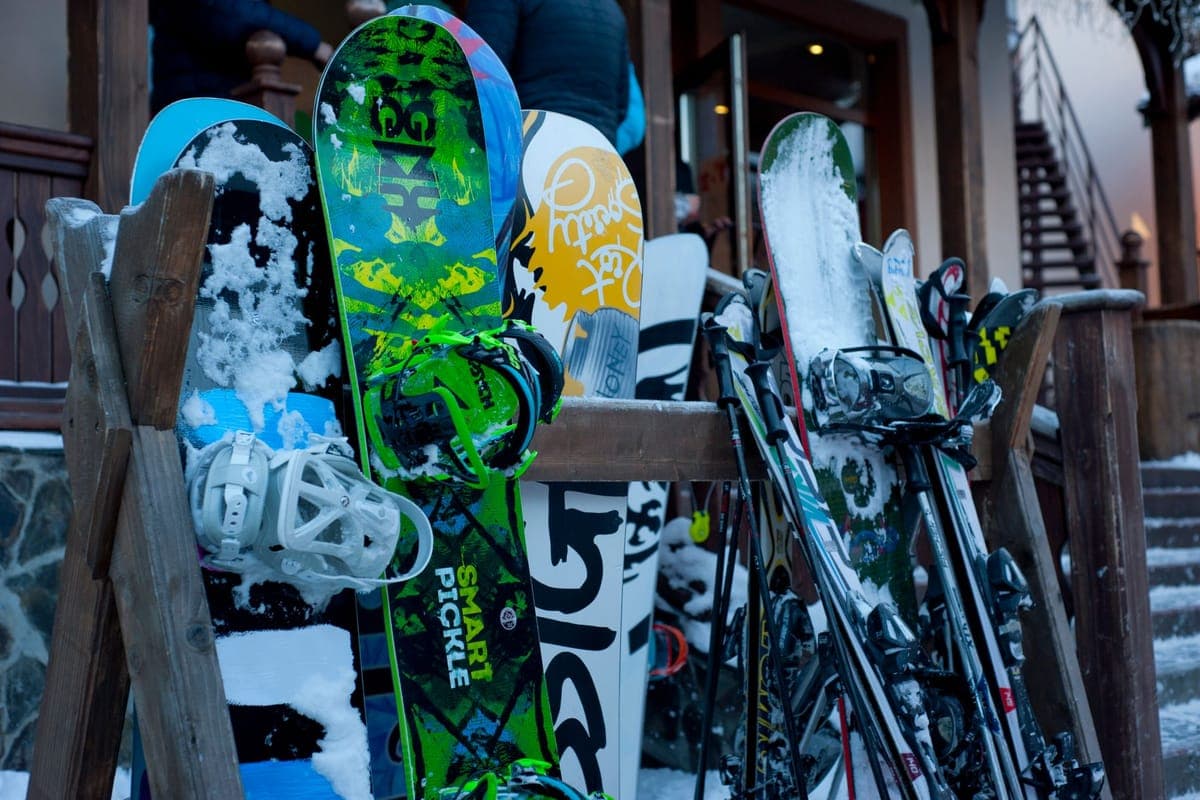
A shop rents you a complete setup for the whole season rather than by the day. You collect it once, keep it in your own garage, and return it in spring. Most programs cover skis, bindings and boots, usually with poles; some cover snowboards and boots on the same terms. Almost all of them include the shop setting the binding release value for the person using it, which is the part that makes the arrangement work.
Two features distinguish a lease from a long rental. The first is that the gear lives with you, so there is no morning queue and no returning it wet at four in the afternoon. The second, and the important one, is the size swap.
The three-way comparison
| Daily rental | Seasonal lease | Buying | |
|---|---|---|---|
| How you pay | Per day, at the counter | Once, before or early in the season | Once, up front, plus a shop setup |
| Best for | One to four days a season | Roughly five to twenty days, or any growing child | Fifteen-plus days a season on a settled size |
| Size changes | Correct every time by definition | Usually one free swap included | You buy again |
| Queueing | Every morning of the trip | Once, at the start of the season | Never |
| Maintenance | The shop does it | Usually the shop does it, check the terms | Yours, or a shop bill |
| What happens in spring | Nothing | You give it back | You store it properly or it rusts |
The row that decides most family decisions is the last one but two. If you are skiing four days a year, the daily rental is right and nothing else comes close. Between about five and twenty days, a lease is usually the cheapest per day and is certainly the least hassle. Above that, and for an adult whose size stopped changing a decade ago, buying wins, and the full cost arithmetic shows where the crossover falls with every input published.
Why this is the default answer for a child
Look at what buying a child’s setup involves. The shortest published ski lengths in this ledger start at 70 cm and run to 92 cm, sold with bindings, and cover a genuinely narrow age band. Our own convention amortizes a child’s hardware over two seasons at five days each, and on that basis a junior package works out at roughly the price of a lift ticket per day on snow. That is the number that sends most families to a lease.
A lease sidesteps all of it. The child gets equipment that is the right length this year, gets it swapped when they grow, and the whole thing disappears in April. There is no resale, no storage, and no season spent on skis that are now too short. For the youngest children the case is stronger still, because at that age the hardware changes almost annually.
What a lease does not cover is the things that have to fit the individual child and that get used away from the mountain: the helmet, the goggles, the clothing and the gloves. Those are the buy list, and the kids budget page prices them. The kids helmet in this ledger publishes two shells with a dial adjuster covering 48 to 55 cm, which is the kind of thing worth owning because rental fleets are thinnest at the smallest sizes.
When it makes sense for an adult
Three cases. An adult who is genuinely new and does not yet know what length or stiffness suits them, and who does not want to spend several hundred dollars on that guess. An adult who skis a moderate amount and has no storage. And a family where leasing four setups from one shop attracts a package price, which is common and worth asking about directly.
Against that, an adult ski package with bindings included is a real option once you ski enough. The Rossignol package in this ledger publishes six lengths from 136 to 176 cm and comes with bindings mounted, which removes the one step that makes buying skis online go wrong. The binding still needs its release setting adjusted by a shop for your height, weight and boot sole length, which is not optional and is explained on the bindings page.
The five clauses worth reading
- The size swap. Is it free, how many times, and does it cover boots as well as skis? A swap that covers skis only is worth much less for a child.
- Damage and loss. Most programs charge for damage beyond normal wear. Ask specifically what a base gouge costs, because that is the common one.
- Tuning. Some leases include a mid-season tune, some do not. Included tuning is worth real money over a season, and if it is not included, doing it at home is a decision of its own.
- The return date. Late returns are usually charged by the day and the dates are earlier than people expect, often before the resort closes.
- Whether a helmet is included. Frequently it is not, and it is usually better to own one anyway. The helmet and goggle arithmetic is unusually one-sided.
Book it before the season starts
Lease programs run out of the popular sizes, and the popular sizes are the junior ones. Shops typically open bookings in early autumn and the best pricing is usually before the first snow. This is the same seasonal pattern that governs buying, and the when-to-buy page covers the whole calendar, including why March and April are the cheapest months to buy anything.
The short decision
- One to four days a season, adults or children. Daily rental. Nothing else is close. Here is what the rental counter will ask you.
- Any child skiing five days or more. Seasonal lease, with the swap clause confirmed. Buy the helmet, goggles and clothing.
- An adult skiing five to fifteen days who is new to it. Seasonal lease, and use the season to work out what you actually like.
- An adult skiing more than about fifteen days on a settled size. Buy, and buy boots first. The boots page explains why they come first.
- Anyone considering secondhand instead. Read what is safe to buy used and what is not first, because used skis carry a binding problem a lease does not.
Every pick, with the working
Each entry shows the published inputs, the axis scores they produce, and what you give up. The order is the computed order, not a commercial one, and the arithmetic is open underneath each score.
1 · A first helmet for a toddler who may not ski again
Retrospec Comstock Kids
Skip this one. If the child is going to ski more than one weekend, the extra $70 for a Mips youth helmet works out at about $3.50 per day on snow on our two-season convention. That is a small number for the one feature this helmet lacks.
Properly certified, dial-adjusted and $39.99, which makes it the cheapest legitimate route to getting a small child into a helmet. It has no rotational-impact liner, and on a two-season horizon the Mips helmets are only about three dollars a day more.
- Published price
- $39.99
- Cost per day on snow
- $4.00 a day
- Amortized over
- 2 seasons (10 days)
- Certified to
- ASTM F2040, CE EN 1077 Class B
- Rotational system
- None published
- Published sizes
- Kids XS 48-51 cm and Youth 52-55 cm
- Warranty
- Limited warranty; no term published
What it gets right
- ASTM F2040 and CE EN 1077 Class B at $39.99
- ErgoKnob dial adjuster
- Covers 48-55 cm, which reaches younger than most youth helmets
What you give up
- No rotational-impact system
- No published warranty term
The working behind the 5.0
- Cost per day on snow: 8.1
- $39.99 over 2 seasons at 5 days each = 10 days = $4.00 a day
- Published protection: 6.0
- ASTM F2040 (+4); CE EN 1077 (+2); no rotational-impact system (+0)
- Size availability: 3.2
- 2 published sizes (1.7 of 8.5); continuous in-size adjuster published (+1.5); range: Kids XS 48-51 cm and Youth 52-55 cm
- Warranty and support: 0.0
- no published term (0 of 6); no published crash replacement (+0); no published repair route (+0)
Axes with unpublished inputs are dropped and the remaining weights re-normalized, so a product is not punished for a manufacturer’s silence. Specifications compiled September 3, 2026 from Retrospec published specifications.
2 · A smaller adult or a tall teenager on groomed runs
Rossignol Experience 76 skis with Xpress 10 bindings
The narrower, cheaper sibling of the 78, at $449.95 with bindings, and the shortest published length here at 136 cm. Six lengths starting that short is what makes it work for a smaller adult or a tall teenager.
- Published price
- $449.95
- Cost per day on snow
- $18.00 a day
- Amortized over
- 5 seasons (25 days)
- Certified to
- Not published
- Published sizes
- 136, 144, 152, 160, 168 and 176 cm
- Warranty
- No term published on the product page
What it gets right
- $449.95 with Xpress 10 bindings included, $130 under the 78
- Six lengths from 136 cm, the shortest adult ski here
- A 76 mm waist is narrow, which makes edge-to-edge turns quicker to learn
What you give up
- A narrow ski is less forgiving in soft snow than a wider one
- The binding release setting still needs a shop, as with any ski
The working behind the 2.3
- Cost per day on snow: 0.0
- $449.95 over 5 seasons at 5 days each = 25 days = $18.00 a day
- Published protection: not scored
- Skis carry no protective standard of their own. The binding release setting does, and a shop sets it.
- Size availability: 8.5
- 6 published sizes (8.5 of 8.5); no continuous adjuster published (+0); range: 136, 144, 152, 160, 168 and 176 cm
- Warranty and support: 0.0
- no published term (0 of 6); no published crash replacement (+0); no published repair route (+0)
Axes with unpublished inputs are dropped and the remaining weights re-normalized, so a product is not punished for a manufacturer’s silence. Specifications compiled September 3, 2026 from Rossignol published specifications.
3 · A first pair for a very small child who will ski a lot
Rossignol Sender Kid skis with bindings
Three very short lengths, 70 to 92 cm, sold with bindings, for the age where a child is learning to stand up rather than to carve. At $249.95 on a two-season clock this is $24.99 a day, which is the number that sends most families to a seasonal lease.
- Published price
- $249.95
- Cost per day on snow
- $24.99 a day
- Amortized over
- 2 seasons (10 days)
- Certified to
- Not published
- Published sizes
- 70, 80 and 92 cm
- Warranty
- No term published on the product page
What it gets right
- Bindings included and sized for genuinely small children, from 70 cm
- Three published lengths covering the earliest years
What you give up
- $249.95 for gear a small child outgrows in a season or two is $24.99 a day on our convention, and a seasonal lease usually beats it
- Only useful across a very narrow age band
The working behind the 0.9
- Cost per day on snow: 0.0
- $249.95 over 2 seasons at 5 days each = 10 days = $24.99 a day
- Published protection: not scored
- Skis carry no protective standard of their own. The binding release setting does, and a shop sets it.
- Size availability: 3.4
- 3 published sizes (3.4 of 8.5); no continuous adjuster published (+0); range: 70, 80 and 92 cm
- Warranty and support: 0.0
- no published term (0 of 6); no published crash replacement (+0); no published repair route (+0)
Axes with unpublished inputs are dropped and the remaining weights re-normalized, so a product is not punished for a manufacturer’s silence. Specifications compiled September 3, 2026 from Rossignol published specifications.
Prices last verified October 21, 2026. Prices move constantly; the figure on Amazon at the moment you click is the real one.
Questions people actually ask
How does a seasonal ski lease work?
You pay once for the whole winter and take skis, bindings, boots and usually poles home for the season, returning them in spring. The shop sets the binding release value for the person using them, and most junior programs include a free size swap partway through the season.
Is a season lease cheaper than daily rental?
Usually once you pass roughly five to seven days on snow, though the exact crossover depends on the shop’s daily and seasonal rates. Below that, daily rental is cheaper and simpler. Above about fifteen days on a size that has stopped changing, buying starts to win.
Should I lease or buy skis for my child?
Lease, in almost every case. A child’s ski covers a narrow height band and is outgrown in one or two seasons, so the cost per day of buying is high. A lease supplies the right length every year and usually includes a mid-season swap. Buy the helmet, goggles and clothing instead.
Does a ski lease include a helmet?
Often not, and it is usually better to own one regardless, because helmet fit is personal and the rental charge over two seasons approaches the purchase price of a certified helmet. Check the lease terms; if a helmet is included, treat it as a bonus rather than the plan.
When should I book a seasonal ski lease?
Early autumn, before the first snow. Programs sell out of the popular sizes, and junior sizes go first. Booking early also usually gets the better price, since shops discount to fill the program before the season starts.