The best kids' ski helmets, ranked on published safety and size range
Three youth helmets compared on certification, rotational-impact liner, published size range and what each costs per day on snow across two seasons.
By Sawyer V. · Published
We have not tested this gear. Everything below is compiled from published specifications and published safety standards, and the arithmetic is public so you can check it. This page carries affiliate links: if you buy through one we earn a commission at no extra cost to you, and it does not change the order of the picks. Full disclosure.
The short answer
The best kids’ ski helmet is the one that carries ASTM F2040 and CE EN 1077, includes a rotational-impact liner, and fits the head you measured today rather than the head you expect next year. On published figures that is the Smith Glide Jr. Mips at $110, which at 350 g is the lightest helmet in this ledger, or the Giro Crue Mips at $109.95 if you want the published 6 cm of dial range to absorb a growth spurt.
| # | Pick | Best for | Score | Price |
|---|---|---|---|---|
| 1 | Retrospec Comstock Kids A first helmet for a toddler who may not ski again | $4.00 a dayon snow | 5.0/10 | $39.99 - View on Amazon |
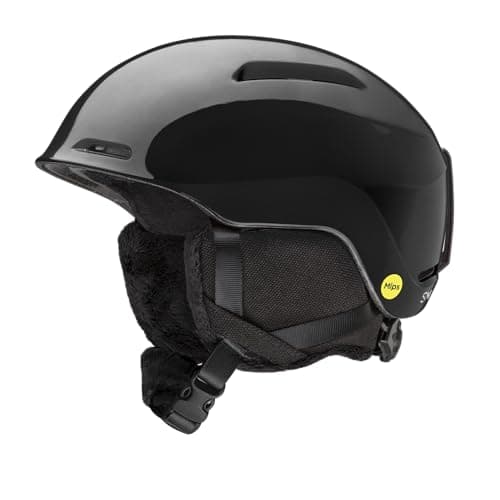
| 2 | Smith Glide Jr. Mips A child who complains about the weight of a helmet | $11 a dayon snow | 4.8/10 | $102.97 - View on Amazon |
| 3 | Giro Crue Mips A child mid-growth-spurt, where one size has to last two seasons | $11.00 a dayon snow | 4.6/10 | $82.46 - View on Amazon |
Prices last verified October 19, 2026. Prices move constantly; the figure on Amazon at the moment you click is the real one.
Why weight is the spec that matters most on a child
On an adult helmet, 50 g either way changes nothing you will notice. On a six-year-old it changes whether the helmet stays on. A child’s head is large relative to their neck strength, and a heavy helmet becomes a complaint by early afternoon, which becomes a helmet pushed back on the head, which is a helmet no longer protecting anything.
Only one of these three publishes a weight. Smith publishes 350 g for the Glide Jr. in youth medium; Giro publishes 520 g for the Crue in the same nominal size. That 170 g gap is the largest difference between these two helmets on any published figure, and it is the one a child will actually feel.
The size ranges, side by side
Measure the head first. The method takes ninety seconds and is on the kids’ helmet size chart, which also has the cross-brand table in full.
| Helmet | Published sizes | Head range covered |
|---|---|---|
| Smith Glide Jr. Mips | Youth XS, S, M | 48 - 59 cm |
| Giro Crue Mips | Youth XS, S, M | 48.5 - 59 cm |
| Retrospec Comstock Kids | Kids XS, Youth | 48 - 55 cm |
The Retrospec stops at 55 cm, which is a real limitation rather than a detail: a nine- or ten-year-old is frequently past it, and at that point the cheapest option on this page is not an option at all.
The dial range, and the second season it buys
Giro publishes something almost nobody else does: how much adjustment the dial actually provides. 6 cm inside a single size is roughly two years of head growth on a typical child, plus a vertical adjustment that changes how the helmet sits front to back.
That is the honest counter-argument to the Smith’s weight advantage. If your child is mid-growth-spurt and you are buying one helmet to cover two seasons, a published adjustment range is worth more than 170 g.
The rotational liner, and why it is the skip criterion
MIPS is a thin low-friction layer inside the shell that lets the helmet rotate a few millimeters against the head during an angled impact. A child catching an edge does not arrive at the snow squarely; they arrive at an angle, and an angle produces twist.
The Retrospec on this page is certified to both standards, has a dial, costs $39.99, and has no rotational liner in any version. Over two seasons at five days each, the step up to a helmet that has one is about $3.50 a day. That is why it is marked as the skip despite being a perfectly legitimate helmet, and the fuller explanation is here.
If your child wears glasses
The helmet is not the problem; the goggle is. Look for an over-the-glasses goggle rather than a different helmet, and check the two together for a gap above the goggle frame. The children’s goggle picks include two over-the-glasses options at the same price as the standard ones, and the helmet-and-goggle fit guide covers how to check the combination.
Should you buy one at all?
For a child, this is a genuinely reasonable question, and we get nothing if you decide against it. Our answer is still buy, for a specific reason: rental helmets are the worst-fitting item in any rental fleet, because the retention system has been adjusted by hundreds of other heads and children’s sizes turn over fastest.
Run it yourself against your own numbers on the buy versus rent page. It lists the rental rates we use as inputs, and it reaches the opposite conclusion for skis and boots, which we also say plainly.
The one hand-me-down to refuse
- Never a used helmet. A helmet protects by crushing, and a crushed liner does not crush twice. You cannot see whether a helmet has already done its job once, which makes a hand-me-down from a cousin the single worst piece of secondhand gear you can accept.
- Retire after any impact you noticed, even if the shell looks undamaged.
- Jackets, pants and goggles pass down fine, and that halves every cost-per-day figure on this page. It is the biggest lever in family ski economics and almost nobody publishes it.
Every pick, with the working
Each entry shows the published inputs, the axis scores they produce, and what you give up. The order is the computed order, not a commercial one, and the arithmetic is open underneath each score.
1 · A first helmet for a toddler who may not ski again
Retrospec Comstock Kids
Skip this one. Properly certified and genuinely cheap, but it has no rotational-impact liner. On our two-season convention the step up to a helmet that has one is about $3.50 per day on snow, and that is the wrong place to save money on a child.
Properly certified, dial-adjusted and $39.99, which makes it the cheapest legitimate route to getting a small child into a helmet. It has no rotational-impact liner, and on a two-season horizon the Mips helmets are only about three dollars a day more.
- Published price
- $39.99
- Cost per day on snow
- $4.00 a day
- Amortized over
- 2 seasons (10 days)
- Certified to
- ASTM F2040, CE EN 1077 Class B
- Rotational system
- None published
- Published sizes
- Kids XS 48-51 cm and Youth 52-55 cm
- Warranty
- Limited warranty; no term published
What it gets right
- ASTM F2040 and CE EN 1077 Class B at $39.99
- ErgoKnob dial adjuster
- Covers 48-55 cm, which reaches younger than most youth helmets
What you give up
- No rotational-impact system
- No published warranty term
The working behind the 5.0
- Cost per day on snow: 8.1
- $39.99 over 2 seasons at 5 days each = 10 days = $4.00 a day
- Published protection: 6.0
- ASTM F2040 (+4); CE EN 1077 (+2); no rotational-impact system (+0)
- Size availability: 3.2
- 2 published sizes (1.7 of 8.5); continuous in-size adjuster published (+1.5); range: Kids XS 48-51 cm and Youth 52-55 cm
- Warranty and support: 0.0
- no published term (0 of 6); no published crash replacement (+0); no published repair route (+0)
Axes with unpublished inputs are dropped and the remaining weights re-normalized, so a product is not punished for a manufacturer’s silence. Specifications compiled September 3, 2026 from Retrospec published specifications.
2 · A child who complains about the weight of a helmet
Smith Glide Jr. Mips
350 g in youth medium is the lightest published weight of any helmet in this ledger, and weight is the single thing that decides whether a six-year-old keeps a helmet on all day. Three youth sizes cover 48-59 cm, and the warranty runs three years.
- Published price
- $110
- Cost per day on snow
- $11 a day
- Amortized over
- 2 seasons (10 days)
- Certified to
- ASTM F2040, CE EN 1077:2007 Class B
- Rotational system
- Mips
- Published sizes
- Youth XS, S and M, 48-59 cm
- Weight
- 350 g
- Warranty
- Smith 3-year limited warranty
What it gets right
- 350 g published in youth medium, well under any adult helmet here
- ASTM F2040 and CE EN 1077:2007 Class B with a Mips liner
- Three youth sizes spanning 48-59 cm, the widest youth range Smith publishes
- Three-year warranty
What you give up
- $110 for a helmet a child will outgrow, which on our two-season convention is $11 a day on snow
- In-mold construction is lighter than a hard shell but less tolerant of being thrown in a car trunk
The working behind the 4.8
- Cost per day on snow: 3.0
- $110 over 2 seasons at 5 days each = 10 days = $11 a day
- Published protection: 9.0
- ASTM F2040 (+4); CE EN 1077 (+2); Mips rotational system (+3)
- Size availability: 4.9
- 3 published sizes (3.4 of 8.5); continuous in-size adjuster published (+1.5); range: Youth XS, S and M, 48-59 cm
- Warranty and support: 2.5
- 3 yr (2.5 of 6); no published crash replacement (+0); no published repair route (+0)
Axes with unpublished inputs are dropped and the remaining weights re-normalized, so a product is not punished for a manufacturer’s silence. Specifications compiled September 3, 2026 from Smith published specifications.
3 · A child mid-growth-spurt, where one size has to last two seasons
Giro Crue Mips
The most useful number Giro publishes here is the adjuster range: the dial covers 6 cm inside a single size, which is roughly two years of a child's head growth. That is the difference between one helmet and two.
- Published price
- $109.95
- Cost per day on snow
- $11.00 a day
- Amortized over
- 2 seasons (10 days)
- Certified to
- ASTM F2040-11, CE EN 1077
- Rotational system
- Mips
- Published sizes
- Youth XS 48.5-52 cm, S 52-55.5 cm, M 55.5-59 cm
- Weight
- 520 g
- Warranty
- Giro 1-year limited warranty
What it gets right
- Published 6 cm of dial adjustment inside a size, plus vertical tuning
- ASTM F2040-11 and CE EN 1077 with a Mips liner
- Hard-shell construction, which survives being packed badly
What you give up
- 520 g, 170 g heavier than the Smith Glide Jr., which a small child will feel by the afternoon
- One-year warranty
The working behind the 4.6
- Cost per day on snow: 3.0
- $109.95 over 2 seasons at 5 days each = 10 days = $11.00 a day
- Published protection: 9.0
- ASTM F2040 (+4); CE EN 1077 (+2); Mips rotational system (+3)
- Size availability: 4.9
- 3 published sizes (3.4 of 8.5); continuous in-size adjuster published (+1.5); range: Youth XS 48.5-52 cm, S 52-55.5 cm, M 55.5-59 cm
- Warranty and support: 1.5
- 1 yr (1.5 of 6); no published crash replacement (+0); no published repair route (+0)
Axes with unpublished inputs are dropped and the remaining weights re-normalized, so a product is not punished for a manufacturer’s silence. Specifications compiled September 3, 2026 from Giro published specifications.
Prices last verified October 19, 2026. Prices move constantly; the figure on Amazon at the moment you click is the real one.
Questions people actually ask
What size ski helmet does my child need?
Measure the head about a centimeter above the eyebrows and around the widest point at the back, then match the centimeter figure to the maker’s own chart. The cross-brand chart and the measuring steps are here.
Do kids need MIPS in a ski helmet?
It is not required by any standard. On the published prices here, a rotational-impact liner costs about $3.50 per day on snow over two seasons, which we think makes it an easy yes for a child.
Can a child wear an adult small helmet?
If it genuinely fits by measurement, yes, and once a head passes about 55 cm the adult small sizes are often the only option. Check the shape as well as the number: adult helmets are cut for adult head proportions and can sit differently front to back.
How long does a kids ski helmet last?
Usually until the head outgrows it, which for a young child is one to three seasons. Replace it immediately after any impact you noticed, regardless of how new it is.
Are ski helmets required for children?
Most resort ski schools require them for children in lessons, and many resorts require them for all children on the mountain. Check the specific resort, but plan on needing one.