Interchangeable lens ski goggles, and whether you need two lenses
Swapping lenses solves a real problem, and half the people who buy a second lens never fit it. Here is who genuinely benefits and what the systems cost.
By Sawyer V. · Published
We have not tested this gear. Everything below is compiled from published specifications and published safety standards, and the arithmetic is public so you can check it. This page carries affiliate links: if you buy through one we earn a commission at no extra cost to you, and it does not change the order of the picks. Full disclosure.
The short answer
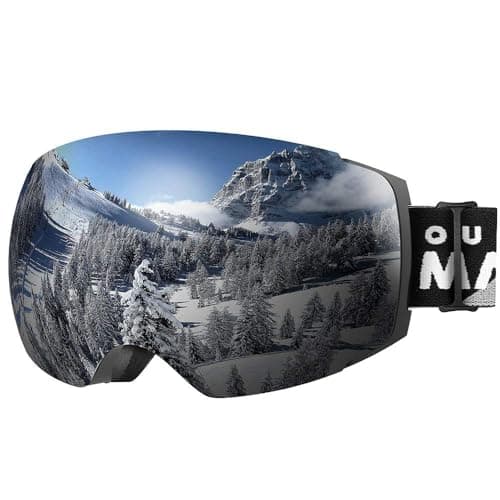
A lens swap system is worth having if you ski in genuinely different light: flat gray mornings and bright afternoons need different tints, and one lens is always a compromise. On published figures the OutdoorMaster PRO Magnetic at $49.99 gives you a magnetic swap for the least money, and the Smith Squad ChromaPop at $155 is the only goggle here that publishes two lenses in the box, which is the version of this feature that actually gets used.
| # | Pick | Best for | Score | Price |
|---|---|---|---|---|
| 1 | OutdoorMaster PRO Magnetic A skier who wants to change lenses without taking gloves off | $2.00 a dayon snow | 6.1/10 | $39.99 - View on Amazon |
| 2 | Bolle Y7 OTG A skier who wears glasses and does not want contacts | $3.60 a dayon snow | 5.5/10 | Check price on Amazon |
| 3 | Smith Squad ChromaPop Anyone who skis in more than one kind of light | $6.20 a dayon snow | 5.3/10 | $119.95 - View on Amazon |
Prices last verified October 19, 2026. Prices move constantly; the figure on Amazon at the moment you click is the real one.
The problem a second lens solves
Goggle lenses are tinted, and a tint that works in one light is wrong in another. A dark lens that is perfect at noon on a bright day makes a flat gray afternoon genuinely dangerous, because you cannot see the shape of the snow in front of you. A pale lens that reveals every bump in flat light is blinding at altitude on a clear day.
The measure of how much light a lens lets through is VLT, or visible light transmission, published as a percentage. Our VLT guide covers the whole range, but the short version is that low VLT is for bright days and high VLT is for storms, and no single number is right for both.
| VLT | Conditions | How it feels wrong in the other light |
|---|---|---|
| 5 - 20% | Bright sun, high altitude, spring | Nearly opaque in cloud or snowfall |
| 20 - 40% | Mixed, the all-round compromise | Slightly dark in a storm, slightly bright at noon |
| 40 - 60% | Overcast, light snow | Uncomfortably bright in sun |
| 60% and up | Heavy storm, night skiing | Unusable in daylight |
The honest question first: do you need this?
For a family taking one ski trip a year, probably not, and this page is going to say so before it ranks anything. One mid-range lens somewhere in the 20-40% band covers the majority of days acceptably, and a second lens that lives in a drawer at home is money spent on a feature you did not use.
Lens swapping earns its keep in three situations:
- You ski more than a handful of days a season, so you will meet both extremes of light rather than one.
- You ski in a region with genuinely variable weather, where a bluebird morning and a whiteout afternoon are the same day.
- You ski in the evening, where a low-light lens is not a luxury.
If none of those apply, buy one goggle with a good all-round lens and spend the difference on something you will use. That is the same conclusion our main goggle roundup reaches for most readers.
The three swap systems
Magnetic
Magnets around the frame hold the lens, and it comes off with a pull and goes on by dropping it near the frame. This is the system that actually gets used on the mountain, because it works with gloves on and takes about ten seconds. The trade is that a magnetic lens can be knocked loose in a heavy crash, which is why most systems now add small mechanical catches as well.
Clip and lever systems
Small levers on the frame release the lens. More secure than magnets alone and genuinely fiddly in gloves, particularly in cold that has stiffened the frame. These are a change-it-in-the-lodge system rather than a change-it-on-the-lift system.
Flex-out frames
The oldest approach: the frame flexes and the lens pops out of a channel. Cheap, secure and unpleasant in the cold, because cold frame plastic is stiff and you will be pushing hard on a lens you are trying not to scratch. Fine at home, awkward anywhere else.
Included lenses beat purchasable ones
This is the most practical thing on the page. A goggle sold with two lenses in the box costs one decision. A goggle sold with one lens and a compatible spare available separately costs a second decision, a second purchase and, in practice, usually never happens.
Of the three goggles here, only the Smith Squad publishes two lenses included. Both the OutdoorMaster PRO Magnetic and the Bolle Y7 publish one. That is why the published lenses included figure is scored directly in our rankings rather than treated as a footnote — the working is printed under each pick.
If you are buying a spare separately, check three things before you pay: that the spare is listed for your exact frame model, its published VLT, and whether it publishes the same anti-fog treatment as the original. Cheaper aftermarket lenses frequently do not.
What else to check while you are in here
- UV protection published at 100%. All three picks here publish it, and any goggle that does not should be dismissed regardless of price. The tint is not what stops UV.
- A double lens with an air gap. Non-negotiable, and the largest single anti-fog feature there is.
- A published anti-fog treatment on the inner pane. All three picks publish one.
- Over-the-glasses fit if you wear glasses. Two of these publish an OTG design. Our page for skiers who wear glasses covers that properly.
- Helmet compatibility. Check the goggle against the helmet you actually own, not against a photo. A gap at the brow is a cold forehead and disrupted venting.
Swapping a lens without ruining it
- Do it indoors if you can. Cold hands drop lenses.
- Hold both lenses by the edges only, always.
- Put the removed lens straight into its pouch, not into a jacket pocket with a zip and a lift pass.
- Check the new lens is seated all the way round before you go out, particularly on a magnetic system.
- If the inner pane has any moisture on it, let it air dry before fitting. Never wipe it.
And store both lenses properly at the end of the season, out of the soft bag and out of sunlight. The goggle care page covers the season-long routine and the summer storage list covers the eight months where most goggle damage actually happens.
Every pick, with the working
Each entry shows the published inputs, the axis scores they produce, and what you give up. The order is the computed order, not a commercial one, and the arithmetic is open underneath each score.
1 · A skier who wants to change lenses without taking gloves off
OutdoorMaster PRO Magnetic
A magnetic lens swap at a published $49.99, with 100% UV400 and an over-the-glasses frame. Spare lenses are a separate purchase, so the real cost of a two-lens setup lands closer to the Smith than the sticker suggests.
- Published price
- $49.99
- Cost per day on snow
- $2.00 a day
- Amortized over
- 5 seasons (25 days)
- Certified to
- Not published
- UV protection
- 100% published
- Anti-fog
- Anti-fog coating
- Lenses included
- 1
- Published sizes
- One size
- Warranty
- No term published for goggles
What it gets right
- Magnetic lens change, workable in gloves on a lift
- 100% UV400 protection and an anti-fog coating
- Over-the-glasses frame at a published $49.99
What you give up
- One lens included; the interchangeable system only pays off after you buy another
- No published impact standard
The working behind the 6.1
- Cost per day on snow: 9.6
- $49.99 over 5 seasons at 5 days each = 25 days = $2.00 a day
- Published protection: 6.0
- 100% UV protection published (+4); no published impact standard (+0); anti-fog treatment published (+2); single lens (+0)
- Size availability: not scored
- Sold in one size, so size availability does not apply.
- Warranty and support: 0.0
- no published term (0 of 6); no published crash replacement (+0); no published repair route (+0)
Axes with unpublished inputs are dropped and the remaining weights re-normalized, so a product is not punished for a manufacturer’s silence. Specifications compiled September 3, 2026 from OutdoorMaster published specifications.
2 · A skier who wears glasses and does not want contacts
Bolle Y7 OTG
Skip this one. Skip it for this specific question. It is an excellent over-the-glasses goggle and it is on this page as the one-lens comparison point: it publishes a single lens, so if lens swapping is what you came for, the other two answer it and this one does not.
Built around the frame depth that lets a pair of glasses sit inside without the arms pressing, which is the only thing that actually distinguishes an over-the-glasses goggle. Double lens, treated inner surface, 100% UV.
- Published price
- $90
- Cost per day on snow
- $3.60 a day
- Amortized over
- 5 seasons (25 days)
- Certified to
- Not published
- UV protection
- 100% published
- Anti-fog
- Anti-fog and anti-scratch lens treatment
- Lenses included
- 1
- Published sizes
- One size
- Warranty
- No term published for goggles
Bolle publishes several Y7 OTG lens variants; the photochromic version is published at a higher price.
What it gets right
- Purpose-built over-the-glasses frame depth rather than a normal goggle sold as OTG
- 100% UV protection with anti-fog and anti-scratch lens treatment
- Double lens with vents top and bottom, the construction that resists fogging
What you give up
- One lens in the box, so flat-light days mean buying a second
- Deeper frame is bulkier against a helmet brow than a standard goggle
The working behind the 5.5
- Cost per day on snow: 8.4
- $90 over 5 seasons at 5 days each = 25 days = $3.60 a day
- Published protection: 6.0
- 100% UV protection published (+4); no published impact standard (+0); anti-fog treatment published (+2); single lens (+0)
- Size availability: not scored
- Sold in one size, so size availability does not apply.
- Warranty and support: 0.0
- no published term (0 of 6); no published crash replacement (+0); no published repair route (+0)
Axes with unpublished inputs are dropped and the remaining weights re-normalized, so a product is not punished for a manufacturer’s silence. Specifications compiled September 3, 2026 from Bolle published specifications.
3 · Anyone who skis in more than one kind of light
Smith Squad ChromaPop
The only goggle here that ships with a second lens in the box, which is the single change that makes a goggle usable in both bright sun and flat light. That, plus 100% UV and a treated inner lens, is the whole specification worth paying for.
- Published price
- $155
- Cost per day on snow
- $6.20 a day
- Amortized over
- 5 seasons (25 days)
- Certified to
- Not published
- UV protection
- 100% published
- Anti-fog
- Fog-X anti-fog inner lens
- Lenses included
- 2
- Published sizes
- One size
- Warranty
- No term published for goggles
What it gets right
- Two lenses in the box, so a flat-light day does not need a second purchase
- 100% UV protection and a Fog-X treated inner lens
- Cylindrical frame that sits flat against most helmet brows
What you give up
- $155 is more than three of the helmets on this site
- Smith publishes no impact standard for this goggle, so we cannot score it on one
- Sold in one frame size; the smaller and larger faces need a different model entirely
The working behind the 5.3
- Cost per day on snow: 6.5
- $155 over 5 seasons at 5 days each = 25 days = $6.20 a day
- Published protection: 8.0
- 100% UV protection published (+4); no published impact standard (+0); anti-fog treatment published (+2); 2 lenses included (+2)
- Size availability: not scored
- Sold in one size, so size availability does not apply.
- Warranty and support: 0.0
- no published term (0 of 6); no published crash replacement (+0); no published repair route (+0)
Axes with unpublished inputs are dropped and the remaining weights re-normalized, so a product is not punished for a manufacturer’s silence. Specifications compiled September 3, 2026 from Smith published specifications.
Prices last verified October 19, 2026. Prices move constantly; the figure on Amazon at the moment you click is the real one.
Questions people actually ask
Are interchangeable lens goggles worth it?
If you ski more than a handful of days a season, or in genuinely variable weather, yes: no single tint works in both bright sun and flat light. For a family taking one trip a year, one all-round lens in the 20 to 40% VLT band is usually enough.
Are magnetic goggle lenses secure?
Modern magnetic systems generally add small mechanical catches as well as magnets, which addresses the obvious worry. Magnets are the only swap system that genuinely works with gloves on and in under ten seconds, which is why they are the system people actually use on the mountain.
What VLT should a spare goggle lens be?
Buy the pair at opposite ends of your conditions rather than two similar numbers. Something around 15 to 20% for bright days and something above 45% for storms and flat light covers most skiing. Two lenses that are both in the middle give you nothing.
Can I use any spare lens with my goggles?
No. Lenses are model-specific. Check the spare is listed for your exact frame, check its published VLT, and check it publishes the same anti-fog treatment as the original, because cheaper aftermarket lenses frequently do not.
How do I change a goggle lens without damaging it?
Indoors if possible, holding both lenses by the edges only, and never touching the inside surface, which carries the anti-fog coating a glove will remove permanently. Put the removed lens straight into its pouch rather than a pocket.