UV, snow blindness, and why a dark lens is not the same as a safe one
Snow reflects UV back up at you, altitude increases it, and cloud does not stop it. The protection that matters is a published figure, not how dark the lens looks.
By Sawyer V. · Published
We have not tested this gear. Everything below is compiled from published specifications and published safety standards, and the arithmetic is public so you can check it. This page carries affiliate links: if you buy through one we earn a commission at no extra cost to you, and it does not change the order of the picks. Full disclosure.
The short answer
Snow reflects a large share of the ultraviolet light hitting it, so you receive UV from above and below at once, and it intensifies with altitude. Extended unprotected exposure causes photokeratitis, or snow blindness - painful, temporary, and it appears hours after the exposure. Every goggle worth buying publishes 100 percent UV protection, including the cheapest ones. Tint is not protection: a dark lens without a UV filter is worse than no lens at all.
| # | Pick | Best for | Score | Price |
|---|---|---|---|---|
| 1 | OutdoorMaster Falcon Kids A first goggle, or a spare in the car for the one that gets lost | $3.00 a dayon snow | 5.8/10 | $24.99 - View on Amazon |
| 2 | Bolle Nevada Junior A child between the junior and adult goggle sizes | $4 a dayon snow | 5.4/10 | $31.95 - View on Amazon |
| 3 | Smith Squad ChromaPop Anyone who skis in more than one kind of light | $6.20 a dayon snow | 5.3/10 | $119.95 - View on Amazon |
| 4 | Smith Snowday A young child who will only ever own one lens, glasses or not | $5 a dayon snow | 5.1/10 | $50.00 - View on Amazon |
Prices last verified October 22, 2026. Prices move constantly; the figure on Amazon at the moment you click is the real one.
Why snow doubles the exposure
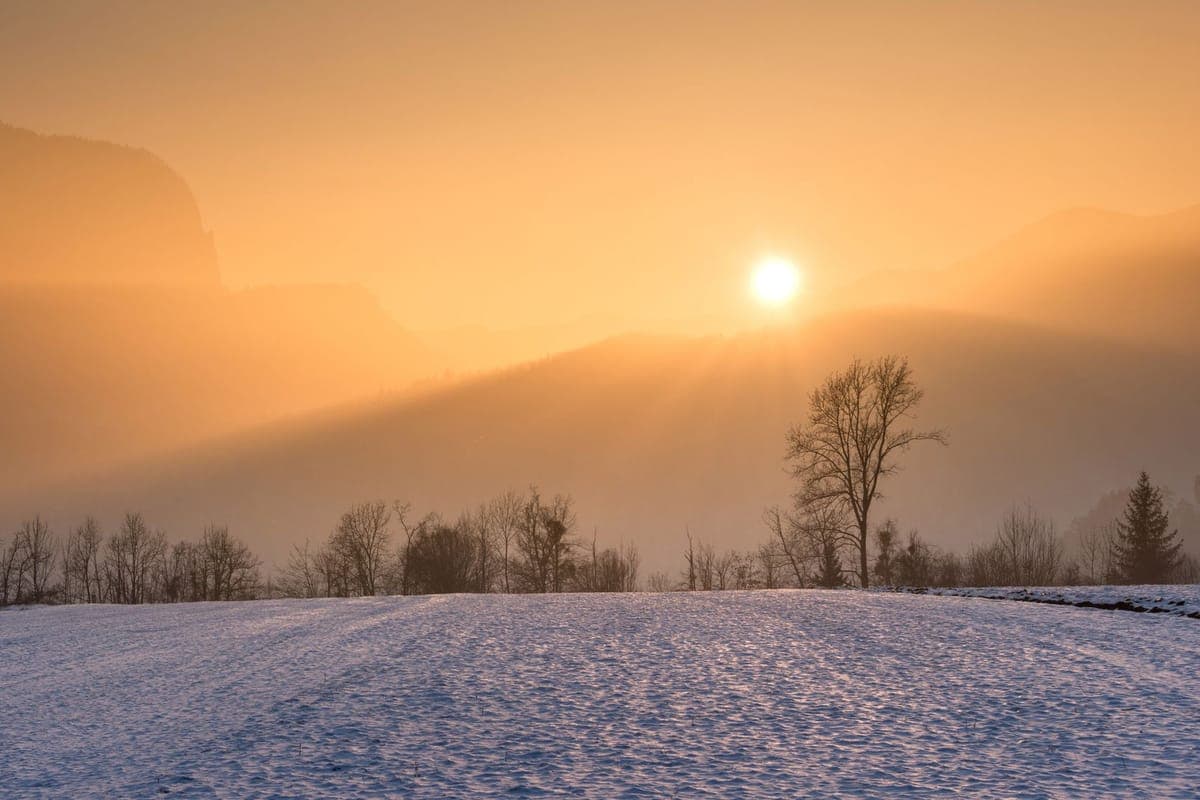
Fresh snow is one of the most reflective natural surfaces there is. A large proportion of the ultraviolet light that reaches it bounces back up, which means that on a snowfield you are being illuminated from above by the sky and from below by the ground at the same time.
Altitude compounds it. There is less atmosphere above a mountain to absorb UV, so the light arriving at 9,000 feet is more intense than the same sunlight at sea level. Put the two together and a bright day on a high snowfield is one of the highest UV environments most people ever stand in.
What snow blindness actually is
Photokeratitis is sunburn of the cornea, the clear surface at the front of the eye. Like sunburn of the skin, it is caused by UV exposure and, like sunburn, it does not hurt while it is happening.
The symptoms turn up several hours later, typically that evening: a gritty feeling as though there is sand in the eye, pain, watering, redness, blurred vision and genuine sensitivity to light. It is temporary and the surface heals over a day or two, but for those days it is disabling, and it is entirely preventable by wearing eye protection you almost certainly already own.
Children are at higher risk, both because they have less lifetime accumulation of eye lens changes that filter some UV in adults, and for the simple practical reason that a child in a lesson spends three hours in the open and will not tell you their eyes hurt until later.
Tint and UV protection are unrelated
This is the part that matters most and is least understood. The darkness of a lens is about visible light. UV protection is a separate coating or material property, dealing with a wavelength you cannot see at all.
| Lens | Visible light | UV | Effect on your eye |
|---|---|---|---|
| No lens, bright day | Full | Full | Pupil constricts, which limits some of the UV entering |
| Dark lens, no UV filter | Reduced | Full | Pupil dilates in the dimmer view and lets MORE UV in |
| Clear lens with 100% UV | Full | Blocked | Fully protected, and correct for night or storm |
| Dark lens with 100% UV | Reduced | Blocked | Protected and comfortable in bright sun |
Read the second row. A dark lens with no UV filter is actively worse than nothing, because your pupil opens up in response to the dimmer image and admits more of the radiation that does the damage. That is the reason to check the published figure rather than judging by appearance, and it is the reason cheap novelty eyewear is a genuine hazard rather than merely a poor product.
What to check, and the good news
Look for a maker publishing 100 percent UV protection, or the equivalent phrasing of UV400, which means blocking wavelengths up to 400 nanometers. That covers UVA and UVB.
The good news is that this is not the expensive part of a goggle. Every goggle in this site’s ledger publishes 100 percent UV protection, from the most expensive adult model down to the cheapest kids frame, which publishes it alongside an anti-fog coating at the lowest price in the category. There is no reason to make a trade here and no budget at which you should.
- Check the published figure, not the tint. If a maker does not state UV protection at all, that absence is information.
- VLT is a separate number. It describes visible light and it is how you match a lens to conditions. The VLT guide covers it.
- Polarization is a third, unrelated thing. It cuts glare and says nothing about UV. The comparison is here.
Wear them all day, including the gray days
The behavior that causes most snow blindness is not skiing without goggles. It is pushing goggles up onto the helmet on an overcast morning, because there is no glare to make you want them, and leaving them there.
If the light is flat, the answer is a higher-VLT lens rather than no lens: a yellow or rose lens above about 50 percent lets in plenty of visible light while still blocking UV. The youth goggle in this ledger publishes 36% VLT, which is a deliberately middling figure chosen so that a child who owns one lens is never in the position of taking it off.
Parking goggles on a forehead has a second cost as well: warm damp skin against a cold inner lens is the classic fogging setup, which is why the anti-fog page gives the same advice for completely different reasons.
Skin has the same problem and a different answer. Sunscreen for skiing covers the five places reflected light actually burns - the underside of the nose, the lips, the ears, the goggle gap and the neck - and what the published SPF and water-resistance figures really mean.
Children, specifically
- A kids frame, not a small adult one. An adult frame gaps under the cheekbones and lets reflected light in from below, which is the direction the snow is sending it. The fit guide has the checks.
- Published UV protection is the only non-negotiable specification. Everything else on a first goggle is optics rather than safety.
- Buy a spare. Goggles get lost, and the alternative to a lost goggle is a child skiing without one.
- Check they are actually wearing them. Children push goggles up when they cannot see well, which usually means the lens is too dark or the goggle is fogging.
The kids goggle roundup ranks the field on exactly these published figures, and the cheapest one on it publishes everything that matters.
Sunglasses are not equivalent
Good sunglasses with a published UV filter protect against light from in front. On snow, a large share arrives from below and around the sides, which is why goggles seal against the face and sunglasses do not. Add that sunglasses fall off, do not stop wind, and are useless in falling snow, and the full comparison lands where you would expect.
For standing around at a base area, sunglasses are fine. For a day on the mountain, goggles, and for a bright day at altitude, goggles with a published UV figure and a lens dark enough that nobody wants to take them off.
The exception is the sports where sunglasses are the right eyewear - cross-country, snowshoeing, spring afternoons. There the lens has to be far darker than a high-street pair and still publish a UV figure: snow sunglasses compared on published VLT and side-shield coverage covers that, including the pairs with removable shields that block the light arriving from below.
Every pick, with the working
Each entry shows the published inputs, the axis scores they produce, and what you give up. The order is the computed order, not a commercial one, and the arithmetic is open underneath each score.
1 · A first goggle, or a spare in the car for the one that gets lost
OutdoorMaster Falcon Kids
The cheapest published price here that still carries 100% UV protection and an anti-fog coating, which are the only two specs that matter on a child's first goggle. Everything above this price is buying optics, not safety.
- Published price
- $29.99
- Cost per day on snow
- $3.00 a day
- Amortized over
- 2 seasons (10 days)
- Certified to
- Not published
- UV protection
- 100% published
- Anti-fog
- Anti-fog coating
- Lenses included
- 1
- Published sizes
- Kids
- Warranty
- No term published for goggles
What it gets right
- 100% UV protection and an anti-fog coating at a published $29.99
- Cheap enough that losing it on a chairlift is annoying rather than expensive
What you give up
- No published VLT figure
- Single lens, no interchange system
The working behind the 5.8
- Cost per day on snow: 8.9
- $29.99 over 2 seasons at 5 days each = 10 days = $3.00 a day
- Published protection: 6.0
- 100% UV protection published (+4); no published impact standard (+0); anti-fog treatment published (+2); single lens (+0)
- Size availability: not scored
- Sold in one size, so size availability does not apply.
- Warranty and support: 0.0
- no published term (0 of 6); no published crash replacement (+0); no published repair route (+0)
Axes with unpublished inputs are dropped and the remaining weights re-normalized, so a product is not punished for a manufacturer’s silence. Specifications compiled September 3, 2026 from OutdoorMaster published specifications.
2 · A child between the junior and adult goggle sizes
Bolle Nevada Junior
An over-the-glasses junior frame with vented anti-fog construction at forty dollars, ten under the non-OTG Smith, which makes the glasses question free rather than a premium.
- Published price
- $40
- Cost per day on snow
- $4 a day
- Amortized over
- 2 seasons (10 days)
- Certified to
- Not published
- UV protection
- 100% published
- Anti-fog
- Anti-fog inner lens coating with Flow-Tech venting
- Lenses included
- 1
- Published sizes
- Junior
- Warranty
- No term published for goggles
What it gets right
- Over-the-glasses junior frame with an anti-fog inner coating and Flow-Tech venting
- 100% UV protection and an anti-scratch coating
- Double-density face foam with a fleece lining, which is the part children complain about
What you give up
- Single lens included
- Bolle publishes no VLT figure for the junior colorways we could read, so you cannot match it to conditions in advance
The working behind the 5.4
- Cost per day on snow: 8.1
- $40 over 2 seasons at 5 days each = 10 days = $4 a day
- Published protection: 6.0
- 100% UV protection published (+4); no published impact standard (+0); anti-fog treatment published (+2); single lens (+0)
- Size availability: not scored
- Sold in one size, so size availability does not apply.
- Warranty and support: 0.0
- no published term (0 of 6); no published crash replacement (+0); no published repair route (+0)
Axes with unpublished inputs are dropped and the remaining weights re-normalized, so a product is not punished for a manufacturer’s silence. Specifications compiled September 3, 2026 from Bolle published specifications.
3 · Anyone who skis in more than one kind of light
Smith Squad ChromaPop
The only goggle here that ships with a second lens in the box, which is the single change that makes a goggle usable in both bright sun and flat light. That, plus 100% UV and a treated inner lens, is the whole specification worth paying for.
- Published price
- $155
- Cost per day on snow
- $6.20 a day
- Amortized over
- 5 seasons (25 days)
- Certified to
- Not published
- UV protection
- 100% published
- Anti-fog
- Fog-X anti-fog inner lens
- Lenses included
- 2
- Published sizes
- One size
- Warranty
- No term published for goggles
What it gets right
- Two lenses in the box, so a flat-light day does not need a second purchase
- 100% UV protection and a Fog-X treated inner lens
- Cylindrical frame that sits flat against most helmet brows
What you give up
- $155 is more than three of the helmets on this site
- Smith publishes no impact standard for this goggle, so we cannot score it on one
- Sold in one frame size; the smaller and larger faces need a different model entirely
The working behind the 5.3
- Cost per day on snow: 6.5
- $155 over 5 seasons at 5 days each = 25 days = $6.20 a day
- Published protection: 8.0
- 100% UV protection published (+4); no published impact standard (+0); anti-fog treatment published (+2); 2 lenses included (+2)
- Size availability: not scored
- Sold in one size, so size availability does not apply.
- Warranty and support: 0.0
- no published term (0 of 6); no published crash replacement (+0); no published repair route (+0)
Axes with unpublished inputs are dropped and the remaining weights re-normalized, so a product is not punished for a manufacturer’s silence. Specifications compiled September 3, 2026 from Smith published specifications.
4 · A young child who will only ever own one lens, glasses or not
Smith Snowday
Smith's youth goggle on the RC36 lens, which is the useful part: 36% light transmission is the middle of the range, so one lens works on a gray morning and a bright afternoon without the child noticing either way. The spherical Carbonic-x lens and Fog-X treated inner lens are the same optical package Smith puts in its adult frames.
- Published price
- $50
- Cost per day on snow
- $5 a day
- Amortized over
- 2 seasons (10 days)
- Certified to
- Not published
- UV protection
- 100% published
- Anti-fog
- Fog-X anti-fog inner lens
- Lenses included
- 1
- Published sizes
- Youth fit medium
- Warranty
- No term published for goggles
What it gets right
- 36% VLT on the RC36 lens, which covers most of the conditions a family actually skis in
- 100% UVA and UVB protection with a Fog-X treated inner lens
- Spherical Carbonic-x lens published for distortion-free optics and impact resistance
- Published over-the-glasses compatibility, with a floating foam membrane that takes the pressure off eyeglass temples
- Dual-slide strap for size adjustment and a silicone-backed strap that stays put on a helmet
What you give up
- Single lens, so a genuinely dark or genuinely flat day is a compromise
- Published as a youth fit MEDIUM, so it is too big for the smallest faces
- $50 published for the RC36 lens, where the mirrored lenses are $60
- No warranty term published for Smith goggles
The working behind the 5.1
- Cost per day on snow: 7.4
- $50 over 2 seasons at 5 days each = 10 days = $5 a day
- Published protection: 6.0
- 100% UV protection published (+4); no published impact standard (+0); anti-fog treatment published (+2); single lens (+0)
- Size availability: not scored
- Sold in one size, so size availability does not apply.
- Warranty and support: 0.0
- no published term (0 of 6); no published crash replacement (+0); no published repair route (+0)
Axes with unpublished inputs are dropped and the remaining weights re-normalized, so a product is not punished for a manufacturer’s silence. Specifications compiled October 18, 2026 from Smith published specifications.
Prices last verified October 22, 2026. Prices move constantly; the figure on Amazon at the moment you click is the real one.
Questions people actually ask
What is snow blindness?
Photokeratitis: sunburn of the cornea caused by ultraviolet light, usually reflected off snow. It does not hurt while it is happening and appears hours later, typically that evening, as a gritty painful sensation with watering and light sensitivity. It heals in a day or two and is entirely preventable.
Do dark ski goggles protect against UV?
Not by being dark. Tint controls visible light; UV protection is a separate property. A dark lens with no UV filter is worse than nothing, because your pupil dilates in the dimmer view and lets more UV in. Check for a published 100 percent UV or UV400 figure.
Do I need goggles on a cloudy day?
Yes. A significant proportion of UV passes through cloud, and a flat overcast day on snow is one of the classic ways people damage their eyes, because there is no glare or heat to warn them. Use a higher-VLT lens rather than no lens.
Are sunglasses enough for skiing?
No. Sunglasses protect against light from in front, and on snow a large share arrives from below and around the sides. They also fall off, do not seal against wind, and are useless in falling snow. They are fine for standing at a base area and not for a day on the mountain.
What UV protection do kids ski goggles need?
The same as adults: a published 100 percent UV or UV400 figure, which even the cheapest kids goggles state. Use a kids frame rather than a small adult one, because an adult frame gaps under the cheekbones and lets in exactly the reflected light you are trying to block.
Sources
- OutdoorMaster published Falcon Kids UV protection and anti-fog coating
- Smith published Snowday RC36 lens, UVA and UVB protection and lens construction
- Smith RC36 lens published at 36% VLT (retailer spec sheet; Smith names the lens on the product page but no longer publishes a VLT table of its own)
- Smith published Squad ChromaPop UV protection and lens count
- Bolle published Nevada Junior UV protection and anti-scratch coating