Snowboard goggles, and whether they are different at all
The short answer is no, with two genuine exceptions that come from how a snowboarder actually spends the day. Three picked on published specifications.
By Sawyer V. · Published
We have not tested this gear. Everything below is compiled from published specifications and published safety standards, and the arithmetic is public so you can check it. This page carries affiliate links: if you buy through one we earn a commission at no extra cost to you, and it does not change the order of the picks. Full disclosure.
The short answer
Snowboard goggles and ski goggles are the same product - there is no separate standard and no separate construction. Two things genuinely matter more for snowboarding: a replaceable or second lens, because you will land on your face more, and a frame that closes the gap with your helmet, because you are looking up the hill from a sitting position several times an hour.
| # | Pick | Best for | Score | Price |
|---|---|---|---|---|
| 1 | OutdoorMaster PRO Magnetic A skier who wants to change lenses without taking gloves off | $2.00 a dayon snow | 6.1/10 | $39.99 - View on Amazon |
| 2 | Smith Squad ChromaPop Anyone who skis in more than one kind of light | $6.20 a dayon snow | 5.3/10 | $119.95 - View on Amazon |
| 3 | Bolle Y7 OTG A skier who wears glasses and does not want contacts | $3.60 a dayon snow | 5.5/10 | Check price on Amazon |
Prices last verified October 19, 2026. Prices move constantly; the figure on Amazon at the moment you click is the real one.
Start with the honest answer
There is no such thing as a snowboard goggle in any technical sense. No maker builds a separate product, no standard distinguishes them, and the goggles sold under snowboard branding are the same frames sold under ski branding with different graphics.
This site says the same thing about helmets - the ski-against-snowboard helmet page finds the difference is marketing rather than certification - and the goggle case is even clearer, because there is no certification to differ on in the first place.
So this page is really the goggle advice, weighted for how a snowboarder spends a day. Two weightings genuinely change.
The two things that do change
You will damage a lens sooner
A learning snowboarder falls forward onto their hands and face far more often than a learning skier does, and a goggle lens pressed into snow and gravel scratches. A scratched lens in flat light is genuinely dangerous, because you stop being able to read the bumps in front of you.
Which makes a second lens or a replaceable lens system worth more here than it is for a skier. The interchangeable lens roundup covers the systems, and the practical point is that a goggle you can re-lens for thirty dollars beats one you replace entirely for eighty.
You spend more time looking up
A snowboarder sits down to strap in, sits down after a fall, and sits down to rest, and from a seated position you look up the hill - which means the top edge of the goggle is in your eyeline far more than it is for a skier.
A frame that sits flush against the helmet brow, with no gap, matters for comfort as well as for the cold strip of forehead everyone complains about. The helmet and goggle fit page covers closing that gap, and it is worth reading before buying either item.
The three, compared
| OutdoorMaster PRO | Smith Squad | Bolle Y7 OTG | |
|---|---|---|---|
| Published price | $49.99 | $155.00 | $90.00 |
| Lenses included | 1 | 2 | 1 |
| Lens change | Magnetic | Published quick-change | Not published |
| Over-the-glasses | Yes | No | Yes |
| 100% UV protection | Published | Published | Published |
| Anti-fog | Coating published | Fog-X anti-fog inner lens | Anti-fog and anti-scratch |
| Published warranty term | None | None | None |
| Best for | Almost everyone | Flat light, and a spare lens | Glasses, at a price |
Two rows are worth pausing on. The Smith is the only goggle here that includes a second lens, which for a snowboarder is worth more than it looks - a scratched lens is a real possibility in a first season. And none of the three publishes a warranty term, which is normal in goggles and worth knowing before you assume otherwise.
The picks
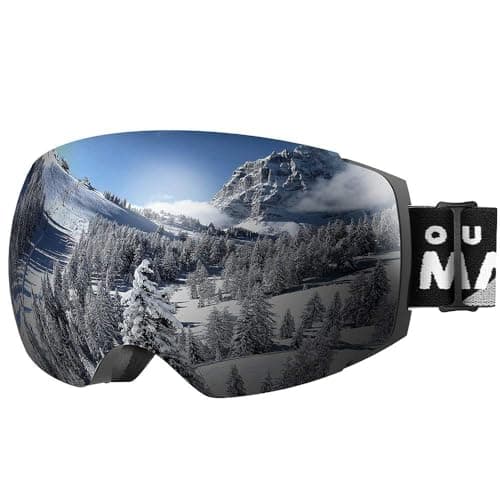
OutdoorMaster PRO Magnetic
The pick, and the reason is the magnetic lens system rather than the price. A lens that comes off and on with magnets can be swapped on a chairlift with gloves on, which means you will actually swap it when the light changes rather than deciding it is not worth the trouble.
For a snowboarder specifically, that same mechanism is what makes a scratched lens a thirty-second fix instead of a new goggle. If you are going to land on your face this winter - and in a first season you are - buy the goggle that re-lenses easily.
It also publishes an over-the-glasses frame at $49.99, which is the cheapest published OTG fit in this ledger. The limitation is that it ships with one lens: the swap mechanism is excellent and the second lens is a separate purchase.
The VLT guide explains which tint to swap to and when.
Smith Squad ChromaPop
The pick if you ride a lot of flat light, which in practice means trees, storms and late afternoons. The optics are the reason: a lens designed to increase contrast is the difference between seeing a bump and discovering it.
It is the most expensive goggle in this ledger at a published $155, and it is the only one that includes a second lens and publishes a named anti-fog treatment on the inner lens rather than a generic coating. For a first season on a snowboard, those two facts are the argument - not the optics. The flat-light roundup covers that problem properly.
Bolle Y7 OTG
Marked as the skip above, and the reason is positional rather than a fault. It is a genuine over-the-glasses frame with published 100% UV protection and an anti-fog and anti-scratch treatment, at $90.
The problem is that the OutdoorMaster publishes an OTG fit too, for forty dollars less, and the Smith includes a second lens for sixty-five dollars more. If you wear glasses and have tried a Bolle frame before and liked it, buy it. The goggles-for-glasses page covers OTG frames and the contact-lens alternative.
The thing that will actually annoy you
Fogging, and a snowboarder gets it worse for a mechanical reason: goggles sat on your forehead while you strap in, or pushed up while you sit, fill with warm damp air from your face and fog the moment you pull them down.
Two rules fix most of it. Do not put goggles on your forehead - put them on your eyes or in a bag. And never wipe the inside of a lens with anything, because the anti-fog coating is a surface treatment and wiping removes it permanently. The anti-fog page covers the causes and the fixes, and the goggle care page covers cleaning and storage.
The rest of the snowboard kit
A helmet first, always, and the same helmet works for both sports. The snowboard helmet roundup covers certified picks. Then wrist guards, because beginner snowboard falls land on outstretched hands - compared on what the makers publish here.
Then boots, which are the only hardware worth buying before you can ride properly. The snowboard boots roundup explains why.
Every pick, with the working
Each entry shows the published inputs, the axis scores they produce, and what you give up. The order is the computed order, not a commercial one, and the arithmetic is open underneath each score.
1 · A skier who wants to change lenses without taking gloves off
OutdoorMaster PRO Magnetic
A magnetic lens swap at a published $49.99, with 100% UV400 and an over-the-glasses frame. Spare lenses are a separate purchase, so the real cost of a two-lens setup lands closer to the Smith than the sticker suggests.
- Published price
- $49.99
- Cost per day on snow
- $2.00 a day
- Amortized over
- 5 seasons (25 days)
- Certified to
- Not published
- UV protection
- 100% published
- Anti-fog
- Anti-fog coating
- Lenses included
- 1
- Published sizes
- One size
- Warranty
- No term published for goggles
What it gets right
- Magnetic lens change, workable in gloves on a lift
- 100% UV400 protection and an anti-fog coating
- Over-the-glasses frame at a published $49.99
What you give up
- One lens included; the interchangeable system only pays off after you buy another
- No published impact standard
The working behind the 6.1
- Cost per day on snow: 9.6
- $49.99 over 5 seasons at 5 days each = 25 days = $2.00 a day
- Published protection: 6.0
- 100% UV protection published (+4); no published impact standard (+0); anti-fog treatment published (+2); single lens (+0)
- Size availability: not scored
- Sold in one size, so size availability does not apply.
- Warranty and support: 0.0
- no published term (0 of 6); no published crash replacement (+0); no published repair route (+0)
Axes with unpublished inputs are dropped and the remaining weights re-normalized, so a product is not punished for a manufacturer’s silence. Specifications compiled September 3, 2026 from OutdoorMaster published specifications.
2 · Anyone who skis in more than one kind of light
Smith Squad ChromaPop
The only goggle here that ships with a second lens in the box, which is the single change that makes a goggle usable in both bright sun and flat light. That, plus 100% UV and a treated inner lens, is the whole specification worth paying for.
- Published price
- $155
- Cost per day on snow
- $6.20 a day
- Amortized over
- 5 seasons (25 days)
- Certified to
- Not published
- UV protection
- 100% published
- Anti-fog
- Fog-X anti-fog inner lens
- Lenses included
- 2
- Published sizes
- One size
- Warranty
- No term published for goggles
What it gets right
- Two lenses in the box, so a flat-light day does not need a second purchase
- 100% UV protection and a Fog-X treated inner lens
- Cylindrical frame that sits flat against most helmet brows
What you give up
- $155 is more than three of the helmets on this site
- Smith publishes no impact standard for this goggle, so we cannot score it on one
- Sold in one frame size; the smaller and larger faces need a different model entirely
The working behind the 5.3
- Cost per day on snow: 6.5
- $155 over 5 seasons at 5 days each = 25 days = $6.20 a day
- Published protection: 8.0
- 100% UV protection published (+4); no published impact standard (+0); anti-fog treatment published (+2); 2 lenses included (+2)
- Size availability: not scored
- Sold in one size, so size availability does not apply.
- Warranty and support: 0.0
- no published term (0 of 6); no published crash replacement (+0); no published repair route (+0)
Axes with unpublished inputs are dropped and the remaining weights re-normalized, so a product is not punished for a manufacturer’s silence. Specifications compiled September 3, 2026 from Smith published specifications.
3 · A skier who wears glasses and does not want contacts
Bolle Y7 OTG
Skip this one. It is squeezed from both sides. At a published $90 it sits between the other two, and the thing it is usually bought for - an over-the-glasses frame - is also published by the OutdoorMaster at $49.99. It publishes one lens where the Smith publishes two, and no warranty term. A good goggle with nothing on this page it is uniquely best at.
Built around the frame depth that lets a pair of glasses sit inside without the arms pressing, which is the only thing that actually distinguishes an over-the-glasses goggle. Double lens, treated inner surface, 100% UV.
- Published price
- $90
- Cost per day on snow
- $3.60 a day
- Amortized over
- 5 seasons (25 days)
- Certified to
- Not published
- UV protection
- 100% published
- Anti-fog
- Anti-fog and anti-scratch lens treatment
- Lenses included
- 1
- Published sizes
- One size
- Warranty
- No term published for goggles
Bolle publishes several Y7 OTG lens variants; the photochromic version is published at a higher price.
What it gets right
- Purpose-built over-the-glasses frame depth rather than a normal goggle sold as OTG
- 100% UV protection with anti-fog and anti-scratch lens treatment
- Double lens with vents top and bottom, the construction that resists fogging
What you give up
- One lens in the box, so flat-light days mean buying a second
- Deeper frame is bulkier against a helmet brow than a standard goggle
The working behind the 5.5
- Cost per day on snow: 8.4
- $90 over 5 seasons at 5 days each = 25 days = $3.60 a day
- Published protection: 6.0
- 100% UV protection published (+4); no published impact standard (+0); anti-fog treatment published (+2); single lens (+0)
- Size availability: not scored
- Sold in one size, so size availability does not apply.
- Warranty and support: 0.0
- no published term (0 of 6); no published crash replacement (+0); no published repair route (+0)
Axes with unpublished inputs are dropped and the remaining weights re-normalized, so a product is not punished for a manufacturer’s silence. Specifications compiled September 3, 2026 from Bolle published specifications.
Prices last verified October 19, 2026. Prices move constantly; the figure on Amazon at the moment you click is the real one.
Questions people actually ask
Are snowboard goggles different from ski goggles?
No. There is no separate construction, no separate standard and no maker building a distinct product - goggles sold under snowboard branding are the same frames with different graphics. Two things matter slightly more for snowboarding: easy lens replacement, and a frame that closes the gap with your helmet.
What lens should snowboard goggles have?
Match the tint to the light rather than to the sport. A high-VLT lens for flat light and trees, a low-VLT one for bright sun on open snow. A goggle that swaps lenses easily is worth more than any single perfect tint, because the light changes through the day.
Why do my goggles fog when I snowboard?
Usually because you put them on your forehead while strapping in or sitting down. That fills the goggle with warm damp air from your face, which condenses the moment you pull them back over your eyes. Put them on your eyes or in a bag, and never anywhere in between.
Should snowboard goggles come with two lenses?
It is worth more for snowboarding than for skiing, because a learning snowboarder lands face-first more often and a scratched lens in flat light is genuinely dangerous. A goggle you can re-lens cheaply beats one you have to replace entirely.
Can you wear glasses under snowboard goggles?
Yes, with an over-the-glasses frame, which carries extra internal volume so the arms of your spectacles clear the foam. Two of the three goggles here publish an OTG fit, including the cheapest, so wearing glasses no longer restricts you to a specialist frame at a premium.