How cold is too cold to ski, especially with children
The number on the weather app is not the number that matters. Wind chill on a chairlift is what decides whether a family day is fun or a rescue mission.
By Sawyer V. · Published
We have not tested this gear. Everything below is compiled from published specifications and published safety standards, and the arithmetic is public so you can check it. This page carries affiliate links: if you buy through one we earn a commission at no extra cost to you, and it does not change the order of the picks. Full disclosure.
The short answer
For a well-dressed adult, skiing is comfortable down to about 10F and manageable to around 0F. Below roughly -10F wind chill, exposed skin is at risk in minutes and it is time to go inside. For children the whole scale shifts up: a small child at 15F in wind is in the same situation as an adult at zero. The number that matters is the wind chill at the top of the mountain, not the temperature in the parking lot.
| # | Pick | Best for | Score | Price |
|---|---|---|---|---|
| 1 | OutdoorMaster Ski Mittens Anyone whose hands get cold, which the gloves will not fix | $2.33 a dayon snow | 6.4/10 | $24.95 - View on Amazon |
| 2 | MERIWOOL Merino 250 Base Layer Top The layer that decides whether a beginner is cold all day | $3.25 a dayon snow | 5.9/10 | $65.00 - View on Amazon |
| 3 | OutdoorMaster Falcon Kids A first goggle, or a spare in the car for the one that gets lost | $3.00 a dayon snow | 5.8/10 | $24.99 - View on Amazon |
| 4 | Columbia Whirlibird V Interchange Jacket One jacket that has to work on the mountain and at home | $10 a dayon snow | 3.2/10 | $250.00 - View on Amazon |
Prices last verified October 22, 2026. Prices move constantly; the figure on Amazon at the moment you click is the real one.
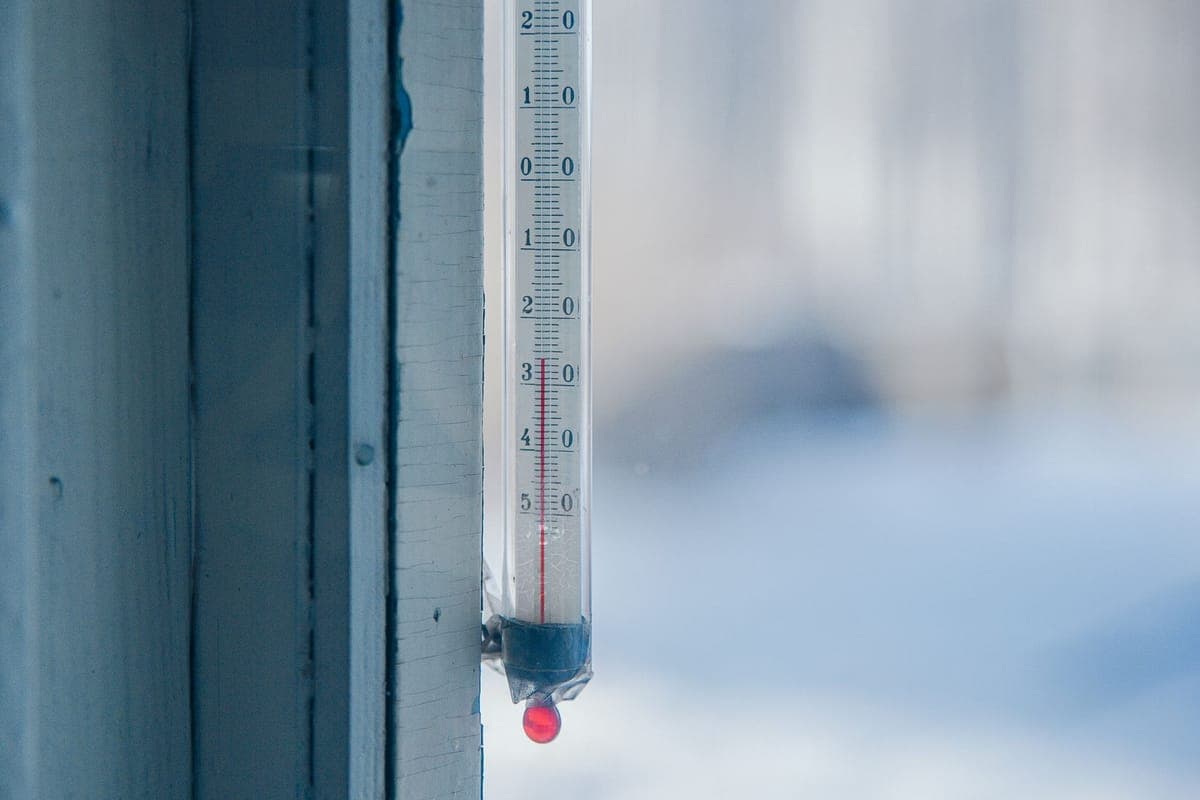
Why the app number is the wrong number
Three things separate the temperature you read at home from the one you experience on a chairlift, and all three make it colder.
- Altitude. Air cools as it rises. The top of a mountain is routinely well below the base, and the base is where the resort posts its temperature.
- Wind. A stationary chairlift in a breeze is the coldest place on the mountain, and wind chill is a much larger effect than most people expect: a moderate wind can take a tolerable temperature into a genuinely hazardous one.
- Your own speed. Skiing at 20 mph in still air is a 20 mph wind on your face. You generate your own wind chill on every run.
So the number to look up is the wind chill at the summit, which most resort weather pages publish alongside the base temperature. If only one figure is available, assume the top of the mountain is meaningfully colder and windier than wherever the reading was taken.
The bands, and what to do in each
| Wind chill | For an adult | For a young child | What to change |
|---|---|---|---|
| Above 32F | Warm; you will overheat | Fine, and likely wet | Vent, drop a layer, expect slush and wet gear |
| 20 to 32F | The ideal band | Comfortable with normal layers | Nothing; this is a good day |
| 10 to 20F | Cold but comfortable dressed properly | Manageable, watch hands and face | Add a mid layer, cover the face, plan indoor breaks |
| 0 to 10F | Genuinely cold; short breaks needed | Hard work; shorten the day | Mittens instead of gloves, full face cover, hourly warm-ups |
| -10 to 0F | Serious; exposed skin at risk | Not recommended | Adults only, short runs, nothing exposed |
| Below -10F | Go inside | Go inside | Change the plan; this is not a stubbornness contest |
Those bands assume you are dressed correctly. A person in cotton at 25F is colder than a person in wool at 10F, which is why the layering page matters more than the thermometer.
Children are on a different scale
A small child loses heat faster than an adult, for two reasons that are simple physics. They have more surface area relative to their body mass, so heat escapes faster. And they generate less heat, because they are smaller and, on a learning slope, they are frequently standing still.
The practical translation: shift every band up by roughly ten degrees for a child under about eight. If the adult band says “cold but comfortable”, the child band says “hard work”. And children are unreliable reporters - they will say they are fine until they are suddenly not, and then the situation goes from manageable to a crying child in a lift line in about ninety seconds.
- Check hands and cheeks physically, not verbally. Put a hand on a cheek. Ask them to wiggle their fingers and watch whether they can.
- Go inside on a schedule rather than on request. Every hour, whether anyone has complained or not.
- Mittens, not gloves. Warmer at the same insulation because fingers share heat. The comparison is here.
- Full face cover, and a goggle that seals. Face protection options, and a neck gaiter rather than a scarf.
- Half days below 15F. The kids layering page has the clothing side.
What actually changes as it gets colder
Not the jacket. Almost everyone reaches for a bigger coat and it is the wrong lever for three reasons: your torso is the part that is already warm, a bulkier jacket restricts movement, and the parts that get cold are extremities.
The things that genuinely change the answer, in order:
- Cover every square inch of skin. Face, neck, the gap at the forehead, wrists. Exposure is what causes actual injury.
- Switch gloves to mittens. A bigger step change than any amount of extra body insulation.
- Add a mid layer, not a bigger shell. The mid-layer page covers which.
- Check the boots are not too tight. Cold feet at low temperatures are usually a circulation problem rather than an insulation one. One thin sock, always.
- Eat and drink. Your body makes heat from fuel, and dehydration reduces the blood volume that moves it. Water freezes; plan for it.
- Carry disposable warmers. A pair publishing up to 10 hours costs almost nothing and covers the one brutal day. When heat is actually the answer.
Cold is not the only reason to stay in
Wind holds lifts. Resorts close upper lifts in high winds, and a day where only the base area runs is a short day whatever the temperature. Heavy snowfall with flat light is genuinely harder to ski than cold, especially for a beginner who cannot read the terrain; a high-VLT lens helps and the VLT guide covers which.
And rain is worse than cold. Wet through at 34F is more miserable and more dangerous than dry at 10F, because water conducts heat away far faster than air. That is the day to look at the seam sealing on your outerwear and, if it is critical-seams-only, to go and do something else.
Making the call
Two questions settle it. Can everyone in the group cover all their skin effectively? And is there somewhere warm within about fifteen minutes of wherever they will be? If both answers are yes, a cold day is a short day rather than a canceled one: two hours in the morning, a long lunch, and stop.
If either answer is no, the correct call is to change the plan. A day sledding at the base, an afternoon in a pool, or simply a late start are all better outcomes than a family that decides skiing is something that hurts. The sledding page is the fallback, and nobody has ever regretted it.
Every pick, with the working
Each entry shows the published inputs, the axis scores they produce, and what you give up. The order is the computed order, not a commercial one, and the arithmetic is open underneath each score.
1 · Anyone whose hands get cold, which the gloves will not fix
OutdoorMaster Ski Mittens
The mitten version of the same thing, five dollars cheaper, and warmer for the same insulation because your fingers share heat instead of each losing it separately. If your hands get cold, this is the answer before more insulation is.
- Published price
- $34.99
- Cost per day on snow
- $2.33 a day
- Amortized over
- 3 seasons (15 days)
- Certified to
- Not published
- Waterproof rating
- Not published
- Published sizes
- S through XL
- Warranty
- OutdoorMaster 2-year warranty
What it gets right
- Warmer than a glove of the same insulation, because fingers share heat
- Two-year published warranty
- $34.99, the cheapest adult hand option here
What you give up
- You cannot work a zipper, a lift ticket or a phone in a mitten
- No published waterproof rating
The working behind the 6.4
- Cost per day on snow: 9.4
- $34.99 over 3 seasons at 5 days each = 15 days = $2.33 a day
- Published protection: not scored
- No waterproof rating or seam construction published.
- Size availability: 5.1
- 4 published sizes (5.1 of 8.5); no continuous adjuster published (+0); range: S through XL
- Warranty and support: 2.5
- 2 yr (2.5 of 6); no published crash replacement (+0); no published repair route (+0)
Axes with unpublished inputs are dropped and the remaining weights re-normalized, so a product is not punished for a manufacturer’s silence. Specifications compiled September 3, 2026 from OutdoorMaster published specifications.
2 · The layer that decides whether a beginner is cold all day
MERIWOOL Merino 250 Base Layer Top
250 g per square meter of merino is the midweight number, and midweight is the right answer for a beginner who alternates between standing still in a lesson and sweating on a magic carpet. Wool keeps working when it is damp; cotton does the opposite.
- Published price
- $65
- Cost per day on snow
- $3.25 a day
- Amortized over
- 4 seasons (20 days)
- Certified to
- Not published
- Published sizes
- S through XXL
- Warranty
- No term published on the product page
What it gets right
- 250 gsm published, so the weight can be compared against any other merino layer
- Wool retains warmth when damp, which is the entire argument against a cotton shirt
- Wearable for several days, which matters on a trip with one suitcase
What you give up
- $65 for a single top is more than a pair of snow pants here
- Merino needs cool washing and takes a long time to dry
The working behind the 5.9
- Cost per day on snow: 8.7
- $65 over 4 seasons at 5 days each = 20 days = $3.25 a day
- Published protection: not scored
- Base layers carry no protective standard, so this axis does not apply.
- Size availability: 6.8
- 5 published sizes (6.8 of 8.5); no continuous adjuster published (+0); range: S through XXL
- Warranty and support: 0.0
- no published term (0 of 6); no published crash replacement (+0); no published repair route (+0)
Axes with unpublished inputs are dropped and the remaining weights re-normalized, so a product is not punished for a manufacturer’s silence. Specifications compiled September 3, 2026 from MERIWOOL published specifications.
3 · A first goggle, or a spare in the car for the one that gets lost
OutdoorMaster Falcon Kids
The cheapest published price here that still carries 100% UV protection and an anti-fog coating, which are the only two specs that matter on a child's first goggle. Everything above this price is buying optics, not safety.
- Published price
- $29.99
- Cost per day on snow
- $3.00 a day
- Amortized over
- 2 seasons (10 days)
- Certified to
- Not published
- UV protection
- 100% published
- Anti-fog
- Anti-fog coating
- Lenses included
- 1
- Published sizes
- Kids
- Warranty
- No term published for goggles
What it gets right
- 100% UV protection and an anti-fog coating at a published $29.99
- Cheap enough that losing it on a chairlift is annoying rather than expensive
What you give up
- No published VLT figure
- Single lens, no interchange system
The working behind the 5.8
- Cost per day on snow: 8.9
- $29.99 over 2 seasons at 5 days each = 10 days = $3.00 a day
- Published protection: 6.0
- 100% UV protection published (+4); no published impact standard (+0); anti-fog treatment published (+2); single lens (+0)
- Size availability: not scored
- Sold in one size, so size availability does not apply.
- Warranty and support: 0.0
- no published term (0 of 6); no published crash replacement (+0); no published repair route (+0)
Axes with unpublished inputs are dropped and the remaining weights re-normalized, so a product is not punished for a manufacturer’s silence. Specifications compiled September 3, 2026 from OutdoorMaster published specifications.
4 · One jacket that has to work on the mountain and at home
Columbia Whirlibird V Interchange Jacket
Two jackets in one: a waterproof shell and a zip-out insulated liner that each work alone. For a family that skis one week a year and spends the other fifty-one weeks in a cold parking lot, that is genuinely two purchases avoided.
- Published price
- $250
- Cost per day on snow
- $10 a day
- Amortized over
- 5 seasons (25 days)
- Certified to
- Not published
- Waterproof rating
- Not published
- Published sizes
- S through XXL
- Warranty
- No term published on the product page
What it gets right
- Three-in-one construction, so the shell and the liner are each usable on their own
- Omni-Tech waterproof-breathable fabric with critical seams sealed
- Sold in five sizes with regular, big and tall variants
What you give up
- Columbia publishes no hydrostatic-head figure, so its waterproofing cannot be compared numerically against a rated jacket
- Critical seams are sealed rather than every seam
- $250 is the most expensive item in this ledger apart from the skis
The working behind the 3.2
- Cost per day on snow: 3.7
- $250 over 5 seasons at 5 days each = 25 days = $10 a day
- Published protection: 2.0
- no published waterproof rating (0 of 6); critically taped or untaped seams (+0); insulation or shell construction published (+2)
- Size availability: 6.8
- 5 published sizes (6.8 of 8.5); no continuous adjuster published (+0); range: S through XXL
- Warranty and support: 0.0
- no published term (0 of 6); no published crash replacement (+0); no published repair route (+0)
Axes with unpublished inputs are dropped and the remaining weights re-normalized, so a product is not punished for a manufacturer’s silence. Specifications compiled September 3, 2026 from Columbia published specifications.
Prices last verified October 22, 2026. Prices move constantly; the figure on Amazon at the moment you click is the real one.
Questions people actually ask
How cold is too cold to ski?
For a well-dressed adult, skiing is comfortable to about 10F wind chill and manageable to around 0F. Below roughly -10F wind chill, exposed skin is at risk within minutes and it is time to go in. Use the wind chill at the summit rather than the temperature at the base.
How cold is too cold for kids to ski?
Shift every adult band up by about ten degrees for a child under eight. They lose heat faster because of their surface area relative to body mass, and they generate less of it, especially standing still in a lesson. Below about 15F wind chill, make it a half day.
Why is it colder on a chairlift?
Because you are stationary and exposed at altitude while the wind moves past you. A chairlift in a breeze is usually the coldest place on the mountain, which is why wind chill at the summit rather than temperature at the base is the number that matters.
What should I add when it gets colder?
Not a bigger jacket. Cover every square inch of skin, switch gloves to mittens, add a mid layer rather than a bigger shell, check your boots are not buckled too tight, and eat and drink. Cold extremities are usually a circulation or exposure problem rather than an insulation one.
Is rain worse than cold for skiing?
Usually yes. Wet through at 34F is more miserable and more dangerous than dry at 10F, because water carries heat away far faster than air does. It is also the day that finds out whether your outerwear is fully taped or only critical-seam sealed.