Skiing in the rain, and the gear that decides whether it is miserable
Rain is the one condition that finds every shortcut in a ski kit at once. It is also survivable, and occasionally worth it, if three things are right.
By Sawyer V. · Published
We have not tested this gear. Everything below is compiled from published specifications and published safety standards, and the arithmetic is public so you can check it. This page carries affiliate links: if you buy through one we earn a commission at no extra cost to you, and it does not change the order of the picks. Full disclosure.
The short answer
Three things decide a wet day: a jacket and pants with sealed seams and a published rating - aim for 10,000 mm or better in genuine rain - a wool or synthetic base layer that keeps insulating when damp, and dry gloves, which means two pairs. Skip down entirely. And know the exit condition: when water is running down the inside of your sleeve, the day is over, because wet plus wind is how people get genuinely cold.
| # | Pick | Best for | Score | Price |
|---|---|---|---|---|
| 1 | MERIWOOL Merino 250 Base Layer Top The layer that decides whether a beginner is cold all day | $3.25 a dayon snow | 5.9/10 | $65.00 - View on Amazon |
| 2 | Arctix Men's Essential Insulated Bib Overalls A beginner who spends more of the day sitting in snow than standing on it | Not publishedon snow | 3.6/10 | $49.99 - View on Amazon |
| 3 | Columbia Whirlibird V Interchange Jacket One jacket that has to work on the mountain and at home | $10 a dayon snow | 3.2/10 | $250.00 - View on Amazon |
Prices last verified October 19, 2026. Prices move constantly; the figure on Amazon at the moment you click is the real one.
Why rain is harder than snow
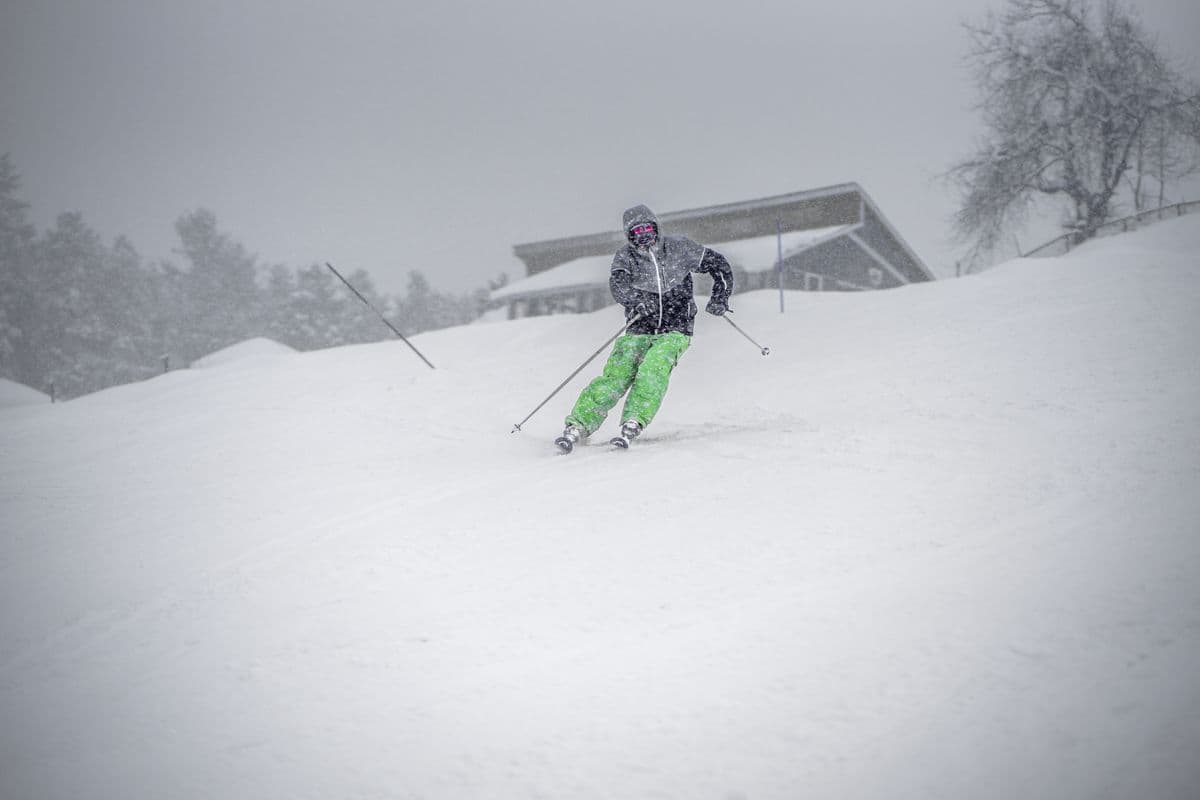
Dry snow bounces off. It brushes away, and a jacket with a modest coating handles a full day of it without complaint. Rain does none of that: it arrives continuously, finds every seam and zipper, soaks in rather than sitting on top, and it does all of this at a temperature close to freezing, which is the worst combination for staying warm.
There is a second effect people underestimate. Rain on snow turns the surface into something between slush and ice - heavy and grabby in the morning, then refrozen and hard as the temperature drops. It is worth knowing that before deciding the day is worth the soaking.
The numbers that actually matter
| Published rating | Dry snow | Wet snow | Rain |
|---|---|---|---|
| Unpublished or coating only | Usually fine | Marginal | No |
| 5,000 mm | Fine | Fine for a few hours | Not for long |
| 10,000 mm | Fine | Fine | A usable day |
| 15,000-20,000 mm | Fine | Fine | Comfortable |
The rating is only half of it. Seam sealing is the other half, because a seam is a line of needle holes through an otherwise waterproof fabric. “Critical seams sealed” means the shoulders, hood and upper back - the places that get soaked first. Fully taped means every seam. The waterproof ratings page explains how these figures are tested and why breathability belongs in the same conversation.
What to wear, top to bottom
- Shell over insulation, not insulation alone. An interchange or 3-in-1 system wins in rain because the outer layer is a true shell. The Columbia Whirlibird V publishes Omni-Tech waterproof-breathable construction with critical seams sealed, in exactly that configuration.
- Bibs rather than pants, if you have the choice. Rain runs downward and finds a waistband. A bib puts the top of the garment at your chest instead. The Arctix Men’s Essential Bib publishes a ThermaLock coating with sealed seams, and pants versus bibs covers the wider trade.
- A base layer that works wet. Merino keeps insulating when damp and does not stink; the MERIWOOL 250 publishes its gsm, which is how you compare weights at all. The base layer guide has merino against synthetic.
- No cotton, anywhere. Including socks, including the T-shirt under everything. Cotton in rain is the fastest way to be cold.
- No down as an outer layer. Wet down collapses, stops insulating and takes days to dry. Under a genuine shell it is fine; exposed it is the worst choice on a wet day.
- Two pairs of gloves. The one thing that reliably ends a rainy ski day is hands. Gloves saturate, and a second dry pair at lunch buys the afternoon. The glove picks are cheap enough to buy two.
Goggles in the rain
Water on the outside of a lens is not the main problem; water getting inside the frame and soaking the foam is, because a wet foam gasket fogs the lens continuously and stays wet for days.
- Keep them on your face or in a pocket - never on your helmet in the rain, where water pools in the frame.
- Do not wipe the inner lens. Wet anti-fog coating wipes straight off. The anti-fog page explains why that is permanent.
- Consider sunglasses in warm rain, which sounds odd and works - they vent freely and do not trap the moisture a goggle does. Goggles versus sunglasses has the conditions where each wins.
- Dry them properly afterward. The goggle care page covers drying foam without damaging the lens coating.
What rain does to the snow itself
Worth knowing before you commit to the day: rain falling on snow makes it heavy and grabby first, and then - when the temperature drops in the late afternoon or overnight - turns it into something close to a sheet of ice. A wet morning frequently becomes a hard, fast, unforgiving afternoon, which is a harder day for a beginner than the rain itself.
Visibility, which is the underrated risk
Rain usually arrives with flat light and fog, and that combination hides terrain far more effectively than snowfall does. A goggle lens with a high light transmission helps, and so does skiing behind someone rather than in front. Slow down before the weather makes you. The flat light goggle picks cover which lenses are published for these conditions.
Rain on a rental day
Most people reading this are skiing on rented hardware and borrowed or budget clothing, which changes the advice in three specific ways.
- Rental boots are the weak point. A rental liner has been packed out by other feet and is frequently damp before you get it. Wet liner plus rain is the fastest route to cold feet, so ask for a pair that has been dried, and put your own dry socks on at the shop rather than wearing them from the hotel.
- Rental goggles are usually scratched, and scratches plus water plus flat light is genuinely unsafe. Owning your own goggles is worth more on a wet day than on any other.
- Ask about a mid-day swap. Shops will generally exchange gear, and almost nobody asks. If your gloves are soaked at lunch, ask what they have.
What happens at a rental shop covers how to ask for all of this without feeling awkward, and what to buy first explains why goggles and gloves sit at the top of the own-it list.
Is it worth skiing at all?
An honest framework rather than an opinion:
- Ski it if you have sealed-seam outerwear with a published rating, dry spare gloves, and the rain is light with the temperature above freezing. Wet days are quiet days, and lift lines are short.
- Half-day it if you are in borrowed or budget kit. Go out, accept that you will be wet by lunch, and make lunch the end.
- Skip it if the temperature is near freezing with wind, if you are skiing with young children, or if your only outerwear is a winter coat. The how-cold-is-too-cold page covers the same call for temperature.
For children the answer is usually skip, and not because they are fragile. A wet child gets cold several times faster than a wet adult, cannot articulate it early, and a single miserable wet day is a reliable way to make a child decide they do not like skiing.
What to do the moment you are off the hill
- Hang everything, do not pile it. A heap of wet gear in a hotel bathroom is still wet in the morning.
- Liners out of boots. Wet liners are why day two starts cold. The overnight drying page has the full routine and the temperatures to avoid.
- Never dry gear on a radiator or a stove. Heat kills membranes, glue and liner foam.
- Re-proof the shell at home. A wash-in DWR treatment restores the water-shedding face fabric, and it is the difference between the jacket working next season and wetting out in an hour.
The short version
Sealed seams and a published rating of around 10,000 mm or better, a wool or synthetic base layer, bibs if you have them, a second pair of gloves, and no cotton or exposed down anywhere. Get that right and a wet day is a quiet mountain with no lift lines. Get it wrong and it is the day someone in your group decides skiing is not for them.
Every pick, with the working
Each entry shows the published inputs, the axis scores they produce, and what you give up. The order is the computed order, not a commercial one, and the arithmetic is open underneath each score.
1 · The layer that decides whether a beginner is cold all day
MERIWOOL Merino 250 Base Layer Top
250 g per square meter of merino is the midweight number, and midweight is the right answer for a beginner who alternates between standing still in a lesson and sweating on a magic carpet. Wool keeps working when it is damp; cotton does the opposite.
- Published price
- $65
- Cost per day on snow
- $3.25 a day
- Amortized over
- 4 seasons (20 days)
- Certified to
- Not published
- Published sizes
- S through XXL
- Warranty
- No term published on the product page
What it gets right
- 250 gsm published, so the weight can be compared against any other merino layer
- Wool retains warmth when damp, which is the entire argument against a cotton shirt
- Wearable for several days, which matters on a trip with one suitcase
What you give up
- $65 for a single top is more than a pair of snow pants here
- Merino needs cool washing and takes a long time to dry
The working behind the 5.9
- Cost per day on snow: 8.7
- $65 over 4 seasons at 5 days each = 20 days = $3.25 a day
- Published protection: not scored
- Base layers carry no protective standard, so this axis does not apply.
- Size availability: 6.8
- 5 published sizes (6.8 of 8.5); no continuous adjuster published (+0); range: S through XXL
- Warranty and support: 0.0
- no published term (0 of 6); no published crash replacement (+0); no published repair route (+0)
Axes with unpublished inputs are dropped and the remaining weights re-normalized, so a product is not punished for a manufacturer’s silence. Specifications compiled September 3, 2026 from MERIWOOL published specifications.
2 · A beginner who spends more of the day sitting in snow than standing on it
Arctix Men's Essential Insulated Bib Overalls
Sealed seams and 85 g of insulation published to -20F, on a bib with four published inseams and adjustable suspenders. The bib cut is the point: no waistband gap means no snow up your back when you sit down, which on a learning day happens roughly once every ten minutes.
- Published price
- Not published
- Cost per day on snow
- Not published
- Amortized over
- 5 seasons (25 days)
- Certified to
- Not published
- Waterproof rating
- Not published
- Published sizes
- Published in 28, 30, 32 and 34 inch inseams
- Warranty
- No term published; Arctix states a satisfaction guarantee
Arctix lists this across four inseam lengths and several colorways rather than publishing one MSRP, so the cost-per-day axis is not scored.
What it gets right
- Reinforced sealed seams published rather than critical-seam taping
- 85 g ThermaTech insulation with a published -20F to +35F range
- Four published inseams, which is more length choice than most bibs offer
- Boot gaiters with grippers and boot zippers both published
What you give up
- No published waterproof rating in millimeters on this model
- No single published price, so cost per day cannot be computed in advance
- A bib is a genuine nuisance at a bathroom stop, especially for a child
The working behind the 3.6
- Cost per day on snow: not scored
- No manufacturer-published price, so this axis is not scored.
- Published protection: 4.0
- no published waterproof rating (0 of 6); fully sealed seams published (+2); insulation or shell construction published (+2)
- Size availability: 6.6
- 4 published sizes (5.1 of 8.5); continuous in-size adjuster published (+1.5); range: Published in 28, 30, 32 and 34 inch inseams
- Warranty and support: 0.0
- no published term (0 of 6); no published crash replacement (+0); no published repair route (+0)
Axes with unpublished inputs are dropped and the remaining weights re-normalized, so a product is not punished for a manufacturer’s silence. Specifications compiled September 12, 2026 from Arctix published specifications.
3 · One jacket that has to work on the mountain and at home
Columbia Whirlibird V Interchange Jacket
Two jackets in one: a waterproof shell and a zip-out insulated liner that each work alone. For a family that skis one week a year and spends the other fifty-one weeks in a cold parking lot, that is genuinely two purchases avoided.
- Published price
- $250
- Cost per day on snow
- $10 a day
- Amortized over
- 5 seasons (25 days)
- Certified to
- Not published
- Waterproof rating
- Not published
- Published sizes
- S through XXL
- Warranty
- No term published on the product page
What it gets right
- Three-in-one construction, so the shell and the liner are each usable on their own
- Omni-Tech waterproof-breathable fabric with critical seams sealed
- Sold in five sizes with regular, big and tall variants
What you give up
- Columbia publishes no hydrostatic-head figure, so its waterproofing cannot be compared numerically against a rated jacket
- Critical seams are sealed rather than every seam
- $250 is the most expensive item in this ledger apart from the skis
The working behind the 3.2
- Cost per day on snow: 3.7
- $250 over 5 seasons at 5 days each = 25 days = $10 a day
- Published protection: 2.0
- no published waterproof rating (0 of 6); critically taped or untaped seams (+0); insulation or shell construction published (+2)
- Size availability: 6.8
- 5 published sizes (6.8 of 8.5); no continuous adjuster published (+0); range: S through XXL
- Warranty and support: 0.0
- no published term (0 of 6); no published crash replacement (+0); no published repair route (+0)
Axes with unpublished inputs are dropped and the remaining weights re-normalized, so a product is not punished for a manufacturer’s silence. Specifications compiled September 3, 2026 from Columbia published specifications.
Prices last verified October 19, 2026. Prices move constantly; the figure on Amazon at the moment you click is the real one.
Questions people actually ask
Can you ski in the rain?
Yes, and it is often the emptiest the mountain gets. It depends on three things: outerwear with sealed seams and a published waterproof rating, a base layer that keeps insulating when damp, and a dry spare pair of gloves. Without those, plan on a half day.
What waterproof rating do I need for rain?
For genuine rain rather than snow, look for a published 10,000 mm or higher, with sealed seams. A 5,000 mm garment handles wet snow for a few hours but will wet through in sustained rain, and an unrated coating is not a rain garment at all.
What should you not wear skiing in the rain?
Cotton anywhere, including socks and the shirt under your base layer, and exposed down, which collapses when wet and takes days to dry. Also avoid taking only one pair of gloves - saturated gloves are the single most common reason a wet ski day ends early.
Do ski goggles work in the rain?
They work until water gets into the frame and soaks the foam, at which point they fog continuously and stay damp for days. Keep them on your face or in a pocket rather than on your helmet, never wipe a wet inner lens, and consider sunglasses if it is warm rain.
Should kids ski in the rain?
Usually not. A wet child gets cold far faster than a wet adult and will not say so until they are miserable, and one cold soaking day is a very effective way to put a child off skiing. If you go out, plan a short morning with a warm indoor finish.