Ski jackets for extreme cold, and why the jacket is only a third of it
Below about 5F the thing that keeps you warm is a system, not a coat. Here is what to buy for the outer layer, and the two layers under it that do more of the work.
By Sawyer V. · Published
We have not tested this gear. Everything below is compiled from published specifications and published safety standards, and the arithmetic is public so you can check it. This page carries affiliate links: if you buy through one we earn a commission at no extra cost to you, and it does not change the order of the picks. Full disclosure.
The short answer
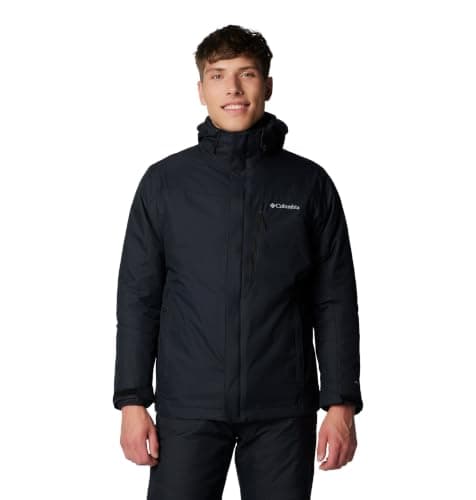
In genuinely deep cold the winning setup is a shell plus removable insulation, not a single thick coat - it lets you add a mid layer on the coldest morning and vent on the warm afternoon. The Columbia Whirlibird V Interchange is that system, publishing Omni-Tech waterproof-breathable construction with critical seams sealed. Then spend on the two layers underneath: a 250 gsm merino base and a fleece mid layer. Cotton anywhere is the failure that ends the day.
| # | Pick | Best for | Score | Price |
|---|---|---|---|---|
| 1 | Columbia Whirlibird V Interchange Jacket One jacket that has to work on the mountain and at home | $10 a dayon snow | 3.2/10 | $250.00 - View on Amazon |
| 2 | Arctix Men's Icecap Insulated Jacket A cold dry week where price matters more than a spec sheet | $4.20 a dayon snow | 4.7/10 | $92.11 - View on Amazon |
| 3 | MERIWOOL Merino 250 Base Layer Top The layer that decides whether a beginner is cold all day | $3.25 a dayon snow | 5.9/10 | $65.00 - View on Amazon |
| 4 | Columbia Steens Mountain 2.0 Full Zip Fleece The mid layer under a shell, and the jacket you wear the rest of the winter | Not publishedon snow | 1.7/10 | $45.50 - View on Amazon |
Prices last verified October 19, 2026. Prices move constantly; the figure on Amazon at the moment you click is the real one.
Why the jacket is a third of the answer
People shopping for deep cold reach for a thicker coat, and a thicker coat is the least adjustable solution available. What actually keeps a skier warm at 0F is three layers doing three different jobs: a base layer moving moisture off the skin, a mid layer trapping air, and a shell stopping wind and snow.
Get any one of them wrong and the other two cannot compensate. The classic failure is a very warm jacket over a cotton T-shirt: the cotton takes on sweat, holds it against the skin, and the skier gets cold in an expensive coat and concludes the coat was the problem.
The layering page sets out the system by temperature, and the cold page covers the point at which the answer is to stop skiing rather than to add clothing.
What to look for in the outer layer
| Specification | What to look for | Why it matters in deep cold |
|---|---|---|
| Layering system | Interchange or 3-in-1, with a removable liner | Lets you add insulation on the worst morning and shed it at noon |
| Seam sealing | At minimum critical seams sealed | Cold plus wet is the dangerous combination, not cold alone |
| Wind resistance | A membrane rather than a coating | Windchill is what actually takes heat off you at speed |
| Powder skirt and cuffs | Present and adjustable | Snow up the back at 0F is a day-ending event |
| Hood over a helmet | Helmet-compatible | Head and neck are where the heat leaves |
Notice that insulation weight is not the first row. Above a certain point, more fill in a fixed jacket is a liability - you cannot remove it when you are working hard on the way to the lift, and sweat is what makes you cold later.
The picks
Columbia Whirlibird V Interchange
The pick, because it is a system rather than a coat. Columbia publishes Omni-Tech waterproof-breathable construction with critical seams sealed, in an interchange configuration - a waterproof shell with a zip-in insulated liner.
Three garments in one purchase is the practical result: shell alone for a warm spring afternoon, liner alone around town, and both together on the coldest morning of the trip. In deep cold that adaptability is worth more than a fixed jacket with a higher fill weight, because the temperature on a ski day routinely swings twenty degrees between the first lift and the last run.
Honest cons: an interchange system is heavier and bulkier than a single jacket of equivalent warmth, and the two halves are never quite as good as two dedicated garments. It is also the most expensive thing on this page.
Arctix Men’s Icecap Insulated Jacket
Here as the budget benchmark and as the skip for this page specifically. Arctix publishes ThermaTech insulation with critical seams sealed and five published sizes, at the lowest price in this group.
It is a genuinely sensible jacket - it is a pick on the under-$100 page for good reason. What makes it the wrong answer here is that it is a single garment with fixed insulation and no published millimeter rating: on a 0F day you cannot add to it, and on a wet day you cannot verify what it will shrug off.
MERIWOOL 250 Merino Base Layer
The layer that does more for deep-cold comfort than any jacket upgrade, and the only garment on this page that publishes a comparable warmth figure: 250 gsm merino.
Merino keeps insulating when damp - and on a cold day you will sweat on the walk to the lift whatever the temperature is - and it resists odor across a multi-day trip. A 250 gsm weight is the heavy end of base layers, which is exactly right when the alternative is adding bulk further out.
Honest cons: merino is slower to dry than synthetics, so a week-long trip wants two. It is more expensive per garment than a synthetic base layer. And it is a base layer, so it has to fit snug against the skin to work at all. Merino against synthetic in full.
Columbia Steens Mountain 2.0 Fleece
The mid layer, and the cheapest meaningful upgrade in this whole category. A fleece traps air between the base layer and the shell, which is where most of your insulation actually comes from in a layered system.
Buying a fleece rather than a warmer jacket has a second advantage: it comes off. On the afternoon the sun appears and the temperature climbs fifteen degrees, a mid layer you can stuff in a pack is the difference between comfortable and soaked in your own sweat.
Honest cons: fleece is bulky for its warmth compared with a synthetic puffy, and it is not windproof on its own, so it needs the shell over it. The mid layer roundup compares the field on published gram weights.
What the temperature actually means for clothing
Outerwear is not rated to a temperature the way a sleeping bag or a winter boot is, so there is no figure to shop by. What exists instead is a rough correspondence between conditions and what the layering system has to do, and it is worth setting out because it explains why a single jacket cannot cover the range.
| Conditions | What the system needs | What usually fails first |
|---|---|---|
| Around freezing, dry | Base plus shell; mid layer optional | Overheating on the way to the lift |
| 20F, breezy | Base, fleece, shell with sealed seams | Cuffs and collar gaps |
| 10F or colder | Heavier base, full mid layer, shell; face covered | Fingers and toes, long before the torso |
| Below 0F with wind | All of the above plus shortened days and indoor breaks | Exposed skin - this is where gear stops being the answer |
The pattern in that last column is the point of this page: as the temperature drops, the failure moves outward to the extremities and to exposed skin, not to the jacket. That is why the extremities section below matters more than any upgrade to the outer layer.
Wind is the variable nobody accounts for
A still day at 5F is comfortable in a good system. The same temperature with a 20 mph wind - which is ordinary on an exposed ridge or a fast chairlift - strips heat off you dramatically faster, and it does it through gaps rather than through fabric.
Which is why a windproof shell beats a warmer insulated jacket in deep cold, and why the gaps matter more than the fill: a powder skirt that seals, cuffs that close over gloves, a collar that zips to the chin, and a hood that goes over a helmet. A jacket with excellent insulation and open cuffs will lose to a thinner one that is sealed.
Chairlifts are the specific problem - you are stationary, exposed and often wet from working. That is the moment a system either holds or does not.
Down or synthetic in the cold
Down is warmer per gram than synthetic insulation in dry cold, and it is the wrong choice as a ski outer layer anyway. Two reasons, both practical.
- Wet down collapses. Loft is what insulates, and a soaked down jacket has none. A ski day involves falling into snow and sweating on the walk to the lift, so the fabric gets wet from both directions.
- Down takes days to dry. On a week-long trip, one soaking removes the garment from service for the rest of it - which is exactly when you needed it.
Where down does work is as a mid layer under a genuine shell, or as the jacket you wear in the village in the evening. For the outer layer on snow, synthetic insulation or a shell-plus-fleece system is the more reliable answer.
Standing still is the hard part
Deep cold punishes a specific pattern: work hard, sweat, then stand still. Skiers do this every single run - a hot few minutes of skiing followed by ten stationary minutes on a lift, repeated all day.
The management is behavioral rather than a purchase. Vent before you overheat rather than after - pit zips open on the way to the lift, closed on it. Take the hat off under the helmet for a hot run and put it back for the ride up. Eat and drink on the lift, because being under-fueled is a genuine cause of feeling cold that no jacket addresses. What works in the cold.
Extremities do the damage
At the temperatures this page is about, the jacket is rarely what fails. Fingers, toes and face are, and they fail faster than a torso ever will because the body reduces blood flow to them to protect the core.
- Mittens over gloves. Fingers share heat in one compartment, and it is a cheaper upgrade than a warmer coat. The comparison.
- One thin sock, not two. Counter-intuitive and correct - compression is what makes feet cold in ski boots. The full sequence.
- Cover the face properly. A balaclava with a published breathing panel beats a gaiter pulled over the nose, which fogs goggles. The balaclava picks.
- Hand and toe warmers are cheap insurance in a pocket on a day forecast below 0F. Published durations.
Knowing when to go in
Waterproof ratings matter less than you think here
Outerwear is sold on two numbers - a waterproof rating in millimeters and a breathability rating in grams - and in genuinely cold conditions their relative importance flips from what you would expect.
Deep cold means dry snow. Snow at 5F brushes off a jacket; snow at 34F soaks into it. So the situations that demand a high waterproof number are the warm, wet, spring days and the coastal resorts - not the coldest week of the season. What punishes you at 5F is moisture from the inside, which is a breathability problem and a venting problem.
- A moderate waterproof rating with good venting beats a high rating with none, in cold and dry conditions.
- Pit zips are the feature to insist on, because they dump heat faster than any fabric can breathe it away.
- Sealed seams matter in both cases - they are about wind as much as water, and a seam that leaks air is a cold stripe across your back.
What the millimeter and gram figures actually measure.
Test the system at home before you travel
The cheapest insurance in this whole page, and almost nobody does it. Put on the complete system - base, mid, shell, gloves, helmet, neck cover, goggles - and stand outside on a cold morning for twenty minutes.
What that finds, while you can still fix it:
- Whether it all fits together. A mid layer that bunches, a jacket sleeve too tight over a glove cuff, a hood that will not go over the helmet - these are discovered on a chairlift otherwise.
- Whether anything is missing. Most people find the gap is a neck cover or a second pair of gloves, both of which are cheap at home and expensive at a resort shop.
- Whether the extremities hold. Twenty stationary minutes tells you more about your gloves than any product description.
Everyone forgets the pants
A page about jackets, and the honest footnote is that the legs are where most people are under-dressed for real cold. A jacket gets upgraded every few seasons; pants get bought once and kept for a decade.
Two things to check before a cold trip. First, whether the pants have any insulation at all or are a shell - a shell is the better system, but only if you own base layer bottoms to go under it, and plenty of people own the shell and not the base layer. Second, whether they have side vents, because legs overheat on the way to the lift exactly like a torso does.
Pants compared on published ratings.
Who should buy what
- One purchase for a genuinely cold region. The Whirlibird V interchange, and layer under it.
- Already own a shell. Skip the jacket entirely - buy the merino base and the fleece, which is a fraction of the price and more of the warmth.
- On a budget, cold but not extreme. The Arctix, plus the two layers underneath.
- Kids in deep cold. Different sizing rules entirely - the kids layering page covers them.
Every pick, with the working
Each entry shows the published inputs, the axis scores they produce, and what you give up. The order is the computed order, not a commercial one, and the arithmetic is open underneath each score.
1 · One jacket that has to work on the mountain and at home
Columbia Whirlibird V Interchange Jacket
Two jackets in one: a waterproof shell and a zip-out insulated liner that each work alone. For a family that skis one week a year and spends the other fifty-one weeks in a cold parking lot, that is genuinely two purchases avoided.
- Published price
- $250
- Cost per day on snow
- $10 a day
- Amortized over
- 5 seasons (25 days)
- Certified to
- Not published
- Waterproof rating
- Not published
- Published sizes
- S through XXL
- Warranty
- No term published on the product page
What it gets right
- Three-in-one construction, so the shell and the liner are each usable on their own
- Omni-Tech waterproof-breathable fabric with critical seams sealed
- Sold in five sizes with regular, big and tall variants
What you give up
- Columbia publishes no hydrostatic-head figure, so its waterproofing cannot be compared numerically against a rated jacket
- Critical seams are sealed rather than every seam
- $250 is the most expensive item in this ledger apart from the skis
The working behind the 3.2
- Cost per day on snow: 3.7
- $250 over 5 seasons at 5 days each = 25 days = $10 a day
- Published protection: 2.0
- no published waterproof rating (0 of 6); critically taped or untaped seams (+0); insulation or shell construction published (+2)
- Size availability: 6.8
- 5 published sizes (6.8 of 8.5); no continuous adjuster published (+0); range: S through XXL
- Warranty and support: 0.0
- no published term (0 of 6); no published crash replacement (+0); no published repair route (+0)
Axes with unpublished inputs are dropped and the remaining weights re-normalized, so a product is not punished for a manufacturer’s silence. Specifications compiled September 3, 2026 from Columbia published specifications.
2 · A cold dry week where price matters more than a spec sheet
Arctix Men's Icecap Insulated Jacket
Skip this one. A good jacket and the wrong tool for this specific page. Arctix publishes ThermaTech insulation with critical seams sealed and five sizes at the lowest price here, which makes it the value pick on the general jackets page - but it is a single fixed-insulation garment with no published waterproof rating, and deep cold is precisely where you want a system you can add to. On a 0F day you cannot put more insulation inside it; with an interchange shell you can.
Arctix publishes a 3,000 mm rating on its insulated snow pants and no rating at all on this jacket, which is worth saying out loud rather than quietly borrowing the pants figure. What it does publish is insulation and critical seam sealing at $105.
- Published price
- $105
- Cost per day on snow
- $4.20 a day
- Amortized over
- 5 seasons (25 days)
- Certified to
- Not published
- Waterproof rating
- Not published
- Published sizes
- S through XXL
- Warranty
- No term published on the product page
What it gets right
- $105 published, which over five seasons is $4.20 a day on snow
- Critical seams sealed, which is what most family-price outerwear does
- Five published sizes
What you give up
- No waterproof rating published for this jacket, so it cannot be compared numerically
- Critical seams rather than fully sealed
The working behind the 4.7
- Cost per day on snow: 8.0
- $105 over 5 seasons at 5 days each = 25 days = $4.20 a day
- Published protection: 2.0
- no published waterproof rating (0 of 6); critically taped or untaped seams (+0); insulation or shell construction published (+2)
- Size availability: 6.8
- 5 published sizes (6.8 of 8.5); no continuous adjuster published (+0); range: S through XXL
- Warranty and support: 0.0
- no published term (0 of 6); no published crash replacement (+0); no published repair route (+0)
Axes with unpublished inputs are dropped and the remaining weights re-normalized, so a product is not punished for a manufacturer’s silence. Specifications compiled September 3, 2026 from Arctix published specifications.
3 · The layer that decides whether a beginner is cold all day
MERIWOOL Merino 250 Base Layer Top
250 g per square meter of merino is the midweight number, and midweight is the right answer for a beginner who alternates between standing still in a lesson and sweating on a magic carpet. Wool keeps working when it is damp; cotton does the opposite.
- Published price
- $65
- Cost per day on snow
- $3.25 a day
- Amortized over
- 4 seasons (20 days)
- Certified to
- Not published
- Published sizes
- S through XXL
- Warranty
- No term published on the product page
What it gets right
- 250 gsm published, so the weight can be compared against any other merino layer
- Wool retains warmth when damp, which is the entire argument against a cotton shirt
- Wearable for several days, which matters on a trip with one suitcase
What you give up
- $65 for a single top is more than a pair of snow pants here
- Merino needs cool washing and takes a long time to dry
The working behind the 5.9
- Cost per day on snow: 8.7
- $65 over 4 seasons at 5 days each = 20 days = $3.25 a day
- Published protection: not scored
- Base layers carry no protective standard, so this axis does not apply.
- Size availability: 6.8
- 5 published sizes (6.8 of 8.5); no continuous adjuster published (+0); range: S through XXL
- Warranty and support: 0.0
- no published term (0 of 6); no published crash replacement (+0); no published repair route (+0)
Axes with unpublished inputs are dropped and the remaining weights re-normalized, so a product is not punished for a manufacturer’s silence. Specifications compiled September 3, 2026 from MERIWOOL published specifications.
4 · The mid layer under a shell, and the jacket you wear the rest of the winter
Columbia Steens Mountain 2.0 Full Zip Fleece
The rare mid layer that publishes a fleece weight: 250 g MTR filament fleece in 100% polyester, with regular, tall and big length ranges and published center-back measurements for each. A stated gram weight is the only way to compare one fleece against another, and almost nothing in this category publishes one.
- Published price
- Not published
- Cost per day on snow
- Not published
- Amortized over
- 5 seasons (25 days)
- Certified to
- Not published
- Waterproof rating
- Not published
- Published sizes
- Regular, Tall and Big ranges published
- Warranty
- No term published on the product page
What it gets right
- 250 g fleece weight published, which is a comparable number in a category that mostly publishes adjectives
- Regular, Tall and Big ranges with published center-back lengths of 28, 32 and 30 in
- Zippered hand pockets published, so a lift pass does not fall out on a chairlift
- 100% polyester, so it dries fast and keeps insulating damp, unlike anything cotton
What you give up
- Fleece is bulky for its warmth compared with down or a synthetic sweater
- Not windproof and not waterproof; it is a layer, not a jacket
- No published warranty term on the product page
The working behind the 1.7
- Cost per day on snow: not scored
- No manufacturer-published price, so this axis is not scored.
- Published protection: not scored
- No waterproof rating or seam construction published.
- Size availability: 3.4
- 3 published sizes (3.4 of 8.5); no continuous adjuster published (+0); range: Regular, Tall and Big ranges published
- Warranty and support: 0.0
- no published term (0 of 6); no published crash replacement (+0); no published repair route (+0)
Axes with unpublished inputs are dropped and the remaining weights re-normalized, so a product is not punished for a manufacturer’s silence. Specifications compiled September 12, 2026 from Columbia published Steens Mountain 2.0 specifications.
Prices last verified October 19, 2026. Prices move constantly; the figure on Amazon at the moment you click is the real one.
Questions people actually ask
What ski jacket is best for extreme cold?
A shell with removable insulation rather than a single thick coat, because a ski day routinely swings twenty degrees and fixed insulation cannot be adjusted. An interchange jacket with published seam sealing, layered over a heavy merino base and a fleece, beats a warmer standalone jacket.
Do I need a warmer jacket or better layers?
Better layers, almost always. Most cold-day failures are a cotton layer against the skin or no mid layer at all, and no jacket compensates for either. A 250 gsm merino base and a fleece cost less than a jacket upgrade and do more of the work.
Is down or synthetic better for cold-weather skiing?
Synthetic, for skiing specifically. Down is warmer for its weight in dry cold, but it collapses when wet and takes days to dry - and a ski day involves falling in snow and sweating on the way to the lift. Down works under a genuine shell, not as an outer layer.
What insulation weight do I need for skiing in deep cold?
Less in the jacket than you would think, and more in the layers. Fixed heavy insulation cannot be removed when you overheat, and sweat is what makes you cold an hour later. A moderate jacket plus an adjustable layering system handles a wider range than a very warm coat.
How cold is too cold to ski?
It depends on wind and on who is with you - frostbite on exposed skin can begin within minutes at around -20F with wind, and children get cold far faster than adults. At those temperatures the answer is a shorter day with indoor breaks rather than more clothing.