Heated gloves, socks and warmers: what works and what to fix first
Adding heat to a cold hand is the second thing to try. The first is finding out why the hand is cold, because four of the five causes are not solved by a battery.
By Sawyer V. · Published
We have not tested this gear. Everything below is compiled from published specifications and published safety standards, and the arithmetic is public so you can check it. This page carries affiliate links: if you buy through one we earn a commission at no extra cost to you, and it does not change the order of the picks. Full disclosure.
The short answer
Fix the cause first: a glove that is too big, a boot buckled too tight, a soaked base layer, or dehydration. If all four are genuinely sorted and the hands or feet are still cold, disposable air-activated warmers publishing up to 10 hours of continuous warmth are the cheap answer and fit any glove. Battery-heated gloves, socks and insoles are the expensive answer and are worth it for a specific group: people with Raynaud’s or poor circulation, and people who are simply cold every single time.
| # | Pick | Best for | Score | Price |
|---|---|---|---|---|
| 1 | OutdoorMaster Ski Mittens Anyone whose hands get cold, which the gloves will not fix | $2.33 a dayon snow | 6.4/10 | $24.95 - View on Amazon |
| 2 | Darn Tough Alpine Over-the-Calf Lightweight Ski Socks The one piece of ski gear worth buying before anything else | $2 a dayon snow | 6.4/10 | $30.95 - View on Amazon |
| 3 | HotHands Hand Warmers A backup in a pocket, and the one cold day a season nobody planned for | Not publishedon snow | 0.0/10 | $24.25 - View on Amazon |
Prices last verified October 22, 2026. Prices move constantly; the figure on Amazon at the moment you click is the real one.
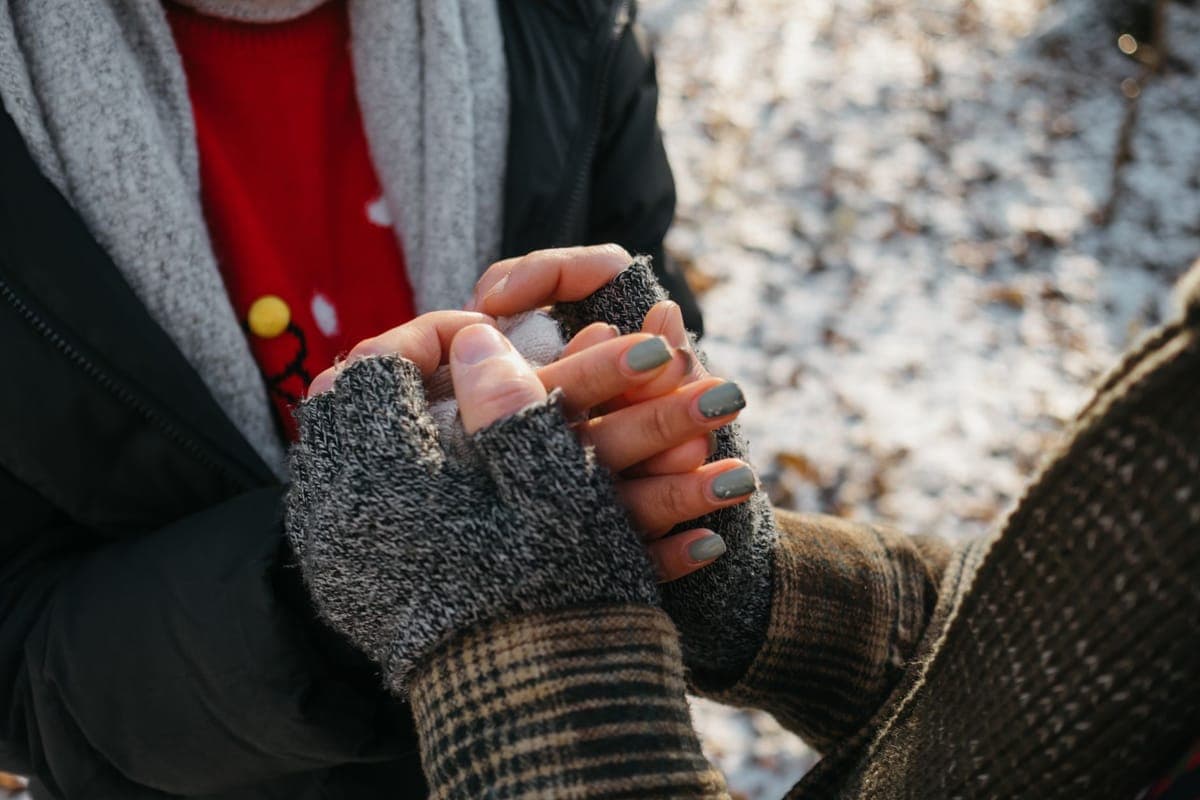
The four things to fix before buying heat
This page will spend money for you eventually, but not before it saves you some. Cold hands and feet on a ski day almost always have a cause that heat papers over rather than solves, and the causes are cheap to fix.
- A glove that is too big. Your fingers heat the air inside the glove. Too much empty volume and they are heating a room. This is the single most common cause and it is counterintuitive enough that people buy bigger gloves hoping for warmth. The sizing method is here.
- A boot buckled too tight, or two pairs of socks. Both restrict circulation, and blood is what carries the heat. One thin merino sock in a boot that fits; the sock page explains why thick is colder.
- A wet base layer. Cotton holds sweat against the skin and evaporates it all afternoon, which is refrigeration. Wool or synthetic, never cotton.
- Dehydration and no food. Your body makes heat from fuel and moves it with blood volume. Both drop over a day at altitude and nobody drinks enough. The altitude page covers this.
The full cold hands page works through these in order and is the page to read before this one. If you have done all four and you are still cold, you are the reader this page is for, and heat is a real solution rather than a gadget.
Disposable warmers: the cheap answer that mostly works
Air-activated single-use warmers are the least glamorous product on this site and the one with the best ratio of benefit to cost. You open the packet, the contents react with oxygen, and it produces low heat for hours. HotHands publishes up to 10 hours of continuous warmth, which is longer than any lift-served day.
Three things worth knowing. They need air, so a warmer sealed airtight inside a glove liner will underperform. They work best placed on the back of the hand rather than in the palm, because the blood vessels you want to warm run across the back and the palm is where you grip. And toe versions are made with an adhesive backing to stick to the top of a sock, which matters because a loose warmer inside a fitted ski boot is a pressure point.
Battery-heated gear: reading the published numbers
Heated gloves, socks, insoles and vests all work the same way: a small battery drives a heating element, usually with three settings. The specification that matters is run time at each setting, and it is published as a range because the settings differ by a lot.
| Published figure | What it tells you | What to watch for |
|---|---|---|
| Run time on low | The number the marketing leads with | Often 6-10 hours, which nobody uses because low is barely warm |
| Run time on high | The number that matters on a cold day | Frequently 2-3 hours, which is less than a ski day |
| Battery capacity in mAh | Comparable across brands, unlike run time | Higher is longer, and also heavier and bulkier |
| Whether a spare battery is included | Whether one purchase covers a full day | Usually not; the spare is the hidden second cost |
| Charge time | Whether it is ready for tomorrow | Several hours is normal; plan around it |
We do not currently rank heated gloves or socks on this site, and the reason is the same one that applies elsewhere: the makers in this category publish run times that are not comparable to each other, and frequently publish no battery capacity at all. We are not going to build a ranking out of numbers that do not mean the same thing. The methodology page explains that rule. When a maker publishes a full specification we can compare, this page gets picks.
If you buy one heated item, which one
Socks or insoles rather than gloves, for most people. Feet are further from the heart, spend the day compressed inside a rigid shell, and cannot be warmed by putting them in a pocket. Hands can be. And a heated sock has the further advantage of being thin, where a heated glove is bulky enough that some people lose more warmth to the reduced fit than they gain from the element.
The exception is anyone whose hands specifically go white and numb. That pattern is worth a conversation with a doctor rather than a purchase, and for people who have already had it, heated gloves are frequently the thing that makes skiing possible at all.
The unheated upgrade most people skip
Before a battery, try a mitten. A mitten of the same insulation is meaningfully warmer than a glove because your fingers share heat rather than each losing it separately, and it costs a fraction of any heated product. The mitten in this ledger publishes a two-year warranty and the same waterproof insert as its glove sibling, at less money.
What you give up is dexterity: zippers, lift tickets and phones are all harder. The full comparison is on its own page, and for a beginner who is not operating anything complicated on the mountain, the trade is easy.
Two roundups carry the published numbers. Hand warmers compares the stated duration of every variant in the range, and heated socks compares battery runtime at each setting rather than the headline figure on the box.
Who genuinely benefits
- Anyone with Raynaud’s or diagnosed poor circulation. Heated gear is not a luxury here and the published run time on high is the number to buy on.
- People who ski in genuinely severe cold. There is a temperature below which good gear is not enough, and the how-cold page has the bands.
- Anyone who has fixed all four upstream causes and is still cold. At that point it is physiology rather than equipment.
- Parents standing still for hours. You generate almost no heat watching a lesson, which is why the coldest person on any family trip is the one not skiing.
Everyone else: a pair of disposable warmers living permanently in a jacket pocket costs almost nothing and covers the one brutal day a season. That is the honest recommendation for most families, and it is the cheapest thing on this page.
Every pick, with the working
Each entry shows the published inputs, the axis scores they produce, and what you give up. The order is the computed order, not a commercial one, and the arithmetic is open underneath each score.
1 · Anyone whose hands get cold, which the gloves will not fix
OutdoorMaster Ski Mittens
The mitten version of the same thing, five dollars cheaper, and warmer for the same insulation because your fingers share heat instead of each losing it separately. If your hands get cold, this is the answer before more insulation is.
- Published price
- $34.99
- Cost per day on snow
- $2.33 a day
- Amortized over
- 3 seasons (15 days)
- Certified to
- Not published
- Waterproof rating
- Not published
- Published sizes
- S through XL
- Warranty
- OutdoorMaster 2-year warranty
What it gets right
- Warmer than a glove of the same insulation, because fingers share heat
- Two-year published warranty
- $34.99, the cheapest adult hand option here
What you give up
- You cannot work a zipper, a lift ticket or a phone in a mitten
- No published waterproof rating
The working behind the 6.4
- Cost per day on snow: 9.4
- $34.99 over 3 seasons at 5 days each = 15 days = $2.33 a day
- Published protection: not scored
- No waterproof rating or seam construction published.
- Size availability: 5.1
- 4 published sizes (5.1 of 8.5); no continuous adjuster published (+0); range: S through XL
- Warranty and support: 2.5
- 2 yr (2.5 of 6); no published crash replacement (+0); no published repair route (+0)
Axes with unpublished inputs are dropped and the remaining weights re-normalized, so a product is not punished for a manufacturer’s silence. Specifications compiled September 3, 2026 from OutdoorMaster published specifications.
2 · The one piece of ski gear worth buying before anything else
Darn Tough Alpine Over-the-Calf Lightweight Ski Socks
The only item in this entire ledger with an unconditional lifetime guarantee. It is a $30 sock that the maker will replace forever, which over any realistic number of ski days is the cheapest thing on the site.
- Published price
- $30
- Cost per day on snow
- $2 a day
- Amortized over
- 3 seasons (15 days)
- Certified to
- Not published
- Published sizes
- S through XL
- Warranty
- Unconditional lifetime guarantee
What it gets right
- Unconditional lifetime guarantee, published without qualifying conditions
- Lightweight merino, which is correct for a modern ski boot: a thick sock makes boots colder, not warmer
- Over-the-calf length, so the boot cuff never touches bare skin
What you give up
- $30 for one pair of socks reads as absurd until the replacement policy is read
- Lightweight is the right choice but feels wrong to anyone expecting a thick ski sock
The working behind the 6.4
- Cost per day on snow: 9.6
- $30 over 3 seasons at 5 days each = 15 days = $2 a day
- Published protection: not scored
- Socks carry no protective standard, so this axis does not apply.
- Size availability: 5.1
- 4 published sizes (5.1 of 8.5); no continuous adjuster published (+0); range: S through XL
- Warranty and support: 2.0
- no published term (0 of 6); no published crash replacement (+0); repair or replacement parts published (+2)
Axes with unpublished inputs are dropped and the remaining weights re-normalized, so a product is not punished for a manufacturer’s silence. Specifications compiled September 3, 2026 from Darn Tough published specifications.
3 · A backup in a pocket, and the one cold day a season nobody planned for
HotHands Hand Warmers
HotHands publishes up to 10 hours of continuous warmth, which is longer than any lift-served day. It is the cheapest fix on this site for cold hands and it is also the one that runs out, which is the argument for fixing the glove instead.
- Published price
- Not published
- Cost per day on snow
- Not published
- Amortized over
- 3 seasons (15 days)
- Certified to
- Not published
- Published sizes
- One size, single use
- Warranty
- No term published; the product is single use
HotHands publishes no MSRP and the product is sold in pack sizes that vary widely, so the cost-per-day axis is not scored.
What it gets right
- Published up to 10 hours of continuous warmth, longer than a resort day
- Air activated, with nothing to charge and nothing to break
- Small enough that a spare pair lives permanently in a jacket pocket
What you give up
- Single use, so the cost repeats on every cold day
- No published MSRP, so cost per day cannot be computed
- It treats the symptom; a glove that fits treats the cause
The working behind the 0.0
- Cost per day on snow: not scored
- No manufacturer-published price, so this axis is not scored.
- Published protection: not scored
- This category carries no protective standard.
- Size availability: not scored
- Sold in one size, so size availability does not apply.
- Warranty and support: 0.0
- no published term (0 of 6); no published crash replacement (+0); no published repair route (+0)
Axes with unpublished inputs are dropped and the remaining weights re-normalized, so a product is not punished for a manufacturer’s silence. Specifications compiled September 7, 2026 from HotHands published specifications.
Prices last verified October 22, 2026. Prices move constantly; the figure on Amazon at the moment you click is the real one.
Questions people actually ask
How long do hand warmers last?
HotHands publishes up to 10 hours of continuous warmth for its hand warmers, which is longer than a lift-served day. They need air to work, so one sealed inside an airtight liner will underperform, and they warm best placed on the back of the hand rather than in the palm.
Are heated ski gloves worth it?
For people with Raynaud’s or poor circulation, and for anyone who has already fixed glove fit, boot tightness, base layers and hydration and is still cold, yes. For everyone else, a mitten of the same insulation and a pair of disposable warmers costs a fraction as much and usually solves it.
Can I put a toe warmer in a ski boot?
Usually not usefully. A correctly fitted ski boot has no spare volume, so a toe warmer either does nothing or creates a pressure point that restricts circulation and makes the foot colder. Toe warmers work well in winter boots, snowboard boots and skates.
Heated socks or heated insoles?
Socks are thinner and easier to fit inside a ski boot that already has no spare room; insoles add thickness where a fitted boot has none. Either way, check the published run time on the high setting rather than the low one, because low is the number brands advertise and high is the setting people actually use.
Why do you not rank heated gloves?
Because the makers in this category publish run times that are not comparable to each other and frequently publish no battery capacity at all. This site scores products on published figures, and a ranking built out of numbers that do not mean the same thing would be a ranking of marketing copy.