Sledding: choosing a hill, a sled, and the gear that matters
Sledding is the cheapest day on snow a family can have and the one where people wear the least protective equipment. Those two facts should not go together.
By Sawyer V. · Published
We have not tested this gear. Everything below is compiled from published specifications and published safety standards, and the arithmetic is public so you can check it. This page carries affiliate links: if you buy through one we earn a commission at no extra cost to you, and it does not change the order of the picks. Full disclosure.
The short answer
Pick a hill with a long flat runout and nothing hard at the bottom, and walk back up at the side rather than the middle. Put a helmet on every child, because a sledding hill produces head impacts at similar speeds to a ski run with none of the control. Sit facing forward, never head first. A steerable sled suits older children; a saucer is fast, uncontrollable and best kept to gentle slopes.
| # | Pick | Best for | Score | Price |
|---|---|---|---|---|
| 1 | Retrospec Comstock Kids A first helmet for a toddler who may not ski again | $4.00 a dayon snow | 5.0/10 | $39.99 - View on Amazon |
| 2 | Flexible Flyer Winter Trek 3-Person Snow Sled Three riders together on a gentle open slope | Not publishedon snow | 0.0/10 | $99.00 - View on Amazon |
| 3 | Slippery Racer Downhill Xtreme Toboggan An adult riding down with a child who is not ready alone | Not publishedon snow | 0.0/10 | $67.97 - View on Amazon |
| 4 | Slippery Racer Downhill Pro Saucer Disc Sled One child on a wide, open hill with a long clear runout | Not publishedon snow | 0.0/10 | $27.99 - View on Amazon |
Prices last verified October 20, 2026. Prices move constantly; the figure on Amazon at the moment you click is the real one.
The hill matters more than the sled
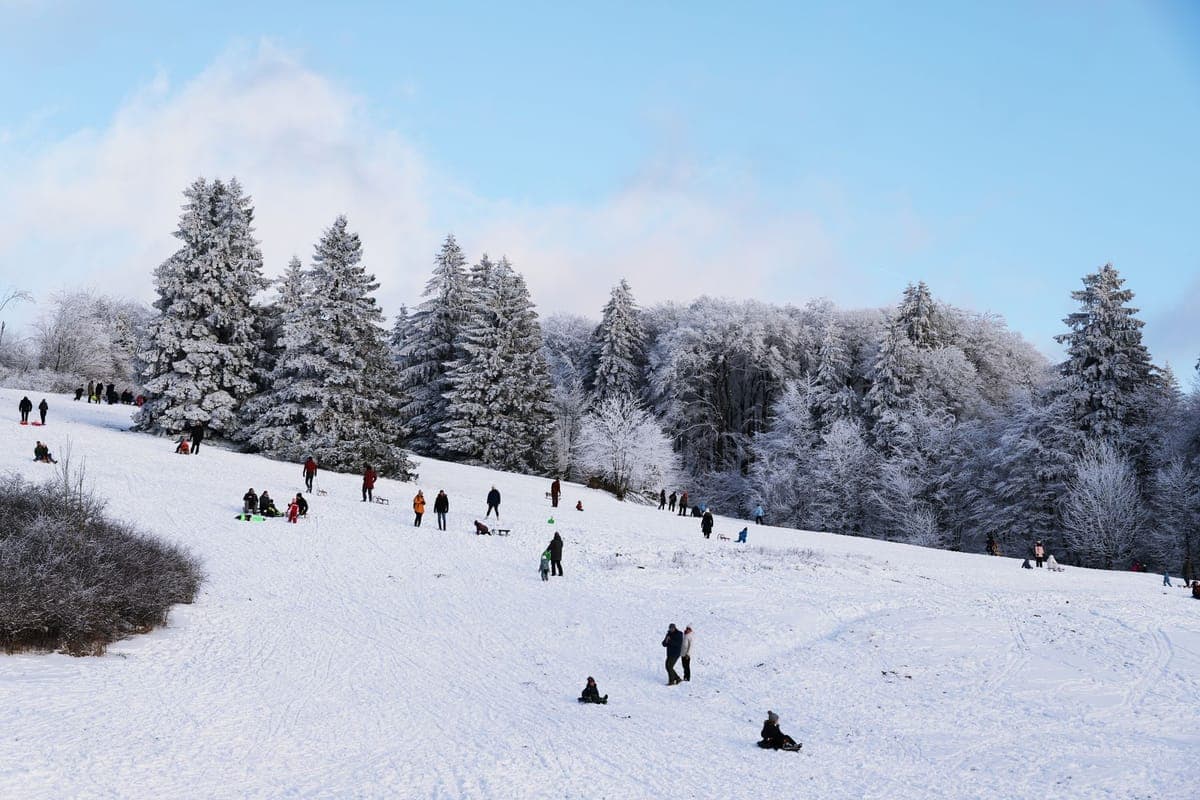
Every decision on this page is downstream of the slope you choose. A good sled on a bad hill is worse than a cheap sled on a good one, and hill selection is free.
- A long flat runout. The single most important feature. You need space to slow down, and more of it than the slope looks like it needs, because a packed track gets faster every hour it is used.
- Nothing hard at the bottom or the sides. Trees, fences, rocks, light poles, parked cars, ponds, and above all roads. Walk the runout before the first run.
- An even surface. Bumps launch small children off sleds. Ice patches make everything faster and unsteerable.
- Not a ski slope. Sleds are not allowed on most pistes and the reason is that a sled and a skier meeting is bad for both.
- Daylight. Obvious and routinely ignored on the way home from school.
The helmet argument
Sledding produces speeds comparable to a beginner ski run, on a surface just as hard, with essentially no ability to steer or stop. The rider is also lower to the ground, feet first, with the head trailing. Almost nobody wears a helmet, and the reason is cultural rather than analytical: sledding reads as play and skiing reads as sport.
If your household owns ski helmets, wear them; a snow helmet is the obvious choice and there is no reason it should sit in the garage on a sledding day. If you do not own one, a bike helmet is far better than nothing, though it is designed for a different impact profile and offers no ear coverage in cold air. A certified snow helmet with a dial adjuster is inexpensive, and the kids helmet chart has the measurement bands.
The one thing that is not optional either way: no scarves, no loose drawstrings, and no hood cords that can catch. A neck gaiter instead of a scarf, as on the face protection page.
Which sled for which child
| Type | How it behaves | Best for |
|---|---|---|
| Toboggan or foam sled | Predictable, moderate speed, seats one or two | Family use, mixed ages, the safe default |
| Steerable sled with a brake | Some directional control and a way to slow down | Older children on longer slopes |
| Saucer or disc | Fast, spins, effectively unsteerable | Gentle short slopes and older children only |
| Inflatable tube | Very fast on packed snow, high bounce, no control | Groomed tubing parks with lanes, not a local hill |
| Runner sled | Steers well on hard snow, poor in soft | Older children on a firm, familiar hill |
The three sleds in this ledger sit in three different places on that table, and the roundup ranks them: the sled roundup compares published construction and capacity. What is worth taking from the table on its own is that speed and control move in opposite directions, and for young children control is worth more.
Check the published capacity
Sleds publish a weight capacity and a rider count, and the two together are the useful figure. A sled published for one child is not a sled for a parent and a child, and adding an adult changes both the speed and the stopping distance significantly. If the plan is for an adult to ride with a small child, buy a sled published for two.
The five rules worth stating out loud
- Feet first, sitting up or lying back. Never head first. This is the single behavior most associated with serious sledding injury.
- One rider unless the sled publishes two. Stacking children on a one-person sled is how they come off at the bottom.
- Wait for the runout to clear. One rider at a time on the track, and someone at the bottom keeping it clear.
- Nothing towed behind anything. A sled behind a car, a snowmobile or an ATV is a different activity with a much worse outcome distribution.
- Roll off rather than steering into something. Teach children to bail sideways off the sled. It is the one useful skill on a hill with no brakes.
What to wear, which is more than people bring
Sledding is wetter than skiing. Everyone sits in the snow, everyone walks back up through it, and children fall over constantly. The clothing that matters is the same as for a ski day, and the seams matter more.
- Waterproof pants and jacket, ideally with sealed seams. Critical seams sealed means the lower seams are not taped, which is the wrong way round for someone sitting in snow. What each seam description means.
- Waterproof boots, not trainers. The walk back up is the part that soaks feet.
- Two pairs of mittens per child. The first pair will be soaked within the hour, and hands in the snow is the entire activity. Sizing method here.
- No cotton anywhere. The what-not-to-wear page applies without modification.
- Goggles or sunglasses on a bright day. Snow glare is the same glare whether or not you paid for a lift ticket.
Why this is the right first day on snow for a small child
For a family with a two to five year old, an afternoon of sledding costs the price of a sled and produces a child who thinks snow is fun. A full day of ski lessons at the same age frequently produces a child who thinks snow is cold and difficult. There is no rush. The toddler gear page makes the same argument at more length.
It is also the cheapest way to test whether the clothing you bought works before you commit to a ski trip. A sledding afternoon reveals a leaking jacket, a soaking glove and a boot that lets snow in, all for free and twenty minutes from home. Fix those and the ski trip goes better.
Afterwards
Everything comes home wet. Get the boots and mittens somewhere with moving air at room temperature rather than on a radiator, which is the same principle as drying ski gear overnight and the reason a radiator is on the list of things not to do. Rinse a sled that has been on gritted snow, and store it flat rather than leaning, which is how plastic sleds warp.
Every pick, with the working
Each entry shows the published inputs, the axis scores they produce, and what you give up. The order is the computed order, not a commercial one, and the arithmetic is open underneath each score.
1 · A first helmet for a toddler who may not ski again
Retrospec Comstock Kids
Skip this one. If the child is going to ski more than one weekend, the extra $70 for a Mips youth helmet works out at about $3.50 per day on snow on our two-season convention. That is a small number for the one feature this helmet lacks.
Properly certified, dial-adjusted and $39.99, which makes it the cheapest legitimate route to getting a small child into a helmet. It has no rotational-impact liner, and on a two-season horizon the Mips helmets are only about three dollars a day more.
- Published price
- $39.99
- Cost per day on snow
- $4.00 a day
- Amortized over
- 2 seasons (10 days)
- Certified to
- ASTM F2040, CE EN 1077 Class B
- Rotational system
- None published
- Published sizes
- Kids XS 48-51 cm and Youth 52-55 cm
- Warranty
- Limited warranty; no term published
What it gets right
- ASTM F2040 and CE EN 1077 Class B at $39.99
- ErgoKnob dial adjuster
- Covers 48-55 cm, which reaches younger than most youth helmets
What you give up
- No rotational-impact system
- No published warranty term
The working behind the 5.0
- Cost per day on snow: 8.1
- $39.99 over 2 seasons at 5 days each = 10 days = $4.00 a day
- Published protection: 6.0
- ASTM F2040 (+4); CE EN 1077 (+2); no rotational-impact system (+0)
- Size availability: 3.2
- 2 published sizes (1.7 of 8.5); continuous in-size adjuster published (+1.5); range: Kids XS 48-51 cm and Youth 52-55 cm
- Warranty and support: 0.0
- no published term (0 of 6); no published crash replacement (+0); no published repair route (+0)
Axes with unpublished inputs are dropped and the remaining weights re-normalized, so a product is not punished for a manufacturer’s silence. Specifications compiled September 3, 2026 from Retrospec published specifications.
2 · Three riders together on a gentle open slope
Flexible Flyer Winter Trek 3-Person Snow Sled
5.5 feet long with a published 300 lb combined capacity for three riders, which is the sled for the family that all wants to go at once. It is also the one that is hardest to steer, and that is worth knowing before the first run.
- Published price
- Not published
- Cost per day on snow
- Not published
- Amortized over
- 3 seasons (15 days)
- Certified to
- Not published
- Published sizes
- One size, 66 x 20 in
- Warranty
- No term published
Flexible Flyer publishes no MSRP we could read.
What it gets right
- Published 300 lb combined capacity across three riders
- 66 in deck, long enough for two children and an adult
What you give up
- No published MSRP
- A long toboggan with three riders is genuinely difficult to steer or stop, which rules out crowded or tree-lined hills
The working behind the 0.0
- Cost per day on snow: not scored
- No manufacturer-published price, so this axis is not scored.
- Published protection: not scored
- Sleds carry no US protective standard, which is itself worth knowing.
- Size availability: not scored
- Sold in one size, so size availability does not apply.
- Warranty and support: 0.0
- no published term (0 of 6); no published crash replacement (+0); no published repair route (+0)
Axes with unpublished inputs are dropped and the remaining weights re-normalized, so a product is not punished for a manufacturer’s silence. Specifications compiled September 3, 2026 from Flexible Flyer published product specification.
3 · An adult riding down with a child who is not ready alone
Slippery Racer Downhill Xtreme Toboggan
A 250 lb published capacity on a 48-inch deck means an adult can ride with a small child, which is the difference between a sled a four-year-old uses and one they watch. Note that no US safety standard applies to sleds at all.
- Published price
- Not published
- Cost per day on snow
- Not published
- Amortized over
- 3 seasons (15 days)
- Certified to
- Not published
- Published sizes
- One size, 48 x 18 in
- Weight
- 1360 g
- Warranty
- No term published
Slippery Racer publishes no MSRP we could read, so the cost-per-day axis is not scored for this sled. Amazon also suppresses the displayed price on this listing because it sits below the maker's minimum advertised price, so the button reads Check price rather than a figure; the listing was verified in stock on September 26, 2026 and is sold there as a two-pack.
What it gets right
- 250 lb published weight capacity, enough for an adult plus a small child
- 48 x 18 in deck with contoured edges to hold on to
- 3 lb, so a child can carry it back up the hill themselves
What you give up
- No published MSRP
- No safety standard applies to sleds in the US, so there is no certification to check on any sled, this one included
The working behind the 0.0
- Cost per day on snow: not scored
- No manufacturer-published price, so this axis is not scored.
- Published protection: not scored
- Sleds carry no US protective standard, which is itself worth knowing.
- Size availability: not scored
- Sold in one size, so size availability does not apply.
- Warranty and support: 0.0
- no published term (0 of 6); no published crash replacement (+0); no published repair route (+0)
Axes with unpublished inputs are dropped and the remaining weights re-normalized, so a product is not punished for a manufacturer’s silence. Specifications compiled September 3, 2026 from Slippery Racer published specifications.
4 · One child on a wide, open hill with a long clear runout
Slippery Racer Downhill Pro Saucer Disc Sled
A 26-inch disc, which is the fastest and least steerable shape there is. That is the whole trade: children love it and it goes where the hill sends it, so the hill has to be chosen carefully. Unlike most saucers it publishes molded hand grips, so there is at least something to hold.
- Published price
- Not published
- Cost per day on snow
- Not published
- Amortized over
- 3 seasons (15 days)
- Certified to
- Not published
- Published sizes
- One size, 26 in diameter
- Warranty
- No term published
Slippery Racer publishes no MSRP we could read.
What it gets right
- Published 26 in diameter in one-piece injection-molded polyethylene, with nothing to inflate or assemble
- Molded hand grips published, which a bare disc does not give you
- Coated with the maker's published IceVex cold-resistant treatment
What you give up
- No published MSRP
- No published rider weight limit, so there is no figure to check an adult against
- A saucer spins and cannot be steered, so it needs an open hill with no trees or fences
The working behind the 0.0
- Cost per day on snow: not scored
- No manufacturer-published price, so this axis is not scored.
- Published protection: not scored
- Sleds carry no US protective standard, which is itself worth knowing.
- Size availability: not scored
- Sold in one size, so size availability does not apply.
- Warranty and support: 0.0
- no published term (0 of 6); no published crash replacement (+0); no published repair route (+0)
Axes with unpublished inputs are dropped and the remaining weights re-normalized, so a product is not punished for a manufacturer’s silence. Specifications compiled October 12, 2026 from Slippery Racer published Downhill Pro specifications.
Prices last verified October 20, 2026. Prices move constantly; the figure on Amazon at the moment you click is the real one.
Questions people actually ask
Should kids wear helmets while sledding?
Yes. Sledding reaches speeds comparable to a beginner ski run on equally hard snow, with no ability to steer or stop. A snow helmet is ideal; a bike helmet is much better than nothing, though it is designed for a different impact profile and gives no ear coverage in cold air.
What makes a good sledding hill?
A long flat runout with nothing hard at the bottom or the sides, an even surface without ice patches or bumps, and no roads, ponds, fences or trees in the path. Walk the runout before the first run, and set a walking lane at one side of the track.
What kind of sled is safest for young children?
A toboggan or foam sled: predictable, moderate speed, and available in versions published for two riders so an adult can go along. Saucers spin and cannot be steered, and inflatable tubes are very fast on packed snow, both of which suit older children on gentle terrain rather than small children.
Is it safe to sled head first?
No. Riding feet first, sitting up or lying back, is the standard advice, and head first is the position most associated with serious sledding injury. Teaching children to roll sideways off the sled rather than steering into an obstacle is the other useful habit.
Can you sled on a ski slope?
Almost never. Most resorts prohibit it on pistes, because a sled cannot be steered or stopped reliably and a collision with a skier is bad for both. Resorts that offer tubing run it in a separate lane with its own lift for exactly that reason.