Winter hiking or snowshoeing: which one does your trail need?
The deciding factor is not difficulty or fitness. It is whether the snow holds you up - and there is a simple test for that before you spend anything.
By Sawyer V. · Published
We have not tested this gear. Everything below is compiled from published specifications and published safety standards, and the arithmetic is public so you can check it. This page carries affiliate links: if you buy through one we earn a commission at no extra cost to you, and it does not change the order of the picks. Full disclosure.
The short answer
Walk ten steps off the packed trail. If you sink past your ankle, you want snowshoes. If the snow holds you and the problem is that it is slippery, you want traction - coils for packed snow, spikes for ice. The two solve different problems and neither substitutes: snowshoes float on soft snow, traction grips hard snow. On a popular packed trail, traction plus winter boots is usually the whole answer and costs a fraction as much.
| # | Pick | Best for | Score | Price |
|---|---|---|---|---|
| 1 | Yaktrax Pro Traction Device Anyone walking in ski or snow boots, where a strapless band slips off | $2.00 a dayon snow | 6.2/10 | $29.99 - View on Amazon |
| 2 | Kahtoola MICROspikes Footwear Traction Real ice, icy trails, and anyone walking a dog before the drive to the hill | $6.00 a dayon snow | 6.1/10 | $89.95 - View on Amazon |
| 3 | MSR Evo Trail Snowshoes Packed trails and rolling terrain, one pair shared between adults | $6.80 a dayon snow | 3.9/10 | $167.00 - View on Amazon |
| 4 | Tubbs Wayfinder Snowshoes A heavier adult, or an adult carrying a child and a bag | $8.20 a dayon snow | 3.2/10 | $173.70 - View on Amazon |
Prices last verified October 19, 2026. Prices move constantly; the figure on Amazon at the moment you click is the real one.
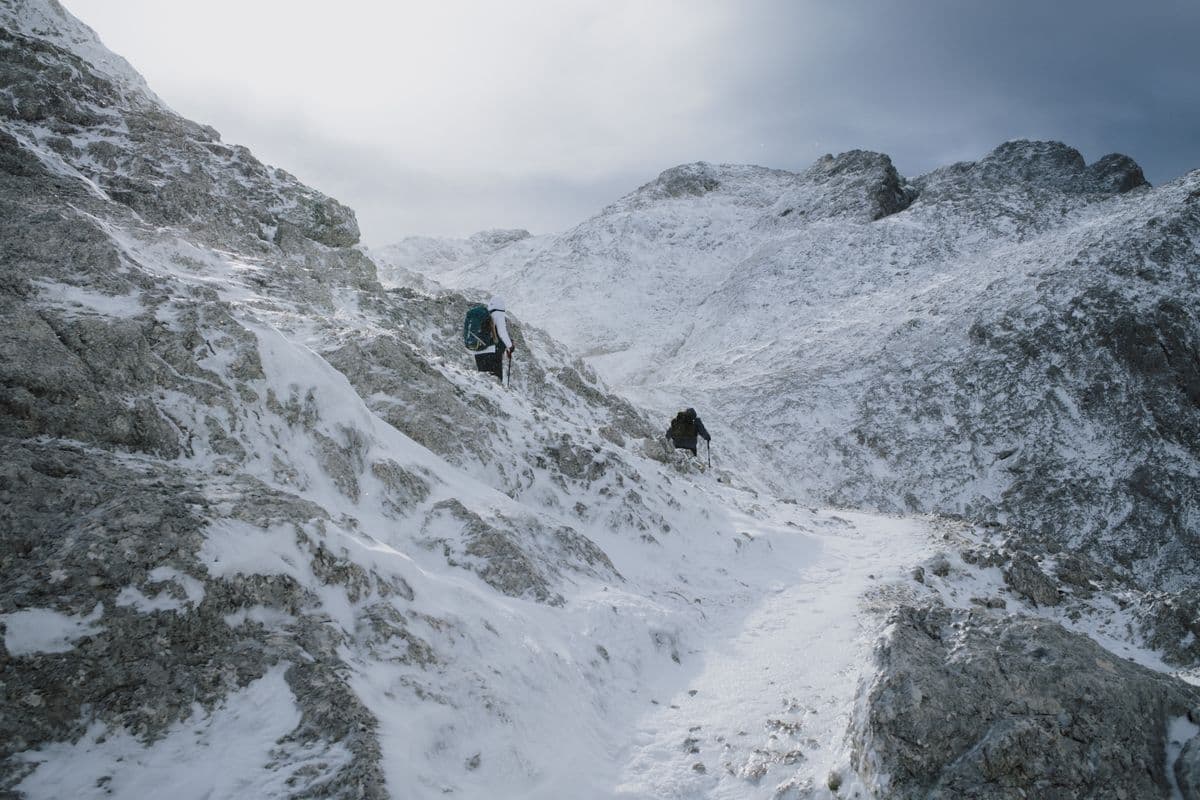
The ten-step test
Everything on this page comes down to one question you can answer at the trailhead in thirty seconds: does the snow hold your weight?
Step off the packed line and walk ten paces. If you stay on top, or sink an inch or two, the trail is consolidated and your problem is grip. If you drop to mid-calf or further - what hikers call postholing - you are going to spend the day exhausted and wet, and that is what snowshoes exist to prevent.
Trail conditions change that answer hour by hour. A trail that is firm at 8 a.m. after a cold night can be soft and collapsing by 2 p.m. in spring sun, which is why experienced winter walkers frequently carry both.
What each setup actually does
| Traction devices | Snowshoes | |
|---|---|---|
| Problem solved | Slipping on hard or icy snow | Sinking into soft snow |
| Works best on | Packed trails, ice, frozen boot-pack | Unconsolidated snow over about ankle depth |
| Sized by | Your footwear size | Your total load - body plus clothing plus pack |
| Carried when not worn | Pocket or a small pouch | Strapped to a pack, bulky |
| Typical cost | Lowest in winter gear | Several times a traction device |
| Learning curve | None | Minutes - walk with a slightly wider stance |
The sizing row is the one that surprises people. Traction is sized to the boot; snowshoes are sized to weight, because flotation is a function of surface area against load. The sizing method sets it out.
If the answer is traction
Two levels, and the difference is what is touching the ground.
Yaktrax Pro - coils
Published as 1.4 mm abrasion-resistant steel coils on a natural rubber frame with a removable over-foot strap, and tested safe from breakage down to -41F. Coils grip packed snow and slush well and glare ice poorly, which makes them the right tool for most maintained winter trails and for the walk from a parking lot.
Kahtoola MICROspikes - steel spikes
Published as twelve heat-treated 400-series stainless spikes per foot at 10.4 mm, on welded chains, in six sizes with a separate published chart for insulated boots, under a four-year warranty. This is the tool for genuine ice and frozen boot-pack on a steeper trail, and it is where coils stop being enough.
The full traction comparison covers carbide options in between, and the traction guide covers where each design belongs.
If the answer is snowshoes
MSR Evo Trail
Publishes a 180 lb load limit that rises to 250 lb with add-on tails fitted, at 1.64 kg a pair - light for a steel-traction snowshoe. The tails matter more than they sound: they mean capacity can be increased later rather than the whole snowshoe being replaced when you start carrying a heavier pack.
Tubbs Wayfinder
Publishes three sizes against explicit load bands - 25 in for 120 to 200 lb, 30 in for 170 to 250 lb, 36 in for 220 to 300 lb - with the bands deliberately overlapping so someone in between has a real choice rather than a guess. That is the clearest published sizing data in the category.
The snowshoe roundup ranks the field on those published limits.
Why serious winter walkers carry both
A single outing frequently contains both problems. The first mile of a popular trail is packed hard by other people and wants traction; the section past where most people turn around is untouched and wants flotation. Coming back down in the afternoon, the packed section has refrozen into something that genuinely needs spikes.
If you are buying one thing first, buy traction. It is a fraction of the price, it lives in a pocket, and it covers the conditions most day-hikers actually meet on maintained trails.
Poles change the answer more than people expect
Whichever setup you choose, poles matter in winter in a way they do not in summer, for three reasons that all come down to the surface being unreliable.
- Balance on uneven, hidden ground. Under snow you cannot see the rock or the hole, and a pole finds it before your ankle does.
- Depth checking. A pole plunged into fresh snow tells you whether the next step is six inches or two feet - which is the difference between walking and wallowing.
- Propulsion on snowshoes. The snowshoe gait is wider and slower than walking, and using arms as well as legs makes a real difference on any climb.
What you need is a pole with a snow basket - the wide disc near the tip that stops the pole disappearing to the handle in soft snow. Summer trekking poles with small baskets, or ski poles with the wrong basket, both work badly. How poles are sized and what the baskets do.
What about skis instead?
A fair question, because backcountry skis and splitboards cover the same terrain and descend it far more enjoyably. The reason this page is not about them is cost and commitment.
Touring equipment means specific bindings, climbing skins, a boot that walks and skis, and - not optional - avalanche training and a beacon, shovel and probe, because touring takes you into terrain where those are needed. It is a season-long project and a four-figure purchase.
Snowshoes are a same-day purchase, work with boots you own, and let you walk a marked winter trail this weekend. That is the trade, and for most people adding winter walking to a ski trip, it is the right one. Touring is where you go if walking uphill stops being the point and skiing down starts being it.
The boots underneath matter either way
Both setups attach to a winter boot, and a boot that soaks through makes the choice irrelevant. Look for a published temperature rating, a shaft tall enough to clear the snow you are walking in, and ideally a removable liner so it dries overnight.
Men’s boots, women’s boots and the boot guide cover what to look for, and poles are the third item worth having on either setup - they take load off the knees on descents and give you something to test depth with.
Dress for working, not for standing
Both activities are aerobic in a way that downhill skiing is not, and the mistake people bring from the ski hill is dressing for a chairlift. You will be generating heat continuously and stopping only briefly.
- Start slightly cold. If you are comfortable at the trailhead, you are overdressed five minutes in.
- Layers you can shed and carry, which means a small pack rather than a heavy jacket. The base layer that matters when you sweat.
- Gaiters or a tall boot for snowshoeing, because deep snow goes down the top of a boot on every step.
- Thinner gloves than you would ski in. Hands are working and holding poles.
Where each one is welcome
A practical point that catches out first-time winter walkers: trails in snow are shared, and the two setups damage each other’s surface differently.
- Groomed cross-country tracks are not for walking on. Boots and snowshoes both punch holes in a set track, which ruins it for skiers and is genuinely resented. Walk beside it, in the marked walking lane if one exists.
- Packed winter trails suit traction devices. If a hundred people have walked it, snowshoes are unnecessary and awkward - this is exactly the case for cleats.
- Unbroken snow needs snowshoes, and a walker in boots postholing along an untracked trail leaves deep holes that freeze into an ankle hazard for everyone behind them. This is the etiquette reason to carry snowshoes, not just the comfort one.
- Check the land manager’s rules. Some nordic centers charge a trail fee and designate which trails allow snowshoes; a few ban them outright on groomed terrain.
None of this is a gear decision, but it does decide which setup goes in the car on any given morning - which is the actual question this page is answering.
The verdict
Do the ten-step test. Sinking means snowshoes, sized by your total load. Slipping means traction, sized to your boot - coils for packed snow, spikes for ice. If you are choosing one purchase to start with, traction wins on price, portability and how often you will actually use it.
Every pick, with the working
Each entry shows the published inputs, the axis scores they produce, and what you give up. The order is the computed order, not a commercial one, and the arithmetic is open underneath each score.
1 · Anyone walking in ski or snow boots, where a strapless band slips off
Yaktrax Pro Traction Device
The Walk with the two upgrades that matter on a ski trip: a thicker 1.4 mm abrasion-resistant coil, and a removable over-foot strap that stops the band rolling off a boot heel. It is also the only device here with a published cold rating - Yaktrax states it is tested safe from breakage down to -41F.
- Published price
- $29.99
- Cost per day on snow
- $2.00 a day
- Amortized over
- 3 seasons (15 days)
- Certified to
- Not published
- Published sizes
- Four bands from women's 6.5-10 / men's 5-8.5 up to women's 15.5+ / men's 14+
- Warranty
- 90-day replacement of defective parts
What it gets right
- 1.4 mm abrasion-resistant steel coils, a step up from the Walk's 1.2 mm
- Published as tested safe from breakage in temperatures as low as -41F
- Removable over-foot strap on a natural rubber frame, which is what keeps it on a bulky boot
- Four published size bands, including one that goes to men's 14 and up
What you give up
- Still coils rather than spikes, so steep or glare ice is outside what it is for
- About a third more than the Walk for a difference most walkers feel only on boots
- Same 90-day warranty term as the cheaper model
The working behind the 6.2
- Cost per day on snow: 9.6
- $29.99 over 3 seasons at 5 days each = 15 days = $2.00 a day
- Published protection: not scored
- This category carries no protective standard.
- Size availability: 6.6
- 4 published sizes (5.1 of 8.5); continuous in-size adjuster published (+1.5); range: Four bands from women's 6.5-10 / men's 5-8.5 up to women's 15.5+ / men's 14+
- Warranty and support: 0.0
- no published term (0 of 6); no published crash replacement (+0); no published repair route (+0)
Axes with unpublished inputs are dropped and the remaining weights re-normalized, so a product is not punished for a manufacturer’s silence. Specifications compiled September 23, 2026 from Yaktrax published Pro specifications.
2 · Real ice, icy trails, and anyone walking a dog before the drive to the hill
Kahtoola MICROspikes Footwear Traction
The most specified product in this category: twelve 400-series stainless spikes per foot at a published 0.41 in (10.4 mm), welded stainless chains, six sizes, per-size weights, and a separate size chart for insulated boots. It is the only one here that publishes a fit chart for the boots a ski trip actually involves.
- Published price
- $89.95
- Cost per day on snow
- $6.00 a day
- Amortized over
- 3 seasons (15 days)
- Certified to
- Not published
- Published sizes
- XS to XXL, published in US men's, US women's and EU sizes, with a separate insulated-boot chart
- Weight
- 338 g
- Warranty
- Kahtoola 4-year limited warranty
What it gets right
- Twelve heat-treated 400-series stainless spikes per foot at a published 10.4 mm
- Six published sizes plus a separate published chart for insulated boots
- Per-size weights published, 285 g to 422 g per pair
- Four-year limited warranty
What you give up
- The most expensive device here, roughly four times the Yaktrax Walk
- 338 g per pair in medium, the heaviest here, and you feel it clipped to a bag
- Aggressive spikes are wrong for pavement-only use and must come off indoors
The working behind the 6.1
- Cost per day on snow: 6.7
- $89.95 over 3 seasons at 5 days each = 15 days = $6.00 a day
- Published protection: not scored
- This category carries no protective standard.
- Size availability: 8.5
- 6 published sizes (8.5 of 8.5); no continuous adjuster published (+0); range: XS to XXL, published in US men's, US women's and EU sizes, with a separate insulated-boot chart
- Warranty and support: 2.5
- 4 yr (2.5 of 6); no published crash replacement (+0); no published repair route (+0)
Axes with unpublished inputs are dropped and the remaining weights re-normalized, so a product is not punished for a manufacturer’s silence. Specifications compiled September 23, 2026 from Kahtoola published MICROspikes specifications.
3 · Packed trails and rolling terrain, one pair shared between adults
MSR Evo Trail Snowshoes
MSR publishes the number that decides whether snowshoes work: a 180 lb load limit, rising to 250 lb with add-on tails. Most brands publish a size chart instead and let you guess.
- Published price
- $169.95
- Cost per day on snow
- $6.80 a day
- Amortized over
- 5 seasons (25 days)
- Certified to
- Not published
- Published sizes
- One size, 22 in, with optional add-on tails
- Weight
- 1640 g
- Warranty
- No term published on the product page
What it gets right
- Published load limits: 180 lb, or 250 lb with tails fitted
- 1.64 kg per pair, light for a steel-traction snowshoe
- Tails are sold separately, so the capacity can be raised later rather than replaced
What you give up
- $169.95 is the most expensive snowshoe here
- One size only, so a heavier adult needs the tails as well
The working behind the 3.9
- Cost per day on snow: 6.1
- $169.95 over 5 seasons at 5 days each = 25 days = $6.80 a day
- Published protection: not scored
- Snowshoes carry no protective standard.
- Size availability: not scored
- Sold in one size, so size availability does not apply.
- Warranty and support: 0.0
- no published term (0 of 6); no published crash replacement (+0); no published repair route (+0)
Axes with unpublished inputs are dropped and the remaining weights re-normalized, so a product is not punished for a manufacturer’s silence. Specifications compiled September 3, 2026 from MSR published specifications.
4 · A heavier adult, or an adult carrying a child and a bag
Tubbs Wayfinder Snowshoes
The only snowshoe here that publishes a load band reaching 300 lb, which matters if you are a larger adult or carrying a small child. It is also the most expensive, and the size bands overlap enough that picking wrong is hard.
- Published price
- $204.95
- Cost per day on snow
- $8.20 a day
- Amortized over
- 5 seasons (25 days)
- Certified to
- Not published
- Published sizes
- 25 in (120-200 lb), 30 in (170-250 lb), 36 in (220-300 lb)
- Weight
- 1530 g
- Warranty
- No term published on the product page
What it gets right
- Three sizes published against explicit load bands from 120 lb to 300 lb
- 3 lb 6 oz per pair in the 30 in size
- Load bands overlap, so a person between two sizes has a real choice rather than a guess
What you give up
- $204.95, the most expensive item in this section
- The smallest size starts at 120 lb, so it does not cover children at all
The working behind the 3.2
- Cost per day on snow: 5.0
- $204.95 over 5 seasons at 5 days each = 25 days = $8.20 a day
- Published protection: not scored
- Snowshoes carry no protective standard.
- Size availability: 3.4
- 3 published sizes (3.4 of 8.5); no continuous adjuster published (+0); range: 25 in (120-200 lb), 30 in (170-250 lb), 36 in (220-300 lb)
- Warranty and support: 0.0
- no published term (0 of 6); no published crash replacement (+0); no published repair route (+0)
Axes with unpublished inputs are dropped and the remaining weights re-normalized, so a product is not punished for a manufacturer’s silence. Specifications compiled September 3, 2026 from Tubbs published specifications.
Prices last verified October 19, 2026. Prices move constantly; the figure on Amazon at the moment you click is the real one.
Questions people actually ask
Do I need snowshoes or just winter boots with traction?
Step off the packed trail and walk ten paces. If you sink past your ankle, you need snowshoes for flotation. If the snow holds you and the issue is slipping, traction devices over winter boots are the answer - and they cost a fraction as much.
Can you use traction devices instead of snowshoes in deep snow?
No. They solve opposite problems: traction grips hard snow, snowshoes float on soft snow. Wearing spikes in unconsolidated snow still leaves you sinking to the knee on every step, which is exhausting and wet.
Are snowshoes hard to learn?
No - it takes minutes. Walk with a slightly wider stance so the frames do not clip each other, and use poles on descents. It is genuinely one of the easiest winter activities to start, which is why it suits families.
How are snowshoes sized?
By total load - your body weight plus clothing and anything you carry - against the maker's published band. Tubbs publishes 25, 30 and 36 inch sizes covering 120 to 300 lb; MSR publishes a 180 lb limit that rises to 250 lb with add-on tails.
Should I carry both on a winter hike?
Experienced winter walkers often do, because one outing contains both problems: a packed first mile that wants traction, untouched snow further on that wants flotation, and a refrozen descent that wants spikes. If you buy one first, buy traction.