How to size snowshoes, by load rather than by foot
Your shoe size is irrelevant. What decides the size is your weight plus everything you are carrying, checked against a band the maker publishes, and the snow you plan to walk on.
By Sawyer V. · Published
We have not tested this gear. Everything below is compiled from published specifications and published safety standards, and the arithmetic is public so you can check it. This page carries affiliate links: if you buy through one we earn a commission at no extra cost to you, and it does not change the order of the picks. Full disclosure.
The short answer
Add your body weight, your clothing and boots, and everything in your pack. That total is your load, and it is the only number that sizes a snowshoe. Match it to the maker’s published band: Retrospec publishes 21 in for 80 to 120 lb, 25 in for 110 to 160 lb and 30 in for 160 to 210 lb. If you are between two bands, size down for packed trails and up for deep snow.
| # | Pick | Best for | Score | Price |
|---|---|---|---|---|
| 1 | Retrospec Drifter Snowshoes A family where a child and an adult both need a pair | $5.96 a dayon snow | 4.0/10 | $49.99 - View on Amazon |
| 2 | MSR Evo Trail Snowshoes Packed trails and rolling terrain, one pair shared between adults | $6.80 a dayon snow | 3.9/10 | $167.00 - View on Amazon |
| 3 | Tubbs Wayfinder Snowshoes A heavier adult, or an adult carrying a child and a bag | $8.20 a dayon snow | 3.2/10 | $170.09 - View on Amazon |
Prices last verified October 20, 2026. Prices move constantly; the figure on Amazon at the moment you click is the real one.
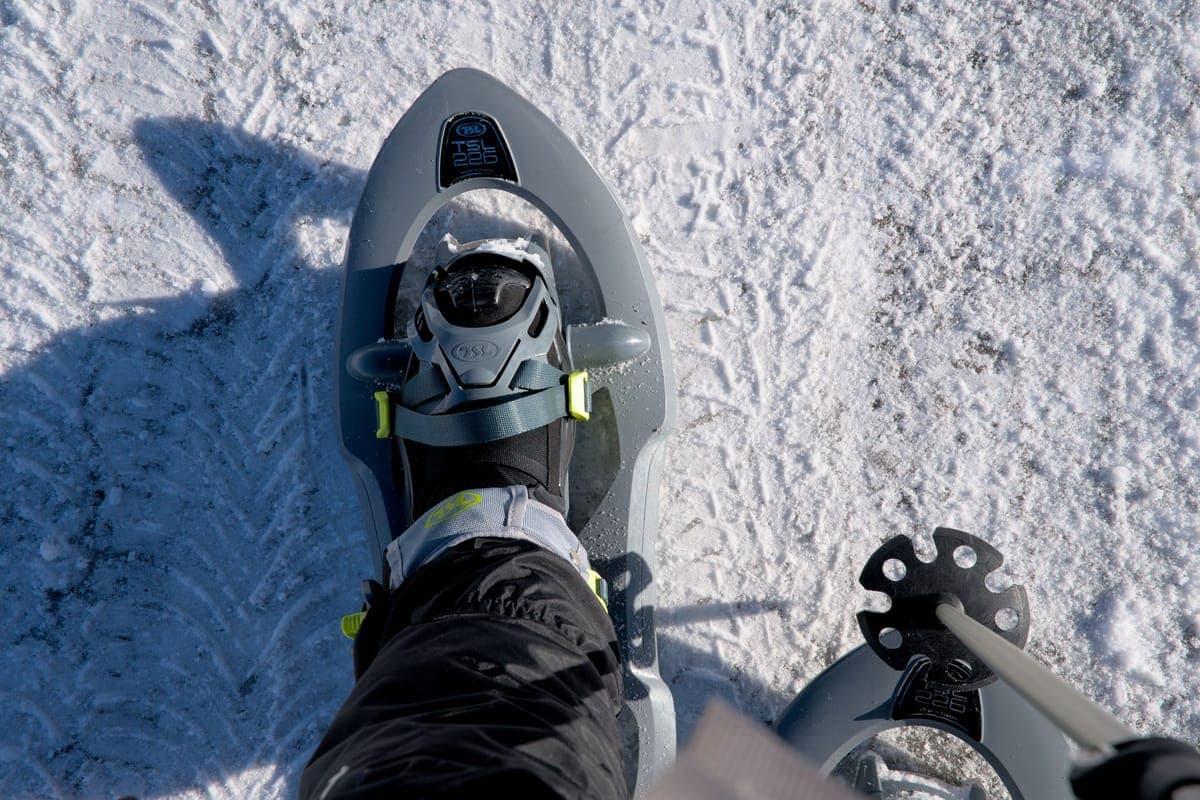
Work out your load first
A snowshoe works by spreading your weight over enough surface area that you sink less. That means the input is force pressing down, not the size of your foot, and the number the makers publish is a total load in pounds.
Add these up honestly:
- Your body weight.
- Winter clothing and boots, which is usually 8 to 12 lb of the total.
- Everything in a daypack: water, food, spare layers, a first aid kit.
- A child in a carrier, if that is the plan, plus the carrier itself. This is the one people forget, and it is often 30 to 40 lb.
The total is what you size against. A 150 lb adult carrying a 35 lb child and a 10 lb pack is a 205 lb load, which puts them in a completely different published band from where their body weight alone would.
What the published bands look like
Three brands in this ledger publish their sizing three different ways, which is itself worth knowing before you shop.
| Snowshoe | Published sizes and loads | Published pair weight |
|---|---|---|
| Retrospec Drifter | 21 in (80-120 lb), 25 in (110-160 lb), 30 in (160-210 lb) | 1,900 g in the 25 in size |
| Tubbs Wayfinder | 25 in (120-200 lb), 30 in (170-250 lb), 36 in (220-300 lb) | 1,530 g in the 30 in size |
| MSR Evo Trail | One size, 22 in, 180 lb load limit, rising to 250 lb with add-on tails | 1,640 g |
Three observations follow directly. Retrospec is the only one whose smallest size starts low enough to cover a child or a small teenager, at 80 lb. Tubbs is the only one whose largest published band reaches 300 lb. And MSR sells one size and raises its capacity with tails, which is a genuinely different model: you buy the capacity later instead of choosing it now.
If you are between two sizes
Load bands overlap deliberately, and being in an overlap is normal rather than a problem. The tie-breaker is the snow you will actually walk on.
- Packed trails, groomed winter paths, hard old snow. Size down. A smaller shoe is lighter, easier to walk naturally in, and you are not sinking anyway.
- Fresh deep snow, off-trail, anything unbroken. Size up. This is exactly the condition the extra surface area exists for.
- Mixed, or you do not know. Size down. Most recreational snowshoeing happens on trails other people have already walked, and a slightly small snowshoe on deep snow is tiring while a large one on a packed trail is tiring every single step.
Tails: buying capacity later
Some snowshoes take add-on tails that clip to the back and increase the surface area. MSR publishes exactly this on the Evo Trail: a 180 lb load limit as sold, rising to a published 250 lb with tails fitted.
For a household that mostly walks packed trails but occasionally carries a pack or a child, that is a sensible structure. You walk on the small footprint most of the time and add the area on the days you need it. The cost is that the tails are a separate purchase and one more thing to keep track of.
Sizing for a child
Children are the hardest case, because most snowshoe lines start above a child’s weight. A 60 lb child is below the bottom of every published band here except the smallest Retrospec, which starts at 80 lb.
Two honest answers. For a genuinely small child, a dedicated youth snowshoe is what you want, and buying an adult small does not work: the shoe is too long to walk in and the binding will not tighten onto a small boot. For a child over about 80 lb, the smallest adult size in a three-size line is usually the right answer and will last for years.
A third answer worth considering: for a family with young children, snowshoeing is often less fun than the alternative. An hour of sledding produces more enthusiasm per dollar than a walk in snowshoes for most children under seven.
Bindings and boots, which is where fit actually happens
The snowshoe is sized by load. The binding is what has to fit your boot, and it is a separate question that people conflate with sizing.
Wear the boots you will actually use when you test a binding: an insulated winter boot is much bulkier than a hiking boot, and a binding that is at the end of its adjustment range with a thin boot has nowhere to go. Look for a binding you can work while wearing gloves, because you will be adjusting it in the cold with cold hands.
What to wear on your feet
A waterproof insulated boot with a stiff-ish sole. Not a ski boot, which is unwalkable, and not a trainer, which soaks. Wool socks, one pair, and the same argument applies as on the ski socks page: thin wool beats thick cotton every time. Gaiters if the snow is deep enough to go over the boot cuff.
Traction, and the thing that is not about size at all
Snowshoes carry crampon-like teeth under the foot and often rails along the frame. On flat groomed trails they barely matter. On any slope they matter a great deal, because a snowshoe with poor traction on an icy traverse is genuinely hazardous rather than merely annoying.
Some models publish a heel lift, a small bar you flip up under the heel on sustained climbs, which reduces calf strain significantly. If your local terrain is hilly, that is worth more than a size difference. The published pair weights above are also relevant here: over a long day, 1,530 g against 1,900 g per pair is a real difference in how tired you are.
The short version
- Add body weight, clothing, pack and any child carrier. That total is the input.
- Match the total to the maker’s published band, not to a generic chart.
- In an overlap, size down for packed trails and up for deep fresh snow.
- Check the smallest published band before assuming a line covers a child or a light adult.
- Test the binding with the boots you will actually wear, with gloves on.
Once the size is settled, the snowshoe roundup ranks the field on published load limits, weight and construction, and the cross-country page covers the other way to spend a winter day without a lift ticket.
Every pick, with the working
Each entry shows the published inputs, the axis scores they produce, and what you give up. The order is the computed order, not a commercial one, and the arithmetic is open underneath each score.
1 · A family where a child and an adult both need a pair
Retrospec Drifter Snowshoes
Three published sizes mapped to weight ranges from 80 to 210 lb, which is the honest way to size a snowshoe and the reason this is the one to buy for a mixed-age family rather than for one adult.
- Published price
- $149
- Cost per day on snow
- $5.96 a day
- Amortized over
- 5 seasons (25 days)
- Certified to
- Not published
- Published sizes
- 21 in (80-120 lb), 25 in (110-160 lb), 30 in (160-210 lb)
- Weight
- 1900 g
- Warranty
- Limited warranty; no term published
What it gets right
- Three sizes published against explicit weight ranges, starting at 80 lb
- 6061-T6 aluminum frame
- $149 published, twenty dollars under the MSR
What you give up
- 1.9 kg per pair in the 25 in size, heavier than the MSR
- Limited warranty with no published term
The working behind the 4.0
- Cost per day on snow: 6.7
- $149 over 5 seasons at 5 days each = 25 days = $5.96 a day
- Published protection: not scored
- Snowshoes carry no protective standard.
- Size availability: 3.4
- 3 published sizes (3.4 of 8.5); no continuous adjuster published (+0); range: 21 in (80-120 lb), 25 in (110-160 lb), 30 in (160-210 lb)
- Warranty and support: 0.0
- no published term (0 of 6); no published crash replacement (+0); no published repair route (+0)
Axes with unpublished inputs are dropped and the remaining weights re-normalized, so a product is not punished for a manufacturer’s silence. Specifications compiled September 3, 2026 from Retrospec published specifications.
2 · Packed trails and rolling terrain, one pair shared between adults
MSR Evo Trail Snowshoes
MSR publishes the number that decides whether snowshoes work: a 180 lb load limit, rising to 250 lb with add-on tails. Most brands publish a size chart instead and let you guess.
- Published price
- $169.95
- Cost per day on snow
- $6.80 a day
- Amortized over
- 5 seasons (25 days)
- Certified to
- Not published
- Published sizes
- One size, 22 in, with optional add-on tails
- Weight
- 1640 g
- Warranty
- No term published on the product page
What it gets right
- Published load limits: 180 lb, or 250 lb with tails fitted
- 1.64 kg per pair, light for a steel-traction snowshoe
- Tails are sold separately, so the capacity can be raised later rather than replaced
What you give up
- $169.95 is the most expensive snowshoe here
- One size only, so a heavier adult needs the tails as well
The working behind the 3.9
- Cost per day on snow: 6.1
- $169.95 over 5 seasons at 5 days each = 25 days = $6.80 a day
- Published protection: not scored
- Snowshoes carry no protective standard.
- Size availability: not scored
- Sold in one size, so size availability does not apply.
- Warranty and support: 0.0
- no published term (0 of 6); no published crash replacement (+0); no published repair route (+0)
Axes with unpublished inputs are dropped and the remaining weights re-normalized, so a product is not punished for a manufacturer’s silence. Specifications compiled September 3, 2026 from MSR published specifications.
3 · A heavier adult, or an adult carrying a child and a bag
Tubbs Wayfinder Snowshoes
The only snowshoe here that publishes a load band reaching 300 lb, which matters if you are a larger adult or carrying a small child. It is also the most expensive, and the size bands overlap enough that picking wrong is hard.
- Published price
- $204.95
- Cost per day on snow
- $8.20 a day
- Amortized over
- 5 seasons (25 days)
- Certified to
- Not published
- Published sizes
- 25 in (120-200 lb), 30 in (170-250 lb), 36 in (220-300 lb)
- Weight
- 1530 g
- Warranty
- No term published on the product page
What it gets right
- Three sizes published against explicit load bands from 120 lb to 300 lb
- 3 lb 6 oz per pair in the 30 in size
- Load bands overlap, so a person between two sizes has a real choice rather than a guess
What you give up
- $204.95, the most expensive item in this section
- The smallest size starts at 120 lb, so it does not cover children at all
The working behind the 3.2
- Cost per day on snow: 5.0
- $204.95 over 5 seasons at 5 days each = 25 days = $8.20 a day
- Published protection: not scored
- Snowshoes carry no protective standard.
- Size availability: 3.4
- 3 published sizes (3.4 of 8.5); no continuous adjuster published (+0); range: 25 in (120-200 lb), 30 in (170-250 lb), 36 in (220-300 lb)
- Warranty and support: 0.0
- no published term (0 of 6); no published crash replacement (+0); no published repair route (+0)
Axes with unpublished inputs are dropped and the remaining weights re-normalized, so a product is not punished for a manufacturer’s silence. Specifications compiled September 3, 2026 from Tubbs published specifications.
Prices last verified October 20, 2026. Prices move constantly; the figure on Amazon at the moment you click is the real one.
Questions people actually ask
What size snowshoes do I need?
Size by total load, meaning your body weight plus clothing, boots, pack and anything you carry, checked against the band the maker publishes. Published bands in this category run from about 80 lb at the smallest to 300 lb at the largest. Shoe size is not an input.
Do snowshoes go by weight or shoe size?
Weight, and specifically total load rather than body weight alone. A snowshoe spreads force over surface area, so the input is how much force is pressing down. Shoe size only affects whether the binding fits your boot, which is a separate check.
What if I am between two snowshoe sizes?
Size down for packed trails and up for deep fresh snow. Bands overlap on purpose. If you are unsure what snow you will be on, size down: most recreational snowshoeing happens on trails others have already broken, and a large shoe is tiring on every step there.
Can two adults share one pair of snowshoes?
Only if both loads fall inside the same published band, which is common for adults of similar weight and unlikely for two adults 60 lb apart. Check the overlap in the maker’s published bands before assuming one pair works for both.
What size snowshoes does a child need?
Most adult lines start above a small child’s weight; the smallest band in this comparison begins at 80 lb. Below that, a dedicated youth snowshoe is needed, because an adult small is too long to walk in and the binding will not tighten onto a small boot.