Poles for snowshoeing, and the part that matters more than the pole
Most people buying snowshoe poles are buying the wrong thing. The pole is almost irrelevant; the basket on the end of it is the whole product.
By Sawyer V. · Published
We have not tested this gear. Everything below is compiled from published specifications and published safety standards, and the arithmetic is public so you can check it. This page carries affiliate links: if you buy through one we earn a commission at no extra cost to you, and it does not change the order of the picks. Full disclosure.
The short answer
Poles genuinely help when snowshoeing - they give you two more points of contact and take load off your knees on descents. What matters is the snow basket: the small trekking basket that comes on most poles sinks straight through soft snow and does nothing. Fit large snow baskets, use adjustable poles, and set them shorter uphill and longer downhill.
| # | Pick | Best for | Score | Price |
|---|---|---|---|---|
| 1 | Retrospec Drifter Snowshoes A family where a child and an adult both need a pair | $5.96 a dayon snow | 4.0/10 | $49.99 - View on Amazon |
| 2 | MSR Evo Trail Snowshoes Packed trails and rolling terrain, one pair shared between adults | $6.80 a dayon snow | 3.9/10 | $167.00 - View on Amazon |
| 3 | Tubbs Wayfinder Snowshoes A heavier adult, or an adult carrying a child and a bag | $8.20 a dayon snow | 3.2/10 | $173.70 - View on Amazon |
Prices last verified October 19, 2026. Prices move constantly; the figure on Amazon at the moment you click is the real one.
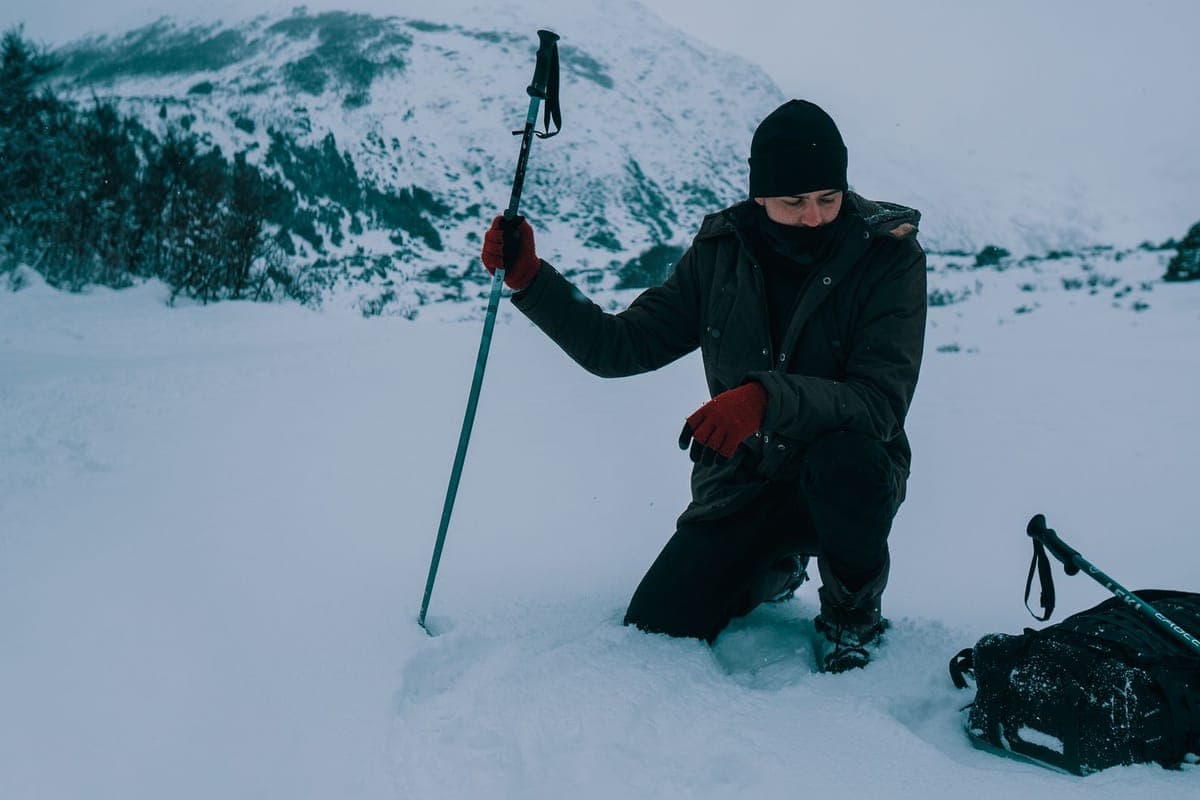
The basket is the product
A pole holds you up by pushing against the ground. In soft snow there is no ground, so what holds you up is the disc near the tip - the basket - spreading the load across enough surface area to stop the pole sinking.
Most trekking poles ship with a small summer basket, roughly the size of a coin, designed to stop the tip catching in mud and rock. In snowshoe conditions that basket sinks to the grip and the pole does absolutely nothing. People conclude poles do not help and leave them in the car.
A snow basket is several times the diameter. Fitting them is usually a twist-off, twist-on job that takes a minute, and it converts a useless pole into a genuinely useful one. If you take one thing from this page, it is that the baskets are the purchase and the poles are the delivery mechanism.
Do you need poles at all?
On a flat, packed, well-used trail, honestly no. Snowshoeing on hard-packed snow is walking, and you do not use poles to walk.
They earn their place in four situations, and all four are common:
- Any gradient. Uphill they let your arms contribute; downhill they take load off knees that are absorbing every step on an unstable surface.
- Deep or unbroken snow. Balance on a surface that gives way unpredictably is a genuine problem, and two more contact points solve it.
- Carrying weight. A pack or a child changes your balance, and it also changes what size snowshoe you need.
- Traverses. Walking across a slope rather than up it is where snowshoes feel least secure, and a pole on the uphill side helps a lot.
This is the case for adjustable
Elsewhere on this site the argument runs the other way - for resort skiing, fixed poles are usually the better buy. Snowshoeing reverses it, because you genuinely want two different lengths on the same outing.
| Terrain | Length | Why |
|---|---|---|
| Flat | Elbow at about 90 degrees with the tip on the snow | The neutral setting; start here |
| Uphill | Shorter, by roughly 5-10 cm | The ground is closer; a long pole forces the shoulder up |
| Downhill | Longer, by roughly 5-10 cm | The ground is further away; a longer pole lets you plant ahead and brake |
| Traversing | Uphill pole shorter, downhill pole longer, if you can be bothered | The slope is at an angle; your poles should be too |
That last row is the one experienced walkers do and everyone else ignores, and it is genuinely worth doing on a long traverse. Lever locks are what make any of this realistic, because you can work them with gloves on - twist locks seize when cold and wet.
Will your ski poles do?
Mostly yes, with one change and one caveat.
The change is baskets. Ski pole baskets are usually mid-sized and can often be swapped for larger powder baskets, which are the same thing snowshoers call snow baskets. Do that and a spare pair of ski poles becomes a perfectly good pair of snowshoe poles.
The caveat is length. Ski poles are fixed, so you get one setting for the whole walk, and you will notice on any sustained climb or descent. On rolling terrain that is a minor annoyance; on a genuinely steep outing it is the reason to own adjustable ones.
Ski pole sizing is a different calculation too - done in ski boots, which add height. The ski pole page has that method; for snowshoeing, measure in the boots you will actually walk in.
Straps: use them, and know when not to
The strap is what lets you push through the pole without gripping hard all day, and the correct technique is to come up through the loop from underneath and then down over the grip, so the strap takes the load across your palm.
The exception worth knowing: on steep or exposed terrain, or crossing anything you could slide on, take your hands out of the straps. A pole attached to your wrist is a pole you cannot let go of. That is standard practice and it is the same reasoning that keeps this site’s backcountry page pointing at training rather than at a shopping list.
The rest of the snowshoe kit
Poles are a small part of it, and the two bigger decisions are sizing and footwear.
- Snowshoe size comes from total load - your weight plus clothing, boots, pack and anything you carry - matched to the maker’s published band. The bands in this ledger run from 80 lb to 300 lb. The sizing page.
- Boots, not ski boots. Waterproof, insulated, with a sole that grips in the cold. What to look for.
- Gaiters if the snow is deeper than your boot cuff. Otherwise snow enters at the top and melts inside.
- Layers you can remove. Snowshoeing is steady work and you will overheat if you dress for the temperature rather than the activity. The mid-layer page.
- Eye protection. An open winter trail is the same reflective environment as a piste, with the same consequences. Which is a page of its own.
Why there are no pole picks here
The snowshoes on this page are ranked because their makers publish load bands, weights and sizes that can be compared. Pole makers do not: shaft material and diameter, weight, basket dimensions and lock type are published inconsistently or not at all.
Building a ranking out of that would be ranking marketing copy rather than products, so we describe what to look for instead and say why. The rule is published, and the same stance applies to ski poles, winter boots and heated gear. When makers publish comparable figures, this page gets a table.
What to look for, in order: large snow baskets included or available, an external lever lock, an aluminum shaft if you want it to bend rather than snap, and a length range that covers your neutral setting plus ten centimeters either side.
Every pick, with the working
Each entry shows the published inputs, the axis scores they produce, and what you give up. The order is the computed order, not a commercial one, and the arithmetic is open underneath each score.
1 · A family where a child and an adult both need a pair
Retrospec Drifter Snowshoes
Three published sizes mapped to weight ranges from 80 to 210 lb, which is the honest way to size a snowshoe and the reason this is the one to buy for a mixed-age family rather than for one adult.
- Published price
- $149
- Cost per day on snow
- $5.96 a day
- Amortized over
- 5 seasons (25 days)
- Certified to
- Not published
- Published sizes
- 21 in (80-120 lb), 25 in (110-160 lb), 30 in (160-210 lb)
- Weight
- 1900 g
- Warranty
- Limited warranty; no term published
What it gets right
- Three sizes published against explicit weight ranges, starting at 80 lb
- 6061-T6 aluminum frame
- $149 published, twenty dollars under the MSR
What you give up
- 1.9 kg per pair in the 25 in size, heavier than the MSR
- Limited warranty with no published term
The working behind the 4.0
- Cost per day on snow: 6.7
- $149 over 5 seasons at 5 days each = 25 days = $5.96 a day
- Published protection: not scored
- Snowshoes carry no protective standard.
- Size availability: 3.4
- 3 published sizes (3.4 of 8.5); no continuous adjuster published (+0); range: 21 in (80-120 lb), 25 in (110-160 lb), 30 in (160-210 lb)
- Warranty and support: 0.0
- no published term (0 of 6); no published crash replacement (+0); no published repair route (+0)
Axes with unpublished inputs are dropped and the remaining weights re-normalized, so a product is not punished for a manufacturer’s silence. Specifications compiled September 3, 2026 from Retrospec published specifications.
2 · Packed trails and rolling terrain, one pair shared between adults
MSR Evo Trail Snowshoes
MSR publishes the number that decides whether snowshoes work: a 180 lb load limit, rising to 250 lb with add-on tails. Most brands publish a size chart instead and let you guess.
- Published price
- $169.95
- Cost per day on snow
- $6.80 a day
- Amortized over
- 5 seasons (25 days)
- Certified to
- Not published
- Published sizes
- One size, 22 in, with optional add-on tails
- Weight
- 1640 g
- Warranty
- No term published on the product page
What it gets right
- Published load limits: 180 lb, or 250 lb with tails fitted
- 1.64 kg per pair, light for a steel-traction snowshoe
- Tails are sold separately, so the capacity can be raised later rather than replaced
What you give up
- $169.95 is the most expensive snowshoe here
- One size only, so a heavier adult needs the tails as well
The working behind the 3.9
- Cost per day on snow: 6.1
- $169.95 over 5 seasons at 5 days each = 25 days = $6.80 a day
- Published protection: not scored
- Snowshoes carry no protective standard.
- Size availability: not scored
- Sold in one size, so size availability does not apply.
- Warranty and support: 0.0
- no published term (0 of 6); no published crash replacement (+0); no published repair route (+0)
Axes with unpublished inputs are dropped and the remaining weights re-normalized, so a product is not punished for a manufacturer’s silence. Specifications compiled September 3, 2026 from MSR published specifications.
3 · A heavier adult, or an adult carrying a child and a bag
Tubbs Wayfinder Snowshoes
The only snowshoe here that publishes a load band reaching 300 lb, which matters if you are a larger adult or carrying a small child. It is also the most expensive, and the size bands overlap enough that picking wrong is hard.
- Published price
- $204.95
- Cost per day on snow
- $8.20 a day
- Amortized over
- 5 seasons (25 days)
- Certified to
- Not published
- Published sizes
- 25 in (120-200 lb), 30 in (170-250 lb), 36 in (220-300 lb)
- Weight
- 1530 g
- Warranty
- No term published on the product page
What it gets right
- Three sizes published against explicit load bands from 120 lb to 300 lb
- 3 lb 6 oz per pair in the 30 in size
- Load bands overlap, so a person between two sizes has a real choice rather than a guess
What you give up
- $204.95, the most expensive item in this section
- The smallest size starts at 120 lb, so it does not cover children at all
The working behind the 3.2
- Cost per day on snow: 5.0
- $204.95 over 5 seasons at 5 days each = 25 days = $8.20 a day
- Published protection: not scored
- Snowshoes carry no protective standard.
- Size availability: 3.4
- 3 published sizes (3.4 of 8.5); no continuous adjuster published (+0); range: 25 in (120-200 lb), 30 in (170-250 lb), 36 in (220-300 lb)
- Warranty and support: 0.0
- no published term (0 of 6); no published crash replacement (+0); no published repair route (+0)
Axes with unpublished inputs are dropped and the remaining weights re-normalized, so a product is not punished for a manufacturer’s silence. Specifications compiled September 3, 2026 from Tubbs published specifications.
Prices last verified October 19, 2026. Prices move constantly; the figure on Amazon at the moment you click is the real one.
Questions people actually ask
Do you need poles for snowshoeing?
Not on flat, packed trail - that is just walking. They earn their place on any gradient, in deep or unbroken snow, when carrying a pack or a child, and on traverses. Downhill in particular they take real load off knees that are absorbing every step on an unstable surface.
What baskets do I need for snowshoeing poles?
Large snow baskets, several times the diameter of the small summer basket most trekking poles ship with. The small one sinks straight through soft snow and the pole does nothing, which is why people conclude poles do not help. Swapping them is usually a one-minute twist-off job.
Can I use ski poles for snowshoeing?
Yes, with one change: swap the baskets for larger powder or snow baskets. The caveat is that ski poles are fixed length, so you get one setting for the whole walk and will notice it on any sustained climb or descent. Measure in the boots you will actually walk in.
How long should snowshoe poles be?
Neutral is elbow at about 90 degrees with the tip on the snow. Then shorten by roughly 5 to 10 cm going uphill, because the ground is closer, and lengthen by the same going downhill, so you can plant ahead and brake. That is why adjustable poles suit snowshoeing where fixed suits resort skiing.
Should I use pole straps when snowshoeing?
Usually yes - come up through the loop from underneath and down over the grip so the strap takes the load across your palm rather than gripping all day. Take your hands out on steep or exposed terrain, or anywhere you could slide: a pole attached to your wrist is one you cannot let go of.