Ski base layers, and the layering system in full
Three layers, each with one job. Get the one against your skin right and the rest of the system works; get it wrong and nothing else saves you.
By Sawyer V. · Published
We have not tested this gear. Everything below is compiled from published specifications and published safety standards, and the arithmetic is public so you can check it. This page carries affiliate links: if you buy through one we earn a commission at no extra cost to you, and it does not change the order of the picks. Full disclosure.
The short answer
Ski clothing is three layers: a base layer against the skin that moves sweat away from it, a mid layer that traps warm air, and a waterproof shell on top. The base layer should be merino wool or a synthetic, in a midweight around 200-250 g/m² for most people. Never cotton, anywhere in the system, including socks.
| # | Pick | Best for | Score | Price |
|---|---|---|---|---|
| 1 | Darn Tough Alpine Over-the-Calf Lightweight Ski Socks The one piece of ski gear worth buying before anything else | $2 a dayon snow | 6.4/10 | $30.64 - View on Amazon |
| 2 | MERIWOOL Merino 250 Base Layer Top The layer that decides whether a beginner is cold all day | $3.25 a dayon snow | 5.9/10 | $65.00 - View on Amazon |
| 3 | Smartwool Ski Zero Cushion Over-the-Calf Socks A boot that already fits, where any extra bulk makes it worse | $1.93 a dayon snow | 5.9/10 | $30.00 - View on Amazon |
Prices last verified October 19, 2026. Prices move constantly; the figure on Amazon at the moment you click is the real one.
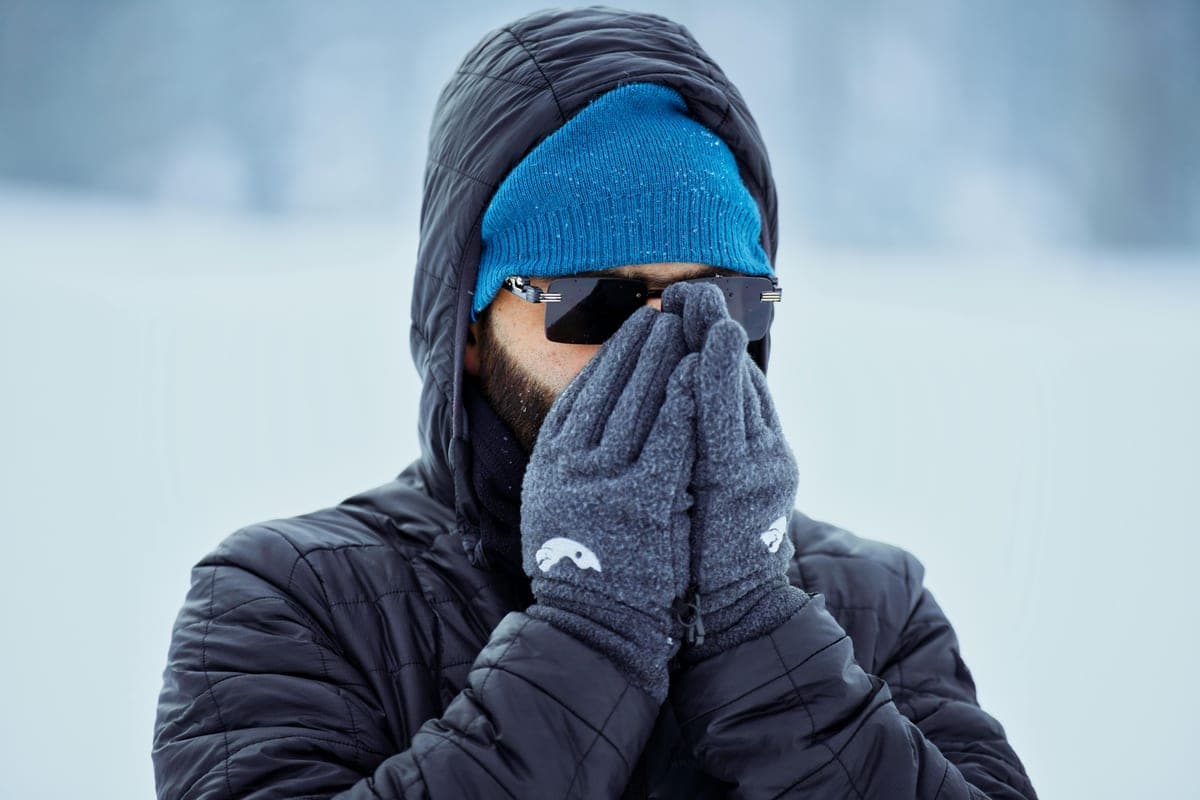
Start with the one rule
Cotton is the single worst thing to wear skiing, and it is what most people put on by default because it is what they own.
Cotton absorbs sweat and holds it against your skin, and it takes a very long time to dry. Wet fabric conducts heat away from your body far faster than dry fabric does, so a damp cotton t-shirt under a good jacket makes you colder than no t-shirt at all would. This is why the outdoor world has a saying about cotton that we will not repeat but which is entirely deserved.
The three layers, and what each one does
| Layer | Job | What to wear | Never |
|---|---|---|---|
| Base | Move sweat off the skin | Merino wool or a synthetic, close fitting | Cotton |
| Mid | Trap warm air | Fleece or a light synthetic puffy. Skip it on a mild day | Anything too bulky to move in |
| Shell | Keep wind and water out | A waterproof jacket and pants | A shower-resistant coat |
The mid layer is the one you adjust. On a mild day, leave it in the locker. On a cold one, wear it. That single adjustment covers more temperature range than any jacket feature. Which is also the argument for a shell or a 3-in-1 over a fixed insulated jacket.
Merino against synthetic
- Merino wool keeps insulating when damp, resists smell for days, and feels warmer at rest, which matters when you are standing in a lift line. It costs more, dries slowly and needs cool washing.
- Synthetic moves sweat faster, dries much faster, costs less and is more durable. It also starts to smell after one hard day, which on a week-long trip with limited laundry becomes a real consideration.
For a family trip where you are packing light and washing rarely, merino wins on the practical grounds rather than the technical ones. For a single day, or for a child who will grow out of it in a season, synthetic is the sensible spend.
Weight, which is published as a number
Merino base layers are sold by fabric weight in grams per square meter, and the number is on the product page:
- 150 g/m²: lightweight. Spring skiing, people who run hot, or as a second layer.
- 200-250 g/m²: midweight. The right answer for most skiers in most conditions, and what the pick below publishes.
- 250 g/m² and above: heavyweight. Genuinely cold conditions, or for someone who feels the cold badly.
Beginners are a specific case: a first-timer spends far more of the day standing still than moving, so they generate less heat than an experienced skier at the same air temperature. Midweight rather than lightweight is the right call.
For the products themselves, four base layers are ranked here on published fabric weight in grams per square meter - the one specification that means the same thing at every brand - along with fiber, micron and published warranty.
Fit
A base layer should be close fitting, in contact with your skin over most of your body. That contact is the mechanism: the fabric can only move sweat off skin it is touching. A loose base layer is just a thin sweater.
Long sleeves, and long legs. Base layer bottoms under ski pants are the thing people skip and then regret, particularly on a chairlift in wind.
Children
Same rules, with two adjustments. Buy synthetic rather than merino, because they will grow out of it in a season and it will be washed constantly. And dress a learning child slightly warmer than you would dress yourself, because they are standing still more and losing heat faster.
The full what-to-wear guide has a temperature table for both adults and children, which is more useful than a general rule.
Two pages carry on from here. The kids’ base layer roundup covers the sizes and weights that exist for children rather than the adult range cut down, and what to wear under ski pants answers the question almost every first-timer asks in a parking lot.
Nobody rents these
Base layers and socks are not part of any rental package, and they get worn all winter regardless of skiing. That puts them in the clear-buy column of our buy-versus-rent arithmetic, alongside gloves, goggles and a helmet.
They are also the cheapest way to be comfortable on a ski day, which is why they are the first thing on our list when a budget is fixed. Skis and boots are the expensive things, and they are the things to rent.
Every pick, with the working
Each entry shows the published inputs, the axis scores they produce, and what you give up. The order is the computed order, not a commercial one, and the arithmetic is open underneath each score.
1 · The one piece of ski gear worth buying before anything else
Darn Tough Alpine Over-the-Calf Lightweight Ski Socks
The only item in this entire ledger with an unconditional lifetime guarantee. It is a $30 sock that the maker will replace forever, which over any realistic number of ski days is the cheapest thing on the site.
- Published price
- $30
- Cost per day on snow
- $2 a day
- Amortized over
- 3 seasons (15 days)
- Certified to
- Not published
- Published sizes
- S through XL
- Warranty
- Unconditional lifetime guarantee
What it gets right
- Unconditional lifetime guarantee, published without qualifying conditions
- Lightweight merino, which is correct for a modern ski boot: a thick sock makes boots colder, not warmer
- Over-the-calf length, so the boot cuff never touches bare skin
What you give up
- $30 for one pair of socks reads as absurd until the replacement policy is read
- Lightweight is the right choice but feels wrong to anyone expecting a thick ski sock
The working behind the 6.4
- Cost per day on snow: 9.6
- $30 over 3 seasons at 5 days each = 15 days = $2 a day
- Published protection: not scored
- Socks carry no protective standard, so this axis does not apply.
- Size availability: 5.1
- 4 published sizes (5.1 of 8.5); no continuous adjuster published (+0); range: S through XL
- Warranty and support: 2.0
- no published term (0 of 6); no published crash replacement (+0); repair or replacement parts published (+2)
Axes with unpublished inputs are dropped and the remaining weights re-normalized, so a product is not punished for a manufacturer’s silence. Specifications compiled September 3, 2026 from Darn Tough published specifications.
2 · The layer that decides whether a beginner is cold all day
MERIWOOL Merino 250 Base Layer Top
250 g per square meter of merino is the midweight number, and midweight is the right answer for a beginner who alternates between standing still in a lesson and sweating on a magic carpet. Wool keeps working when it is damp; cotton does the opposite.
- Published price
- $65
- Cost per day on snow
- $3.25 a day
- Amortized over
- 4 seasons (20 days)
- Certified to
- Not published
- Published sizes
- S through XXL
- Warranty
- No term published on the product page
What it gets right
- 250 gsm published, so the weight can be compared against any other merino layer
- Wool retains warmth when damp, which is the entire argument against a cotton shirt
- Wearable for several days, which matters on a trip with one suitcase
What you give up
- $65 for a single top is more than a pair of snow pants here
- Merino needs cool washing and takes a long time to dry
The working behind the 5.9
- Cost per day on snow: 8.7
- $65 over 4 seasons at 5 days each = 20 days = $3.25 a day
- Published protection: not scored
- Base layers carry no protective standard, so this axis does not apply.
- Size availability: 6.8
- 5 published sizes (6.8 of 8.5); no continuous adjuster published (+0); range: S through XXL
- Warranty and support: 0.0
- no published term (0 of 6); no published crash replacement (+0); no published repair route (+0)
Axes with unpublished inputs are dropped and the remaining weights re-normalized, so a product is not punished for a manufacturer’s silence. Specifications compiled September 3, 2026 from MERIWOOL published specifications.
3 · A boot that already fits, where any extra bulk makes it worse
Smartwool Ski Zero Cushion Over-the-Calf Socks
Zero cushion is not a compromise, it is the point: in a boot fitted properly there is no room for padding, and every millimeter of sock is a millimeter of lost contact with the shell.
- Published price
- $28.95
- Cost per day on snow
- $1.93 a day
- Amortized over
- 3 seasons (15 days)
- Certified to
- Not published
- Published sizes
- S through XL
- Warranty
- Limited lifetime warranty
What it gets right
- Zero cushioning, which is the correct construction for a fitted ski boot
- Limited lifetime warranty published
- Merino blend, so it stays warm damp and does not smell after three days
What you give up
- The limited lifetime warranty is a narrower promise than Darn Tough's unconditional one
- Anyone whose boots are slightly too big will find zero cushion uncomfortable
The working behind the 5.9
- Cost per day on snow: 9.7
- $28.95 over 3 seasons at 5 days each = 15 days = $1.93 a day
- Published protection: not scored
- Socks carry no protective standard, so this axis does not apply.
- Size availability: 5.1
- 4 published sizes (5.1 of 8.5); no continuous adjuster published (+0); range: S through XL
- Warranty and support: 0.0
- no published term (0 of 6); no published crash replacement (+0); no published repair route (+0)
Axes with unpublished inputs are dropped and the remaining weights re-normalized, so a product is not punished for a manufacturer’s silence. Specifications compiled September 3, 2026 from Smartwool published specifications.
Prices last verified October 19, 2026. Prices move constantly; the figure on Amazon at the moment you click is the real one.
Questions people actually ask
How many layers should I wear skiing?
Three on a cold day: base, mid and shell. Two on a mild one, dropping the mid layer. More than three usually makes you sweat, and sweat is what makes you cold two hours later.
Is merino wool better than synthetic for skiing?
Merino keeps insulating when damp and resists smell for days, which matters on a trip with limited laundry. Synthetic dries faster, costs less and is tougher. For adults on a week-long trip, merino. For children, synthetic.
Can I wear a cotton t-shirt under my ski jacket?
Do not. Cotton holds sweat against your skin and takes a long time to dry, and wet fabric pulls heat out of you far faster than dry fabric. It is the single most common reason people are cold on a ski day.
What weight base layer do I need for skiing?
Midweight, around 200-250 g/m², suits most people in most conditions. Beginners should lean midweight rather than light, because they spend more of the day standing still.
Do I need base layer bottoms?
Yes, and they are the layer people skip. Ski pants are a shell over your legs; without a base layer underneath you feel every bit of wind on a chairlift.