Ice traction: which device for a parking lot, a trail or a mountain
Five different things get called traction, they are not interchangeable, and the cheapest one solves the problem most families actually have.
By Sawyer V. · Published
We have not tested this gear. Everything below is compiled from published specifications and published safety standards, and the arithmetic is public so you can check it. This page carries affiliate links: if you buy through one we earn a commission at no extra cost to you, and it does not change the order of the picks. Full disclosure.
The short answer
Match the device to the surface. Packed snow and icy pavement: slip-on coils or chains, which cost very little and pack into a pocket. Icy trails and steeper walking: micro-spikes. Deep unbroken snow: snowshoes, which are about flotation rather than grip. Steep hard ice and mountaineering: crampons, which need training and boots designed for them, and are outside what this site covers.
| # | Pick | Best for | Score | Price |
|---|---|---|---|---|
| 1 | Retrospec Drifter Snowshoes A family where a child and an adult both need a pair | $5.96 a dayon snow | 4.0/10 | $49.99 - View on Amazon |
| 2 | MSR Evo Trail Snowshoes Packed trails and rolling terrain, one pair shared between adults | $6.80 a dayon snow | 3.9/10 | $167.00 - View on Amazon |
| 3 | Tubbs Wayfinder Snowshoes A heavier adult, or an adult carrying a child and a bag | $8.20 a dayon snow | 3.2/10 | $166.40 - View on Amazon |
Prices last verified October 22, 2026. Prices move constantly; the figure on Amazon at the moment you click is the real one.
Grip and flotation are different problems
The confusion in this category comes from treating one word, traction, as if it covered two unrelated situations.
- Grip. The surface is hard and you are sliding on it. The answer is something sharp that bites: coils, chains, spikes or crampons.
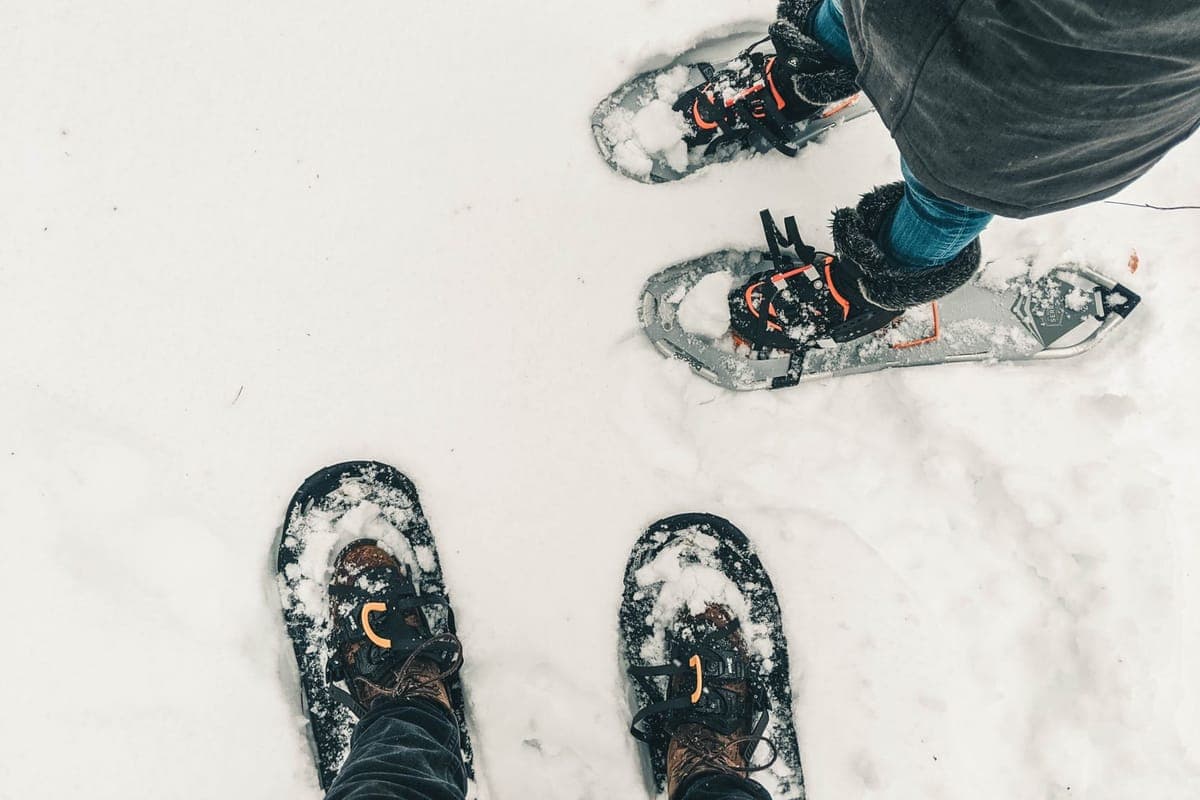
- Flotation. The surface is soft and you are sinking into it. The answer is surface area: snowshoes.
Buying the wrong one is common and completely ineffective. Snowshoes on an icy parking lot are worse than boots; micro-spikes in eighteen inches of fresh snow put you knee-deep with sharp things on your feet. The snowshoe sizing page covers the flotation side, and this page is mostly about grip.
The ladder, from a parking lot upward
| Device | What it is | Right for | Not for |
|---|---|---|---|
| Slip-on coils | A rubber harness with steel coils under the sole | Icy pavement, parking lots, flat packed paths | Anything steep or genuinely hard ice |
| Slip-on chains | A rubber harness with a chain web underfoot | Packed snow and mixed conditions on flat ground | Steep terrain |
| Micro-spikes | A rubber harness with short chains and small spikes | Icy and rolling trails; the general winter hiking answer | Technical or steep ice, and deep snow |
| Snowshoes | A frame with a deck, binding and toe crampon | Deep unbroken snow; flotation rather than grip | Icy pavement and hard-packed trails |
| Crampons | Rigid steel points attached to a stiff boot | Steep hard ice; mountaineering terrain | Anyone without training and the right boots |
The one most families actually need
Slip-on coils or chains. A resort parking lot, a village pavement and the path from a condo to a car all go through the same cycle: melt in the afternoon sun, freeze overnight, and become genuinely treacherous by eight in the morning.
A rubber harness that stretches over a boot in about fifteen seconds solves it entirely, costs very little, and folds into a jacket pocket. For an older or less steady member of the family it is one of the highest-value purchases on a ski trip, and it is invisible in the usual list of things to buy.
Two practical notes. They go over the winter boots you are already wearing, so the boot has to fit first - the boots page covers that. And they must come off indoors: walking on a hard floor with steel underfoot damages the floor and is slippery in the other direction.
Micro-spikes: the trail answer
A step up in aggression: a rubber harness with short chain links and small spikes, typically under a centimeter. They bite into hard packed snow and ice on rolling terrain, and they are what most winter hikers use for most of a winter.
The published figures worth comparing are spike length, the number of spikes, chain material, and the sizing range against boot size. Fit matters more than in most categories: a harness that is too loose rolls sideways under the boot, which is worse than no traction at all because it is unpredictable.
They are not crampons and should not be used as them. On steep hard ice, spikes this short skate, and the consequence of a slide on that terrain is different in kind from a slip on a path.
Snowshoes: a different job entirely
If you are sinking rather than sliding, none of the above helps. Snowshoes spread your weight over enough area that you sink less, and they are sized by total load - your weight plus clothing, boots, pack and anything you carry - against a band the maker publishes.
The published bands in this ledger run from 80 lb at the smallest to 300 lb at the largest, which is genuinely useful information and the reason the sizing question has its own page. Most snowshoes also carry a toe crampon and side rails, which give real grip on a slope, so on rolling terrain with deep snow they do both jobs.
What they do not do is work on ice or hard-packed trail. A snowshoe on a packed trail is a large awkward object with a small contact patch, and it is slower and less stable than a boot with micro-spikes.
Choosing, in three questions
- Am I sinking or sliding? Sinking means snowshoes. Sliding means everything else on this page.
- How steep? Flat means coils or chains. Rolling means micro-spikes. Steep hard ice means a course before it means a purchase.
- How far? A hundred meters from a car park is a different problem from a four-hour walk, and the answer scales with distance rather than with ambition.
Using them without hurting yourself
- Fit them before you need them. Standing on ice trying to stretch a cold rubber harness over a boot is the wrong moment to learn how.
- Check the harness has not rolled. Every so often, especially after rough ground. Spikes off-center are worse than none.
- Take them off indoors and on bare rock. Steel on stone blunts; steel on a lodge floor is slippery and unpopular.
- Dry them before storing. Steel rusts, exactly as ski edges do, and for the same reason.
- Poles help more than people expect. Two extra points of contact on ice is a large improvement, and ski poles work fine for this. The pole page covers sizing.
What to wear for winter walking
The same layering system as skiing, with one difference: you are working steadily rather than alternating between effort and standing on a lift, so you will overheat if you dress for the temperature rather than for the activity. Start slightly cold and expect to be comfortable within ten minutes.
A removable mid layer is the key piece, along with waterproof boots and a good wool sock. And take goggles or sunglasses with published UV protection: a winter trail through open ground is the same reflective environment as a piste, with the same consequences. Which is a page of its own.
Every pick, with the working
Each entry shows the published inputs, the axis scores they produce, and what you give up. The order is the computed order, not a commercial one, and the arithmetic is open underneath each score.
1 · A family where a child and an adult both need a pair
Retrospec Drifter Snowshoes
Three published sizes mapped to weight ranges from 80 to 210 lb, which is the honest way to size a snowshoe and the reason this is the one to buy for a mixed-age family rather than for one adult.
- Published price
- $149
- Cost per day on snow
- $5.96 a day
- Amortized over
- 5 seasons (25 days)
- Certified to
- Not published
- Published sizes
- 21 in (80-120 lb), 25 in (110-160 lb), 30 in (160-210 lb)
- Weight
- 1900 g
- Warranty
- Limited warranty; no term published
What it gets right
- Three sizes published against explicit weight ranges, starting at 80 lb
- 6061-T6 aluminum frame
- $149 published, twenty dollars under the MSR
What you give up
- 1.9 kg per pair in the 25 in size, heavier than the MSR
- Limited warranty with no published term
The working behind the 4.0
- Cost per day on snow: 6.7
- $149 over 5 seasons at 5 days each = 25 days = $5.96 a day
- Published protection: not scored
- Snowshoes carry no protective standard.
- Size availability: 3.4
- 3 published sizes (3.4 of 8.5); no continuous adjuster published (+0); range: 21 in (80-120 lb), 25 in (110-160 lb), 30 in (160-210 lb)
- Warranty and support: 0.0
- no published term (0 of 6); no published crash replacement (+0); no published repair route (+0)
Axes with unpublished inputs are dropped and the remaining weights re-normalized, so a product is not punished for a manufacturer’s silence. Specifications compiled September 3, 2026 from Retrospec published specifications.
2 · Packed trails and rolling terrain, one pair shared between adults
MSR Evo Trail Snowshoes
MSR publishes the number that decides whether snowshoes work: a 180 lb load limit, rising to 250 lb with add-on tails. Most brands publish a size chart instead and let you guess.
- Published price
- $169.95
- Cost per day on snow
- $6.80 a day
- Amortized over
- 5 seasons (25 days)
- Certified to
- Not published
- Published sizes
- One size, 22 in, with optional add-on tails
- Weight
- 1640 g
- Warranty
- No term published on the product page
What it gets right
- Published load limits: 180 lb, or 250 lb with tails fitted
- 1.64 kg per pair, light for a steel-traction snowshoe
- Tails are sold separately, so the capacity can be raised later rather than replaced
What you give up
- $169.95 is the most expensive snowshoe here
- One size only, so a heavier adult needs the tails as well
The working behind the 3.9
- Cost per day on snow: 6.1
- $169.95 over 5 seasons at 5 days each = 25 days = $6.80 a day
- Published protection: not scored
- Snowshoes carry no protective standard.
- Size availability: not scored
- Sold in one size, so size availability does not apply.
- Warranty and support: 0.0
- no published term (0 of 6); no published crash replacement (+0); no published repair route (+0)
Axes with unpublished inputs are dropped and the remaining weights re-normalized, so a product is not punished for a manufacturer’s silence. Specifications compiled September 3, 2026 from MSR published specifications.
3 · A heavier adult, or an adult carrying a child and a bag
Tubbs Wayfinder Snowshoes
The only snowshoe here that publishes a load band reaching 300 lb, which matters if you are a larger adult or carrying a small child. It is also the most expensive, and the size bands overlap enough that picking wrong is hard.
- Published price
- $204.95
- Cost per day on snow
- $8.20 a day
- Amortized over
- 5 seasons (25 days)
- Certified to
- Not published
- Published sizes
- 25 in (120-200 lb), 30 in (170-250 lb), 36 in (220-300 lb)
- Weight
- 1530 g
- Warranty
- No term published on the product page
What it gets right
- Three sizes published against explicit load bands from 120 lb to 300 lb
- 3 lb 6 oz per pair in the 30 in size
- Load bands overlap, so a person between two sizes has a real choice rather than a guess
What you give up
- $204.95, the most expensive item in this section
- The smallest size starts at 120 lb, so it does not cover children at all
The working behind the 3.2
- Cost per day on snow: 5.0
- $204.95 over 5 seasons at 5 days each = 25 days = $8.20 a day
- Published protection: not scored
- Snowshoes carry no protective standard.
- Size availability: 3.4
- 3 published sizes (3.4 of 8.5); no continuous adjuster published (+0); range: 25 in (120-200 lb), 30 in (170-250 lb), 36 in (220-300 lb)
- Warranty and support: 0.0
- no published term (0 of 6); no published crash replacement (+0); no published repair route (+0)
Axes with unpublished inputs are dropped and the remaining weights re-normalized, so a product is not punished for a manufacturer’s silence. Specifications compiled September 3, 2026 from Tubbs published specifications.
Prices last verified October 22, 2026. Prices move constantly; the figure on Amazon at the moment you click is the real one.
Questions people actually ask
What is the difference between micro-spikes and crampons?
Micro-spikes are a rubber harness with short chains and small spikes that stretches over a normal boot, for icy rolling trails. Crampons are rigid steel points fitted to a stiff mountaineering boot for steep hard ice, and they need training and the right boots to use safely.
Do I need snowshoes or spikes?
Ask whether you are sinking or sliding. Sinking into deep unbroken snow means snowshoes, which are about flotation. Sliding on hard packed snow or ice means spikes, coils or chains, which are about grip. Each is close to useless in the other situation.
What traction device do I need for an icy parking lot?
Slip-on coils or chains. They stretch over the boots you are already wearing in about fifteen seconds, cost very little, and fold into a pocket. For an older or less steady member of a family they are one of the highest-value purchases on a ski trip, and nobody thinks to buy them.
How are snowshoes sized?
By total load: your body weight plus clothing, boots, pack and anything you carry, checked against the band the maker publishes. Published bands in this comparison run from about 80 lb at the smallest to 300 lb at the largest. Shoe size only affects whether the binding fits your boot.
Can I wear traction devices indoors?
Take them off. Steel underfoot on a hard floor is slippery in the other direction and damages the surface, and walking on bare rock blunts the points. Dry them before storing, because the steel rusts exactly the way ski edges do.