Winter boots: what to wear when you are not in ski boots
You spend more of a ski trip walking on ice than skiing on snow. The boots for that are a real purchase, and the rating printed on the box is not how to choose them.
By Sawyer V. · Published
We have not tested this gear. Everything below is compiled from published specifications and published safety standards, and the arithmetic is public so you can check it. This page carries affiliate links: if you buy through one we earn a commission at no extra cost to you, and it does not change the order of the picks. Full disclosure.
The short answer
Four things matter and the number on the box is not one of them: a waterproof upper, a removable insulated liner or a stated insulation weight, an aggressive lug sole with a cold-rated rubber, and a height that clears the snow you walk in. Published temperature ratings are marketing figures with no common test behind them. Size to fit one thick sock, unlike a ski boot.
| # | Pick | Best for | Score | Price |
|---|---|---|---|---|
| 1 | Darn Tough Alpine Over-the-Calf Lightweight Ski Socks The one piece of ski gear worth buying before anything else | $2 a dayon snow | 6.4/10 | $30.95 - View on Amazon |
| 2 | MERIWOOL Merino 250 Base Layer Top The layer that decides whether a beginner is cold all day | $3.25 a dayon snow | 5.9/10 | $65.00 - View on Amazon |
Prices last verified October 22, 2026. Prices move constantly; the figure on Amazon at the moment you click is the real one.
Why this is a real purchase
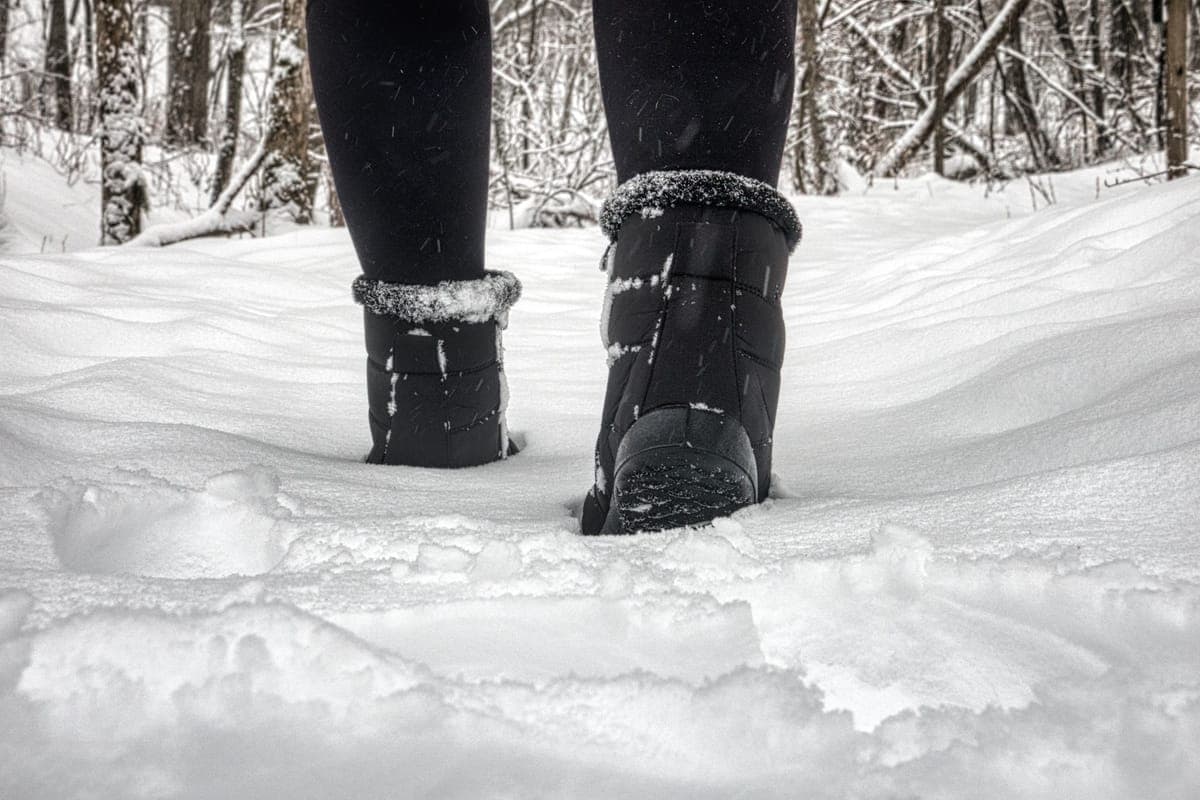
Add up a ski trip. The parking lot, the walk to the rental shop, the walk from the lodge to the lift, the evening in the village, the morning scraping a car, and every minute of anybody’s day who is not skiing. That is a lot of time on packed snow and ice, and it happens in whatever is on your feet when the ski boots come off.
The default is trainers, and trainers are the wrong tool for all of it: no waterproofing, no insulation, and a sole compound that goes hard and slippery in the cold. The result is wet feet by lunch on day one, and the person who suffers most is whoever is not skiing. The page for the non-skiers in the family puts boots near the top of its list for exactly this reason.
The four things that matter
A waterproof upper, and a sealed one
Water-resistant is not waterproof, and the difference shows up in slush. Look for a named waterproof membrane or a sealed rubber lower, and treat any boot that does not state waterproofing as not waterproof. The same distinction applies here as with outerwear: fabric rarely leaks first, seams do. What waterproof specifications actually mean.
A removable liner, or a published insulation weight
A removable felt or foam liner is the feature to look for. It insulates, and critically it comes out to dry - which is the same argument as the ski boot liner page makes, for the same reason. Where the liner is fixed, look for a published insulation weight in grams, typically 200 g for general winter use and 400 g and up for genuinely cold standing around.
A sole made for cold
The specification nobody checks and the one that stops you falling over. Two parts: deep, widely spaced lugs that clear packed snow rather than filling with it, and a rubber compound that stays soft below freezing. Standard rubber hardens in the cold and hard rubber does not grip ice. Some makers publish a cold-rated compound by name; most do not, which is worth noticing.
Height
Snow goes in at the top. A boot that reaches mid-calf covers most resort walking; an ankle boot is fine on cleared paths and useless in fresh snow. If the boot is short, the snow pants need to come over the top of it rather than tuck inside.
Why temperature ratings are close to useless
| Published figure | Useful? | Why |
|---|---|---|
| Temperature rating (for example -40F) | No | No common test method; assumes an active person and varies wildly by brand |
| Insulation weight in grams | Yes | Comparable between boots, and directly related to warmth |
| Removable liner | Yes | It dries, which matters more than any rating over a week |
| Named waterproof membrane | Yes | A specific claim rather than the word water-resistant |
| Named cold-rated rubber compound | Yes | The difference between grip and no grip on ice |
| Weight of the boot | Somewhat | You walk a long way in these; heavy boots are tiring |
Sizing: the opposite of a ski boot
This is the one place on this site where the advice reverses. A ski boot is fitted snug with one thin sock, because volume is the enemy and a thick sock makes it colder. A winter boot is the opposite: you want room for a thicker sock and a little air, because you are walking rather than transmitting steering input.
- Size with the sock you will wear. Often a half size up from your street shoe.
- Leave room to wiggle toes. Toes that cannot move cannot circulate blood, and cold toes in a winter boot are almost always a fit problem rather than an insulation one.
- Check the heel does not lift much when walking. Some lift is normal in a soft boot; a heel sliding freely causes blisters over a week.
- For children, one size of growing room is fine. More than that and they trip. Where growing room works.
Why there are no picks on this page
This site scores products on figures their makers publish, and winter boots are a category where the most important figures - insulation weight, sole compound, and whether the liner comes out - are published inconsistently or not at all, while a temperature rating with no test behind it is published prominently by nearly everybody.
Building a ranking out of that would be a ranking of marketing copy, which is not something we do. It is the same reason the ski pole page and the cross-country page carry no picks either, and the rule is published. When makers in this category publish comparable specifications, this page gets a table.
What we can tell you is what to look for, which is the four specifications above, and what to put inside the boot: one good wool sock. Both socks in this site’s ledger publish lifetime terms, and unlike in a ski boot, a thicker wool sock is the right answer here.
Grip, and when to add to it
Even a good sole is not enough on genuine ice, which is what a resort parking lot becomes after a freeze-thaw cycle. Slip-on traction devices - a rubber harness with chains or spikes that stretches over a boot - solve it completely and pack down to nothing.
They are the single most useful thing an older or less steady member of the family can have on a ski trip, and they cost very little. The traction devices page covers the types and the difference between the ones for a parking lot and the ones for a trail.
What a family actually needs
- Everyone: one pair of waterproof, insulated, well-soled winter boots. Worn every day of the trip and every cold day at home.
- Whoever is not skiing: the warmest pair. Standing still is the cold job.
- One good wool sock each, and a spare. Not cotton, here as everywhere.
- Slip-on traction devices for anyone unsteady on ice.
- Dry them the same way as ski boots. Liners out where they come out, room temperature, moving air, never a radiator. The method.
Every pick, with the working
Each entry shows the published inputs, the axis scores they produce, and what you give up. The order is the computed order, not a commercial one, and the arithmetic is open underneath each score.
1 · The one piece of ski gear worth buying before anything else
Darn Tough Alpine Over-the-Calf Lightweight Ski Socks
The only item in this entire ledger with an unconditional lifetime guarantee. It is a $30 sock that the maker will replace forever, which over any realistic number of ski days is the cheapest thing on the site.
- Published price
- $30
- Cost per day on snow
- $2 a day
- Amortized over
- 3 seasons (15 days)
- Certified to
- Not published
- Published sizes
- S through XL
- Warranty
- Unconditional lifetime guarantee
What it gets right
- Unconditional lifetime guarantee, published without qualifying conditions
- Lightweight merino, which is correct for a modern ski boot: a thick sock makes boots colder, not warmer
- Over-the-calf length, so the boot cuff never touches bare skin
What you give up
- $30 for one pair of socks reads as absurd until the replacement policy is read
- Lightweight is the right choice but feels wrong to anyone expecting a thick ski sock
The working behind the 6.4
- Cost per day on snow: 9.6
- $30 over 3 seasons at 5 days each = 15 days = $2 a day
- Published protection: not scored
- Socks carry no protective standard, so this axis does not apply.
- Size availability: 5.1
- 4 published sizes (5.1 of 8.5); no continuous adjuster published (+0); range: S through XL
- Warranty and support: 2.0
- no published term (0 of 6); no published crash replacement (+0); repair or replacement parts published (+2)
Axes with unpublished inputs are dropped and the remaining weights re-normalized, so a product is not punished for a manufacturer’s silence. Specifications compiled September 3, 2026 from Darn Tough published specifications.
2 · The layer that decides whether a beginner is cold all day
MERIWOOL Merino 250 Base Layer Top
250 g per square meter of merino is the midweight number, and midweight is the right answer for a beginner who alternates between standing still in a lesson and sweating on a magic carpet. Wool keeps working when it is damp; cotton does the opposite.
- Published price
- $65
- Cost per day on snow
- $3.25 a day
- Amortized over
- 4 seasons (20 days)
- Certified to
- Not published
- Published sizes
- S through XXL
- Warranty
- No term published on the product page
What it gets right
- 250 gsm published, so the weight can be compared against any other merino layer
- Wool retains warmth when damp, which is the entire argument against a cotton shirt
- Wearable for several days, which matters on a trip with one suitcase
What you give up
- $65 for a single top is more than a pair of snow pants here
- Merino needs cool washing and takes a long time to dry
The working behind the 5.9
- Cost per day on snow: 8.7
- $65 over 4 seasons at 5 days each = 20 days = $3.25 a day
- Published protection: not scored
- Base layers carry no protective standard, so this axis does not apply.
- Size availability: 6.8
- 5 published sizes (6.8 of 8.5); no continuous adjuster published (+0); range: S through XXL
- Warranty and support: 0.0
- no published term (0 of 6); no published crash replacement (+0); no published repair route (+0)
Axes with unpublished inputs are dropped and the remaining weights re-normalized, so a product is not punished for a manufacturer’s silence. Specifications compiled September 3, 2026 from MERIWOOL published specifications.
Prices last verified October 22, 2026. Prices move constantly; the figure on Amazon at the moment you click is the real one.
Questions people actually ask
What should I look for in winter boots?
A waterproof upper with sealed seams, a removable insulated liner or a published insulation weight in grams, a deep-lugged sole in a rubber that stays soft below freezing, and enough height to clear the snow you actually walk in. The temperature rating on the box is not one of the four.
Are winter boot temperature ratings accurate?
They are close to meaningless. There is no common test method behind them, they vary wildly between brands, and where a maker explains the rating it usually assumes an active wearer - which is not the person standing still watching a ski lesson. Use insulation weight in grams instead.
What size winter boots should I buy?
Often a half size up from your street shoe, sized with the sock you will actually wear. This is the opposite of a ski boot: you want room for a thicker sock and a little air, because toes that cannot move cannot circulate blood, and that is the usual cause of cold feet in a winter boot.
Can I wear ski boots to walk around a resort?
You can and it is unpleasant. A ski boot sole has no roll in it, so walking means short flat-footed steps, and on ice it is genuinely slippery. Undo the top buckle and power strap for short walks, and carry proper boots for anything longer.
Why do you not recommend specific winter boots?
Because this site scores products on published figures, and in this category the specifications that matter - insulation weight, sole compound and whether the liner is removable - are published inconsistently, while an untested temperature rating is published prominently. A ranking built on that would be a ranking of marketing copy.