Backcountry basics, and the page where we sell you nothing
Everything past a resort boundary is life-safety territory. This page explains what is involved and points you at real training, because that is the only responsible thing a website can do here.
By Sawyer V. · Published
The short answer
Backcountry skiing means skiing outside a patrolled, avalanche-controlled resort boundary. It requires a transceiver, a probe and a shovel that every member of the group can use under pressure, formal avalanche training, and a decision-making habit that a website cannot give you. This page carries no buy links and never will: the correct first purchase is a course, not equipment.
Why this page is different from every other page here
Everywhere else on this site we compile published specifications, do arithmetic on them, publish the working, and put a buy link at the bottom. That model works for a helmet, a goggle and a pair of snow pants. It does not work here, and we are going to be explicit about why rather than quietly leaving the category out.
Avalanche safety equipment is life-safety gear whose usefulness depends almost entirely on training and practice rather than on the specification of the device. A transceiver you have not practiced a search with is not safety equipment; it is an object. Ranking transceivers by published frequency and antenna count would produce a page that looks like our other pages, converts like our other pages, and is, in this one category, actively dangerous.
What backcountry actually means
Inside a resort boundary, a patrol team assesses avalanche risk every morning, triggers slides deliberately before the public arrives, closes terrain that is not safe, marks hazards, and will come and find you if you do not come down. That entire apparatus is included in the lift ticket and it is why resort skiing is as safe as it is.
Past the boundary rope, all of it stops. Nobody has assessed the slope, nobody has triggered anything, nothing is marked, and nobody is counting you at the end of the day. That is the whole distinction, and it is much larger than the few meters of rope suggests.
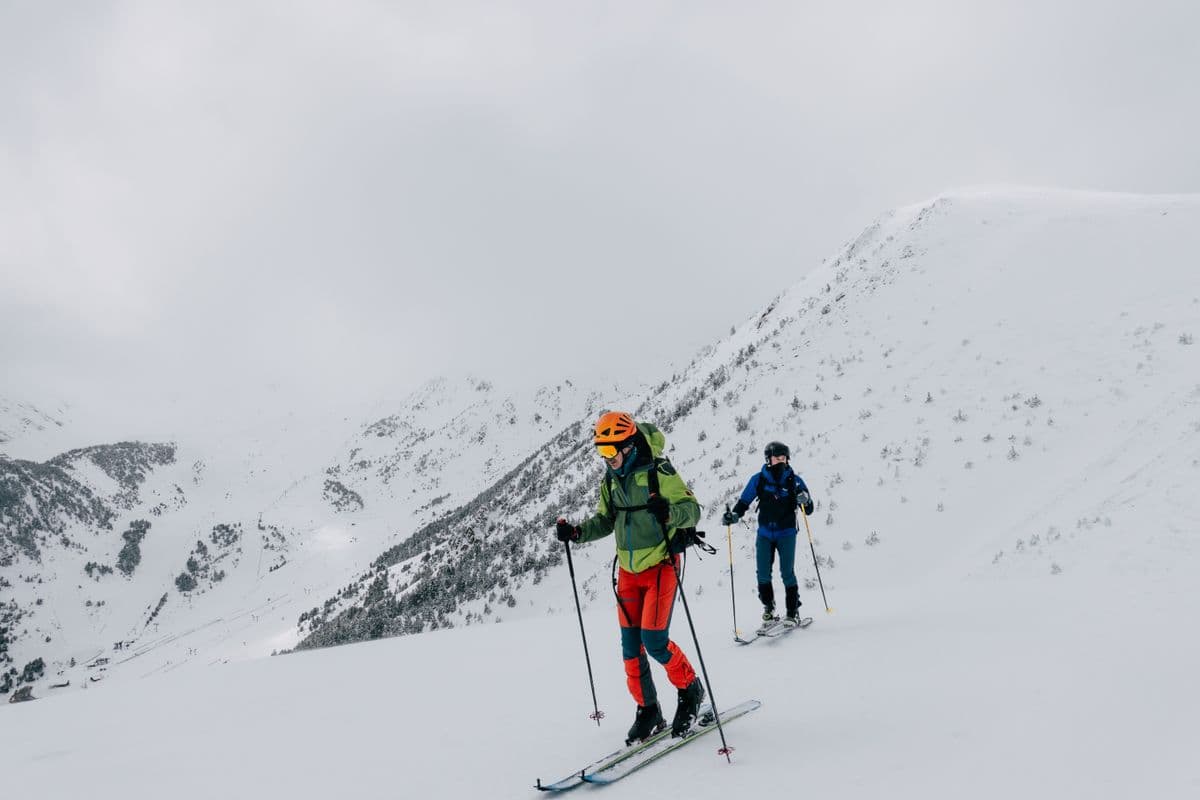
- Ski touring is going uphill under your own power on skis with a free heel and climbing skins, then locking the heel down to ski back.
- Sidecountry is a marketing word for terrain reached through a resort gate. The snow does not know it is near a lift; the hazards are identical to any other backcountry, and the word has probably contributed to more accidents than it has prevented.
- Slackcountry, out-of-bounds and off-piste are used loosely and often mean the same thing. If it is outside the patrolled boundary, treat it as backcountry.
The actual first step, which is a course
In the United States, formal recreational avalanche education is provided by organizations including the American Institute for Avalanche Research and Education and the American Avalanche Association, and courses are taught locally by providers accredited through them. A first-level course typically runs over three days and covers snowpack basics, terrain assessment, group decision-making, and hands-on transceiver search practice under time pressure.
Two things worth knowing before you sign up:
- Awareness sessions are not the same as a full course. A one-evening awareness talk is a good introduction and is not a substitute.
- Everyone in the group needs it. If you are buried, the people digging are your partners. Their training is the thing that saves you, not yours.
Every region also publishes a daily avalanche forecast for its own snowpack, and reading it is a habit rather than a task. Find the center that covers where you ski and read it every day of the season, including the days you are not going out. That is how the vocabulary and the pattern recognition arrive.
The equipment, described rather than recommended
Listed here so you know what a course will put in your hands, not as a shopping list. Buy this after training, in person, from a shop that will show you how it works.
- Transceiver. A beacon worn on the body that transmits a signal, and switches to receive to search for others. Every person carries one, and every person has to have practiced with one recently. Batteries checked every single day.
- Probe. A collapsible pole used to pinpoint a burial once the transceiver has narrowed it down. Practicing assembling it in gloves is part of the training for a reason.
- Shovel. A metal-bladed shovel. Digging is the slowest part of a rescue and by far the most physically demanding, and it is the part people consistently underestimate.
- Airbag pack. An inflatable device intended to help keep a person nearer the surface of a moving slide. Additional to the three above, never a replacement for any of them.
The three-item set is treated as a unit for a reason: without all three, and without partners trained to use them, the others do not function. That interdependence is exactly why a per-item ranking page is the wrong shape for this subject.
The part we can help with
Clothing and personal protection are ordinary gear questions and we cover them normally, with one adjustment for touring: you are working hard uphill and then stopping in the cold, so the layering problem is much sharper than at a resort.
- Base layers matter more here than anywhere else, because sweat that stays against your skin becomes the cold problem on the descent.
- A shell rather than an insulated jacket is usually correct for touring, with insulation carried and put on at the top.
- A helmet is a helmet, and the same certifications apply. What ASTM F2040 and EN 1077 actually cover is on its own page.
- Lens choice matters more in variable mountain light than on a groomed run, and carrying a second lens is normal.
The honest summary
Backcountry skiing is a genuinely wonderful thing that a lot of resort skiers eventually want to do, and it is not an equipment upgrade. It is a different activity with a different risk profile, entered through education and mentorship rather than through a shopping cart.
If this page has been useful and slightly disappointing, that is the intended outcome. Take the course, read the forecast for a season, go out with people who have done it for years, and buy the equipment when somebody who has trained you tells you which to buy. Meanwhile, the rest of this section is full of winter days that need no lift ticket and no avalanche training, and cross-country skiing in particular scratches a lot of the same itch.
Questions people actually ask
What equipment do you need for backcountry skiing?
A transceiver, a probe and a shovel carried by every person in the group, plus touring skis or a splitboard with climbing skins. The equipment only works if everyone has trained with it, which is why a course comes before any purchase.
Is sidecountry safer than backcountry?
No. Sidecountry is terrain reached through a resort gate, but the snowpack does not know it is near a lift. Once you are outside the patrolled boundary, nobody has assessed the slope or triggered anything, and the hazards are identical to any other backcountry.
Where do you get avalanche training in the US?
Through providers accredited by organizations such as the American Institute for Avalanche Research and Education and the American Avalanche Association. A first-level recreational course typically runs three days and includes hands-on transceiver search practice. An evening awareness talk is not a substitute.
Why does this site not recommend avalanche safety gear?
Because the usefulness of that equipment depends on training and practice rather than on published specifications, which is what our rankings are built from. We have tested none of it and we are enthusiasts rather than professionals, so we carry no buy links for transceivers, probes, shovels or airbag packs. That boundary is written into our editorial policy.
Can I use my resort ski gear for touring?
Your clothing, helmet and goggles carry over. The skis, bindings and boots do not: touring requires a binding that frees the heel for climbing and locks it for the descent, plus climbing skins. That is a separate setup bought with expert advice.