Ski jackets under $100, and the number most of them will not print
At this price the jackets are not the problem. The missing waterproof rating is, because it is the one figure that decides whether a wet afternoon ends the day.
By Sawyer V. · Published
We have not tested this gear. Everything below is compiled from published specifications and published safety standards, and the arithmetic is public so you can check it. This page carries affiliate links: if you buy through one we earn a commission at no extra cost to you, and it does not change the order of the picks. Full disclosure.
The short answer
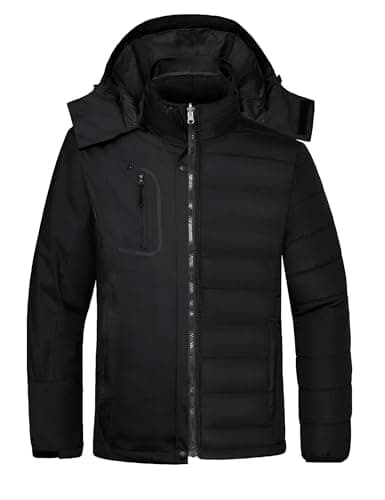
Yes, a usable ski jacket exists under $100 - and the specification to insist on is a published waterproof rating in millimeters plus sealed critical seams. The Wantdo 3-in-1 is the only jacket here that prints a number, 10,000 mm, over a named microporous TPU membrane, and it includes a zip-out fleece liner. Most jackets at this price publish no rating at all, which is not the same thing as failing one - it means you are buying on trust.
| # | Pick | Best for | Score | Price |
|---|---|---|---|---|
| 1 | Wantdo Men's 3-in-1 Ski Jacket A wet-snow resort at a price that does not assume a season pass | Not publishedon snow | 3.8/10 | $59.97 - View on Amazon |
| 2 | Arctix Men's Icecap Insulated Jacket A cold dry week where price matters more than a spec sheet | $4.20 a dayon snow | 4.7/10 | $92.11 - View on Amazon |
| 3 | Columbia Boys' Alpine Action II Jacket A child who needs one warm waterproof jacket, not a system | $9 a dayon snow | 3.4/10 | $94.70 - View on Amazon |
| 4 | Arctix Kids Jackalope Insulated Jacket A first trip where nobody knows whether this will become a hobby | $5.50 a dayon snow | 4.3/10 | $79.99 - View on Amazon |
Prices last verified October 19, 2026. Prices move constantly; the figure on Amazon at the moment you click is the real one.
What the $100 line actually buys
Under about a hundred dollars you can buy a jacket that keeps a beginner warm and dry through a normal resort day. What you generally cannot buy is information. Expensive jackets publish waterproof ratings, breathability figures and insulation weights; budget jackets publish adjectives, and the gap in stated specifications is wider than the gap in performance.
That matters because the failure mode at this price is specific. A cheap jacket rarely fails on the cold - synthetic insulation is cheap and effective. It fails when it gets wet, on a spring afternoon or during a day of sitting in soft snow, because the fabric was treated rather than membraned and the seams were stitched rather than sealed.
Prices on this page move constantly. Every buy button shows the live figure rather than a number we remembered, and two of these publish a list price slightly above the line while selling at or under it. Treat $100 as a shopping ceiling, not a specification.
The three specifications worth insisting on
| Specification | What good looks like | If it is not published |
|---|---|---|
| Waterproof rating | A stated millimeter figure, 5,000 mm and up | You are buying a coating on trust; it may be fine, and you cannot compare it |
| Seam sealing | At minimum 'critical seams sealed' | Water enters through needle holes at the shoulders, which is where snow sits |
| Insulation | A named insulation, ideally with a gram weight | Warmth cannot be compared between two jackets at all |
The waterproof ratings page explains what 10,000 mm means and why the number alone is not the whole story. The short version: for a family skiing groomed runs in normal conditions, a published 5,000 to 10,000 mm with sealed critical seams is genuinely enough.
The picks
Wantdo Men’s 3-in-1 Ski Jacket
The pick, and the reason is one printed number. Wantdo publishes 10,000 mm over a named microporous TPU membrane - a figure most brands at any price decline to state, and a membrane rather than a surface treatment. At this end of the market that is the entire ballgame.
It is also a three-in-one: a zip-out fleece liner inside a shell, which is two garments for one price and the most flexible thing you can own for a family that skis a few days a year in variable weather. The 3-in-1 page covers why that construction suits this buyer and where it compromises.
Honest cons: no warranty term is published, which is the trade at this price. The liner-plus-shell system is heavier and bulkier than a single insulated jacket. And sizing on direct-to-consumer brands is the thing most often returned, so buy where returns are easy.
Arctix Men’s Icecap Insulated Jacket
The straightforward insulated jacket, and the one whose arithmetic this site keeps coming back to: a published $105 list over five seasons on snow is a few dollars a day. Arctix publishes ThermaTech insulation with critical seams sealed and five sizes from S to XXL.
Sealed critical seams is the specification doing the work here. It means the seams most exposed to sitting snow - shoulders, hood, upper back - are taped, which is where a cheap jacket usually lets water in first.
Honest cons: Arctix publishes no waterproof rating in millimeters for this jacket, so it cannot be compared numerically with the Wantdo. No warranty term is published either. And a single insulated jacket is less adaptable than a 3-in-1 on a warm spring day.
Columbia Boys’ Alpine Action II Jacket
The children’s jacket with the best-documented shell here: Columbia publishes an Omni-Tech waterproof-breathable construction with critical seams sealed, in five youth sizes from XXS to XL. Omni-Tech is a named membrane system rather than a coating, which is a genuine step up from most jackets at this price.
It is the skip on this page for one reason only, and it is not about quality: it sits at the top of the price line for a garment a child will outgrow in two seasons, and the Arctix below publishes sealed critical seams for meaningfully less. If a younger sibling inherits it, the arithmetic flips and this is the better buy. The hand-me-down page runs that calculation properly.
Arctix Kids Jackalope Insulated Jacket
The cheapest jacket on this page by a wide margin and the right answer for a child skiing for the first time. Arctix publishes ThermaTech insulation with critical seams sealed and five youth sizes, which is the same specification story as the adult Icecap in a smaller cut.
For a child who may or may not take to skiing, a jacket at this price that publishes sealed seams is the sensible risk. Spend what you saved on gloves that fit, which is what actually ends a child’s day early.
Honest cons: no published waterproof rating and no published warranty term. Youth sizing runs short in the body for tall, thin children. And the insulation is fixed, so there is no layer to remove in spring.
Why some brands publish numbers and others do not
A pattern worth recognizing while shopping this price band: publishing a waterproof rating costs money. The fabric has to be tested, the result has to be defensible, and a brand that prints 10,000 mm has committed to it. Brands that sell primarily on price often skip the testing rather than fail it, which is why the absence of a number is ambiguous rather than damning.
What you can read into it is the maker’s confidence. A brand publishing a membrane name, a millimeter figure and a seam-sealing description is telling you it expects to be compared. A brand publishing only “waterproof” is telling you it would rather not be. The brands page works through who publishes what across the whole market.
The practical upshot for a hundred dollars: prefer the jacket with a number, accept the one with sealed seams and no number if it fits better, and treat anything with neither as a coat rather than ski outerwear.
Children at this price, and the second-child question
Two of the four picks here are children’s jackets, and the buying logic for a child is genuinely different from an adult’s.
A child will outgrow the jacket long before it wears out, which inverts the usual durability argument. Spending more on a jacket a child gets two seasons out of only makes sense if a younger sibling inherits it - at which point the better shell is being amortized over four or six seasons rather than two, and the Columbia becomes the cheaper choice per season worn.
| One child, two seasons | Two children, four seasons | |
|---|---|---|
| Cheaper insulated jacket | The sensible buy; low risk if skiing does not stick | Likely worn out or dated by the handover |
| Better shell with a published membrane | More than the job needs | The cheaper option per season, and it survives the handover |
The other factor is fit. A child in an oversized jacket cannot get up after a fall easily, and sleeves that swallow gloves let snow straight in at the wrist - so the usual instinct to size up for growth does more damage here than it saves. The kids clothing size guide covers measuring properly, and the hand-me-down page covers what survives a handover and what does not.
Where the money goes above $100
Useful to know before deciding the budget is too tight, because the next price bracket is not mostly about warmth.
| Roughly | What appears | Does a family skier notice? |
|---|---|---|
| $100-150 | Published waterproof ratings, fully taped seams, a powder skirt, pit zips | Yes on a wet or warm day - the venting most of all |
| $150-250 | Named membranes, better hoods, more sizes, a published warranty | Yes over several seasons; the warranty is the real difference |
| $250-400 | Premium membranes, lighter fabric, articulated cut, longer warranties | Rarely, for a few days a year on groomed runs |
| $400 and up | Weight, packability and technical fabrics for the backcountry | No, not for this kind of skiing |
The honest read: the jump from “no published specification” to “published rating with taped seams and pit zips” is the only one that reliably changes a family ski day. Everything above it is buying lighter, nicer versions of a problem that was already solved. The main jacket roundup covers that next bracket, and the brands page explains why some makers publish numbers and others do not.
Secondhand at this price, which is often better
A hundred dollars buys a new budget jacket or a two-year-old jacket that cost three hundred. For outerwear specifically, the used option is frequently the better one, because a shell has no moving parts and no safety function - unlike a helmet, which this site never recommends buying used.
- Check the seams first. Look inside: the tape over the seams should be intact and flat. Lifting, cracked or peeling tape means the jacket is done, and it is not repairable at home.
- Check the cuffs and hem. These wear first. Fraying is cosmetic; delamination - the inner layer separating in patches - is terminal.
- Expect to re-proof it. A used jacket has almost certainly lost its DWR finish. A wash-in treatment is cheap and restores the water-shedding face fabric. The washing page has the method.
- Ignore the smell. Almost every used ski jacket smells; almost every one washes clean.
The used gear page covers what is and is not safe to buy secondhand across the whole kit, and where to buy compares the return windows that matter when you are buying blind.
When to buy at this price
Budget outerwear is the category where timing moves the price most. Pre-season sales in early autumn have the best size availability at a modest discount; the real markdowns land in late February and March, when a jacket bought for next winter costs a fraction of its list price and the only cost is guessing a child’s size a year out. The when-to-buy page has the full calendar.
The fit check to do the week before, not the morning of
- Layer up first. Put on the base layer and fleece you will actually ski in, then the jacket. A jacket that fits over a T-shirt is not the jacket you are taking.
- Raise both arms above your head. The hem should not lift above your waistband. If it does, snow gets in on every fall, and no powder skirt exists at this price to stop it.
- Check the cuffs against your gloves. Decide whether gloves go inside or outside, and confirm the chosen order actually closes.
- Put the hood up over a helmet if you own one. Most budget hoods are not helmet-compatible, and finding that out in the parking lot is too late.
- Sit down in it. A short jacket rides up when you sit on a chairlift, which is where cold gets in on a beginner.
What you give up below $100
- Published numbers. Most of this price band states no waterproof rating. That is the real cost.
- Warranty. None of the four publishes a term. Above this line, brands start publishing multi-year or lifetime coverage.
- Fit range. Budget lines carry fewer sizes and shorter bodies, which is why tall skiers end up spending more.
- Powder skirt and pit zips. Rarely present here, and genuinely missed on a deep day or a warm one. The features page separates the ones that matter from the ones that are marketing.
Who should buy what
- An adult wanting one jacket with a published number. The Wantdo, for the 10,000 mm and the zip-out liner.
- An adult who wants simple and warm. The Arctix Icecap, with sealed critical seams and the lowest cost per day here.
- A child who will hand the jacket down. The Columbia, for the Omni-Tech shell.
- A child trying skiing once. The Arctix Jackalope, and put the savings into gloves and goggles.
- Anyone unsure whether to buy at all. Rent or buy ski clothes runs the arithmetic before you spend anything.
Every pick, with the working
Each entry shows the published inputs, the axis scores they produce, and what you give up. The order is the computed order, not a commercial one, and the arithmetic is open underneath each score.
1 · A wet-snow resort at a price that does not assume a season pass
Wantdo Men's 3-in-1 Ski Jacket
Publishes a 10,000 mm waterproof rating, which is a genuine resort-day figure and more than three times what the budget snow pants on this site publish. It is also the only jacket here that names a membrane rather than a coating.
- Published price
- Not published
- Cost per day on snow
- Not published
- Amortized over
- 5 seasons (25 days)
- Certified to
- Not published
- Waterproof rating
- 10,000 mm
- Published sizes
- S through XXL
- Warranty
- No term published on the product page
Wantdo lists this jacket across a price range that varies by colorway and size rather than publishing a single MSRP, so the cost-per-day axis is not scored.
What it gets right
- Publishes 10,000 mm, a number most brands at any price decline to state
- Names a microporous TPU membrane rather than a surface coating
- Three-in-one construction with a zip-out fleece liner
What you give up
- No single published price, so cost per day cannot be computed in advance
- Seam construction is not published, and seams leak before fabric does
The working behind the 3.8
- Cost per day on snow: not scored
- No manufacturer-published price, so this axis is not scored.
- Published protection: 4.5
- 10,000mm waterproof rating (2.5 of 6); seam sealing not published (+0); insulation or shell construction published (+2)
- Size availability: 6.8
- 5 published sizes (6.8 of 8.5); no continuous adjuster published (+0); range: S through XXL
- Warranty and support: 0.0
- no published term (0 of 6); no published crash replacement (+0); no published repair route (+0)
Axes with unpublished inputs are dropped and the remaining weights re-normalized, so a product is not punished for a manufacturer’s silence. Specifications compiled September 3, 2026 from Wantdo published specifications.
2 · A cold dry week where price matters more than a spec sheet
Arctix Men's Icecap Insulated Jacket
Arctix publishes a 3,000 mm rating on its insulated snow pants and no rating at all on this jacket, which is worth saying out loud rather than quietly borrowing the pants figure. What it does publish is insulation and critical seam sealing at $105.
- Published price
- $105
- Cost per day on snow
- $4.20 a day
- Amortized over
- 5 seasons (25 days)
- Certified to
- Not published
- Waterproof rating
- Not published
- Published sizes
- S through XXL
- Warranty
- No term published on the product page
What it gets right
- $105 published, which over five seasons is $4.20 a day on snow
- Critical seams sealed, which is what most family-price outerwear does
- Five published sizes
What you give up
- No waterproof rating published for this jacket, so it cannot be compared numerically
- Critical seams rather than fully sealed
The working behind the 4.7
- Cost per day on snow: 8.0
- $105 over 5 seasons at 5 days each = 25 days = $4.20 a day
- Published protection: 2.0
- no published waterproof rating (0 of 6); critically taped or untaped seams (+0); insulation or shell construction published (+2)
- Size availability: 6.8
- 5 published sizes (6.8 of 8.5); no continuous adjuster published (+0); range: S through XXL
- Warranty and support: 0.0
- no published term (0 of 6); no published crash replacement (+0); no published repair route (+0)
Axes with unpublished inputs are dropped and the remaining weights re-normalized, so a product is not punished for a manufacturer’s silence. Specifications compiled September 3, 2026 from Arctix published specifications.
3 · A child who needs one warm waterproof jacket, not a system
Columbia Boys' Alpine Action II Jacket
Skip this one. A good jacket and the one to think hardest about at this price. Columbia publishes an Omni-Tech waterproof-breathable shell with critical seam sealing, which is a real specification - but it lands at the very top of this page's price line for a child who will outgrow it in two seasons, and the Arctix below it publishes sealed critical seams for around forty dollars less. Buy it if a younger sibling will inherit it; otherwise the cheaper jacket does the same job for one winter.
The insulated single-layer version of the same Omni-Tech fabric, at a third of the adult three-in-one price. On our two-season convention that is $9 a day on snow, which is the number to hold against a season rental.
- Published price
- $90
- Cost per day on snow
- $9 a day
- Amortized over
- 2 seasons (10 days)
- Certified to
- Not published
- Waterproof rating
- Not published
- Published sizes
- XXS through XL youth
- Warranty
- No term published on the product page
What it gets right
- Omni-Tech waterproof-breathable shell with critical seam sealing
- Five youth sizes
- $90, against $155 for the interchange version of the same idea
What you give up
- No hydrostatic-head figure published, so it cannot be compared numerically
- Fixed insulation, so it is one jacket for one temperature range
The working behind the 3.4
- Cost per day on snow: 4.4
- $90 over 2 seasons at 5 days each = 10 days = $9 a day
- Published protection: 2.0
- no published waterproof rating (0 of 6); critically taped or untaped seams (+0); insulation or shell construction published (+2)
- Size availability: 6.8
- 5 published sizes (6.8 of 8.5); no continuous adjuster published (+0); range: XXS through XL youth
- Warranty and support: 0.0
- no published term (0 of 6); no published crash replacement (+0); no published repair route (+0)
Axes with unpublished inputs are dropped and the remaining weights re-normalized, so a product is not punished for a manufacturer’s silence. Specifications compiled September 3, 2026 from Columbia published specifications.
4 · A first trip where nobody knows whether this will become a hobby
Arctix Kids Jackalope Insulated Jacket
$55 for an insulated, critically sealed children's snow jacket is the lowest published figure here, which on a two-season clock is $5.50 a day. For a child who may decide after one trip that they hate skiing, that is the right amount of money to risk.
- Published price
- $55
- Cost per day on snow
- $5.50 a day
- Amortized over
- 2 seasons (10 days)
- Certified to
- Not published
- Waterproof rating
- Not published
- Published sizes
- XS through XL youth
- Warranty
- No term published on the product page
What it gets right
- $55 published, the cheapest children's jacket here by a wide margin
- ThermaTech insulation with critical seams sealed
- Five youth sizes
What you give up
- No published waterproof rating
- Single-layer insulated construction, so it is one jacket for one temperature band
The working behind the 4.3
- Cost per day on snow: 7.0
- $55 over 2 seasons at 5 days each = 10 days = $5.50 a day
- Published protection: 2.0
- no published waterproof rating (0 of 6); critically taped or untaped seams (+0); insulation or shell construction published (+2)
- Size availability: 6.8
- 5 published sizes (6.8 of 8.5); no continuous adjuster published (+0); range: XS through XL youth
- Warranty and support: 0.0
- no published term (0 of 6); no published crash replacement (+0); no published repair route (+0)
Axes with unpublished inputs are dropped and the remaining weights re-normalized, so a product is not punished for a manufacturer’s silence. Specifications compiled September 3, 2026 from Arctix published specifications.
Prices last verified October 19, 2026. Prices move constantly; the figure on Amazon at the moment you click is the real one.
Questions people actually ask
Can you get a decent ski jacket under $100?
Yes, for a family skiing groomed runs a few days a year. What you give up is published information rather than performance: most jackets at this price state no waterproof rating and no warranty. Insist on sealed critical seams at minimum, and prefer any jacket that prints a millimeter figure.
What waterproof rating do I need for a ski jacket?
For normal resort skiing, a published 5,000 to 10,000 mm with sealed critical seams is genuinely enough. Higher numbers matter for wet coastal snow and long days sitting in it. The Wantdo on this page publishes 10,000 mm over a microporous TPU membrane, which is the only stated figure in this group.
Is a 3-in-1 jacket worth it for skiing?
For an occasional skier, often yes: a zip-out liner means one purchase covers a cold January day and a warm spring afternoon, and the shell doubles as a rain jacket at home. The trade is weight and bulk, and a system that is never quite as good as two dedicated garments.
Jacket or pants first on a tight budget?
Pants. A beginner spends a meaningful part of the first day sitting in the snow, and wet legs end a ski day faster than a cool torso does. Borrow or layer on top, and put the money into waterproof pants with sealed seams.
Do cheap ski jackets keep you warm?
Warm, usually yes - synthetic insulation is inexpensive and works. Dry is the question. Cheap jackets fail when they get wet, through unsealed seams and coatings rather than membranes, so seam sealing is the specification to check before insulation.
Sources
- Wantdo published 10,000 mm rating and microporous TPU membrane construction
- Arctix published Icecap ThermaTech insulation, sealed critical seams and sizes
- Columbia published Alpine Action II Omni-Tech shell, seam sealing and youth sizes
- Arctix published Jackalope ThermaTech insulation, sealed critical seams and sizes