The best ski mid layers, ranked on the one number makers publish
Almost every fleece on the market is sold on adjectives. A handful publish a gram weight, and those are the only ones you can genuinely compare.
By Sawyer V. · Published
We have not tested this gear. Everything below is compiled from published specifications and published safety standards, and the arithmetic is public so you can check it. This page carries affiliate links: if you buy through one we earn a commission at no extra cost to you, and it does not change the order of the picks. Full disclosure.
The short answer
A mid layer’s job is insulation you can remove, and the only comparable specification is a published gram weight - fleece weight in g, or merino in gsm. Most makers publish neither. For resort skiing, a 200-300 g fleece or a 250 gsm merino covers almost every day. Never wear cotton, and never treat a ski jacket as the mid layer by putting another shell over it.
| # | Pick | Best for | Score | Price |
|---|---|---|---|---|
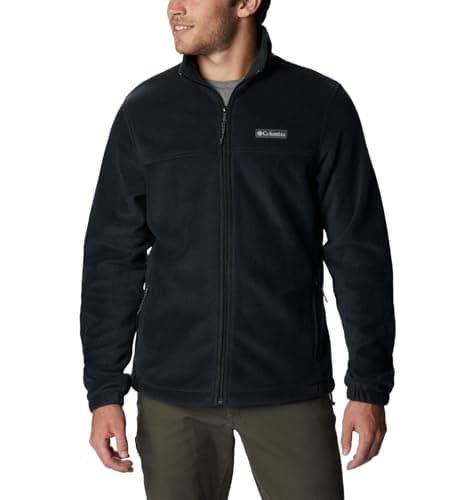
| 1 | Columbia Steens Mountain 2.0 Full Zip Fleece The mid layer under a shell, and the jacket you wear the rest of the winter | Not publishedon snow | 1.7/10 | $45.50 - View on Amazon |
| 2 | MERIWOOL Merino 250 Base Layer Top The layer that decides whether a beginner is cold all day | $3.25 a dayon snow | 5.9/10 | $65.00 - View on Amazon |
| 3 | Wantdo Men's 3-in-1 Ski Jacket A wet-snow resort at a price that does not assume a season pass | Not publishedon snow | 3.8/10 | $59.97 - View on Amazon |
Prices last verified October 19, 2026. Prices move constantly; the figure on Amazon at the moment you click is the real one.
The job, which is not "extra warmth"
People buy a mid layer to be warmer. Its actual job is to be removable.
A ski day is not one temperature. You are cold standing in a lift line at nine, overheating on a groomer at eleven, cold again on a chairlift at noon, and warm walking to lunch. A base layer cannot come off and a jacket has to stay on. The mid layer is the only piece in the system that can leave, which is why the wrong one ruins a day and the right one is invisible.
The mid layer explainer covers the layering theory; this page is about which one to buy and what the numbers mean.
The only comparable number
Fleece is sold as “cozy”, “plush” and “technical”. None of those is a specification. Two figures are:
- Fleece weight in grams, usually stated as 100, 200 or 300 weight, or as a specific number like 250 g. Higher is warmer and bulkier. This is the figure the Columbia below publishes and most of its competitors do not.
- Merino weight in gsm - grams per square meter. Roughly 150 gsm is a light base, 250 gsm is a heavy base or a light mid layer, and 320 gsm and up is a genuine mid layer. The base layer page uses the same scale.
Fleece, down or synthetic
| Material | Warmth for bulk | Wet performance | Best for |
|---|---|---|---|
| Fleece | Lowest | Good - dries fast, keeps insulating damp | The default. Breathes well on a hard run. |
| Merino | Good | Very good - insulates wet, resists odor | Multi-day trips and cold lifts |
| Synthetic puffy | High | Good | Genuinely cold, low-effort days |
| Down | Highest | Poor - collapses wet | Après and the drive, not under a shell |
| Cotton hoodie | Low | Bad - holds water, stays cold | Nothing. Leave it in the room. |
The row people get wrong is down. A down mid layer under a shell is warm right up until it gets damp from your own sweat, and then it collapses and stops insulating - on the coldest day, at the worst moment. Keep down for the lodge and the drive home.
The picks
Columbia Steens Mountain 2.0 Full Zip Fleece
The pick, and the reason is that it publishes a number: 250 g MTR filament fleece in 100% polyester. In a category that mostly publishes adjectives, a stated gram weight is the only way to know what you are buying relative to anything else.
Columbia also publishes center-back lengths for each range - 28 in regular, 30 in big and 32 in tall - which is unusually specific and genuinely useful, because a mid layer that rides up above the powder skirt of your jacket is a cold gap. Zippered hand pockets, which is where a lift pass lives.
Honest cons: fleece is the bulkiest option for its warmth, it is neither windproof nor waterproof, and Columbia publishes no warranty term on the product page.
MERIWOOL Merino 250
The merino answer, at a published 250 gsm. It sits on the boundary between a heavy base layer and a light mid layer, which makes it the most flexible garment on this page: base layer on a cold day, mid layer on a mild one.
Merino keeps insulating when damp and resists odor across several days, which is the argument for it on a trip rather than a day.
Honest cons: slower to dry than fleece, more expensive per garment, and 250 gsm is not enough insulation on its own for a genuinely severe day.
Wantdo 3-in-1 liner
Included for completeness and marked as the skip above. If you already own a 3-in-1 jacket, its liner is a mid layer and you should use it. It is not a reason to buy the jacket.
Fit, and the mistake that makes everything worse
A mid layer has to fit inside your jacket with room to spare. Insulation works by trapping air, and a layer compressed flat by a tight shell is not insulating - it is just fabric.
- Try it under the jacket you own. Not over a t-shirt in a changing room.
- Raise both arms. If the jacket sleeves ride up, the mid layer is too bulky at the shoulder.
- Check the length. It should reach past your waistband and past the jacket’s powder skirt.
- Full zip beats a pullover. Because the point is removing it, and on a chairlift half-unzipping is the adjustment you will actually make.
A mid layer only works over the right thing underneath. The base layer roundup ranks four on published grams per square meter, and explains why a 190 g/m² layer needs a real mid layer over it where a 250 sometimes does not.
Who should buy what
- Most people, most days. The 250 g fleece. It is the default for a reason.
- A multi-day trip. The merino, because it can be worn three days running.
- Genuinely cold resorts. The fleece plus the merino as a base. The temperature bands are here.
- Spring skiing. Often nothing at all - a base layer and a shell. The spring page covers it.
- A child. A fleece, and buy it a size up. Children overheat faster and cool faster than adults, and the removable layer matters more for them. The kids layering page has the order.
Every pick, with the working
Each entry shows the published inputs, the axis scores they produce, and what you give up. The order is the computed order, not a commercial one, and the arithmetic is open underneath each score.
1 · The mid layer under a shell, and the jacket you wear the rest of the winter
Columbia Steens Mountain 2.0 Full Zip Fleece
The rare mid layer that publishes a fleece weight: 250 g MTR filament fleece in 100% polyester, with regular, tall and big length ranges and published center-back measurements for each. A stated gram weight is the only way to compare one fleece against another, and almost nothing in this category publishes one.
- Published price
- Not published
- Cost per day on snow
- Not published
- Amortized over
- 5 seasons (25 days)
- Certified to
- Not published
- Waterproof rating
- Not published
- Published sizes
- Regular, Tall and Big ranges published
- Warranty
- No term published on the product page
What it gets right
- 250 g fleece weight published, which is a comparable number in a category that mostly publishes adjectives
- Regular, Tall and Big ranges with published center-back lengths of 28, 32 and 30 in
- Zippered hand pockets published, so a lift pass does not fall out on a chairlift
- 100% polyester, so it dries fast and keeps insulating damp, unlike anything cotton
What you give up
- Fleece is bulky for its warmth compared with down or a synthetic sweater
- Not windproof and not waterproof; it is a layer, not a jacket
- No published warranty term on the product page
The working behind the 1.7
- Cost per day on snow: not scored
- No manufacturer-published price, so this axis is not scored.
- Published protection: not scored
- No waterproof rating or seam construction published.
- Size availability: 3.4
- 3 published sizes (3.4 of 8.5); no continuous adjuster published (+0); range: Regular, Tall and Big ranges published
- Warranty and support: 0.0
- no published term (0 of 6); no published crash replacement (+0); no published repair route (+0)
Axes with unpublished inputs are dropped and the remaining weights re-normalized, so a product is not punished for a manufacturer’s silence. Specifications compiled September 12, 2026 from Columbia published Steens Mountain 2.0 specifications.
2 · The layer that decides whether a beginner is cold all day
MERIWOOL Merino 250 Base Layer Top
250 g per square meter of merino is the midweight number, and midweight is the right answer for a beginner who alternates between standing still in a lesson and sweating on a magic carpet. Wool keeps working when it is damp; cotton does the opposite.
- Published price
- $65
- Cost per day on snow
- $3.25 a day
- Amortized over
- 4 seasons (20 days)
- Certified to
- Not published
- Published sizes
- S through XXL
- Warranty
- No term published on the product page
What it gets right
- 250 gsm published, so the weight can be compared against any other merino layer
- Wool retains warmth when damp, which is the entire argument against a cotton shirt
- Wearable for several days, which matters on a trip with one suitcase
What you give up
- $65 for a single top is more than a pair of snow pants here
- Merino needs cool washing and takes a long time to dry
The working behind the 5.9
- Cost per day on snow: 8.7
- $65 over 4 seasons at 5 days each = 20 days = $3.25 a day
- Published protection: not scored
- Base layers carry no protective standard, so this axis does not apply.
- Size availability: 6.8
- 5 published sizes (6.8 of 8.5); no continuous adjuster published (+0); range: S through XXL
- Warranty and support: 0.0
- no published term (0 of 6); no published crash replacement (+0); no published repair route (+0)
Axes with unpublished inputs are dropped and the remaining weights re-normalized, so a product is not punished for a manufacturer’s silence. Specifications compiled September 3, 2026 from MERIWOOL published specifications.
3 · A wet-snow resort at a price that does not assume a season pass
Wantdo Men's 3-in-1 Ski Jacket
Skip this one. It is here because its removable liner is the mid layer most readers of this page already own without realizing it - and that is exactly why it is the skip. A 3-in-1 liner is built to a price inside a jacket system, it is rarely wearable as a standalone layer off the mountain, and no maker publishes a gram weight for one. If you own the jacket, use the liner. Do not buy the jacket for the liner.
Publishes a 10,000 mm waterproof rating, which is a genuine resort-day figure and more than three times what the budget snow pants on this site publish. It is also the only jacket here that names a membrane rather than a coating.
- Published price
- Not published
- Cost per day on snow
- Not published
- Amortized over
- 5 seasons (25 days)
- Certified to
- Not published
- Waterproof rating
- 10,000 mm
- Published sizes
- S through XXL
- Warranty
- No term published on the product page
Wantdo lists this jacket across a price range that varies by colorway and size rather than publishing a single MSRP, so the cost-per-day axis is not scored.
What it gets right
- Publishes 10,000 mm, a number most brands at any price decline to state
- Names a microporous TPU membrane rather than a surface coating
- Three-in-one construction with a zip-out fleece liner
What you give up
- No single published price, so cost per day cannot be computed in advance
- Seam construction is not published, and seams leak before fabric does
The working behind the 3.8
- Cost per day on snow: not scored
- No manufacturer-published price, so this axis is not scored.
- Published protection: 4.5
- 10,000mm waterproof rating (2.5 of 6); seam sealing not published (+0); insulation or shell construction published (+2)
- Size availability: 6.8
- 5 published sizes (6.8 of 8.5); no continuous adjuster published (+0); range: S through XXL
- Warranty and support: 0.0
- no published term (0 of 6); no published crash replacement (+0); no published repair route (+0)
Axes with unpublished inputs are dropped and the remaining weights re-normalized, so a product is not punished for a manufacturer’s silence. Specifications compiled September 3, 2026 from Wantdo published specifications.
Prices last verified October 19, 2026. Prices move constantly; the figure on Amazon at the moment you click is the real one.
Questions people actually ask
What is the best mid layer for skiing?
A 200 to 300 gram fleece for most people and most days, because it breathes well on a hard run and dries fast. The Columbia Steens Mountain 2.0 publishes 250 g MTR filament fleece, which is rare - most of this category publishes adjectives rather than a gram weight, and without a number you cannot compare two fleeces at all.
Fleece or down as a ski mid layer?
Fleece, under a shell. Down has the best warmth for its bulk but it collapses when damp, and the damp usually comes from your own sweat on the coldest day. Keep down for the lodge and the drive home, and put fleece or merino under the jacket.
Can I wear a hoodie under my ski jacket?
Not a cotton one. Cotton holds moisture against your skin and stays cold once damp, which is the exact failure mode layering exists to prevent. A synthetic or fleece hoodie is fine and is essentially a mid layer. The other rule is room - insulation works by trapping air, so a layer compressed flat by a tight shell is not insulating.
What does 250 gsm mean on a merino layer?
Grams per square meter - the weight of the fabric. Roughly 150 gsm is a light base layer, 250 gsm is a heavy base or a light mid layer, and 320 gsm and above is a genuine mid layer. It is the merino equivalent of fleece weight and the only figure that lets you compare one merino garment against another.
Do I need a mid layer at all?
Often not, in spring or on a mild day - a base layer and a shell is a complete system. The mid layer earns its place when the day has a wide temperature range, because it is the only piece you can actually take off. If you only ski warm days, spend the money on the shell instead.