The best ski balaclavas, and why most of them fog your goggles
It is the warmest thing you can add under a helmet and the easiest way to ruin your own vision, because you are now breathing through fabric an inch below a cold lens.
By Sawyer V. · Published
We have not tested this gear. Everything below is compiled from published specifications and published safety standards, and the arithmetic is public so you can check it. This page carries affiliate links: if you buy through one we earn a commission at no extra cost to you, and it does not change the order of the picks. Full disclosure.
The short answer
Buy the thinnest balaclava that publishes where your breath goes. Thin is what keeps a helmet fitting the way it was sized; a published breathing panel or hinge is what keeps your goggles clear. The BlackStrap Hood publishes both a face hinge and UPF 50+. If your goggles fog every single day, the Seirus Neofleece Combo Scarf is the only product here whose maker publishes breathing holes and a goggle-contoured top edge - but it covers face and neck only, not your head. For a child, buy a youth size, never an adult one worn loose.
| # | Pick | Best for | Score | Price |
|---|---|---|---|---|
| 1 | BlackStrap Hood Balaclava An adult who wants one balaclava for the whole season and fogs goggles easily | $2.67 a dayon snow | 4.2/10 | $39.99 - View on Amazon |
| 2 | Seirus Neofleece Combo Scarf Someone whose goggles fog every single day, in a helmet that already has a liner | $2.40 a dayon snow | 6.1/10 | $32.26 - View on Amazon |
| 3 | Turtle Fur Comfort Shell Shellaclava A helmet that already fits, and a buyer who does not want to re-fit it | $2.60 a dayon snow | 4.3/10 | $39.00 - View on Amazon |
| 4 | Turtle Fur Youth Comfort Shell Shellaclava A child in a helmet, on the handful of days that are genuinely cold | $3.50 a dayon snow | 4.0/10 | $35.00 - View on Amazon |
| 5 | Smartwool Thermal Merino Balaclava A multi-day trip where the same layer gets worn every morning | $3 a dayon snow | 4.2/10 | $45.00 - View on Amazon |
Prices last verified October 19, 2026. Prices move constantly; the figure on Amazon at the moment you click is the real one.
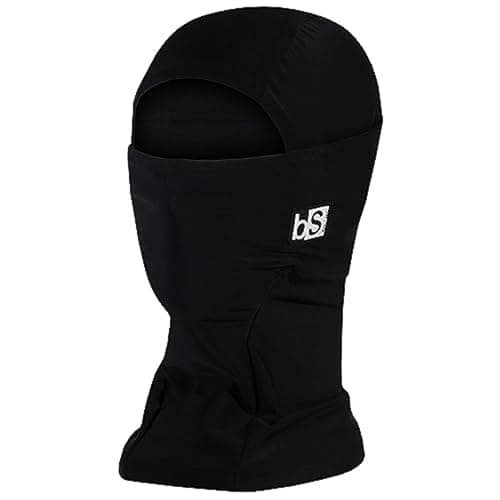
Balaclava, ski mask, face mask: what the words mean
These are shopping terms rather than technical ones, and the overlap is why people end up with the wrong item. In US retail a balaclava and a ski mask are the same garment - BlackStrap sells the hood on this page under both words at once - while a face mask covers the face and neck and leaves your head alone. Seirus sells exactly that, and it is on this page for a reason, but it is not a balaclava and this page is not going to pretend otherwise.
The difference matters because it decides whether your helmet still fits. Anything that goes over your head goes between your skull and a helmet liner that was sized without it. Anything that stops at your jawline does not.
| Format | Covers | Leaves uncovered | Effect on helmet fit |
|---|---|---|---|
| Balaclava (ski mask) | Head, ears, neck, and most of the face | Eyes, and whatever the opening exposes | Adds a layer inside the helmet; must be thin |
| Face mask or combo scarf | Face and neck | Head and ears | None - it sits below the helmet line |
| Neck gaiter | Neck, pulled up to the nose | Head, ears, forehead | None |
| Helmet liner or beanie | Head and ears | Face and neck | Adds a layer inside the helmet; must be thin |
Most people on most days need the gaiter, and the neck gaiter roundup covers that. You want a balaclava for the handful of days a season that are genuinely severe, for wind, and for children, whose faces are smaller, closer to the snow and worse at telling you they are cold. The temperature bands are on the cold page.
The four things worth comparing, and the ones nobody publishes
Start with what this category does not tell you, because it is most of it. Not one of these five product pages states a fabric weight in grams per square meter, a temperature rating, or a warranty term. There is no standard to certify against, no test protocol, and no number you can hold two products up against the way you can with a waterproof rating. So the comparison has to be built out of what makers do state.
- Where your breath goes. The only published specification that changes your actual day. Some makers publish a shaped breathing panel, a vent, or a hinge that drops the face fabric without removing the hood. Most publish nothing, which means the answer is you, pulling it below your nose.
- Thickness. Published as an ounce figure or as dimensions, and it decides whether the helmet you already own still fits. A balaclava is the one garment where lighter is usually better.
- Fabric. Synthetic stretch, fleece-lined, merino or neoprene, each with a different answer to the fact that you are breathing through it all day.
- How many sizes exist. Three of these five ship one size. The two that publish a head circumference range let you measure first, which is the only way to know before it arrives.
| Product | Published fabric | Breath design published | Sizes |
|---|---|---|---|
| BlackStrap Hood | 80% polyester, 20% spandex; UPF 50+ | Dual-layer face hinge | One, with a published 21-23.75 in head range |
| Seirus Neofleece Combo Scarf | Closed-cell Neofleece face, 200 wt Polartec neck | Central breathing holes, top contoured to seal under goggles | XS, S, M, L |
| Turtle Fur Comfort Shell Shellaclava | 92% polyester, 8% spandex; micro fleece neck lining | None published | One (10 x 17 in, 2.8 oz) |
| Turtle Fur Youth Shellaclava | 92% polyester, 8% spandex; micro fleece neck lining | None published | One youth (9.5 x 15.5 in, 2.5 oz) |
| Smartwool Thermal Merino | 100% merino wool, double-layer interlock knit | None published | One, with a published 21.5-23.5 in head range |
Why the balaclava is usually the thing fogging your goggles
A goggle fogs when warm, saturated air meets a cold inner lens. On a ski day the only reliable source of warm, saturated air is you, and a balaclava puts a layer of fabric directly over the place it comes out of.
Two failures do almost all of the damage. The first is tucking: pulling the top edge of the balaclava up inside the goggle frame, where it breaks the foam seal and channels every breath straight up behind the lens. It should sit under the bottom edge of the foam, against your face. The second is breathing through it for an entire run with no vent, which saturates the fabric and then feeds the same warm air upward anyway.
The anti-fog page works through the rest of it, and the goggle fit guide covers the seal all of this depends on.
It has to fit under the helmet you already own
Helmet sizing is set by the shell and the liner together, and it is measured on a bare head. Add a layer of fabric over your skull and you have changed the fit of a piece of safety equipment - usually by making it tighter, occasionally by making a dial adjuster run out of travel.
The rule this site sticks to: if a balaclava makes your helmet feel tight, buy a thinner balaclava, not a bigger helmet. A helmet that is loose enough to accommodate fabric is a helmet that moves when your head stops. The sizing page explains what correct feels like, and the liners page covers the same question for beanies.
Published weights are the proxy worth using. The two Turtle Fur models publish ounces and dimensions; BlackStrap publishes a head circumference range instead. If a maker publishes neither, you are buying blind on the one specification that decides whether the thing is usable.
The picks
BlackStrap Hood Balaclava
The pick, on two published features that nothing else here has together. The first is the dual-layer face hinge, published as lift for warmth or lower for ventilation: the face panel comes down while the hood stays where it is. That is the entire difference between managing your breath at the top of every run and pulling the whole thing off with a glove in your teeth.
The second is UPF 50+, published for the fabric and stated as blocking 98 percent of UV. On a snowfield you are lit from above and from below at once, and the strip of face between a goggle and a collar takes all of it. The UV page covers what that actually does. The rest of the published spec is 80 percent polyester and 20 percent spandex with four-way stretch, a stated head circumference range of 21 to 23.75 in, and a note that the fabric is soft enough to wipe a goggle with.
Honest cons: one size, so a teenager or a small adult is in a garment cut for most adults. No published warranty term and no published fabric weight, which means you cannot compare its warmth against a merino figure. And it is midweight and dual-layer, which is more than a spring afternoon asks for.
Seirus Neofleece Combo Scarf
The fogging fix, and the honest caveat first: this is not a balaclava. It covers your face and neck and leaves your head and ears to your helmet and its liner. It is on a balaclava page because it is the only product in this group whose maker publishes an actual engineered answer to the problem the rest leave to you.
Seirus publishes large central breathing holes, a top edge contoured to seal under goggles, and a breath-easy system stated to direct air down and away from the face to keep goggles from fogging. The mask is closed-cell Neofleece, the neck is 200 wt Polartec fleece, and there is a Velcro closure so it can be adjusted without taking a helmet off. It also ships in four published sizes, where most of this category ships one.
Honest cons: no head coverage, so on a genuinely cold day it is half a solution. Neoprene against the face is warm and windproof but it goes clammy, and that moisture has to end up somewhere. The Velcro catches long hair. There is no published warranty term, and the published price is a sale price, so treat it as a ceiling rather than a number.
Turtle Fur Comfort Shell Shellaclava
The thin one, and thin is the specification that decides whether a balaclava works under a helmet that already fits. Turtle Fur publishes 2.8 oz and dimensions of 10 in by 17 in, with a Comfort Shell hood of 92 percent polyester and 8 percent spandex and a neck fully lined in micro fleece.
That split is the right way round for skiing: technical stretch fabric where the helmet sits, warmth where the gap between collar and helmet actually is. It is also the one to buy if you want a balaclava that disappears under a fitted helmet rather than one that announces itself.
Honest cons: no shaped breathing panel and no hinge, so breath management is down to you and the position you wear it in. Turtle Fur publishes UPF 50+ on some Comfort Shell products but states no UV figure on this one, so this page does not claim it. One size, and no published warranty term.
Turtle Fur Youth Comfort Shell Shellaclava
The same published fabric, cut an inch and a half shorter and about a quarter of an ounce lighter, listed by Turtle Fur for ages 7 to 12. The sizing is the whole point. An adult balaclava on a child is long in the neck and loose at the face, so it slides, gets yanked up, and ends up tucked inside the goggle - which is the exact failure that fogs a lens and makes a child want to go inside.
Children also lose these. It is worth buying before the trip rather than at a resort shop, where the same item costs what lunch does. If your child is younger than this band, a gaiter is usually the better answer anyway: the kids layering guide covers what to cover at what age.
Honest cons: one youth size spanning ages 7 to 12 is a wide band for a garment that has to seal against a face. No vent or hinge published, so in practice a child pulls it down rather than breathing through it. No published warranty term, and no UV figure stated on this model.
Smartwool Thermal Merino Balaclava
Published as 100 percent merino wool in a double-layer interlock knit, sold in the Thermal Merino line - the range Smartwool describes as its warmest base-layer weight, and the one it used to sell as Merino 250, where in its own words the 250 designation refers to the fabric’s density in grams per square meter. The balaclava’s own page states no weight, so that number describes the family rather than this garment. It does publish a head circumference range of 21.5 to 23.5 in, which is a real measurement rather than a shrug.
The fabric argument is genuine. Merino keeps insulating when it is damp, and a balaclava is always damp by lunchtime. It also does not smell after three days, which is the property that shows up on a week-long trip.
It is still the skip on this page, and the reason is shape rather than fabric. The garment that most needs somewhere for breath to go publishes no vent, no breathing panel and no hinge; merino is the slowest of these fabrics to dry; and it is the most expensive thing here, in one size. Buy the merino as a base layer, where that fabric is at its strongest, and buy a balaclava that publishes a way out for your breath.
Fabric, and what each one costs you
- Synthetic stretch (polyester and spandex). Dries fastest, stretches to seal without gripping, and it is the fabric most published specs exist for. The sensible default, and what both Turtle Fur models and the BlackStrap use.
- Fleece-lined neck. Warmth where the collar gap is, without adding bulk where the helmet sits. This is why a hood-plus-fleece-neck construction beats a uniformly thick balaclava for skiing.
- Merino. Warmest for its weight, keeps insulating when damp, does not hold odor. More expensive, and slower to dry than anything else here - which is a real cost on the one garment you breathe through.
- Neoprene. Windproof and warm on the face, which is why face masks use it, and clammy for the same reason. Works best when the maker has designed vents into it rather than leaving it sealed.
- Cotton. No, for the same reason as everywhere else on this site: it holds moisture against skin and stays cold once it is wet. On a balaclava it will be wet by the second run.
Care, which is genuinely one line
Wash it, often. A balaclava spends every day with your breath passing through it and it is the grubbiest thing in a ski bag by the end of a week. Cool wash, air dry, no fabric softener - softener coats fibers and kills the wicking you paid for. The washing page covers the rest of the soft goods, and if it is wet at the end of the day, dry it with everything else rather than stuffing it back in the bag.
Who should buy what
- Most adults, most of the season. A gaiter, not a balaclava. Add a thin balaclava for the severe days and the windy ones.
- One balaclava for the whole season. The BlackStrap Hood - the hinge means you can drop it without taking anything off, and the published UPF figure earns its keep in spring.
- Goggles that fog every single day. Fix the wearing position first, because it is free and it is usually the cause. If it persists, the Seirus is the only product here that publishes a design intended to fix it - and keep your helmet liner, because it will not cover your head.
- A helmet that already fits perfectly. The Turtle Fur Comfort Shell Shellaclava, on its published 2.8 oz.
- A child. A youth size, and buy it before you travel. The face-protection page covers what to cover at which temperature.
- Renting the rest of your gear? This is still worth owning. It is the cheapest item in the kit, nobody rents one, and it is the layer that touches your face. What to buy versus rent on the clothing side runs the rest of the arithmetic.
Every pick, with the working
Each entry shows the published inputs, the axis scores they produce, and what you give up. The order is the computed order, not a commercial one, and the arithmetic is open underneath each score.
1 · An adult who wants one balaclava for the whole season and fogs goggles easily
BlackStrap Hood Balaclava
The only full balaclava here that publishes both a UV figure and a designed way to get the fabric off your mouth: UPF 50+, and a dual-layer face hinge BlackStrap calls ExoHinge, which drops the face panel while the hood stays put. That second feature is the one that decides whether you wear a balaclava all day or pull it off at the first lift.
- Published price
- $39.99
- Cost per day on snow
- $2.67 a day
- Amortized over
- 3 seasons (15 days)
- Certified to
- Not published
- Published sizes
- One size for most adults; published crown length 7.25-9.26 in and head circumference 21-23.75 in
- Warranty
- No term published on the product page
What it gets right
- UPF 50+ published, which matters on a reflective snowfield more than people expect
- Dual-layer face hinge, published as lift for warmth or lower for ventilation, so the fabric leaves your mouth without the hood coming off your head
- Published head circumference range of 21-23.75 in, so you can measure before you buy rather than guess at one size
- Published as helmet-friendly and lens-safe, the second meaning it is soft enough to wipe a goggle with
What you give up
- One published size, so a teenager or a small adult is wearing a garment cut for most adults
- No published warranty term and no published fabric weight, so it cannot be compared with a merino gsm figure
- Midweight and dual-layer, which is more than a spring afternoon needs
The working behind the 4.2
- Cost per day on snow: 9.1
- $39.99 over 3 seasons at 5 days each = 15 days = $2.67 a day
- Published protection: not scored
- This category carries no protective standard.
- Size availability: 0.0
- 1 published size (0.0 of 8.5); no continuous adjuster published (+0); range: One size for most adults; published crown length 7.25-9.26 in and head circumference 21-23.75 in
- Warranty and support: 0.0
- no published term (0 of 6); no published crash replacement (+0); no published repair route (+0)
Axes with unpublished inputs are dropped and the remaining weights re-normalized, so a product is not punished for a manufacturer’s silence. Specifications compiled September 20, 2026 from BlackStrap published Hood Balaclava specifications.
2 · Someone whose goggles fog every single day, in a helmet that already has a liner
Seirus Neofleece Combo Scarf
The only product on this page where the maker publishes an engineered answer to fogging rather than leaving it to you: large central breathing holes, a top contoured to seal under goggles, and a stated breath-easy system that directs air down and away from the face. It is also the only one that is not a balaclava - it covers face and neck, not your head or ears.
- Published price
- $35.99
- Cost per day on snow
- $2.40 a day
- Amortized over
- 3 seasons (15 days)
- Certified to
- Not published
- Published sizes
- XS, S, M and L
- Warranty
- No term published on the product page
Published on the Seirus product page as a sale price on September 20, 2026, so treat it as a ceiling that moves rather than a settled MSRP.
What it gets right
- Published breathing holes and a goggle-contoured top edge, which is the only published anti-fog design in this group
- Four published sizes, where most of this category ships one
- Closed-cell Neofleece face mask with a 200 wt Polartec fleece neck, both published, and a Velcro closure so it can be adjusted mid-run
- Face and neck can be covered without adding a layer over your head, which is what makes helmet fit go wrong
What you give up
- Not a balaclava: no head or ear coverage, so it does not replace a helmet liner on a genuinely cold day
- Neoprene against the face is warm and windproof but it gets clammy, and the moisture has to go somewhere
- A Velcro closure at the back of the neck catches long hair, and it is one more thing to unpick in a lift line
- No published warranty term, and the published price is a sale price
The working behind the 6.1
- Cost per day on snow: 9.3
- $35.99 over 3 seasons at 5 days each = 15 days = $2.40 a day
- Published protection: not scored
- This category carries no protective standard.
- Size availability: 6.6
- 4 published sizes (5.1 of 8.5); continuous in-size adjuster published (+1.5); range: XS, S, M and L
- Warranty and support: 0.0
- no published term (0 of 6); no published crash replacement (+0); no published repair route (+0)
Axes with unpublished inputs are dropped and the remaining weights re-normalized, so a product is not punished for a manufacturer’s silence. Specifications compiled September 20, 2026 from Seirus published Neofleece Combo Scarf specifications.
3 · A helmet that already fits, and a buyer who does not want to re-fit it
Turtle Fur Comfort Shell Shellaclava
The thin one, and thin is the specification that decides whether a balaclava works under a helmet you already own. Turtle Fur publishes 2.8 oz, which is the 79 g on this card, and a 92 percent polyester, 8 percent spandex hood with a micro fleece neck lining. That split is the right one: technical fabric where the helmet sits, warmth where the collar gap is.
- Published price
- $39
- Cost per day on snow
- $2.60 a day
- Amortized over
- 3 seasons (15 days)
- Certified to
- Not published
- Published sizes
- One size, published at 10 in wide by 17 in long
- Weight
- 79 g
- Warranty
- No term published on the product page
What it gets right
- Published at 2.8 oz, light enough that it does not change how a fitted helmet sits
- Comfort Shell hood published as 92 percent polyester and 8 percent spandex, with a micro fleece neck lining
- Published dimensions of 10 in by 17 in, so you can check the length against your own collar before buying
- Double-layer neck without a bulky head layer, which is the right way round for skiing
What you give up
- No shaped breathing panel and no hinge, so managing your breath is down to pulling it below your nose
- Turtle Fur publishes UPF 50+ on some Comfort Shell products but does not state a UV figure on this one
- One size, and no published warranty term
The working behind the 4.3
- Cost per day on snow: 9.2
- $39 over 3 seasons at 5 days each = 15 days = $2.60 a day
- Published protection: not scored
- This category carries no protective standard.
- Size availability: 0.0
- 1 published size (0.0 of 8.5); no continuous adjuster published (+0); range: One size, published at 10 in wide by 17 in long
- Warranty and support: 0.0
- no published term (0 of 6); no published crash replacement (+0); no published repair route (+0)
Axes with unpublished inputs are dropped and the remaining weights re-normalized, so a product is not punished for a manufacturer’s silence. Specifications compiled September 20, 2026 from Turtle Fur published Comfort Shell Shellaclava specifications.
4 · A child in a helmet, on the handful of days that are genuinely cold
Turtle Fur Youth Comfort Shell Shellaclava
The same published Comfort Shell fabric cut an inch and a half shorter and about a quarter of an ounce lighter, which is the difference between a balaclava a child keeps on and one that sags into the bottom of the goggle. Turtle Fur lists it for ages 7 to 12.
- Published price
- $35
- Cost per day on snow
- $3.50 a day
- Amortized over
- 2 seasons (10 days)
- Certified to
- Not published
- Published sizes
- One youth size, published at 9.5 in wide by 15.5 in long, listed for ages 7-12
- Weight
- 71 g
- Warranty
- No term published on the product page
What it gets right
- Cut for a child rather than an adult garment worn loose, which is the failure that ends up tucked inside a goggle
- Published at 2.5 oz and 9.5 in by 15.5 in, thin enough to go under a youth helmet
- Same published Comfort Shell construction as the adult version, micro fleece neck lining included
- Cheap enough to buy before the trip rather than at the resort, where the same item costs what a lunch does
What you give up
- One youth size covering ages 7 to 12, which is a wide band for a garment that has to seal
- No vent panel or hinge published, so a child will pull it down rather than breathe through it
- No published warranty term, and no UV figure stated on this model
The working behind the 4.0
- Cost per day on snow: 8.5
- $35 over 2 seasons at 5 days each = 10 days = $3.50 a day
- Published protection: not scored
- This category carries no protective standard.
- Size availability: 0.0
- 1 published size (0.0 of 8.5); no continuous adjuster published (+0); range: One youth size, published at 9.5 in wide by 15.5 in long, listed for ages 7-12
- Warranty and support: 0.0
- no published term (0 of 6); no published crash replacement (+0); no published repair route (+0)
Axes with unpublished inputs are dropped and the remaining weights re-normalized, so a product is not punished for a manufacturer’s silence. Specifications compiled September 20, 2026 from Turtle Fur published youth Comfort Shell Shellaclava specifications.
5 · A multi-day trip where the same layer gets worn every morning
Smartwool Thermal Merino Balaclava
Skip this one. The best fabric here and the wrong shape for the job. A balaclava sits over your mouth all day and takes on breath moisture continuously, and merino is the slowest of these fabrics to dry - so the one garment that most needs a vent or a hinge is the one that publishes neither. Buy Smartwool's merino as a base layer, where the fabric argument is strongest, and buy a balaclava that publishes somewhere for your breath to go.
The merino option, published as 100 percent merino wool in a double-layer interlock knit, from the line Smartwool builds at its heaviest base-layer weight. Merino keeps insulating when it is damp and does not smell after three days, which is a real argument for a garment you breathe through. The catch is that it publishes no vent, no hinge and no second size, and it is the most expensive thing on this page.
- Published price
- $45
- Cost per day on snow
- $3 a day
- Amortized over
- 3 seasons (15 days)
- Certified to
- Not published
- Published sizes
- One size, published to fit a 21.5-23.5 in head circumference
- Warranty
- No term published on the product page
What it gets right
- 100 percent merino wool published, double-layered, in Smartwool's warmest base-layer weight
- Merino keeps insulating when damp, which a balaclava always ends up being
- Published to fit a 21.5-23.5 in head circumference, a real measurement rather than a shrug
- Odor resistance is the published property that actually shows up on day four of a trip
What you give up
- No published vent, breathing panel or hinge, on the garment most likely to need one
- Merino is slower to dry than the synthetics here, and this one dries overnight at best
- The highest published price on the page, and still only one size
The working behind the 4.2
- Cost per day on snow: 8.9
- $45 over 3 seasons at 5 days each = 15 days = $3 a day
- Published protection: not scored
- This category carries no protective standard.
- Size availability: 0.0
- 1 published size (0.0 of 8.5); no continuous adjuster published (+0); range: One size, published to fit a 21.5-23.5 in head circumference
- Warranty and support: 0.0
- no published term (0 of 6); no published crash replacement (+0); no published repair route (+0)
Axes with unpublished inputs are dropped and the remaining weights re-normalized, so a product is not punished for a manufacturer’s silence. Specifications compiled September 20, 2026 from Smartwool published Thermal Merino Balaclava specifications.
Prices last verified October 19, 2026. Prices move constantly; the figure on Amazon at the moment you click is the real one.
Questions people actually ask
What is the best balaclava for skiing?
The thinnest one that publishes where your breath goes. Thin keeps your helmet fitting the way it was sized, and a published breathing panel or hinge is what keeps your goggles clear. The BlackStrap Hood publishes a dual-layer face hinge and UPF 50+, which is the most useful pair of published features in this category.
Balaclava vs ski mask: what is the difference?
In US retail they are the same garment - a hood that covers head, ears, neck and most of the face, with an opening for the eyes. Makers use both words, often in the same product title. What is genuinely different is a face mask or combo scarf, which covers the face and neck only and leaves your head to a helmet liner.
Do balaclavas make your goggles fog?
They can, and it is usually the wearer rather than the product. Pulling the top edge up inside the goggle frame breaks the foam seal and channels every breath behind the lens. Wear it under the bottom edge of the foam, keep it below your nose while you are moving, and never wipe a wet inner lens - that removes the factory anti-fog coating for good.
Can you wear a balaclava under a ski helmet?
Yes, and that is where it goes - but it has to be thin. A helmet is sized on a bare head, so any fabric you add changes the fit of safety equipment. If the helmet feels tight over the balaclava, buy a thinner balaclava rather than a bigger helmet.
Is a balaclava or a neck gaiter better for skiing?
A gaiter for most of the season, because it adds nothing inside the helmet and is easier to drop below the nose. A balaclava for the severe days, wind, and for children, because it covers ears and forehead as well as the face.
What size balaclava should I buy for a child?
A youth or kids size, not an adult one worn loose. An adult balaclava on a child is long in the neck and slack at the face, so it slides, gets pulled up, and ends up tucked inside the goggle - which fogs the lens and ends the afternoon early. Turtle Fur lists its youth Shellaclava for ages 7 to 12.
Sources
- BlackStrap published Hood Balaclava fabric, UPF 50+ rating, face hinge and head circumference range
- Seirus published Neofleece Combo Scarf breathing holes, goggle-contoured top edge, materials and sizes
- Turtle Fur published Comfort Shell Shellaclava fabric content, weight and dimensions
- Turtle Fur published youth Comfort Shell Shellaclava fabric, weight, dimensions and age range
- Smartwool published Thermal Merino Balaclava fabric, construction and head circumference range
- Smartwool published explanation of the Merino 250 weight designation in grams per square meter