Gifts for skiers, and the four things never to buy for one
Most ski gear has to fit, which makes it a bad gift. Here is what is safe to buy for somebody else, by price, and what to avoid.
By Sawyer V. · Published
We have not tested this gear. Everything below is compiled from published specifications and published safety standards, and the arithmetic is public so you can check it. This page carries affiliate links: if you buy through one we earn a commission at no extra cost to you, and it does not change the order of the picks. Full disclosure.
The short answer
The safe gifts are the ones that do not have to fit: socks, hand warmers, neck gaiters, bags, tuning kits and boot dryers. The four to avoid are boots, helmets, goggles and skis - all four work by fitting a specific body, and all four are returned more often than any other ski purchase. If in doubt, give a gift receipt with it.
| # | Pick | Best for | Score | Price |
|---|---|---|---|---|
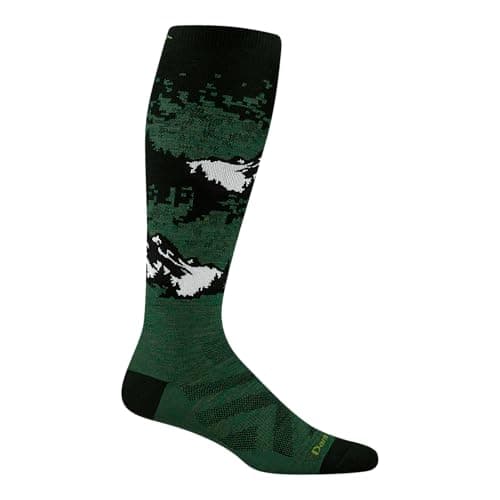
| 1 | Darn Tough Alpine Over-the-Calf Lightweight Ski Socks The one piece of ski gear worth buying before anything else | $2 a dayon snow | 6.4/10 | $30.64 - View on Amazon |
| 2 | OutdoorMaster PRO Magnetic A skier who wants to change lenses without taking gloves off | $2.00 a dayon snow | 6.1/10 | $39.99 - View on Amazon |
| 3 | HotHands Hand Warmers A backup in a pocket, and the one cold day a season nobody planned for | Not publishedon snow | 0.0/10 | $24.25 - View on Amazon |
| 4 | Turtle Fur Comfort Shell Totally Tubular Neck Gaiter A do-everything tube that also handles spring sun | Not publishedon snow | 0.0/10 | $24.80 - View on Amazon |
| 5 | Dakine Boot Locker 69L Boot Bag Carrying boots, helmet and layers as one checked or trunk item | Not publishedon snow | 0.0/10 | $68.99 - View on Amazon |
Prices last verified October 19, 2026. Prices move constantly; the figure on Amazon at the moment you click is the real one.
The rule that makes this easy
Ski gear splits cleanly into two groups: things that have to fit a specific body, and things that do not. Buy from the second group and almost anything works. Buy from the first and you are guessing at a head circumference or a Mondopoint length.
Four items are firmly in the first group and should not be bought as surprises:
- Boots. Both ski and snowboard. A boot has to match a specific foot in length, width, instep height and calf shape, and a boot that fits by accident is a boot that fits nobody. The ski boots page explains why they are the one purchase worth doing in person.
- Helmets. A helmet works by fitting. One that moves independently of the scalp protects worse than a cheaper one that does not. Measure before buying, always.
- Goggles. They have to fit the face and the helmet they will sit under. The forehead gap is the failure mode.
- Skis and boards. Sized from weight, height and ability, and mounted to a specific boot. The size chart shows the variables.
Under $25: the ones that always get used
Hand warmers
The most reliably useful small gift in this entire category. Air-activated warmers need no charging, no batteries and no sizing, and the published run times are long enough to cover a day - HotHands publishes up to 10 hours on the standard pair and up to 18 on the larger Super Warmer.
They go in a glove, a boot or a pocket, and they are the thing a cold child asks for at eleven o’clock. The hand warmers roundup covers the shapes and run times.
A neck gaiter
One size, no fitting, and it solves a real problem: the gap between a jacket collar and a helmet that lets cold air down your neck on a chairlift. A tube gaiter is also far safer than a scarf around moving equipment.
The gaiter roundup covers adult and youth sizes, and the face protection page compares gaiters and balaclavas.
Under $50: the upgrade nobody buys themselves
Proper ski socks
The single best-value gift on this page, because it is the item skiers most reliably get wrong and least reliably replace. A thin merino ski sock with a lifetime guarantee costs about thirty dollars and will outlast the person who receives it.
The counterintuitive part is worth saying out loud when you hand it over: a thin sock is warmer than a thick one inside a ski boot, because the boot does the insulating and a thick sock squeezes out the air that would have done the rest. The socks page explains the mechanism.
Sizing is forgiving - published in shoe-size ranges rather than exact sizes - which is what makes it a safe gift. The kids version is here.
Under $100: things that solve an annoyance
A boot bag
Unglamorous and genuinely welcome. It keeps wet boots away from clothing, it has a place for a helmet and goggles, and it means the whole kit travels as one object rather than four.
No sizing question at all beyond capacity in liters. The bags page covers what to look for, and the traveling page covers flying with gear.
A home tuning kit
For someone who owns skis or a board, a tuning kit is the gift that keeps the gear they already have working. Wax, a scraper, brushes and an edge tool cover the whole job.
The tuning kits roundup compares what is in each box, and the waxing page is the how-to that goes with it. Do not buy one for somebody who rents - there is nothing for them to tune.
Over $100: only with knowledge
Above about a hundred dollars, gifts get specific enough that you need to know something about the recipient’s gear or habits.
| Gift | You need to know |
|---|---|
| Boot dryer | Whether they own boots, and whether they have somewhere to put it |
| Heated socks or mittens | Shoe or hand size, and whether cold extremities are a real problem |
| Roof box or ski rack | Their car's crossbar spread and roof load limit |
| Season lease or lessons | Nothing - this is the safest big gift there is |
A boot dryer is the pick of those for anyone who owns boots, because damp boots are a universal complaint and nobody buys the fix for themselves. The boot dryer roundup is here.
And the last row is the honest answer for a big budget. Paying for a lesson is a better gift than any object on this page, because a lesson changes how much somebody enjoys the sport more than any piece of equipment.
Gifts for somebody who has never been
Different problem. Somebody who has not skied yet does not need equipment, they need the things that make a first day survivable - and most of those they may already own.
- Waterproof gloves or mittens, which is the item beginners most often turn up without. Mittens are warmer.
- A base layer, merino or synthetic, never cotton. The base layers page covers the difference.
- Sunscreen and lip balm, unironically. Snow at elevation burns faster than a beach and everybody forgets. The altitude and sun page explains why.
Or give them the checklist of what they actually need alongside something small, which is more useful than a guess at their jacket size.
Every pick, with the working
Each entry shows the published inputs, the axis scores they produce, and what you give up. The order is the computed order, not a commercial one, and the arithmetic is open underneath each score.
1 · The one piece of ski gear worth buying before anything else
Darn Tough Alpine Over-the-Calf Lightweight Ski Socks
The only item in this entire ledger with an unconditional lifetime guarantee. It is a $30 sock that the maker will replace forever, which over any realistic number of ski days is the cheapest thing on the site.
- Published price
- $30
- Cost per day on snow
- $2 a day
- Amortized over
- 3 seasons (15 days)
- Certified to
- Not published
- Published sizes
- S through XL
- Warranty
- Unconditional lifetime guarantee
What it gets right
- Unconditional lifetime guarantee, published without qualifying conditions
- Lightweight merino, which is correct for a modern ski boot: a thick sock makes boots colder, not warmer
- Over-the-calf length, so the boot cuff never touches bare skin
What you give up
- $30 for one pair of socks reads as absurd until the replacement policy is read
- Lightweight is the right choice but feels wrong to anyone expecting a thick ski sock
The working behind the 6.4
- Cost per day on snow: 9.6
- $30 over 3 seasons at 5 days each = 15 days = $2 a day
- Published protection: not scored
- Socks carry no protective standard, so this axis does not apply.
- Size availability: 5.1
- 4 published sizes (5.1 of 8.5); no continuous adjuster published (+0); range: S through XL
- Warranty and support: 2.0
- no published term (0 of 6); no published crash replacement (+0); repair or replacement parts published (+2)
Axes with unpublished inputs are dropped and the remaining weights re-normalized, so a product is not punished for a manufacturer’s silence. Specifications compiled September 3, 2026 from Darn Tough published specifications.
2 · A skier who wants to change lenses without taking gloves off
OutdoorMaster PRO Magnetic
Skip this one. A good goggle and a risky gift. Goggles have to fit the face and the helmet they will be worn with, and a frame that leaves a gap above the goggle or presses at the nose is a frame that gets left in a drawer. Buy it as a gift only if you know the helmet it will sit under, or hand over the goggle and the receipt together.
A magnetic lens swap at a published $49.99, with 100% UV400 and an over-the-glasses frame. Spare lenses are a separate purchase, so the real cost of a two-lens setup lands closer to the Smith than the sticker suggests.
- Published price
- $49.99
- Cost per day on snow
- $2.00 a day
- Amortized over
- 5 seasons (25 days)
- Certified to
- Not published
- UV protection
- 100% published
- Anti-fog
- Anti-fog coating
- Lenses included
- 1
- Published sizes
- One size
- Warranty
- No term published for goggles
What it gets right
- Magnetic lens change, workable in gloves on a lift
- 100% UV400 protection and an anti-fog coating
- Over-the-glasses frame at a published $49.99
What you give up
- One lens included; the interchangeable system only pays off after you buy another
- No published impact standard
The working behind the 6.1
- Cost per day on snow: 9.6
- $49.99 over 5 seasons at 5 days each = 25 days = $2.00 a day
- Published protection: 6.0
- 100% UV protection published (+4); no published impact standard (+0); anti-fog treatment published (+2); single lens (+0)
- Size availability: not scored
- Sold in one size, so size availability does not apply.
- Warranty and support: 0.0
- no published term (0 of 6); no published crash replacement (+0); no published repair route (+0)
Axes with unpublished inputs are dropped and the remaining weights re-normalized, so a product is not punished for a manufacturer’s silence. Specifications compiled September 3, 2026 from OutdoorMaster published specifications.
3 · A backup in a pocket, and the one cold day a season nobody planned for
HotHands Hand Warmers
HotHands publishes up to 10 hours of continuous warmth, which is longer than any lift-served day. It is the cheapest fix on this site for cold hands and it is also the one that runs out, which is the argument for fixing the glove instead.
- Published price
- Not published
- Cost per day on snow
- Not published
- Amortized over
- 3 seasons (15 days)
- Certified to
- Not published
- Published sizes
- One size, single use
- Warranty
- No term published; the product is single use
HotHands publishes no MSRP and the product is sold in pack sizes that vary widely, so the cost-per-day axis is not scored.
What it gets right
- Published up to 10 hours of continuous warmth, longer than a resort day
- Air activated, with nothing to charge and nothing to break
- Small enough that a spare pair lives permanently in a jacket pocket
What you give up
- Single use, so the cost repeats on every cold day
- No published MSRP, so cost per day cannot be computed
- It treats the symptom; a glove that fits treats the cause
The working behind the 0.0
- Cost per day on snow: not scored
- No manufacturer-published price, so this axis is not scored.
- Published protection: not scored
- This category carries no protective standard.
- Size availability: not scored
- Sold in one size, so size availability does not apply.
- Warranty and support: 0.0
- no published term (0 of 6); no published crash replacement (+0); no published repair route (+0)
Axes with unpublished inputs are dropped and the remaining weights re-normalized, so a product is not punished for a manufacturer’s silence. Specifications compiled September 7, 2026 from HotHands published specifications.
4 · A do-everything tube that also handles spring sun
Turtle Fur Comfort Shell Totally Tubular Neck Gaiter
The only neck gaiter we could find that publishes a UV figure: UPF 50+, in a brushed polyester and spandex Comfort Shell with four-way stretch. On a reflective snowfield at altitude that number is doing more work than the warmth is.
- Published price
- Not published
- Cost per day on snow
- Not published
- Amortized over
- 3 seasons (15 days)
- Certified to
- Not published
- Published sizes
- One size, tube construction
- Warranty
- No term published on the product page
Turtle Fur prices this by print and colorway rather than publishing one MSRP, so the cost-per-day axis is not scored.
What it gets right
- UPF 50+ published, which almost nothing else in this category states
- Brushed polyester and spandex with published four-way stretch, so it seals without gripping
- Published as moisture-wicking and odor resistant, which matters on a multi-day trip
- Tube construction with no seam at the front, and it packs into a jacket pocket
What you give up
- Midweight, so it is not the warmest option on a genuinely severe day
- One size, so it is loose on a small adult
- No published warranty term and no single published price
The working behind the 0.0
- Cost per day on snow: not scored
- No manufacturer-published price, so this axis is not scored.
- Published protection: not scored
- This category carries no protective standard.
- Size availability: not scored
- Sold in one size, so size availability does not apply.
- Warranty and support: 0.0
- no published term (0 of 6); no published crash replacement (+0); no published repair route (+0)
Axes with unpublished inputs are dropped and the remaining weights re-normalized, so a product is not punished for a manufacturer’s silence. Specifications compiled September 9, 2026 from Turtle Fur published specifications.
5 · Carrying boots, helmet and layers as one checked or trunk item
Dakine Boot Locker 69L Boot Bag
A published 69 L with a tarp-lined lower compartment for boots and a separate upper one for everything else. The separation is the product: wet boots and a dry fleece sharing one undivided bag is how a car smells for a week.
- Published price
- Not published
- Cost per day on snow
- Not published
- Amortized over
- 3 seasons (15 days)
- Certified to
- Not published
- Published sizes
- One size, 69 L, published at 51 x 38 x 36 cm
- Weight
- 1100 g
- Warranty
- No term published on the product page
Dakine publishes no single MSRP across colorways for this bag, so the cost-per-day axis is not scored.
What it gets right
- Published 69 L, or 4,200 cubic inches, at 51 x 38 x 36 cm, inside a normal airline checked allowance
- Tarp-lined lower boot compartment published as separate from the upper one
- 600D polyester published, a heavier fabric than most soft luggage
- 1.1 kg empty, so almost all of an airline weight allowance is left for gear
What you give up
- No published warranty term
- No single published price across colorways
- Big enough that it invites packing straight past an airline weight limit
The working behind the 0.0
- Cost per day on snow: not scored
- No manufacturer-published price, so this axis is not scored.
- Published protection: not scored
- This category carries no protective standard.
- Size availability: not scored
- Sold in one size, so size availability does not apply.
- Warranty and support: 0.0
- no published term (0 of 6); no published crash replacement (+0); no published repair route (+0)
Axes with unpublished inputs are dropped and the remaining weights re-normalized, so a product is not punished for a manufacturer’s silence. Specifications compiled September 7, 2026 from Dakine published specifications.
Prices last verified October 19, 2026. Prices move constantly; the figure on Amazon at the moment you click is the real one.
Questions people actually ask
What is a good gift for a skier?
Anything that does not have to fit: ski socks, hand warmers, a neck gaiter, a boot bag, a tuning kit or a boot dryer. All of them solve a real annoyance, none of them needs a measurement, and most skiers do not buy them for themselves.
What ski gear should you not buy as a gift?
Boots, helmets, goggles and skis. All four work by fitting a specific body - foot shape, head circumference, face shape, weight and height - and all four are returned more often than anything else in the category. Give a gift card toward a fitting instead.
What is the best cheap gift for a skier?
Hand warmers under $25, or a pair of thin merino ski socks under $50. The socks are the better gift: skiers reliably wear socks that are too thick, and a thin sock is warmer inside a ski boot because the boot does the insulating.
What do you buy someone going skiing for the first time?
Waterproof gloves or mittens, a merino or synthetic base layer, and sunscreen. A first-timer will rent the equipment, so the useful gifts are the things that make the day survivable - and gloves are what beginners most often turn up without.
Are ski lessons a good gift?
The best one on this list, for a beginner. A lesson changes how much somebody enjoys the sport far more than any piece of equipment does, it needs no sizing information, and it is the purchase people are most reluctant to make for themselves.