The ski gear checklist, split by what you buy and what you rent
Everything a beginner needs, grouped so you can see at a glance what has to be bought, what can be rented, and what is already in the house.
By Sawyer V. · Published
We have not tested this gear. Everything below is compiled from published specifications and published safety standards, and the arithmetic is public so you can check it. This page carries affiliate links: if you buy through one we earn a commission at no extra cost to you, and it does not change the order of the picks. Full disclosure.
The short answer
A beginner needs, on their body: base layer top and bottom, ski socks, a mid layer, waterproof pants, a waterproof jacket, gloves, a neck gaiter, goggles and a helmet. In a pocket: sunscreen, lip balm, snacks, a phone and the lift pass. From the rental counter: skis, boots and poles. That is the whole list.
| # | Pick | Best for | Score | Price |
|---|---|---|---|---|
| 1 | Darn Tough Alpine Over-the-Calf Lightweight Ski Socks The one piece of ski gear worth buying before anything else | $2 a dayon snow | 6.4/10 | $30.64 - View on Amazon |
| 2 | OutdoorMaster 3M Thinsulate Waterproof Ski Gloves The default adult glove when nothing about your hands is unusual | $2.67 a dayon snow | 6.3/10 | $24.95 - View on Amazon |
| 3 | OutdoorMaster PRO Magnetic A skier who wants to change lenses without taking gloves off | $2.00 a dayon snow | 6.1/10 | $39.99 - View on Amazon |
| 4 | Arctix Men's Insulated Snowsports Cargo Pants A cold, dry resort week where the snow does not turn to rain | $2 a dayon snow | 5.2/10 | $64.99 - View on Amazon |
Prices last verified October 19, 2026. Prices move constantly; the figure on Amazon at the moment you click is the real one.
What you wear
| Item | Buy or rent | Why it is on the list |
|---|---|---|
| Base layer top | Buy | Cotton against skin is the most common reason people are cold |
| Base layer bottoms | Buy | Ski pants are a shell; without a layer under them you feel the wind |
| Ski socks (thin, over the calf) | Buy | Thick socks make ski boots colder, not warmer |
| Mid layer: fleece or light puffy | Own it already | The layer you adjust for the temperature |
| Waterproof snow pants | Buy | A beginner sits in snow constantly |
| Waterproof jacket | Buy or borrow | A genuinely waterproof coat does for a first trip |
| Gloves or mittens | Buy | Never in a rental package |
| Neck gaiter | Buy, cheaply | Covers the gap between collar and helmet |
| Goggles | Buy | Rarely rented; a scratched shared lens is hard to see through |
| Helmet | Buy or rent | Rentable, but rental helmets fit worst of all rental items |
The full explanation of each layer is here, with a temperature table.
What you carry, in pockets
- Lift pass. Most resorts scan it through a jacket pocket, so put it in the dedicated sleeve pocket on the left arm if your jacket has one.
- Sunscreen and lip balm. Snow reflects a great deal of sunlight. Overcast days catch people out worst because they do not feel like sun.
- Snacks. Pocket food prevents more arguments than anything else in this list, especially with children.
- Phone, in an inside pocket. Batteries die fast in the cold; keeping it against your body keeps it alive.
- A little cash or a card. For the hot chocolate that fixes an afternoon.
What you rent
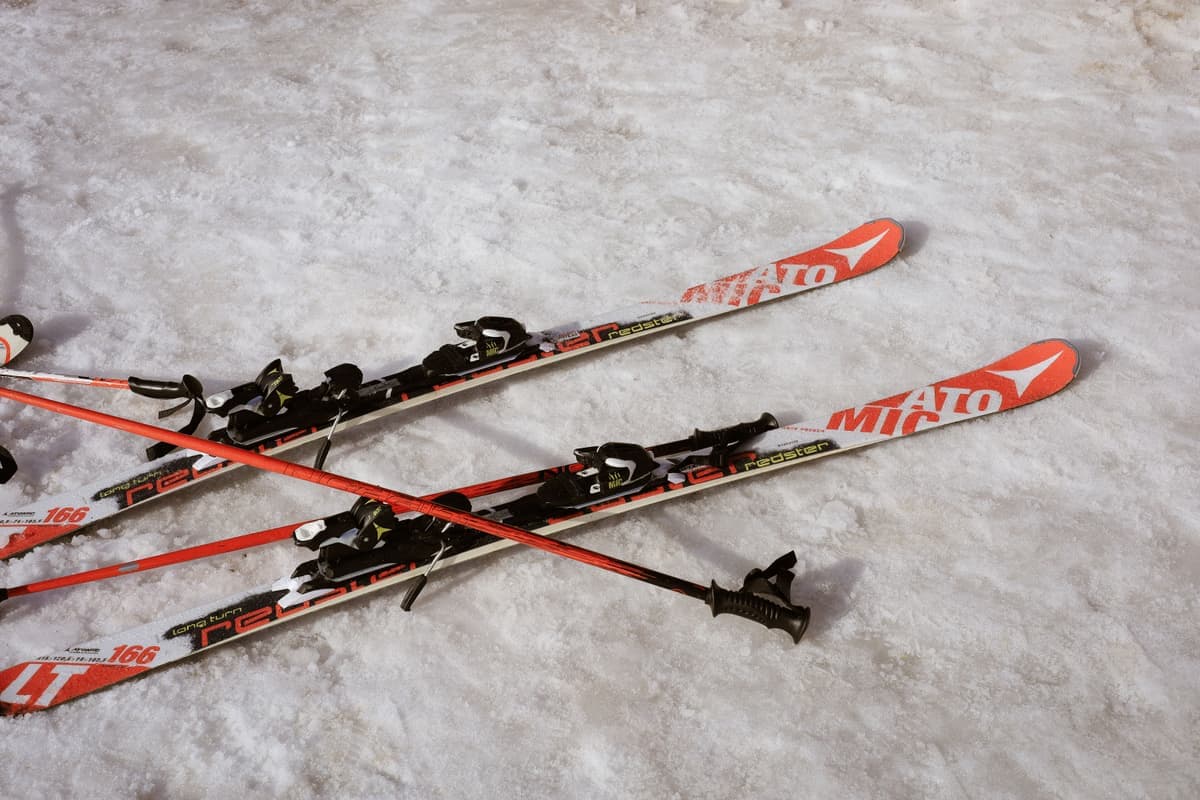
- Skis or a snowboard. Almost always the right call for a beginner.
- Boots. The strongest rental case on this site, because fit matters more than any specification and can only be judged with your foot in the shell. Why.
- Poles. Included with a ski rental, and not used at all in most first lessons.
Book rentals ahead if the resort allows it. The good boots and the full size range go first, and the first morning of a holiday week is a bad time to be at the back of a queue.
The children’s version
The same list with four additions and one subtraction:
- A second pair of gloves or mittens. Wet by lunch, no drying on a mountain. The most useful thing you will pack.
- Spare ski socks. Cheap, and a wet sock ends a day.
- Snow pants with reinforced knees and seat. That is where a learning child destroys a pair. The picks.
- A photo of each child taken that morning, on your phone. Describing what they are wearing to a lift attendant becomes easy. Costs nothing.
- Not a bigger helmet. Measure and buy the size that fits today. The size chart.
If you have four weeks
- Four weeks out: decide what you are renting and book it.
- Three weeks out: measure heads and feet, order anything that has to fit, so there is time to exchange it.
- Two weeks out: layers, gloves, socks and goggles.
- The week before: work through this list and the trip packing list.
Printing this
The tables and lists above print cleanly from a browser, which is deliberate. Print it, tick it, and put it in the bag with the passports.
If you are working out what to spend where, the budget page builds real kits at three price ceilings, and the buy-versus-rent page has the arithmetic behind every buy-or-rent call in the tables above.
Every pick, with the working
Each entry shows the published inputs, the axis scores they produce, and what you give up. The order is the computed order, not a commercial one, and the arithmetic is open underneath each score.
1 · The one piece of ski gear worth buying before anything else
Darn Tough Alpine Over-the-Calf Lightweight Ski Socks
The only item in this entire ledger with an unconditional lifetime guarantee. It is a $30 sock that the maker will replace forever, which over any realistic number of ski days is the cheapest thing on the site.
- Published price
- $30
- Cost per day on snow
- $2 a day
- Amortized over
- 3 seasons (15 days)
- Certified to
- Not published
- Published sizes
- S through XL
- Warranty
- Unconditional lifetime guarantee
What it gets right
- Unconditional lifetime guarantee, published without qualifying conditions
- Lightweight merino, which is correct for a modern ski boot: a thick sock makes boots colder, not warmer
- Over-the-calf length, so the boot cuff never touches bare skin
What you give up
- $30 for one pair of socks reads as absurd until the replacement policy is read
- Lightweight is the right choice but feels wrong to anyone expecting a thick ski sock
The working behind the 6.4
- Cost per day on snow: 9.6
- $30 over 3 seasons at 5 days each = 15 days = $2 a day
- Published protection: not scored
- Socks carry no protective standard, so this axis does not apply.
- Size availability: 5.1
- 4 published sizes (5.1 of 8.5); no continuous adjuster published (+0); range: S through XL
- Warranty and support: 2.0
- no published term (0 of 6); no published crash replacement (+0); repair or replacement parts published (+2)
Axes with unpublished inputs are dropped and the remaining weights re-normalized, so a product is not punished for a manufacturer’s silence. Specifications compiled September 3, 2026 from Darn Tough published specifications.
2 · The default adult glove when nothing about your hands is unusual
OutdoorMaster 3M Thinsulate Waterproof Ski Gloves
Named Thinsulate insulation and a published two-year warranty at $39.99, which is the only glove here that publishes a warranty term at all. Over three seasons that is $2.67 a day.
- Published price
- $39.99
- Cost per day on snow
- $2.67 a day
- Amortized over
- 3 seasons (15 days)
- Certified to
- Not published
- Waterproof rating
- Not published
- Published sizes
- S through XL
- Warranty
- OutdoorMaster 2-year warranty
What it gets right
- Two-year published warranty, which no other glove here states
- 3M Thinsulate insulation named rather than unspecified fill
- $39.99, which is $2.67 a day over three seasons at five days each
What you give up
- No published waterproof rating in millimeters
- Four sizes, so hands at the extremes are less well served
The working behind the 6.3
- Cost per day on snow: 9.1
- $39.99 over 3 seasons at 5 days each = 15 days = $2.67 a day
- Published protection: not scored
- No waterproof rating or seam construction published.
- Size availability: 5.1
- 4 published sizes (5.1 of 8.5); no continuous adjuster published (+0); range: S through XL
- Warranty and support: 2.5
- 2 yr (2.5 of 6); no published crash replacement (+0); no published repair route (+0)
Axes with unpublished inputs are dropped and the remaining weights re-normalized, so a product is not punished for a manufacturer’s silence. Specifications compiled September 3, 2026 from OutdoorMaster published specifications.
3 · A skier who wants to change lenses without taking gloves off
OutdoorMaster PRO Magnetic
A magnetic lens swap at a published $49.99, with 100% UV400 and an over-the-glasses frame. Spare lenses are a separate purchase, so the real cost of a two-lens setup lands closer to the Smith than the sticker suggests.
- Published price
- $49.99
- Cost per day on snow
- $2.00 a day
- Amortized over
- 5 seasons (25 days)
- Certified to
- Not published
- UV protection
- 100% published
- Anti-fog
- Anti-fog coating
- Lenses included
- 1
- Published sizes
- One size
- Warranty
- No term published for goggles
What it gets right
- Magnetic lens change, workable in gloves on a lift
- 100% UV400 protection and an anti-fog coating
- Over-the-glasses frame at a published $49.99
What you give up
- One lens included; the interchangeable system only pays off after you buy another
- No published impact standard
The working behind the 6.1
- Cost per day on snow: 9.6
- $49.99 over 5 seasons at 5 days each = 25 days = $2.00 a day
- Published protection: 6.0
- 100% UV protection published (+4); no published impact standard (+0); anti-fog treatment published (+2); single lens (+0)
- Size availability: not scored
- Sold in one size, so size availability does not apply.
- Warranty and support: 0.0
- no published term (0 of 6); no published crash replacement (+0); no published repair route (+0)
Axes with unpublished inputs are dropped and the remaining weights re-normalized, so a product is not punished for a manufacturer’s silence. Specifications compiled September 3, 2026 from OutdoorMaster published specifications.
4 · A cold, dry resort week where the snow does not turn to rain
Arctix Men's Insulated Snowsports Cargo Pants
The only garment in this ledger that publishes an actual waterproof number: a 3,000 mm ThermaLock coating with 85 g of insulation, at fifty dollars. 3,000 mm is the bottom of the useful range, and on a wet spring day you will find out where that bottom is.
- Published price
- $50
- Cost per day on snow
- $2 a day
- Amortized over
- 5 seasons (25 days)
- Certified to
- Not published
- Waterproof rating
- 3,000 mm
- Published sizes
- S through XXL, in 28, 32 and 34 inch inseams
- Warranty
- No term published on the product page
What it gets right
- Publishes a 3,000 mm waterproof rating, which most competitors at this price do not
- 85 g of ThermaTech insulation, warm enough for a beginner standing still on a learning slope
- Three published inseam lengths, which matters more in snow pants than in almost anything else
What you give up
- 3,000 mm is a coating, not a membrane, and heavy wet snow will eventually get through it
- Critical seams only, not fully sealed
The working behind the 5.2
- Cost per day on snow: 9.6
- $50 over 5 seasons at 5 days each = 25 days = $2 a day
- Published protection: 2.0
- 3,000mm waterproof rating (0.0 of 6); critically taped or untaped seams (+0); insulation or shell construction published (+2)
- Size availability: 6.8
- 5 published sizes (6.8 of 8.5); no continuous adjuster published (+0); range: S through XXL, in 28, 32 and 34 inch inseams
- Warranty and support: 0.0
- no published term (0 of 6); no published crash replacement (+0); no published repair route (+0)
Axes with unpublished inputs are dropped and the remaining weights re-normalized, so a product is not punished for a manufacturer’s silence. Specifications compiled September 3, 2026 from Arctix published specifications.
Prices last verified October 19, 2026. Prices move constantly; the figure on Amazon at the moment you click is the real one.
Questions people actually ask
What do beginners need for skiing?
A non-cotton base layer, ski socks, a mid layer, waterproof pants and jacket, gloves, goggles, a helmet and a neck gaiter, plus rented skis, boots and poles. Everything else is optional.
Do I need ski poles as a beginner?
Not for the first lessons; most instructors start people without them. They come with a ski rental anyway, so it is not a purchase decision.
What should I put in my pockets when skiing?
Lift pass, phone in an inside pocket so the battery survives, sunscreen, lip balm, snacks and a card. Most people do not carry a backpack on a first day.
What do I need to bring for a kid's first ski day?
Everything on the adult list, plus a spare pair of gloves, spare socks, pocket snacks, and a photo of them taken that morning in case they get separated from you.
Should I take a backpack skiing?
Usually not on a first day. It is awkward on a chairlift and most resorts have lockers. Keep a bag in the car with spare gloves, socks and dry shoes instead.