The best neck gaiters for skiing, and the way to wear one
A gaiter is the cheapest thing on this site and the easiest to wear wrong. Tuck it inside your goggle foam and you have built a machine for fogging lenses.
By Sawyer V. · Published
We have not tested this gear. Everything below is compiled from published specifications and published safety standards, and the arithmetic is public so you can check it. This page carries affiliate links: if you buy through one we earn a commission at no extra cost to you, and it does not change the order of the picks. Full disclosure.
The short answer
A midweight stretch tube is the right default, and the specification worth looking for is a published UPF rating - the Turtle Fur Comfort Shell publishes UPF 50+, which almost nothing else in this category states. Buy a youth size for a child rather than an adult tube worn loose. And wear it under the goggle foam, never tucked inside it, or your breath will fog the lens within minutes.
| # | Pick | Best for | Score | Price |
|---|---|---|---|---|
| 1 | Turtle Fur Comfort Shell Totally Tubular Neck Gaiter A do-everything tube that also handles spring sun | Not publishedon snow | 0.0/10 | $24.80 - View on Amazon |
| 2 | Turtle Fur Youth Comfort Shell Tube Neck Gaiter A child, and the gap between a helmet and a jacket collar | Not publishedon snow | 0.0/10 | $18.00 - View on Amazon |
| 3 | MERIWOOL Merino 250 Base Layer Top The layer that decides whether a beginner is cold all day | $3.25 a dayon snow | 5.9/10 | $65.00 - View on Amazon |
Prices last verified October 19, 2026. Prices move constantly; the figure on Amazon at the moment you click is the real one.
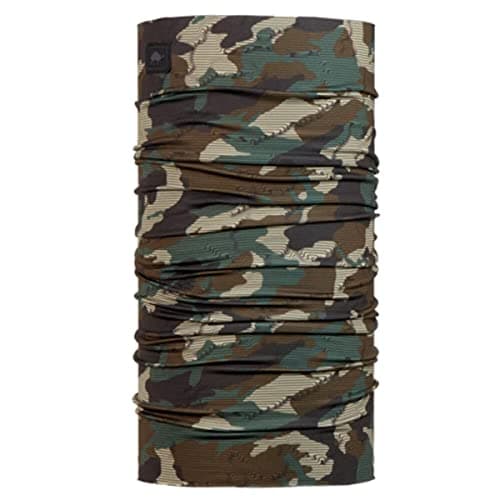
Three jobs, and the one nobody buys it for
A neck gaiter closes the gap between a jacket collar and a helmet. That gap does three things when it is open: it lets warm air escape upward like a chimney, it exposes the neck and lower face to windchill, and it leaves cheeks bare on the one day a season that is genuinely severe.
The third job is the one people do not buy it for and should: sun. A snowfield reflects a large share of the ultraviolet light hitting it, and at altitude the light is more intense to begin with, so you are lit from above and below at once. The strip of face between a goggle and a collar is exposed to all of it all day. The UV page covers what that does, and it is why a published UPF figure is worth more on this product than the warmth is.
The wearing mistake that fogs your goggles
This is the most useful paragraph on the page. A gaiter must sit under the bottom edge of your goggle foam, against your face - never pulled up inside the goggle frame.
If it is tucked inside, every breath you exhale is channelled up behind the lens instead of out into the air. A warm, humid stream hitting a cold inner lens is the textbook fogging condition, and it will happen within a couple of minutes of the first lift. People then blame the goggle, buy an anti-fog spray, and wipe the inner lens - which destroys the factory anti-fog treatment permanently and makes the whole thing worse.
The anti-fog page is largely a page about this one mistake, and the goggle fit guide covers the seal it depends on.
The four formats
| Format | Covers | Best for | Downside |
|---|---|---|---|
| Stretch tube (midweight) | Neck, and pulls up over the nose | The default; wears all season | Not the warmest in severe cold |
| Fleece tube | Neck and lower face, warmer | Genuinely cold days | Bulkier under a collar, and damper from breath |
| Balaclava | Head, ears, neck and face | Severe cold, and under a helmet | Must be thin, or it changes the helmet fit |
| Hinged or shaped face mask | Nose and cheeks specifically | People who fog badly | Fussier, and more to lose |
For most people a midweight stretch tube covers the whole season, with a fleece tube or a thin balaclava added for the coldest handful of days. If you are going the balaclava route, it has to be thin enough not to change how the helmet sits - the helmet liners page explains why that matters, and the balaclava roundup compares five of them on published weight, fabric and breathing design.
The picks
Turtle Fur Comfort Shell Totally Tubular
The pick, and the reason is the published UPF 50+ rating. In a category where almost every product publishes nothing beyond "soft" and "warm", a stated UV figure is the only comparable specification available, and it happens to be the thing that matters most in spring.
The rest of the published spec supports it: brushed polyester and spandex with four-way stretch, so it seals around the face without gripping; published as moisture-wicking and odor resistant, which matters across a multi-day trip; and tube construction with no seam at the front, which is where a seam would sit against your nose.
Honest cons: it is midweight, so a genuinely severe day wants something warmer over it, and it is one size, which is loose on a small adult. No published warranty term.
Turtle Fur Youth Comfort Shell
Same published fabric, sized for a child - and the sizing is the entire point. An adult tube on a child is loose, which means it slides down, gets pulled up too far, and ends up tucked under the goggle, which is the fogging failure above. Turtle Fur publishes a separate smaller kids size below the youth one, so there are genuinely two child sizes rather than one nominal one.
Buy two if you can. Gaiters are the single most-lost item in a family gear bag, and they cost less than a lift-line hot chocolate.
Fabric, briefly
- Synthetic stretch. Dries fast, stretches, cheap, and the format most published specs exist for. The sensible default.
- Merino. Warmer for its weight, keeps insulating when damp - and it will get damp, because you are breathing through it - and does not smell after three days. More expensive, slower to dry. The published figure to compare is gsm, exactly as on the base layer page.
- Fleece. Warmest per dollar, bulkiest, and it holds moisture from your breath more than the others.
- Cotton. No. Same reason as everywhere else on this site: it holds moisture against skin and stays cold.
Care, which is one line
Wash it. A gaiter spends the day with your breath passing through it, and it is the single grubbiest item in a ski bag by the end of a week. Cool wash, air dry, no fabric softener - which coats fibers and kills wicking. The washing page covers the rest of the soft goods.
Who should buy what
- Most adults, most of the season. One midweight stretch tube with a published UPF figure.
- A child. A youth or kids size, two of them, and never a scarf.
- Anyone who skis in severe cold. Add a thin balaclava rather than a thicker tube, so the ears and forehead are covered too. The bands are here.
- Anyone whose goggles fog constantly. Fix the wearing position first. It is free, and it is the cause about eighty percent of the time.
- Spring skiers. The UPF figure, and the wider face-protection page for what else to cover.
Every pick, with the working
Each entry shows the published inputs, the axis scores they produce, and what you give up. The order is the computed order, not a commercial one, and the arithmetic is open underneath each score.
1 · A do-everything tube that also handles spring sun
Turtle Fur Comfort Shell Totally Tubular Neck Gaiter
The only neck gaiter we could find that publishes a UV figure: UPF 50+, in a brushed polyester and spandex Comfort Shell with four-way stretch. On a reflective snowfield at altitude that number is doing more work than the warmth is.
- Published price
- Not published
- Cost per day on snow
- Not published
- Amortized over
- 3 seasons (15 days)
- Certified to
- Not published
- Published sizes
- One size, tube construction
- Warranty
- No term published on the product page
Turtle Fur prices this by print and colorway rather than publishing one MSRP, so the cost-per-day axis is not scored.
What it gets right
- UPF 50+ published, which almost nothing else in this category states
- Brushed polyester and spandex with published four-way stretch, so it seals without gripping
- Published as moisture-wicking and odor resistant, which matters on a multi-day trip
- Tube construction with no seam at the front, and it packs into a jacket pocket
What you give up
- Midweight, so it is not the warmest option on a genuinely severe day
- One size, so it is loose on a small adult
- No published warranty term and no single published price
The working behind the 0.0
- Cost per day on snow: not scored
- No manufacturer-published price, so this axis is not scored.
- Published protection: not scored
- This category carries no protective standard.
- Size availability: not scored
- Sold in one size, so size availability does not apply.
- Warranty and support: 0.0
- no published term (0 of 6); no published crash replacement (+0); no published repair route (+0)
Axes with unpublished inputs are dropped and the remaining weights re-normalized, so a product is not punished for a manufacturer’s silence. Specifications compiled September 9, 2026 from Turtle Fur published specifications.
2 · A child, and the gap between a helmet and a jacket collar
Turtle Fur Youth Comfort Shell Tube Neck Gaiter
The same published Comfort Shell fabric in a youth cut, which matters because an adult tube on a child is loose enough to slide down and get pushed under a goggle. Turtle Fur publishes a separate kids size below this one, so there are genuinely two child sizes rather than one.
- Published price
- Not published
- Cost per day on snow
- Not published
- Amortized over
- 2 seasons (10 days)
- Certified to
- Not published
- Published sizes
- Youth, one size; a separate kids size is also published
- Warranty
- No term published on the product page
Turtle Fur prices this by print and colorway rather than publishing one MSRP, so the cost-per-day axis is not scored.
What it gets right
- Sized for a child rather than an adult tube worn loose, which is the whole failure mode
- Same published Comfort Shell polyester and spandex with UPF 50+ protection
- A separate smaller kids size is published below the youth size
- Cheap enough that losing one is annoying rather than expensive, and children lose them
What you give up
- No published warranty term and no single published price
- Midweight fabric, so a genuinely cold day wants a fleece tube over the top
- Not a balaclava; it does not cover the head under a helmet
The working behind the 0.0
- Cost per day on snow: not scored
- No manufacturer-published price, so this axis is not scored.
- Published protection: not scored
- This category carries no protective standard.
- Size availability: not scored
- Sold in one size, so size availability does not apply.
- Warranty and support: 0.0
- no published term (0 of 6); no published crash replacement (+0); no published repair route (+0)
Axes with unpublished inputs are dropped and the remaining weights re-normalized, so a product is not punished for a manufacturer’s silence. Specifications compiled September 9, 2026 from Turtle Fur published specifications.
3 · The layer that decides whether a beginner is cold all day
MERIWOOL Merino 250 Base Layer Top
Skip this one. Not a gaiter at all - it is here because the most common upgrade path from a cheap tube is a merino one, and this is the only merino weight this site has a published gsm figure for. Buy it as a base layer; buy a gaiter as a gaiter. It is on the page so the fabric comparison is grounded in something rather than asserted.
250 g per square meter of merino is the midweight number, and midweight is the right answer for a beginner who alternates between standing still in a lesson and sweating on a magic carpet. Wool keeps working when it is damp; cotton does the opposite.
- Published price
- $65
- Cost per day on snow
- $3.25 a day
- Amortized over
- 4 seasons (20 days)
- Certified to
- Not published
- Published sizes
- S through XXL
- Warranty
- No term published on the product page
What it gets right
- 250 gsm published, so the weight can be compared against any other merino layer
- Wool retains warmth when damp, which is the entire argument against a cotton shirt
- Wearable for several days, which matters on a trip with one suitcase
What you give up
- $65 for a single top is more than a pair of snow pants here
- Merino needs cool washing and takes a long time to dry
The working behind the 5.9
- Cost per day on snow: 8.7
- $65 over 4 seasons at 5 days each = 20 days = $3.25 a day
- Published protection: not scored
- Base layers carry no protective standard, so this axis does not apply.
- Size availability: 6.8
- 5 published sizes (6.8 of 8.5); no continuous adjuster published (+0); range: S through XXL
- Warranty and support: 0.0
- no published term (0 of 6); no published crash replacement (+0); no published repair route (+0)
Axes with unpublished inputs are dropped and the remaining weights re-normalized, so a product is not punished for a manufacturer’s silence. Specifications compiled September 3, 2026 from MERIWOOL published specifications.
Prices last verified October 19, 2026. Prices move constantly; the figure on Amazon at the moment you click is the real one.
Questions people actually ask
What is the best neck gaiter for skiing?
A midweight stretch tube, and the specification worth looking for is a published UPF rating - most of this category publishes nothing comparable at all. The Turtle Fur Comfort Shell publishes UPF 50+ along with four-way stretch and moisture-wicking, brushed polyester and spandex construction.
Why do my goggles fog when I wear a neck gaiter?
Because the gaiter is tucked up inside the goggle frame rather than sitting under the bottom edge of the foam. That channels every breath up behind the lens, and a warm humid stream on a cold inner lens fogs within minutes. Wear it under the goggle, against your face.
Neck gaiter or balaclava for skiing?
A gaiter for most of the season, a thin balaclava for the coldest days because it covers ears and forehead too. If you go the balaclava route it must be thin enough not to change how your helmet sits - a thick one under a helmet is a fit problem.
Can kids wear an adult neck gaiter?
Poorly. An adult tube on a child is loose, so it slides down and gets pulled up too far, which is exactly how it ends up tucked inside the goggle and fogging the lens. Buy a youth or kids size, and buy two - they are the most-lost item in a family gear bag.
Do neck gaiters protect against sun?
The ones that publish a UPF rating do, and it matters more than people expect. Snow reflects a large share of the UV hitting it and altitude intensifies it, so the strip of face between a goggle and a collar is exposed from above and below all day. Most gaiters publish no UV figure at all.