What actually happens at a ski rental shop, step by step
The shop hands you skis, boots and poles. It does not hand you the four items that decide whether the day is fun, and nobody mentions that until you are already on the snow.
By Sawyer V. · Published
We have not tested this gear. Everything below is compiled from published specifications and published safety standards, and the arithmetic is public so you can check it. This page carries affiliate links: if you buy through one we earn a commission at no extra cost to you, and it does not change the order of the picks. Full disclosure.
The short answer
A rental shop supplies skis, bindings, boots and poles, and usually a helmet for a small extra charge. It will ask your height, weight, age, shoe size and how much you have skied, because those five figures feed the binding release setting the technician has to calculate. It will not rent you socks, base layers, gloves or goggles. Those four are yours to bring, and they are the four that decide whether you are comfortable.
| # | Pick | Best for | Score | Price |
|---|---|---|---|---|
| 1 | Darn Tough Alpine Over-the-Calf Lightweight Ski Socks The one piece of ski gear worth buying before anything else | $2 a dayon snow | 6.4/10 | $30.95 - View on Amazon |
| 2 | OutdoorMaster 3M Thinsulate Waterproof Ski Gloves The default adult glove when nothing about your hands is unusual | $2.67 a dayon snow | 6.3/10 | $24.95 - View on Amazon |
| 3 | MERIWOOL Merino 250 Base Layer Top The layer that decides whether a beginner is cold all day | $3.25 a dayon snow | 5.9/10 | $65.00 - View on Amazon |
| 4 | Smith Squad ChromaPop Anyone who skis in more than one kind of light | $6.20 a dayon snow | 5.3/10 | $119.95 - View on Amazon |
Prices last verified October 21, 2026. Prices move constantly; the figure on Amazon at the moment you click is the real one.
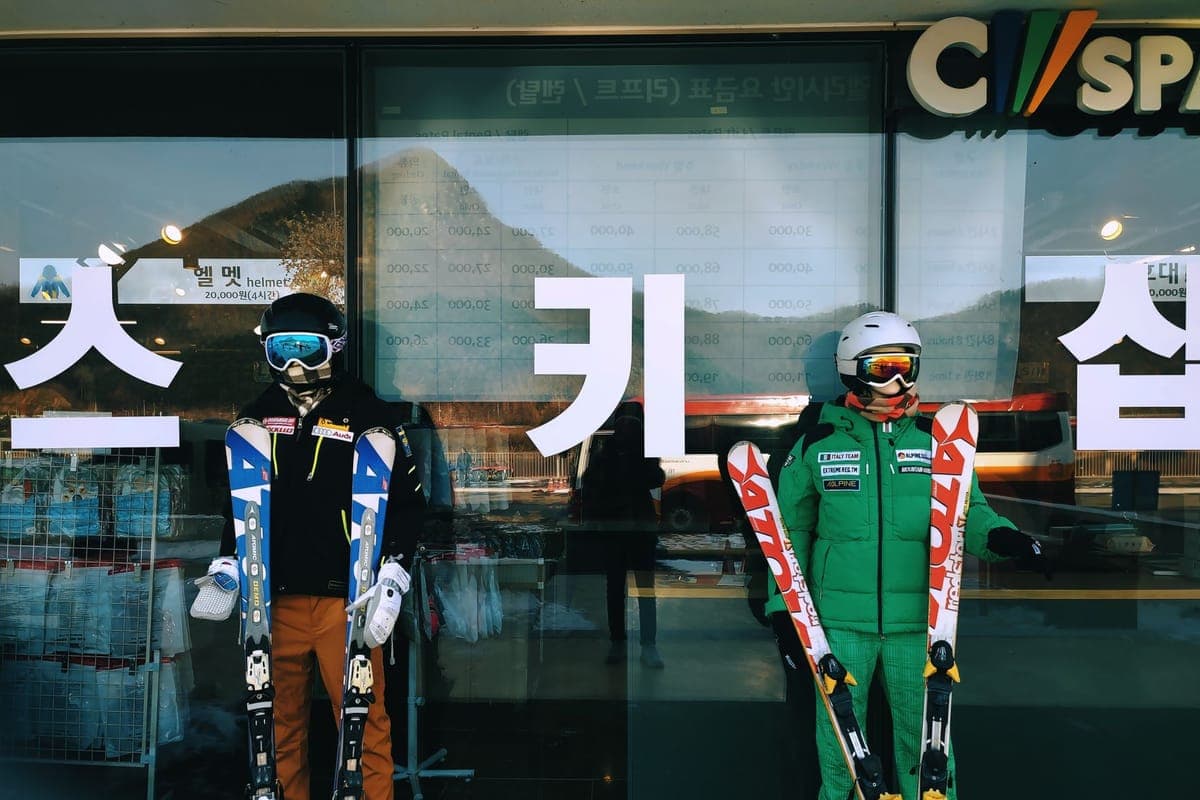
What is actually in a rental package
Almost every resort sells rentals in two or three tiers, and the tiers differ less than the price list suggests. The base package is skis with bindings already mounted, boots, and poles. The step up is a newer or narrower ski and, at some shops, a boot with a more adjustable fit. A helmet is nearly always a separate line item at a small daily rate, and it is the one add-on worth taking every time if you do not own one yet.
What none of the tiers include is anything that touches your skin. That is not stinginess, it is hygiene, and it is universal. So the shop can put you on perfectly good skis and you can still have a miserable day because you wore cotton socks. If you read nothing else here, read the layering page and the four-item list further down.
The five questions, and why they ask them
The form at the counter is short and it always asks the same things: height, weight, age, street shoe size, and a self-assessed ability level, usually described as type 1, 2 or 3. People fudge the weight and inflate the ability level out of embarrassment. Both are a mistake, and it helps to know exactly what those numbers are being used for.
They are inputs to a published international procedure. ISO 11088 is the standard covering assembly, adjustment and inspection of the alpine ski/binding/boot system, and it is written for the shop rather than for the manufacturer. It takes the skier parameters, combines them with the boot sole length, and produces a release value the technician dials into the binding. A deliberately overstated ability level raises that value, which means the binding holds on longer before it lets your leg go. Understating your weight does the opposite. Neither error is in your interest.
The boot fitting is the whole appointment
Skis are close to interchangeable at beginner speeds. Boots are not. A boot that is too big lets your heel lift, which turns every attempt to steer into a negotiation, and it is also colder, because a foot swimming in air has nothing to warm. A boot that is genuinely too small hurts within twenty minutes. The one you want feels firm and slightly alarming in the shop and correct on the third run.
Do the flex test while you are still at the counter. Stand up, buckle to a snug setting rather than a tight one, and bend your ankles forward as if reaching for something on a low shelf. Your heel should stay planted and your toes should come off the front of the boot. If your toes are still jammed against the end when you flex, the boot is too short. If your heel lifts, it is too big. The full rent-or-buy argument on boots covers why this is the item most families eventually buy first.
Bring the socks you intend to ski in and put them on before you try boots. A thick sock changes the fit by a full size and makes the boot colder rather than warmer, which is counterintuitive enough that it gets its own page.
The four things no shop will rent you
This is the part that catches families out. Everything below has to come from home, and none of it is expensive relative to a lift ticket.
| Item | Rented? | Why it matters on day one |
|---|---|---|
| Skis, bindings, poles | Yes | Sized and set at the counter from your five figures |
| Boots | Yes | The fitting is the appointment; everything else is quick |
| Helmet | Usually, small daily charge | Take it if you do not own one |
| Ski socks | No | One thin pair; thick socks make boots colder and looser |
| Base layer | No | Cotton stays wet and cold all day; wool does not |
| Gloves | No | Wet hands end a beginner day faster than cold feet |
| Goggles | No | Snow, wind and glare are all worse without them |
Socks are the cheapest insurance on the list and the one item worth buying properly, because a lightweight over-the-calf ski sock lasts for years. Base layers are the difference between damp and warm. Gloves get wet, so for children the second pair is effectively part of the purchase. Goggles matter more than first-timers expect: sunglasses fall off, do not seal against wind, and are genuinely poor in falling snow. There is a whole page on why that swap does not work.
Collect the gear the night before
Most resort and in-town shops let you pick up the afternoon or evening before your first day at no extra charge, and it is the best free upgrade available. The morning queue at a rental counter on a Saturday is long, the staff are rushed, and a rushed boot fitting is the one thing you cannot afford. Fitting boots at five in the evening the day before, unhurried, with time to swap a shell that is not right, changes the whole trip.
In-town shops are usually cheaper than the base-of-mountain shop and less crowded. The trade-off is that if something breaks at eleven in the morning you are twenty minutes from help rather than two. For a first trip with children, the base-area shop is often worth the premium for exactly that reason.
Four things to check before you walk out
- The boots have your name or number on them. Rental boots look identical and families routinely go home with three left feet.
- You can buckle and unbuckle the boots yourself. If you cannot work them in the shop you will not manage in a cold parking lot.
- Ask what the release setting is and whether it is written down. Shops record it. If a boot gets swapped mid-trip the setting has to be recalculated, because the boot sole length is one of the inputs.
- Confirm the return time and the damage policy. Most shops charge for a base gouge deep enough to need a repair, and most waive normal wear.
If something is wrong, go back
Rental agreements almost universally allow a swap. A boot that hurts, a ski that feels unmanageable, a helmet that presses on the goggle frame: all of these are a five-minute visit, and the shop would far rather do the swap than have you suffer through it. First-timers put up with an ill-fitting boot for three days because they assume skiing simply hurts. It does not.
Renting for a child
Children get the same process with two differences. First, the ability-level question is almost always answered as type 1, and it should be. Second, resorts frequently bundle a child rental with a lesson at a lower combined price, and the lesson provider will want the child in gear that matches what the class uses. Ask before you book the two separately.
A child grows out of gear rather than wearing it out, which is why the cost arithmetic lands so differently for them. The things worth owning for a child are the same four items above plus a helmet, and the budget kit page lists what that actually comes to. If the child will ski more than a handful of days, a seasonal lease usually beats both daily rental and buying.
When renting stops making sense
Somewhere between five and fifteen days on snow the arithmetic flips, and it flips at a different point for every item. Boots flip first, because fit is personal and rental boots are a compromise. Helmets and goggles flip almost immediately, because the daily rental charge for a helmet is close to the purchase price spread over two seasons. Skis flip last, and for a family skiing five days a year they may never flip at all.
We have published the arithmetic rather than the opinion: what ski gear actually costs works through the cost per day on snow, and the helmet and goggle page handles the two items that flip first. Renting is not a failure state. For most of the families this site is written for, it is the correct answer for years.
Every pick, with the working
Each entry shows the published inputs, the axis scores they produce, and what you give up. The order is the computed order, not a commercial one, and the arithmetic is open underneath each score.
1 · The one piece of ski gear worth buying before anything else
Darn Tough Alpine Over-the-Calf Lightweight Ski Socks
The only item in this entire ledger with an unconditional lifetime guarantee. It is a $30 sock that the maker will replace forever, which over any realistic number of ski days is the cheapest thing on the site.
- Published price
- $30
- Cost per day on snow
- $2 a day
- Amortized over
- 3 seasons (15 days)
- Certified to
- Not published
- Published sizes
- S through XL
- Warranty
- Unconditional lifetime guarantee
What it gets right
- Unconditional lifetime guarantee, published without qualifying conditions
- Lightweight merino, which is correct for a modern ski boot: a thick sock makes boots colder, not warmer
- Over-the-calf length, so the boot cuff never touches bare skin
What you give up
- $30 for one pair of socks reads as absurd until the replacement policy is read
- Lightweight is the right choice but feels wrong to anyone expecting a thick ski sock
The working behind the 6.4
- Cost per day on snow: 9.6
- $30 over 3 seasons at 5 days each = 15 days = $2 a day
- Published protection: not scored
- Socks carry no protective standard, so this axis does not apply.
- Size availability: 5.1
- 4 published sizes (5.1 of 8.5); no continuous adjuster published (+0); range: S through XL
- Warranty and support: 2.0
- no published term (0 of 6); no published crash replacement (+0); repair or replacement parts published (+2)
Axes with unpublished inputs are dropped and the remaining weights re-normalized, so a product is not punished for a manufacturer’s silence. Specifications compiled September 3, 2026 from Darn Tough published specifications.
2 · The default adult glove when nothing about your hands is unusual
OutdoorMaster 3M Thinsulate Waterproof Ski Gloves
Named Thinsulate insulation and a published two-year warranty at $39.99, which is the only glove here that publishes a warranty term at all. Over three seasons that is $2.67 a day.
- Published price
- $39.99
- Cost per day on snow
- $2.67 a day
- Amortized over
- 3 seasons (15 days)
- Certified to
- Not published
- Waterproof rating
- Not published
- Published sizes
- S through XL
- Warranty
- OutdoorMaster 2-year warranty
What it gets right
- Two-year published warranty, which no other glove here states
- 3M Thinsulate insulation named rather than unspecified fill
- $39.99, which is $2.67 a day over three seasons at five days each
What you give up
- No published waterproof rating in millimeters
- Four sizes, so hands at the extremes are less well served
The working behind the 6.3
- Cost per day on snow: 9.1
- $39.99 over 3 seasons at 5 days each = 15 days = $2.67 a day
- Published protection: not scored
- No waterproof rating or seam construction published.
- Size availability: 5.1
- 4 published sizes (5.1 of 8.5); no continuous adjuster published (+0); range: S through XL
- Warranty and support: 2.5
- 2 yr (2.5 of 6); no published crash replacement (+0); no published repair route (+0)
Axes with unpublished inputs are dropped and the remaining weights re-normalized, so a product is not punished for a manufacturer’s silence. Specifications compiled September 3, 2026 from OutdoorMaster published specifications.
3 · The layer that decides whether a beginner is cold all day
MERIWOOL Merino 250 Base Layer Top
250 g per square meter of merino is the midweight number, and midweight is the right answer for a beginner who alternates between standing still in a lesson and sweating on a magic carpet. Wool keeps working when it is damp; cotton does the opposite.
- Published price
- $65
- Cost per day on snow
- $3.25 a day
- Amortized over
- 4 seasons (20 days)
- Certified to
- Not published
- Published sizes
- S through XXL
- Warranty
- No term published on the product page
What it gets right
- 250 gsm published, so the weight can be compared against any other merino layer
- Wool retains warmth when damp, which is the entire argument against a cotton shirt
- Wearable for several days, which matters on a trip with one suitcase
What you give up
- $65 for a single top is more than a pair of snow pants here
- Merino needs cool washing and takes a long time to dry
The working behind the 5.9
- Cost per day on snow: 8.7
- $65 over 4 seasons at 5 days each = 20 days = $3.25 a day
- Published protection: not scored
- Base layers carry no protective standard, so this axis does not apply.
- Size availability: 6.8
- 5 published sizes (6.8 of 8.5); no continuous adjuster published (+0); range: S through XXL
- Warranty and support: 0.0
- no published term (0 of 6); no published crash replacement (+0); no published repair route (+0)
Axes with unpublished inputs are dropped and the remaining weights re-normalized, so a product is not punished for a manufacturer’s silence. Specifications compiled September 3, 2026 from MERIWOOL published specifications.
4 · Anyone who skis in more than one kind of light
Smith Squad ChromaPop
The only goggle here that ships with a second lens in the box, which is the single change that makes a goggle usable in both bright sun and flat light. That, plus 100% UV and a treated inner lens, is the whole specification worth paying for.
- Published price
- $155
- Cost per day on snow
- $6.20 a day
- Amortized over
- 5 seasons (25 days)
- Certified to
- Not published
- UV protection
- 100% published
- Anti-fog
- Fog-X anti-fog inner lens
- Lenses included
- 2
- Published sizes
- One size
- Warranty
- No term published for goggles
What it gets right
- Two lenses in the box, so a flat-light day does not need a second purchase
- 100% UV protection and a Fog-X treated inner lens
- Cylindrical frame that sits flat against most helmet brows
What you give up
- $155 is more than three of the helmets on this site
- Smith publishes no impact standard for this goggle, so we cannot score it on one
- Sold in one frame size; the smaller and larger faces need a different model entirely
The working behind the 5.3
- Cost per day on snow: 6.5
- $155 over 5 seasons at 5 days each = 25 days = $6.20 a day
- Published protection: 8.0
- 100% UV protection published (+4); no published impact standard (+0); anti-fog treatment published (+2); 2 lenses included (+2)
- Size availability: not scored
- Sold in one size, so size availability does not apply.
- Warranty and support: 0.0
- no published term (0 of 6); no published crash replacement (+0); no published repair route (+0)
Axes with unpublished inputs are dropped and the remaining weights re-normalized, so a product is not punished for a manufacturer’s silence. Specifications compiled September 3, 2026 from Smith published specifications.
Prices last verified October 21, 2026. Prices move constantly; the figure on Amazon at the moment you click is the real one.
Questions people actually ask
What do I need to bring to a ski rental shop?
Your own ski socks, and a rough idea of your height, weight and street shoe size. If you already own boots, bring them, because the binding release setting is calculated from the boot sole length. Bring a photo ID and the card you booked with; most shops take a card on file against damage.
Do ski rentals include a helmet?
Usually as a separate small daily charge rather than part of the package. Take it if you do not own one. If you expect to ski more than a few days across two seasons, buying is normally cheaper than renting a helmet repeatedly, and the fit is better because it is yours.
Should I rent skis at the resort or in town?
In-town shops are usually cheaper and quieter. Base-of-mountain shops cost more but can fix a problem in minutes rather than after a drive. For a first trip with children, the ability to swap a painful boot at lunchtime is worth the premium.
Why does the rental form ask my weight?
Because weight, height, age, boot sole length and self-assessed ability feed the release setting the technician dials into the binding, following the published ISO 11088 procedure. An inaccurate answer produces a setting that either releases too easily or does not release when it should.
Can I swap rental gear during the trip?
Almost always, and at no charge. Boots that hurt, skis that feel wrong and helmets that clash with your goggles are all normal swap requests. If a boot is swapped, the binding release setting has to be recalculated because the sole length changed.