Which ski jacket features are worth paying for
A jacket spec sheet lists fifteen features. Four of them change whether you are dry and comfortable; the rest are worth exactly nothing to a family skiing five days a year.
By Sawyer V. · Published
We have not tested this gear. Everything below is compiled from published specifications and published safety standards, and the arithmetic is public so you can check it. This page carries affiliate links: if you buy through one we earn a commission at no extra cost to you, and it does not change the order of the picks. Full disclosure.
The short answer
Four features are worth money: seam sealing, a helmet-compatible hood, pit zips, and a powder skirt if you fall a lot, which as a beginner you will. Three are close to irrelevant for a resort skier: a RECCO reflector, a goggle wipe, and a headphone port. The specification that matters most and is published least is the hydrostatic head rating in millimeters.
| # | Pick | Best for | Score | Price |
|---|---|---|---|---|
| 1 | Arctix Men's Icecap Insulated Jacket A cold dry week where price matters more than a spec sheet | $4.20 a dayon snow | 4.7/10 | $92.12 - View on Amazon |
| 2 | Wantdo Men's 3-in-1 Ski Jacket A wet-snow resort at a price that does not assume a season pass | Not publishedon snow | 3.8/10 | $59.97 - View on Amazon |
| 3 | Columbia Whirlibird V Interchange Jacket One jacket that has to work on the mountain and at home | $10 a dayon snow | 3.2/10 | $250.00 - View on Amazon |
Prices last verified October 21, 2026. Prices move constantly; the figure on Amazon at the moment you click is the real one.
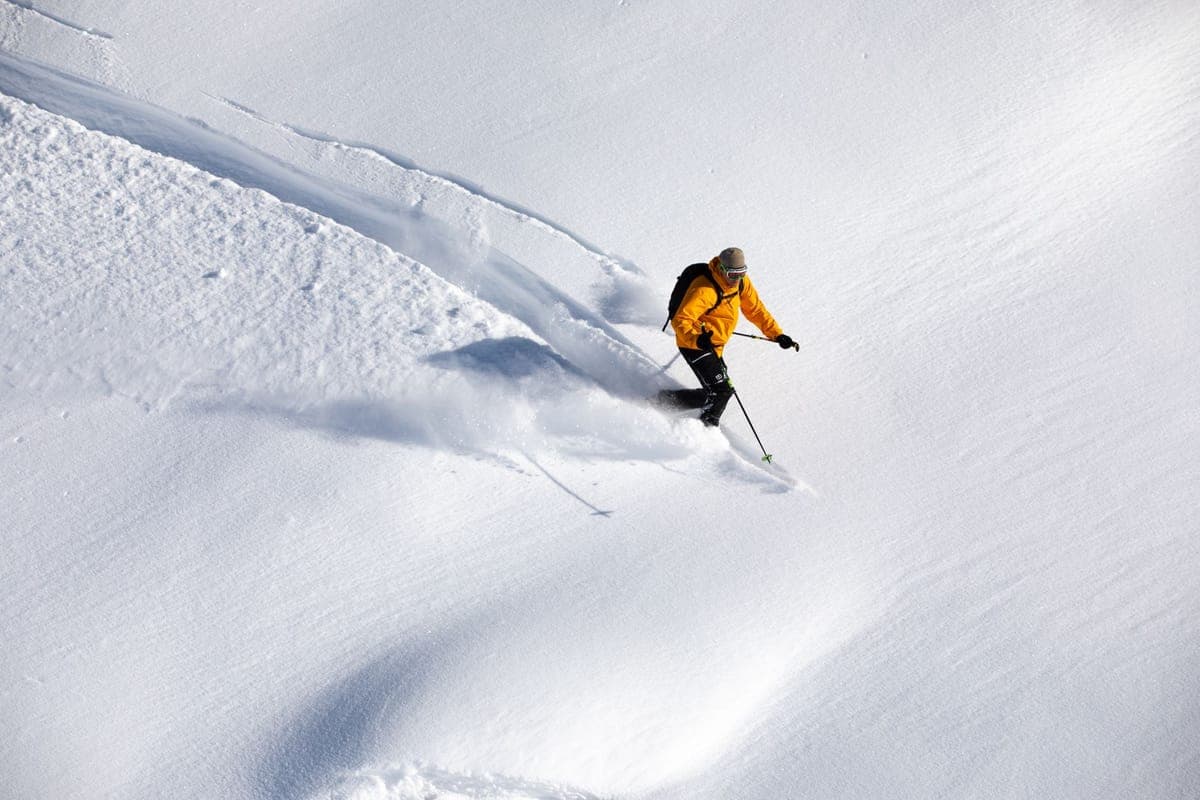
Seam sealing: the feature that decides whether you stay dry
Fabric almost never leaks first. Seams do, because a seam is a line of needle holes, and each hole is a route through the waterproof layer. Sealing means a tape bonded over the inside of that seam. There are three published states and the difference between them is real.
| Published as | What it means | Where water gets in |
|---|---|---|
| Fully taped or fully seam sealed | Every seam in the garment has taped stitching | Effectively only the zips and the fabric itself |
| Critical seams sealed | Shoulders, hood and upper body taped; lower seams not | Wherever you sit, kneel, or take a fall on your hip |
| Not published | No claim made either way | Assume untaped and treat the jacket as showerproof |
Critical seams are what most family-price outerwear publishes, including the Columbia and the Arctix in this ledger, and for a cold dry resort week it is genuinely fine. Where it stops being fine is wet snow, spring skiing, and children, who spend a lot of the day sitting in it. If your skiing is mostly a learning slope in March, fully taped is worth the premium.
The number brands avoid publishing
A hydrostatic head rating in millimeters is the closest thing outerwear has to a comparable specification, and the striking thing about this category is how few makers state one. In this ledger, Wantdo publishes 10,000 mm on its 3-in-1 jacket and names a microporous membrane. Arctix publishes 3,000 mm on its snow pants and nothing at all on its jacket. Columbia publishes a named waterproof-breathable fabric and no number.
An absent rating does not mean a bad jacket. It means you cannot compare that jacket numerically against one that publishes, and you are being asked to trust a brand name instead of a figure. The waterproof ratings page explains what the millimeter figure is measuring and which bands are useful for which weather. Read it before you pay for a number you did not need or skip a jacket for not having one.
Pit zips: the most useful feature per dollar
Zippered vents under the arms, opened on the way up and closed on the way down. They are the difference between a jacket that works on a cold February morning and one that works on both that and a sunny April afternoon, and they cost the maker very little.
They matter most for beginners, which is counterintuitive. A confident skier spends a lot of the day riding lifts and going downhill in cold air. A beginner spends the day sidestepping up a slope, carrying skis, picking a child up, and getting genuinely hot inside a jacket bought for standing still. Overheating and then cooling in wet base layers is the actual cause of most cold afternoons, and the base layer page covers the other half of the fix.
Powder skirt: yes if you fall, no if you do not
An elasticated band inside the hem that snaps closed around your waist and stops snow traveling up inside the jacket. It is described as a deep-snow feature, which undersells it: the people who most need one are beginners, because beginners fall, and every fall on a learning slope is an opportunity for snow to get in at the hem.
If you already own a jacket without one, a long hem and a base layer tucked into your pants achieves most of the same thing. The sizing page covers how long a hem needs to be. If you are buying and the choice is between a powder skirt and a slightly better waterproof rating, take the skirt for a first season.
The hood has to fit over a helmet
This is a feature rather than a given. A hood cut for a bare head will not close over a helmet, and the weather in which you want a hood is the weather in which you are wearing one. Look for a maker that says helmet-compatible; if it does not say, assume it is not, and test with the helmet on before you remove the tags.
Two secondary details are worth a glance. A hood that adjusts at the back as well as at the face will actually stay on in wind rather than blowing off the moment you turn your head. And a removable hood is a genuine convenience on a jacket you also wear off the mountain, which for a family is most of its life.
Three-in-one systems, and what they really give you
An interchange or 3-in-1 jacket is a waterproof shell with a zip-out insulated liner, so you have a shell, a liner and a combined jacket. Columbia publishes the Whirlibird V this way and Wantdo publishes a fleece-liner version. For a family that skis one week a year and spends the other fifty-one in a cold parking lot, this is genuinely two purchases avoided rather than a gimmick.
The catch is that neither half is quite as good as a dedicated one. The shell is heavier than a pure shell and the liner is less warm than a real insulated jacket, and the combined weight is more than either. Whether that trade is worth it depends entirely on whether the jacket has a life off the mountain. The 3-in-1 roundup compares the published constructions, and the shell versus insulated page argues the underlying question.
The features that are close to irrelevant
- A RECCO reflector. A passive reflector that lets a rescue team with a matching detector locate you. Genuinely useful in avalanche terrain and essentially never relevant on a groomed resort run. Do not pay extra for it; do not avoid a jacket that has it.
- A goggle wipe on a cord. A small piece of cloth. It is fine, and wiping the inside of a lens with anything is how the anti-fog treatment gets destroyed, which is the actual advice on the goggle care page.
- A media pocket with a headphone port. Solved by any pocket and a wireless earbud. It exists because the pattern was drawn in 2011.
- A ski pass pocket on the sleeve. Genuinely convenient at a resort with a gate reader, and worth roughly nothing anywhere else. Nice if it is there.
Pockets, briefly
Two things worth checking rather than counting. Whether there is an internal pocket big enough for a phone against your body, because a phone in an outer pocket dies in the cold. And whether the hand pockets sit above the waist belt of a backpack, which matters the moment anyone in the family carries one.
The order to spend money in
For a family skiing a handful of days a year, in order: seam sealing, then a helmet-compatible hood, then pit zips, then a powder skirt, then a published waterproof rating, then everything else. If a jacket has the first three and no published rating, it is a better buy than one with a big number on the tag and untaped seams.
And before spending at all, it is worth reading the rent-or-buy page on clothing. Outerwear is the one ski category where the purchase is easy to justify, because a jacket that works on the mountain also works for the school run in January, which no ski boot ever will.
Every pick, with the working
Each entry shows the published inputs, the axis scores they produce, and what you give up. The order is the computed order, not a commercial one, and the arithmetic is open underneath each score.
1 · A cold dry week where price matters more than a spec sheet
Arctix Men's Icecap Insulated Jacket
Arctix publishes a 3,000 mm rating on its insulated snow pants and no rating at all on this jacket, which is worth saying out loud rather than quietly borrowing the pants figure. What it does publish is insulation and critical seam sealing at $105.
- Published price
- $105
- Cost per day on snow
- $4.20 a day
- Amortized over
- 5 seasons (25 days)
- Certified to
- Not published
- Waterproof rating
- Not published
- Published sizes
- S through XXL
- Warranty
- No term published on the product page
What it gets right
- $105 published, which over five seasons is $4.20 a day on snow
- Critical seams sealed, which is what most family-price outerwear does
- Five published sizes
What you give up
- No waterproof rating published for this jacket, so it cannot be compared numerically
- Critical seams rather than fully sealed
The working behind the 4.7
- Cost per day on snow: 8.0
- $105 over 5 seasons at 5 days each = 25 days = $4.20 a day
- Published protection: 2.0
- no published waterproof rating (0 of 6); critically taped or untaped seams (+0); insulation or shell construction published (+2)
- Size availability: 6.8
- 5 published sizes (6.8 of 8.5); no continuous adjuster published (+0); range: S through XXL
- Warranty and support: 0.0
- no published term (0 of 6); no published crash replacement (+0); no published repair route (+0)
Axes with unpublished inputs are dropped and the remaining weights re-normalized, so a product is not punished for a manufacturer’s silence. Specifications compiled September 3, 2026 from Arctix published specifications.
2 · A wet-snow resort at a price that does not assume a season pass
Wantdo Men's 3-in-1 Ski Jacket
Publishes a 10,000 mm waterproof rating, which is a genuine resort-day figure and more than three times what the budget snow pants on this site publish. It is also the only jacket here that names a membrane rather than a coating.
- Published price
- Not published
- Cost per day on snow
- Not published
- Amortized over
- 5 seasons (25 days)
- Certified to
- Not published
- Waterproof rating
- 10,000 mm
- Published sizes
- S through XXL
- Warranty
- No term published on the product page
Wantdo lists this jacket across a price range that varies by colorway and size rather than publishing a single MSRP, so the cost-per-day axis is not scored.
What it gets right
- Publishes 10,000 mm, a number most brands at any price decline to state
- Names a microporous TPU membrane rather than a surface coating
- Three-in-one construction with a zip-out fleece liner
What you give up
- No single published price, so cost per day cannot be computed in advance
- Seam construction is not published, and seams leak before fabric does
The working behind the 3.8
- Cost per day on snow: not scored
- No manufacturer-published price, so this axis is not scored.
- Published protection: 4.5
- 10,000mm waterproof rating (2.5 of 6); seam sealing not published (+0); insulation or shell construction published (+2)
- Size availability: 6.8
- 5 published sizes (6.8 of 8.5); no continuous adjuster published (+0); range: S through XXL
- Warranty and support: 0.0
- no published term (0 of 6); no published crash replacement (+0); no published repair route (+0)
Axes with unpublished inputs are dropped and the remaining weights re-normalized, so a product is not punished for a manufacturer’s silence. Specifications compiled September 3, 2026 from Wantdo published specifications.
3 · One jacket that has to work on the mountain and at home
Columbia Whirlibird V Interchange Jacket
Two jackets in one: a waterproof shell and a zip-out insulated liner that each work alone. For a family that skis one week a year and spends the other fifty-one weeks in a cold parking lot, that is genuinely two purchases avoided.
- Published price
- $250
- Cost per day on snow
- $10 a day
- Amortized over
- 5 seasons (25 days)
- Certified to
- Not published
- Waterproof rating
- Not published
- Published sizes
- S through XXL
- Warranty
- No term published on the product page
What it gets right
- Three-in-one construction, so the shell and the liner are each usable on their own
- Omni-Tech waterproof-breathable fabric with critical seams sealed
- Sold in five sizes with regular, big and tall variants
What you give up
- Columbia publishes no hydrostatic-head figure, so its waterproofing cannot be compared numerically against a rated jacket
- Critical seams are sealed rather than every seam
- $250 is the most expensive item in this ledger apart from the skis
The working behind the 3.2
- Cost per day on snow: 3.7
- $250 over 5 seasons at 5 days each = 25 days = $10 a day
- Published protection: 2.0
- no published waterproof rating (0 of 6); critically taped or untaped seams (+0); insulation or shell construction published (+2)
- Size availability: 6.8
- 5 published sizes (6.8 of 8.5); no continuous adjuster published (+0); range: S through XXL
- Warranty and support: 0.0
- no published term (0 of 6); no published crash replacement (+0); no published repair route (+0)
Axes with unpublished inputs are dropped and the remaining weights re-normalized, so a product is not punished for a manufacturer’s silence. Specifications compiled September 3, 2026 from Columbia published specifications.
Prices last verified October 21, 2026. Prices move constantly; the figure on Amazon at the moment you click is the real one.
Questions people actually ask
Do I need a powder skirt on a ski jacket?
If you fall regularly, which as a beginner you will, yes. It stops snow traveling up inside the jacket at the hem. If you already own a jacket without one, a long hem plus a base layer tucked into your pants gets you most of the way there.
What is the difference between fully taped and critical seams sealed?
Fully taped means every seam has taped stitching. Critical seams sealed means the shoulders, hood and upper body are taped and the lower seams are not, so water gets in wherever you sit or take a fall on your hip. Most family-price outerwear publishes critical seams, which is fine in cold dry snow and less fine in spring.
Are pit zips worth it on a ski jacket?
Yes, and they matter most for beginners. A beginner spends the day sidestepping, carrying skis and picking children up, which generates far more heat than riding lifts does. Venting mechanically works regardless of what the fabric claims about breathability.
What waterproof rating do I need for a ski jacket?
It depends on the snow you ski in, and many brands publish no number at all. A published 10,000 mm is a genuine resort figure for wet snow; 3,000 mm is the bottom of the useful range. An absent rating is not automatically bad, but it does mean you cannot compare that jacket numerically.
Is a RECCO reflector useful for resort skiing?
Barely. It is a passive reflector that lets a rescue team with a matching detector locate a buried person, which is an avalanche-terrain scenario rather than a groomed-run one. Do not pay extra for it and do not rule out a jacket that includes it.