Ski gifts for kids, by age, and the ones that never get worn
A child grows out of most ski gear in a season, which makes half this category a bad present. These are the ones that survive the growth and the Christmas morning test.
By Sawyer V. · Published
We have not tested this gear. Everything below is compiled from published specifications and published safety standards, and the arithmetic is public so you can check it. This page carries affiliate links: if you buy through one we earn a commission at no extra cost to you, and it does not change the order of the picks. Full disclosure.
The short answer
The gifts that work for a child are the ones that do not have to fit exactly: mittens with a long cuff, merino socks, hand warmers, a neck gaiter and a sled. The ones to avoid as surprises are boots, helmets, goggles and skis - all four work by fitting a specific body, and all four are the gifts that get exchanged. By age: toddler (1-4), long-cuff waterproof mittens and a sled; young child (4-8), merino ski socks, a youth gaiter and hand warmers; 8-12, their own goggles or a helmet if you have measured the head; teen, anything adult-sized they chose themselves. Prices are live; published figures as of October 17, 2026.
| # | Pick | Best for | Score | Price |
|---|---|---|---|---|
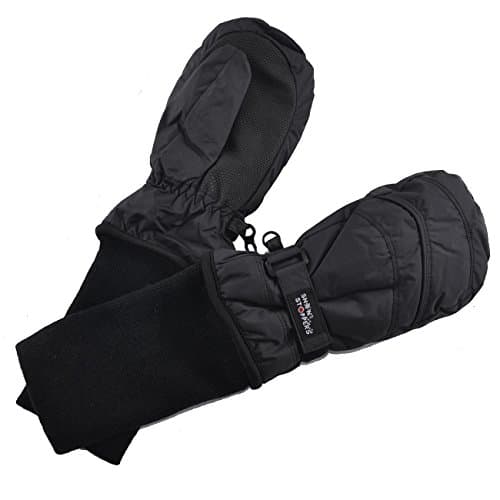
| 1 | SnowStoppers Original Extended Cuff Mittens A child who pulls mittens off, and the snow that goes up a sleeve | $3.90 a dayon snow | 5.6/10 | $19.79 - View on Amazon |
| 2 | Darn Tough Kids Polar Patroller Over-the-Calf Ski Socks A child whose shins hurt after an afternoon in ski boots | Not publishedon snow | 0.0/10 | $23.95 - View on Amazon |
| 3 | HotHands Hand Warmers A backup in a pocket, and the one cold day a season nobody planned for | Not publishedon snow | 0.0/10 | $24.25 - View on Amazon |
| 4 | Turtle Fur Youth Comfort Shell Tube Neck Gaiter A child, and the gap between a helmet and a jacket collar | Not publishedon snow | 0.0/10 | $18.00 - View on Amazon |
| 5 | Slippery Racer Downhill Pro Saucer Disc Sled One child on a wide, open hill with a long clear runout | Not publishedon snow | 0.0/10 | $27.99 - View on Amazon |
| 6 | OutdoorMaster Kids Ski Helmet and Goggles Set A child's first certified helmet, when the goggles have to be bought the same week | $6.00 a dayon snow | 4.0/10 | $59.99 - View on Amazon |
Prices last verified October 19, 2026. Prices move constantly; the figure on Amazon at the moment you click is the real one.
The rule for children, which is not the rule for adults
The ski gift guide sorts gifts for grown-ups by price, because an adult’s size is the same next winter. A child’s is not, which changes the question completely: the right gift for a child is one that still works after a growth spurt, or one that is cheap enough not to matter when it does not.
That splits the category cleanly:
- Forgiving things. Mittens, socks, gaiters, warmers, sleds, bags. A size out means “room to grow”, not “useless”.
- Unforgiving things. Boots, helmets, goggles, skis. A size out means it does not protect, does not fit and does not get worn. Growing room has limits, and this is where they are.
Buy from the first list for a surprise. Buy from the second list only with a tape measure, a size chart and preferably the child standing next to you.
By age, which is how parents actually shop
Toddler, roughly 1 to 4
At this age nobody is skiing much and everybody is playing in snow, so the gift that matters is the one that keeps a small body outside for longer. The toddler gear page makes the case that skis are not the deciding purchase at this age - warm dry hands are.
- Long-cuff mittens. The single best toddler snow gift. A cuff that goes under the coat sleeve keeps snow out and the mitten on, which is the whole fight at this age - the toddler mittens roundup compares the published cuff lengths.
- A cheap sled. A saucer is ten or fifteen dollars, works the moment it meets snow and gets towed around on flat ground for years.
- A one-piece snowsuit, if you know the size. One zip, nothing to ride up - the toddler snowsuits roundup.
- Not: goggles (they will not keep them on), poles (not yet), or anything with a battery.
Young child, roughly 4 to 8
Lessons start, days get longer, and the failures are all about being cold and wet rather than about equipment.
- Merino ski socks. The best-value gift on this page. One thin merino pair is warmer than two cotton pairs in a boot, and socks are the one clothing item a child cannot really outgrow mid-season - the kids’ socks roundup.
- A youth neck gaiter. One size, no fitting, solves the gap between a jacket collar and a helmet - and is far safer than a scarf around moving equipment.
- Hand warmers. A box of disposables is the thing a cold child asks for at eleven o’clock. Published up to 10 hours, no charging, no sizing.
- A second pair of mittens. Unglamorous and the most-used present in this list: the first pair is soaked by lunch and there is no drying it on a mountain.
- Not: boots. Even at this age, boots are the purchase to do in person.
Older child, roughly 8 to 12
The age when children start caring what their gear looks like, and when owning rather than renting starts to pay - the 6-to-11 page covers what to buy in what order.
- Their own goggles. The first piece of “real” gear most children want, and a rented goggle is nobody’s favorite thing. Fit to the helmet they already own - the kids’ goggles roundup and the goggle size chart.
- A helmet and goggle set, if you have measured. A matched set removes the forehead-gap problem. It carries this page’s skip note, because measuring first is not optional - the helmet size chart.
- A boot bag or a gear bag with their name on it. Makes the child responsible for their own kit, which is worth more than it costs.
- A lesson or a day pass. Not an object, and frequently the best present here - whether lessons are worth the money.
Teenager
Adult sizes, adult opinions, and a strong preference for choosing their own things - the teen gear page covers the transition.
- Anything they picked. Genuinely. At this age a gift card to a shop beats a surprise jacket in the wrong color.
- Adult accessories that will outlast the growth. Merino socks, a good gaiter or balaclava, a rechargeable hand warmer, a gear bag.
- A season pass or a lesson block, which is the gift that gets used fifteen times rather than once.
The four presents that get opened and never worn
The same four as for adults, and worse for children because the fit window is smaller:
- Boots - ski or snowboard. Length, width, instep and calf all have to match a specific foot.
- Helmets - unless you have measured the head. Measure first, always.
- Goggles - they have to fit the face and the helmet they sit under. The forehead gap is the failure mode.
- Skis - sized from height, weight and ability, and mounted to a specific boot. The kids’ ski size chart shows why.
Getting the size right without asking
If you are buying for somebody else’s child - a grandparent’s problem more than a parent’s - these are the measurements worth having before you buy:
| Gift | What you need to know | Where the chart is |
|---|---|---|
| Mittens or gloves | Age band, or a hand measurement | Published age bands cover most of it |
| Socks | Shoe size | Usually a wide band - hard to get wrong |
| Gaiter or balaclava | Youth or adult | One size within each |
| Jacket or pants | Current height in inches | Kids' clothing size chart |
| Helmet | Head circumference in cm | Kids' helmet size chart |
| Goggles | The helmet it will be worn with | Goggle size chart |
| Skis | Height, weight and ability | Kids' ski size chart |
| Boots | Nothing - do it in person | Not a gift |
One tape measure and one text message solves most of this. The kids’ clothing size chart covers jackets and pants, and the helmet chart covers the one measurement people most often guess at.
If the budget is the constraint
The best gifts on this page are not the expensive ones. In rough order of value per dollar for a child who skis:
- Under $15: hand warmers, a youth gaiter, a saucer sled, a second pair of mittens.
- Under $30: merino ski socks, long-cuff waterproof mittens, a goggle case or a gear bag.
- Under $100: goggles they chose, a helmet and goggle set once you have measured, a junior gear bag.
- Over $100: a season lease, a lesson block, or a pass - all of which get used far more than an object does.
Kitting out a child for a season without spending a fortune covers the whole list rather than just the gift-shaped part of it.
Every pick, with the working
Each entry shows the published inputs, the axis scores they produce, and what you give up. The order is the computed order, not a commercial one, and the arithmetic is open underneath each score.
1 · A child who pulls mittens off, and the snow that goes up a sleeve
SnowStoppers Original Extended Cuff Mittens
The pick, on the one feature that decides whether a toddler mitten works: a cuff long enough to go UNDER the coat sleeve rather than over it. SnowStoppers publishes 40 g Thinsulate, a waterproof Drypel liner, a nylon shell and a grip palm, in five sizes from 6-18 months up, each with a published fingertip-to-wrist measurement.
- Published price
- $19.50
- Cost per day on snow
- $3.90 a day
- Amortized over
- 1 season (5 days)
- Certified to
- Not published
- Waterproof rating
- Not published
- Published sizes
- XS 6-18 months (no thumb), S 1-3 years, M 2-5 years, L 4-8 years, XL 7-12 years
- Warranty
- No term published on the product page
What it gets right
- The extended cuff is published to fit under the coat sleeve, which keeps snow out and the mitten on
- Published 40 g Thinsulate insulation and a waterproof Drypel liner - an insulation weight almost nobody in this category publishes
- Five published sizes with real measurements: 3.5 in at XS up to 5.75 in at XL, fingertip to wrist
- The XS is published with NO THUMB for 6-18 months, which is the correct design for a baby
- Nylon shell published as resisting snow and ice better than fleece, with a grip palm for sledding
What you give up
- No waterproof rating in millimeters published, only the Drypel liner name
- No warranty term published
- 40 g is light insulation: this is a mitten for play, not a -20F chairlift
- The long cuff is bulky under a slim-cuffed jacket sleeve
The working behind the 5.6
- Cost per day on snow: 8.2
- $19.50 over 1 season at 5 days each = 5 days = $3.90 a day
- Published protection: not scored
- No waterproof rating or seam construction published.
- Size availability: 6.8
- 5 published sizes (6.8 of 8.5); no continuous adjuster published (+0); range: XS 6-18 months (no thumb), S 1-3 years, M 2-5 years, L 4-8 years, XL 7-12 years
- Warranty and support: 0.0
- no published term (0 of 6); no published crash replacement (+0); no published repair route (+0)
Axes with unpublished inputs are dropped and the remaining weights re-normalized, so a product is not punished for a manufacturer’s silence. Specifications compiled October 17, 2026 from SnowStoppers published Original Extended Cuff Mitten specifications.
2 · A child whose shins hurt after an afternoon in ski boots
Darn Tough Kids Polar Patroller Over-the-Calf Ski Socks
Merino wool, midweight, over-the-calf at a published 13 inches heel to cuff, with a shin pad where a ski boot presses — and the same unconditional lifetime guarantee as the adult range, on a sock for a child who will outgrow it. That guarantee is the only published warranty on anything in this ledger that a child wears.
- Published price
- Not published
- Cost per day on snow
- Not published
- Amortized over
- 1 season (5 days)
- Certified to
- Not published
- Published sizes
- Published kids sizes; over-the-calf, about 13 in heel to cuff
- Warranty
- Unconditional lifetime guarantee
What it gets right
- Unconditional lifetime guarantee published, which on a child's sock is close to absurd and entirely real
- Merino wool, so it keeps insulating when damp and does not smell after three days
- Published shin pad, which is the specific fix for boot-cuff pressure on a child's leg
- Over-the-calf at a published 13 in, so the sock covers the whole boot cuff
What you give up
- Midweight in a category where thinner is usually better inside a fitted boot
- Expensive per pair against a supermarket multipack, and children lose socks
- Kids sizes are published as ranges, so a child between sizes has to pick one
The working behind the 0.0
- Cost per day on snow: not scored
- No manufacturer-published price, so this axis is not scored.
- Published protection: not scored
- Socks carry no protective standard, so this axis does not apply.
- Size availability: not scored
- Sold in one size, so size availability does not apply.
- Warranty and support: 0.0
- no published term (0 of 6); no published crash replacement (+0); no published repair route (+0)
Axes with unpublished inputs are dropped and the remaining weights re-normalized, so a product is not punished for a manufacturer’s silence. Specifications compiled September 12, 2026 from Darn Tough published kids ski sock specifications.
3 · A backup in a pocket, and the one cold day a season nobody planned for
HotHands Hand Warmers
HotHands publishes up to 10 hours of continuous warmth, which is longer than any lift-served day. It is the cheapest fix on this site for cold hands and it is also the one that runs out, which is the argument for fixing the glove instead.
- Published price
- Not published
- Cost per day on snow
- Not published
- Amortized over
- 3 seasons (15 days)
- Certified to
- Not published
- Published sizes
- One size, single use
- Warranty
- No term published; the product is single use
HotHands publishes no MSRP and the product is sold in pack sizes that vary widely, so the cost-per-day axis is not scored.
What it gets right
- Published up to 10 hours of continuous warmth, longer than a resort day
- Air activated, with nothing to charge and nothing to break
- Small enough that a spare pair lives permanently in a jacket pocket
What you give up
- Single use, so the cost repeats on every cold day
- No published MSRP, so cost per day cannot be computed
- It treats the symptom; a glove that fits treats the cause
The working behind the 0.0
- Cost per day on snow: not scored
- No manufacturer-published price, so this axis is not scored.
- Published protection: not scored
- This category carries no protective standard.
- Size availability: not scored
- Sold in one size, so size availability does not apply.
- Warranty and support: 0.0
- no published term (0 of 6); no published crash replacement (+0); no published repair route (+0)
Axes with unpublished inputs are dropped and the remaining weights re-normalized, so a product is not punished for a manufacturer’s silence. Specifications compiled September 7, 2026 from HotHands published specifications.
4 · A child, and the gap between a helmet and a jacket collar
Turtle Fur Youth Comfort Shell Tube Neck Gaiter
The same published Comfort Shell fabric in a youth cut, which matters because an adult tube on a child is loose enough to slide down and get pushed under a goggle. Turtle Fur publishes a separate kids size below this one, so there are genuinely two child sizes rather than one.
- Published price
- Not published
- Cost per day on snow
- Not published
- Amortized over
- 2 seasons (10 days)
- Certified to
- Not published
- Published sizes
- Youth, one size; a separate kids size is also published
- Warranty
- No term published on the product page
Turtle Fur prices this by print and colorway rather than publishing one MSRP, so the cost-per-day axis is not scored.
What it gets right
- Sized for a child rather than an adult tube worn loose, which is the whole failure mode
- Same published Comfort Shell polyester and spandex with UPF 50+ protection
- A separate smaller kids size is published below the youth size
- Cheap enough that losing one is annoying rather than expensive, and children lose them
What you give up
- No published warranty term and no single published price
- Midweight fabric, so a genuinely cold day wants a fleece tube over the top
- Not a balaclava; it does not cover the head under a helmet
The working behind the 0.0
- Cost per day on snow: not scored
- No manufacturer-published price, so this axis is not scored.
- Published protection: not scored
- This category carries no protective standard.
- Size availability: not scored
- Sold in one size, so size availability does not apply.
- Warranty and support: 0.0
- no published term (0 of 6); no published crash replacement (+0); no published repair route (+0)
Axes with unpublished inputs are dropped and the remaining weights re-normalized, so a product is not punished for a manufacturer’s silence. Specifications compiled September 9, 2026 from Turtle Fur published specifications.
5 · One child on a wide, open hill with a long clear runout
Slippery Racer Downhill Pro Saucer Disc Sled
A 26-inch disc, which is the fastest and least steerable shape there is. That is the whole trade: children love it and it goes where the hill sends it, so the hill has to be chosen carefully. Unlike most saucers it publishes molded hand grips, so there is at least something to hold.
- Published price
- Not published
- Cost per day on snow
- Not published
- Amortized over
- 3 seasons (15 days)
- Certified to
- Not published
- Published sizes
- One size, 26 in diameter
- Warranty
- No term published
Slippery Racer publishes no MSRP we could read.
What it gets right
- Published 26 in diameter in one-piece injection-molded polyethylene, with nothing to inflate or assemble
- Molded hand grips published, which a bare disc does not give you
- Coated with the maker's published IceVex cold-resistant treatment
What you give up
- No published MSRP
- No published rider weight limit, so there is no figure to check an adult against
- A saucer spins and cannot be steered, so it needs an open hill with no trees or fences
The working behind the 0.0
- Cost per day on snow: not scored
- No manufacturer-published price, so this axis is not scored.
- Published protection: not scored
- Sleds carry no US protective standard, which is itself worth knowing.
- Size availability: not scored
- Sold in one size, so size availability does not apply.
- Warranty and support: 0.0
- no published term (0 of 6); no published crash replacement (+0); no published repair route (+0)
Axes with unpublished inputs are dropped and the remaining weights re-normalized, so a product is not punished for a manufacturer’s silence. Specifications compiled October 12, 2026 from Slippery Racer published Downhill Pro specifications.
6 · A child's first certified helmet, when the goggles have to be bought the same week
OutdoorMaster Kids Ski Helmet and Goggles Set
Skip this one. Skip it as a surprise, and buy it as a planned purchase. A helmet works by fitting: one that moves independently of the scalp protects worse than a cheaper one that does not, and you cannot guess a head circumference from across a family. If you have measured the head - a tape around the forehead, above the ears - then a matched helmet and goggle set is a genuinely good gift, because it solves the forehead-gap problem that buying the two separately creates. If you have not measured, give the box with the receipt in it and plan on an exchange.
One helmet and one goggle in a box for a published $59.99, which is less than most single certified kids' helmets. OutdoorMaster publishes a PC shell over an EPS liner certified to ASTM F2040, 12 air vents, a dial fit system, a published small band of 52-56 cm, a rear snap for the goggle strap, and a double-layer anti-fog lens with 100% UV protection.
- Published price
- $59.99
- Cost per day on snow
- $6.00 a day
- Amortized over
- 2 seasons (10 days)
- Certified to
- ASTM F2040
- Rotational system
- None published
- Published sizes
- S published as 52-56 cm (20.47-22.04 in), with a larger size also published
- Warranty
- No term published on the listing
What it gets right
- ASTM F2040 published for the helmet, which is the certification that matters and the one novelty sets skip
- $59.99 published for both items, against roughly $100 for a certified helmet and a decent goggle bought separately
- Dial fit system published, so one shell follows a head through a season of growth
- Goggle venting and a rear strap snap published - the two details that decide whether a child's goggles fog or get lost
- 100% UV protection and a double-layer anti-fog lens published for the goggle
What you give up
- No rotational-impact system (Mips or equivalent) published, which the Smith and Giro junior helmets do carry
- No CE EN 1077 certification published alongside the ASTM figure
- One lens only, so there is nothing to swap for a flat-light day
- No warranty term published, against three years from Smith
- A set means the goggle size is chosen for you, which is the one thing worth choosing yourself on a small face
The working behind the 4.0
- Cost per day on snow: 6.7
- $59.99 over 2 seasons at 5 days each = 10 days = $6.00 a day
- Published protection: 4.0
- ASTM F2040 (+4); no published EN 1077 (+0); no rotational-impact system (+0)
- Size availability: 3.2
- 2 published sizes (1.7 of 8.5); continuous in-size adjuster published (+1.5); range: S published as 52-56 cm (20.47-22.04 in), with a larger size also published
- Warranty and support: 0.0
- no published term (0 of 6); no published crash replacement (+0); no published repair route (+0)
Axes with unpublished inputs are dropped and the remaining weights re-normalized, so a product is not punished for a manufacturer’s silence. Specifications compiled October 7, 2026 from OutdoorMaster published set specifications.
Prices last verified October 19, 2026. Prices move constantly; the figure on Amazon at the moment you click is the real one.
Questions people actually ask
What is a good ski gift for a child?
Something that does not have to fit exactly: long-cuff waterproof mittens, merino ski socks, a youth neck gaiter, hand warmers or a cheap sled. All of them get used on every snow day, none of them is ruined by a growth spurt, and none requires you to know a measurement you do not have.
Should I buy a child ski boots or a helmet as a present?
Not as a surprise. Boots have to match a specific foot in length, width, instep and calf, and a helmet that moves independently of the scalp protects worse than a cheaper one that fits. If you want to give one anyway, give the decision instead: a gift card to a shop that fits boots, or the offer to pay for a fitting. If you have measured the head, a helmet and goggle set is a good gift - include the receipt regardless.
What ski gift works for a toddler?
Mittens with a long cuff that goes under the coat sleeve, and a sled. At one to four, nobody is skiing much and everybody is playing in snow, and the day ends when the hands get wet. A toddler snowsuit is a good gift too if you know the size - one zip and nothing to ride up.
What do you buy a teenager who skis?
Something they chose, or something that is not clothing. Teenagers have adult sizes and firm opinions, so a gift card, a season pass, a lesson block or an accessory that survives the growth - merino socks, a balaclava, a rechargeable hand warmer, a gear bag - beats a surprise jacket in the wrong color.
Is it worth buying ski gear for a child who will grow out of it?
For the cheap, forgiving items, yes: socks, mittens, gaiters and warmers are used hard for a season and cost less than a day’s rental. For boots, skis and helmets a junior season lease frequently works out better than buying, because the shop swaps sizes mid-season when the child grows - season rentals and junior lease programs covers how those work.
What size ski clothing should I buy for a growing child?
One size up is the sensible limit for outerwear, and only for jackets and pants - cuffs that cover hands and hems that drag are a real nuisance on snow. Gloves, helmets and goggles should fit now, not next year. Growing room and hand-me-downs covers where the line sits for each item.