Winter car gear for a ski trip, and the three items that matter
The drive is the riskiest part of a ski day and the part nobody buys gear for. Three published lengths and one published blade material cover almost all of it.
By Sawyer V. · Published
We have not tested this gear. Everything below is compiled from published specifications and published safety standards, and the arithmetic is public so you can check it. This page carries affiliate links: if you buy through one we earn a commission at no extra cost to you, and it does not change the order of the picks. Full disclosure.
The short answer
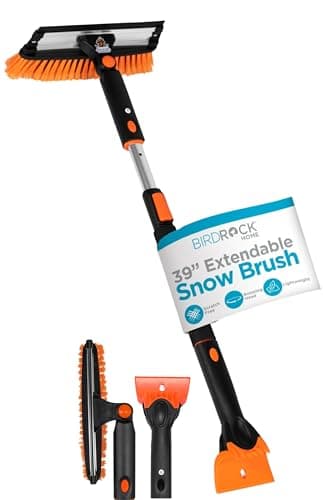
Buy the long brush first, the traction second, the shovel if you stay overnight. The Snow MOOver 39 in extendable brush is the pick because the published length is what matters - 39 in reaches the middle of a car roof from one side, and a roof you do not clear becomes a sheet of snow on your own windshield at the first stop sign. The Yaktrax Walk is next because an icy resort lot is where a large share of ski-trip injuries happen, before anybody reaches the snow. The AstroAI folding shovel publishes an aluminum handle and metal blade - which a plastic one needs to be - and it is the item you use once a season. Prices below are live; published figures as of October 11, 2026.
| # | Pick | Best for | Score | Price |
|---|---|---|---|---|
| 1 | Snow MOOver 39 in Extendable Snow Brush with Squeegee and Ice Scraper Clearing a car roof and windshield after a day of snowfall | Not publishedon snow | 0.8/10 | $29.95 - View on Amazon |
| 2 | Yaktrax Walk Traction Device Icy parking lots, sidewalks and the walk from the car to the lodge | $1.50 a dayon snow | 6.0/10 | $18.60 - View on Amazon |
| 3 | AstroAI 38.4 in Folding Extendable Snow Shovel Digging a car out of a plowed-in parking spot | Not publishedon snow | 0.8/10 | $36.77 - View on Amazon |
Prices last verified October 19, 2026. Prices move constantly; the figure on Amazon at the moment you click is the real one.
Why the drive is the risky part
Worth stating because it reorders what you buy. A ski day involves a few hours of a sport with a real injury rate, and several hours of driving on winter roads into mountains, in the dark on the way home, tired. The gear budget almost always goes entirely to the first half.
Two risks actually dominate, and neither is dramatic. The car kit guide sets them out in full - this page is its shopping half - and the short version is: not being able to see or be seen, and not being able to move. Everything below addresses one of those two.
Who each of these is for, and who should skip it
- Everyone who drives to a hill: the 39 in brush. Non-optional, and the published length is the reason to buy this one rather than the 24 in one at the checkout.
- Everyone walking across a resort lot: the Yaktrax Walk. Especially anyone carrying skis and a child's hand at the same time.
- Overnight trips, rural routes, or anyone who has been plowed in: the shovel. It carries the skip note because that is not everybody.
- Skip the lot if you take a resort shuttle or the train. Then your winter-travel problem is a bag problem - getting gear there without losing a day to it.
- Skip the shovel if you drive a rental. Check what the rental company provides and what you are liable for first - damage waivers and insurance.
What this page ranks on
- 1. Published length. For the brush, this is the entire specification - a 24 in brush cannot reach the middle of a roof and a 39 in one can. For the shovel it decides leverage.
- 2. Published materials. Aluminum handle and metal blade against all-plastic, which is the difference between cutting a plow ridge and bouncing off it.
- 3. Whether it stores alongside skis. A trunk already holding skis, boot bags and a toboggan has limited room, so folding and extendable matter.
- 4. Published fit or coverage, where it exists. The traction device publishes a shoe-size range, which is more than either of the other two publishes about anything.
- Not brand reputation, because two of these are Amazon-native with no spec page of their own. We cite the listings, and where a figure is absent the table says so.
The three, compared
| Snow MOOver brush | Yaktrax Walk | AstroAI shovel | |
|---|---|---|---|
| What it solves | Seeing and being seen | Walking across ice | Being plowed in |
| Published length | 39 in extendable | Not applicable | 38.4 in folding |
| Published materials | Not published; foam grip | Steel coils on elastomer | Aluminum handle, metal blade |
| Tools in one | Brush, squeegee, scraper | One job | One job |
| Published fit / size range | Not applicable | Published shoe-size ranges | Not published |
| Stores with skis | Extendable, trunk | Folds, trunk | |
| Warranty | Not published | 90-day replacement of defective parts | Not published |
| Maker spec page reachable | No | Yes | No |
| Days used per season | Most | Most | About one |
Read the last row with the first. The brush and the traction device get used on nearly every trip; the shovel gets used about once a season, which is exactly why it is the one people do not own on the day they need it. That is a judgment call about your own driving rather than a product comparison.
The picks
Snow MOOver 39 in Extendable Snow Brush with Squeegee and Ice Scraper
The pick, and the published length is the whole argument. 39 in extendable, with a brush, a squeegee and an ice scraper in one tool, and a foam grip - which matters because you will be using this in ski gloves with cold hands.
Thirty-nine inches is the number that separates a usable brush from the one at the gas station checkout. A 24 in brush reaches the windshield and the side windows and stops there, so the roof stays loaded - and then slides onto your glass at the first hard brake. From one side of a normal car, 39 in reaches past the middle of the roof, which means you can clear the whole thing without climbing on anything.
The squeegee is the quietly useful part on a ski day specifically. After a day in a sunny lot, the roof is slush rather than snow - a brush just smears it and it refreezes on the windshield overnight. A squeegee takes water off.
Honest cons. No bristle or scraper material published, which is the figure that would tell you whether it marks paint or clear coat - and on a dark car that matters. No MSRP, no warranty term and no reachable spec page from the brand. An extendable joint is the part that fails on this kind of tool and nothing is published about it. And at 39 in it lives in the trunk under the gear rather than in the cabin, which is where you want it when the car is buried.
Yaktrax Walk
Second, and the only product on this page from a maker with a reachable spec page and a published warranty. Yaktrax publishes steel coils on an elastomer harness, a published shoe-size range, and a 90-day replacement of defective parts.
The case for it being this high up the list: a resort parking lot in the afternoon is a sheet of polished ice, and you cross it carrying skis, poles, a bag and frequently a child's hand - with both arms full and no way to catch yourself. It is a genuinely common place for a ski-trip injury to happen before anybody has clipped into anything. The ice cleats roundup compares it against the heavier spiked options, and the traction guide explains which device suits a lot, a trail or a mountain - the short answer being that coils are right for pavement and ice, and spikes are overkill in a car park.
Honest cons. Coils are the lightest-duty traction option and will not hold on steep packed snow. They have to come off before you drive, which is one more thing to remember. And they stretch over seasons, which the 90-day warranty does not cover.
AstroAI 38.4 in Folding Extendable Snow Shovel, and why it carries the skip
The tool for the one scenario that actually strands people at ski areas: a plow has been through the lot while you were skiing and left a compacted ridge across the end of your row. AstroAI publishes an aluminum handle and a metal blade at 38.4 in, folding for a trunk.
Those published materials are the reason to choose this over the cheaper option. A plastic blade will move loose powder and will not cut a plow ridge, which is ice with gravel in it - it flexes, skips and eventually cracks. A metal blade cuts. And 38.4 in extended is enough handle length to get leverage rather than working on your knees.
It carries the skip note because of the last row of the table: you will use it about one day a season. For somebody who parks in a cleared resort lot and drives home the same afternoon, that day may never come. For anybody staying overnight near a hill, driving a rural approach road, or who has once waited an hour for a stranger with a shovel, it comes often enough.
Honest cons. No blade width or weight published, which are the figures that decide how much snow it moves per stroke. A metal blade will mark a painted bumper or a plastic sill if you lever against the car. No MSRP, warranty term or reachable spec page. And it is the item most likely to be left in the garage on the day it is needed.
The order to buy in, and what is free
Three purchases is not a big kit, and several of the most useful things cost nothing.
- 1. The long brush. Used on nearly every winter trip and the only item here that protects other drivers.
- 2. Traction for your boots. Cheap, pocketable, and it addresses the place where ski-trip falls actually happen.
- 3. The shovel, if your driving pattern warrants it.
- Free: fill the tank before the mountain road, not after it. Fuel stations thin out and queues at closing time do not.
- Free: keep the gear you might need in the cabin, not the trunk. A buried trunk is a locked trunk, and the warm layers you want are the ones you can reach - what to wear by the number on the forecast.
- Free: charge the phone on the drive up and keep it warm. A full battery dies at 20F, which is exactly the circumstance in which you would be calling somebody.
- Nearly free: a hot drink in the car for the end of the day. It changes the drive home with children more than it has any right to - and one flask here publishes 24 hours of heat retention.
The parking lot, which is its own hazard
- Change out of ski boots before you walk far. A ski boot on polished ice has effectively no grip and no ankle articulation - winter boots: what to wear when you are not in ski boots.
- Carry skis properly rather than dragging them. The free shoulder carry keeps a hand available, and a strap makes the bundle one object.
- Note where you parked before you ski, not after. Rows look identical under fresh snow and phone photos of the row marker are free.
- Dry the boots overnight rather than leaving them in the car. A boot left in a freezing trunk is a cold boot in the morning - the overnight method that costs nothing.
Every pick, with the working
Each entry shows the published inputs, the axis scores they produce, and what you give up. The order is the computed order, not a commercial one, and the arithmetic is open underneath each score.
1 · Clearing a car roof and windshield after a day of snowfall
Snow MOOver 39 in Extendable Snow Brush with Squeegee and Ice Scraper
The pick for the parking lot, and the published length is the reason: 39 in extendable reaches the middle of a car roof, which a 24 in brush does not. A ski day ends with four inches of fresh on the roof, and clearing the roof is not vanity - it is the sheet that slides onto your windshield at the first stop sign.
- Published price
- Not published
- Cost per day on snow
- Not published
- Amortized over
- 3 seasons (15 days)
- Certified to
- Not published
- Published sizes
- Published as 39 in extendable
- Warranty
- No term published on the listing
Sold across lengths without a published MSRP we could read, so the cost-per-day axis is not scored.
What it gets right
- Published 39 in extendable length, which reaches the center of a roof from one side
- Three tools published in one: brush, squeegee and ice scraper
- Foam grip published, which matters when you are doing this in ski gloves
- Extendable, so it still stores in a trunk alongside skis
What you give up
- No bristle material or scraper material published, which is what decides whether it marks paint
- No MSRP, warranty term or reachable spec page from the brand
- An extendable joint is the part that fails, and nothing is published about it
- Too long to keep in the cabin, so it lives in the trunk under the gear
The working behind the 0.8
- Cost per day on snow: not scored
- No manufacturer-published price, so this axis is not scored.
- Published protection: not scored
- This category carries no protective standard.
- Size availability: 1.5
- 1 published size (0.0 of 8.5); continuous in-size adjuster published (+1.5); range: Published as 39 in extendable
- Warranty and support: 0.0
- no published term (0 of 6); no published crash replacement (+0); no published repair route (+0)
Axes with unpublished inputs are dropped and the remaining weights re-normalized, so a product is not punished for a manufacturer’s silence. Specifications compiled October 11, 2026 from Snow MOOver published length and head configuration.
2 · Icy parking lots, sidewalks and the walk from the car to the lodge
Yaktrax Walk Traction Device
The cheapest thing on this site that meaningfully reduces the odds of falling in a resort parking lot. Yaktrax publishes 1.2 mm steel coils on a polyelastomer band and four size bands in real shoe sizes, and states the intended terrain as packed snow, slush and mixed conditions - which is exactly where a family walks in ski boots.
- Published price
- $22.49
- Cost per day on snow
- $1.50 a day
- Amortized over
- 3 seasons (15 days)
- Certified to
- Not published
- Published sizes
- Four bands from women's 2.5-6 / men's 1-4.5 up to women's 13-15 / men's 11.5-13.5
- Warranty
- 90-day replacement of defective parts
What it gets right
- 1.2 mm high-strength steel coils published, with 70 percent recycled content
- Four published size bands stated in women's and men's shoe sizes rather than S/M/L
- No spikes, so it can be worn on the hard floors of a lodge without gouging them
- Packs flat into a jacket pocket and costs less than a resort lunch
What you give up
- Coils, not spikes: grip on hard blue ice is nothing like a spiked device
- The elastomer band is the part that fails, and the warranty is 90 days
- Yaktrax publishes no cold-temperature rating for this model, only for the Pro
The working behind the 6.0
- Cost per day on snow: 10.0
- $22.49 over 3 seasons at 5 days each = 15 days = $1.50 a day
- Published protection: not scored
- This category carries no protective standard.
- Size availability: 5.1
- 4 published sizes (5.1 of 8.5); no continuous adjuster published (+0); range: Four bands from women's 2.5-6 / men's 1-4.5 up to women's 13-15 / men's 11.5-13.5
- Warranty and support: 0.0
- no published term (0 of 6); no published crash replacement (+0); no published repair route (+0)
Axes with unpublished inputs are dropped and the remaining weights re-normalized, so a product is not punished for a manufacturer’s silence. Specifications compiled September 23, 2026 from Yaktrax published Walk specifications.
3 · Digging a car out of a plowed-in parking spot
AstroAI 38.4 in Folding Extendable Snow Shovel
Skip this one. Skip it if you only ever park in a cleared resort lot and drive home the same day. It is the right tool for being plowed in - published aluminum handle and metal blade at 38.4 in, which is what it takes to cut a compacted plow ridge - and it is also the item on this page you will use roughly one day a season. Buy it if you stay overnight near the hill, drive a rural route, or have ever waited for somebody with a shovel. Buy the brush first either way.
The item you own for the one day you need it, and the published materials are what separate it from the plastic ones: an aluminum handle and a metal blade at 38.4 in, folding down to fit a trunk. A plastic blade will not cut the compacted ridge a snowplow leaves across the end of a parking row, which is the exact obstacle that strands people at a ski area.
- Published price
- Not published
- Cost per day on snow
- Not published
- Amortized over
- 3 seasons (15 days)
- Certified to
- Not published
- Published sizes
- Published as 38.4 in folding and extendable
- Warranty
- No term published on the listing
Sold without a published MSRP we could read, so the cost-per-day axis is not scored.
What it gets right
- Published aluminum handle and metal blade, where most car shovels are all plastic
- Published 38.4 in extended, which is enough leverage to actually move compacted snow
- Folds, so it fits a trunk already holding skis and boot bags
- The difference between waiting for help and driving home
What you give up
- No blade width or weight published, which are the figures that decide how much it moves per stroke
- A metal blade will mark a painted bumper or a plastic sill if you lever against it
- No MSRP, warranty term or reachable spec page from the brand
- Needed on maybe one day a season, which is why it gets left at home
The working behind the 0.8
- Cost per day on snow: not scored
- No manufacturer-published price, so this axis is not scored.
- Published protection: not scored
- This category carries no protective standard.
- Size availability: 1.5
- 1 published size (0.0 of 8.5); continuous in-size adjuster published (+1.5); range: Published as 38.4 in folding and extendable
- Warranty and support: 0.0
- no published term (0 of 6); no published crash replacement (+0); no published repair route (+0)
Axes with unpublished inputs are dropped and the remaining weights re-normalized, so a product is not punished for a manufacturer’s silence. Specifications compiled October 11, 2026 from AstroAI published length, handle and blade materials.
Prices last verified October 19, 2026. Prices move constantly; the figure on Amazon at the moment you click is the real one.
Questions people actually ask
What do I need in the car for a ski trip?
A snow brush long enough to reach the middle of the roof, traction for your boots, and - if you stay overnight or drive rural roads - a folding shovel with a metal blade. Everything else that matters is free: fuel before the mountain road, warm layers in the cabin rather than the trunk, a charged phone kept warm, and a note of where you parked.
What length snow brush do I need?
At least 39 inches if you want to clear a roof, which you do. A 24 inch brush reaches the windshield and side windows and stops there, leaving the roof loaded - and that snow slides onto your own glass at the first hard brake or off the back into the car behind you. An extendable 39 inch brush reaches past the middle of a normal car roof from one side.
Do I really need to clear snow off my car roof?
Yes, and it is the most commonly skipped job in winter driving. Roof snow slides forward onto your own windshield when you brake, or off the back into the windshield of the car behind you at highway speed. Several US states make leaving it an offense for that reason. It is the one winter-car task that protects somebody other than you.
Is a plastic or metal snow shovel better for the car?
Metal, for a ski trip specifically. The scenario you are buying for is being plowed in - a compacted ridge of ice with gravel in it across the end of your parking row - and a plastic blade flexes, skips and eventually cracks against that. A published aluminum handle with a metal blade cuts it. The trade is that metal will mark a painted bumper if you lever against the car.
Do you need ice cleats for a ski resort parking lot?
They are among the cheapest useful things you can buy for a ski trip. An afternoon resort lot is polished ice, and you cross it with both arms full of skis and poles and often a child’s hand - with no way to catch yourself. Coil-type traction is right for pavement and ice; spiked versions are overkill in a car park. Take them off before you drive.
Should I keep ski gear in the car overnight?
Not the boots, and not anything you want dry. A boot left in a freezing trunk is a cold boot in the morning and a damp liner never dries. Bring boots, gloves and liners inside to dry at room temperature. Skis are fine in the car, out of sight - visible gear on a roof in a motel lot is an advertisement.
Sources
- Snow MOOver published length and head configuration: 39 in extendable, brush with squeegee and ice scraper, foam grip
- Yaktrax published Walk specifications: steel coils on an elastomer harness, published shoe-size ranges, 90-day replacement of defective parts
- AstroAI published folding snow shovel specifications: 38.4 in folding and extendable, aluminum handle, metal blade