Insulated bottles for skiing, and the one that publishes an hours figure
A plastic bottle freezes at the mouthpiece by mid-morning. Steel does not. Only one bottle here publishes how long it actually holds heat, which makes the ranking easier than it should be.
By Sawyer V. · Published
We have not tested this gear. Everything below is compiled from published specifications and published safety standards, and the arithmetic is public so you can check it. This page carries affiliate links: if you buy through one we earn a commission at no extra cost to you, and it does not change the order of the picks. Full disclosure.
The short answer
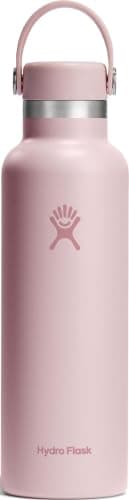
Buy a 21 oz steel bottle for your jacket, and a Thermos for the car. The Hydro Flask 21 oz is the pick because it is the size that fits an inside jacket pocket, which is the only place a bottle stays liquid and stays reachable - published as insulated double-wall stainless, non-spill and leakproof. The Thermos Stainless King 40 oz is the only bottle here that publishes a retention figure - up to 24 hours hot and 24 hours cold - so if the goal is hot chocolate at the car after a cold day, that is the buy. Skip the 32 oz for the hill: too big for a pocket, and a straw lid can freeze shut. Never a plain plastic bottle. Prices below are live; published figures as of October 11, 2026.
| # | Pick | Best for | Score | Price |
|---|---|---|---|---|
| 1 | Hydro Flask 21 oz Insulated Water Bottle A jacket pocket or a small pack, on a half day | Not publishedon snow | 0.9/10 | $27.05 - View on Amazon |
| 2 | Thermos Stainless King Vacuum-Insulated Beverage Bottle, 40 oz Hot drinks for a group, kept in the car for the end of the day | Not publishedon snow | 0.9/10 | $39.99 - View on Amazon |
| 3 | Hydro Flask 32 oz Wide Mouth Insulated Water Bottle A full day, or the bottle that waits in the car for the drive home | Not publishedon snow | 0.9/10 | $39.20 - View on Amazon |
Prices last verified October 19, 2026. Prices move constantly; the figure on Amazon at the moment you click is the real one.
Why a normal bottle fails on a ski day
Not the body of the water - the mouthpiece. A liter of water has a lot of thermal mass and takes hours to freeze through, but the few millilitres sitting in a bite valve, a straw or a threaded neck freeze in minutes at 20F with wind. Once that plug forms, the bottle is a paperweight for the rest of the day.
Which produces the three rules this page is built on, and the first two cost nothing:
- Insulated steel, not plastic. A double-wall vacuum body keeps the contents above freezing long enough that the neck never plugs.
- Inside the jacket, not in a pack or a cup holder. Body heat is doing most of the work. A bottle in an outside pocket or clipped to a pack is in the windchill - the same reason a phone dies at 20F.
- A screw lid, not a straw or a bite valve, in genuine cold. The lid that holds a column of liquid outside the insulated body is the lid that freezes.
Who each of these is for, and who should skip it
- Carrying water on the hill: the 21 oz. The only one here that fits an inside jacket pocket, which is the whole constraint.
- Hot drinks for a group, from the car: the Thermos 40 oz. Published 24 hours hot, and four mugs rather than one bottle.
- A full day's water in a pack, or the car bottle: the 32 oz. It carries the skip note for the hill, not for the car park.
- Skip all of them if you are happy buying water at the lodge. That is a legitimate choice and it is what most once-a-year skiers do.
- Skip them for a child and use a bottle they will actually drink from - the limiting factor there is willingness, not insulation. Three things end a kid's day early and one of them is hunger.
What this page ranks on
- 1. Published retention, in hours. The only figure that compares one insulated bottle with another. Exactly one of these three publishes it, which is both the ranking and the finding.
- 2. Published capacity, against where it has to fit. A bottle that does not fit inside a jacket is a bottle that freezes or gets left behind, so bigger is not better here.
- 3. Lid type. Screw lid, flex lid or straw. Not a spec sheet item so much as a cold-weather failure mode.
- 4. Published construction. Double-wall vacuum, stainless grade where stated, and whether the exterior is published as sweat-proof - because a bottle that condenses inside a pack wets everything next to it.
- Not taste, not durability over years, and not colorways. We have not used any of these for a season and will not pretend to have.
The three, compared
| Hydro Flask 21 oz | Thermos Stainless King 40 oz | Hydro Flask 32 oz | |
|---|---|---|---|
| Published capacity | 21 oz | 40 oz | 32 oz |
| Hot retention published | Not published | Up to 24 hours | Not published |
| Cold retention published | Not published | Up to 24 hours | Not published |
| Construction | Insulated double-wall stainless | Double-wall vacuum, 18/8 stainless | Insulated double-wall stainless |
| Sweat-proof exterior | Not published | Published | Not published |
| Lid | Non-spill, leakproof | Screw lid with cup | Flex straw lid |
| Fits an inside jacket pocket | Yes | No | No |
| Freeze risk at the lid | Lower | Lowest | Higher, straw |
| Warranty published | Not published | Not published | Not published |
Two rows carry the whole page. Thermos publishes a retention figure and Hydro Flask does not - and at roughly comparable money, that is a real difference in what you are being told. But only the 21 oz fits inside a jacket, and a bottle that does not is a bottle that freezes or stays in the car. Those two facts pull in opposite directions, which is why the answer is one of each rather than one bottle.
The picks
Hydro Flask 21 oz
The pick, on the single criterion that decides whether a bottle gets used: it fits an inside jacket pocket. Published as insulated double-wall stainless steel, non-spill and leakproof, at 21 oz.
Everything else about a ski bottle follows from where it lives. Inside the jacket it is warm, it does not freeze, and - the part people miss - it is actually available to you on a chairlift, which is when you would drink. In a pack it is cold, awkward and gets opened twice a day at the lodge. A smaller bottle you carry beats a bigger one you stow, every time.
The leakproof claim matters more here than on a summer bottle, because the pocket it lives in is usually the same one holding a phone - which should be in an inside pocket for its own reasons. And steel rather than plastic means it does not crack when it goes down on ice with you.
Honest cons. No retention figure in hours published - not for heat, not for cold - which on this page is the specification that matters most and the one Hydro Flask simply does not state. No MSRP and no warranty term published on the listing. At 21 oz it is not a full day's water for most people. And steel is heavy for its capacity against a soft flask.
Thermos Stainless King 40 oz
The only bottle here that tells you how long it works, and the reason it is ranked above the larger Hydro Flask. Thermos publishes up to 24 hours hot and up to 24 hours cold, from a 40 oz double-wall vacuum-insulated 18/8 stainless body with a sweat-proof exterior.
On a ski day the useful half is the hot one. A 40 oz flask of hot chocolate or tea in the car turns the end of a cold day from an endurance event into something children will agree to repeat - and 40 oz is four decent mugs, not one. The sweat-proof exterior is published for a reason too: a condensing bottle in a bag wets whatever is next to it, which on a ski trip is usually gloves.
Honest cons, and the first is why it is not the overall pick: it is far too big and heavy to carry on the hill, so this is a car and base-lodge bottle rather than a chairlift one. One retailer listing for a different colorway quotes 12 hours hot rather than 24, so treat the figure as the maker's claim rather than an independently measured number. Thermos does not publish the starting or ambient temperature those 24 hours assume - which is the caveat on every retention claim in this category. And no US MSRP or warranty term is published.
Hydro Flask 32 oz Wide Mouth, and why it carries the skip
Published as 32 oz insulated double-wall stainless with a wide mouth and a flex straw lid, non-spill and leakproof. The wide mouth is a genuine advantage in winter: it takes ice, it takes a cleaning brush, and it is the only way to get anything thicker than water into a bottle.
It carries the skip for two reasons, and both are about cold rather than quality. At 32 oz it does not fit inside a jacket, so it lives in a pack or the car - and a bottle in a pack is a bottle in the windchill. And a straw lid holds a column of water outside the insulated body, which is precisely the geometry that plugs with ice first. In a car, neither matters; on a chairlift at 15F, both do.
Honest cons. No retention figure published, same as the 21 oz. Too big for a pocket. The straw lid is the wrong lid for genuine cold. And no MSRP or warranty term is published on the listing.
If you want to carry something other than water
- Hot drinks belong in the car or the lodge, not the jacket. A flask big enough to hold heat for hours is too big to carry, which is the trade the Thermos makes explicit.
- Sugary drinks need the wide mouth, because you will have to clean the bottle properly and a narrow neck with a straw does not come clean.
- Nothing carbonated. Pressure plus a sealed insulated bottle plus a temperature swing is a mess waiting for a pocket.
- Food is a separate problem with a separate answer. What freezes and what does not covers which snacks survive a jacket pocket - the short version is that a frozen energy bar is a dental risk and dried fruit is not.
Where the bottle goes, and the rest of the pocket plan
- Inside jacket pocket, against the mid layer. Warm, reachable, protected.
- Not an outside pocket, and not clipped to a pack. That is the windchill, which is roughly ten degrees colder than the forecast on a lift - the temperature page has the adjustment.
- If you carry a pack at all, carry it for a reason. What size, what features, and whether you need one - and for most resort days the honest answer is no.
- Upside down, if you are leaving a bottle in a cold car overnight. Water freezes from the top, so an inverted bottle keeps the neck clear longest.
Every pick, with the working
Each entry shows the published inputs, the axis scores they produce, and what you give up. The order is the computed order, not a commercial one, and the arithmetic is open underneath each score.
1 · A jacket pocket or a small pack, on a half day
Hydro Flask 21 oz Insulated Water Bottle
The pocketable one, and the size that fits a ski jacket. Published as insulated double-wall stainless steel, non-spill and leakproof at 21 oz. What Hydro Flask does NOT publish on this listing is a retention figure in hours - no number for how long it holds heat or cold - which matters on this page because the one competitor here does publish one.
- Published price
- Not published
- Cost per day on snow
- Not published
- Amortized over
- 3 seasons (15 days)
- Certified to
- Not published
- Published sizes
- Published in 21 oz and 32 oz among other capacities
- Warranty
- No term published on the listing
Hydro Flask lists this across colorways rather than publishing one MSRP we could read, so the cost-per-day axis is not scored.
What it gets right
- 21 oz published, which is the capacity that actually fits an inside jacket pocket
- Published as insulated double-wall stainless steel, so it will not freeze solid the way a plastic bottle does
- Published non-spill and leakproof, which is the specification that protects a phone in the same pack
- Stainless steel does not crack when it is dropped on ice
What you give up
- No retention figure in hours published, so it cannot be compared with the Thermos on the only axis that matters here
- No MSRP and no warranty term published on the listing
- 21 oz is not enough water for a full day for most people
- Steel bottles are heavy for their capacity against a soft flask
The working behind the 0.9
- Cost per day on snow: not scored
- No manufacturer-published price, so this axis is not scored.
- Published protection: not scored
- This category carries no protective standard.
- Size availability: 1.7
- 2 published sizes (1.7 of 8.5); no continuous adjuster published (+0); range: Published in 21 oz and 32 oz among other capacities
- Warranty and support: 0.0
- no published term (0 of 6); no published crash replacement (+0); no published repair route (+0)
Axes with unpublished inputs are dropped and the remaining weights re-normalized, so a product is not punished for a manufacturer’s silence. Specifications compiled October 11, 2026 from Hydro Flask published 21 oz specification.
2 · Hot drinks for a group, kept in the car for the end of the day
Thermos Stainless King Vacuum-Insulated Beverage Bottle, 40 oz
The only bottle on this page that publishes a retention figure, and the reason it wins the ranking: Thermos states up to 24 hours hot and up to 24 hours cold, from a 40 oz double-wall vacuum-insulated 18/8 stainless body with a sweat-proof exterior. On a ski day the useful half of that claim is the hot one - this is the bottle that makes hot chocolate at the car a real thing rather than a plan.
- Published price
- Not published
- Cost per day on snow
- Not published
- Amortized over
- 3 seasons (15 days)
- Certified to
- Not published
- Published sizes
- Published in 40 oz and 68 oz
- Warranty
- No term published on the product page
Thermos lists this across colorways rather than publishing one US MSRP we could read, so the cost-per-day axis is not scored.
What it gets right
- Publishes up to 24 hours hot and up to 24 hours cold - the only retention figure on this page
- 40 oz published, which is four decent mugs rather than one bottle
- Published 18/8 stainless with a sweat-proof exterior, so it does not wet the inside of a bag
- Also published in a 68 oz size for a bigger group
What you give up
- Far too big and heavy to carry on the hill - this is a car and base-lodge bottle
- One retailer listing for a different colorway quotes 12 hours hot rather than 24, so treat the figure as the maker's claim rather than an independent measurement
- Thermos does not publish the starting or ambient temperature the 24-hour figures assume
- No US MSRP and no warranty term published
The working behind the 0.9
- Cost per day on snow: not scored
- No manufacturer-published price, so this axis is not scored.
- Published protection: not scored
- This category carries no protective standard.
- Size availability: 1.7
- 2 published sizes (1.7 of 8.5); no continuous adjuster published (+0); range: Published in 40 oz and 68 oz
- Warranty and support: 0.0
- no published term (0 of 6); no published crash replacement (+0); no published repair route (+0)
Axes with unpublished inputs are dropped and the remaining weights re-normalized, so a product is not punished for a manufacturer’s silence. Specifications compiled October 11, 2026 from Thermos published Stainless King 40 oz specifications.
3 · A full day, or the bottle that waits in the car for the drive home
Hydro Flask 32 oz Wide Mouth Insulated Water Bottle
Skip this one. Skip it as your on-the-hill bottle. At 32 oz it is too big for an inside jacket pocket, which is the only place a bottle stays unfrozen and the only place it is actually available to you on a chairlift - so it ends up in the car or in a pack you take off at the lodge. And the flex straw lid is the one lid type that can freeze shut in genuine cold, because the straw holds a column of water outside the insulated body. Buy it if your bottle lives in the car for the drive home, or buy the 21 oz for the hill.
The full-day capacity, and the one to leave in the car rather than carry. Published as 32 oz insulated double-wall stainless with a wide mouth and a flex straw lid, non-spill and leakproof. The wide mouth is the useful part in winter: it takes ice, it takes a cleaning brush, and it is the only way to get anything thicker than water into a bottle.
- Published price
- Not published
- Cost per day on snow
- Not published
- Amortized over
- 3 seasons (15 days)
- Certified to
- Not published
- Published sizes
- Published in 21 oz and 32 oz among other capacities
- Warranty
- No term published on the listing
Hydro Flask lists this across colorways and lids rather than publishing one MSRP we could read, so the cost-per-day axis is not scored.
What it gets right
- 32 oz published, which is a realistic full-day volume for one adult
- Wide mouth published, so it accepts ice and cleans properly after a season of sports drink
- Published non-spill and leakproof with a flex straw lid
- Same published double-wall stainless construction as the 21 oz
What you give up
- No retention figure in hours published, same as the smaller bottle
- Too big for a jacket pocket, so it lives in a pack or the car
- A straw lid is the one lid type that can freeze shut on a cold chairlift
- No MSRP or warranty term published on the listing
The working behind the 0.9
- Cost per day on snow: not scored
- No manufacturer-published price, so this axis is not scored.
- Published protection: not scored
- This category carries no protective standard.
- Size availability: 1.7
- 2 published sizes (1.7 of 8.5); no continuous adjuster published (+0); range: Published in 21 oz and 32 oz among other capacities
- Warranty and support: 0.0
- no published term (0 of 6); no published crash replacement (+0); no published repair route (+0)
Axes with unpublished inputs are dropped and the remaining weights re-normalized, so a product is not punished for a manufacturer’s silence. Specifications compiled October 11, 2026 from Hydro Flask published 32 oz wide mouth specification.
Prices last verified October 19, 2026. Prices move constantly; the figure on Amazon at the moment you click is the real one.
Questions people actually ask
What kind of water bottle is best for skiing?
An insulated steel bottle of about 21 oz, carried in an inside jacket pocket. The size is the real specification: a bottle that fits inside your jacket stays above freezing on body heat and is actually reachable on a chairlift, while a bigger one ends up in a pack in the windchill or left in the car. A plain plastic bottle freezes at the mouthpiece within an hour or two.
Will a water bottle freeze while skiing?
The mouthpiece will, long before the water does. The few millilitres sitting in a straw, bite valve or threaded neck freeze within minutes at 20F with wind, and once that plug forms the bottle is useless for the day. An insulated body plus an inside jacket pocket plus a screw lid rather than a straw avoids all three failure points.
How long do insulated bottles keep drinks hot?
Only one bottle here publishes a figure: Thermos states up to 24 hours hot and up to 24 hours cold for the Stainless King. Hydro Flask publishes no retention hours at all on its listings. Note that Thermos does not state the starting or ambient temperature those 24 hours assume, and one retailer listing for a different colorway quotes 12 hours - so treat it as the maker’s claim rather than a measurement.
Is a straw lid or screw lid better for skiing?
Screw lid, in genuine cold. A straw holds a column of water outside the insulated body of the bottle, which is exactly the geometry that freezes first and plugs the bottle for the rest of the day. A straw lid is fine for a bottle that lives in the car and wrong for one that goes on a chairlift.
How much water do you need for a day of skiing?
More than you will feel like drinking, which is the problem. You dehydrate faster at altitude in dry air while breathing hard, and you do not feel thirsty doing it - the result usually shows up as a headache and exhaustion on day two of a trip. A 21 oz bottle you actually carry and refill at the lodge beats a 32 oz one left in the car.
Can you put hot chocolate in an insulated bottle?
Yes, and a 40 oz flask of it in the car is one of the better ideas on a cold family day. Use a wide-mouth or screw-lid bottle rather than a straw lid, because anything sugary has to be cleaned properly afterward and a narrow neck with a straw does not come clean. Never anything carbonated in a sealed insulated bottle.
Sources
- Thermos published Stainless King 40 oz specifications: up to 24 hours hot and 24 hours cold, 40 oz, double-wall vacuum insulated, 18/8 stainless steel, sweat-proof exterior
- Hydro Flask published 21 oz specification: insulated double-wall stainless steel, non-spill and leakproof
- Hydro Flask published 32 oz wide mouth specification: insulated double-wall stainless steel, flex straw lid, non-spill and leakproof