Ski straps, and the one length that does the most jobs
Nine dollars of stretch polyurethane with an aluminum buckle. It carries your skis, it holds a roof load, and once or twice in a lifetime it gets you off the mountain.
By Sawyer V. · Published
We have not tested this gear. Everything below is compiled from published specifications and published safety standards, and the arithmetic is public so you can check it. This page carries affiliate links: if you buy through one we earn a commission at no extra cost to you, and it does not change the order of the picks. Full disclosure.
The short answer
Buy the 20 inch, and buy more than one. Voile publishes these as stretch polyurethane with a heat-treated aluminum buckle, and 20 in is the length that wraps a pair of adult skis at tip and tail, lashes a board to a roof bar, and still tensions around a smaller load. The 3-pack is the honest buy for a household with more than one pair of skis - the per-strap saving is small, but running out is the actual failure. The 15 in is the kids'-skis and poles length, not a first purchase. What Voile does not publish is a load rating, which is the honest limit of what anyone can tell you about a nine-dollar strap. Prices below are live; published figures as of October 11, 2026.
| # | Pick | Best for | Score | Price |
|---|---|---|---|---|
| 1 | Voile Strap, 20 in Aluminum Buckle Carrying skis, and the one repair that gets you off the hill | Not publishedon snow | 0.9/10 | $9.00 - View on Amazon |
| 2 | Voile Straps 3-Pack, Aluminum Buckle A family with more than one pair of skis to carry | Not publishedon snow | 0.0/10 | $25.50 - View on Amazon |
| 3 | Voile Strap, 15 in Aluminum Buckle Kids' skis, poles, and anything too small for the 20 in to tension properly | Not publishedon snow | 0.9/10 | $8.50 - View on Amazon |
Prices last verified October 19, 2026. Prices move constantly; the figure on Amazon at the moment you click is the real one.
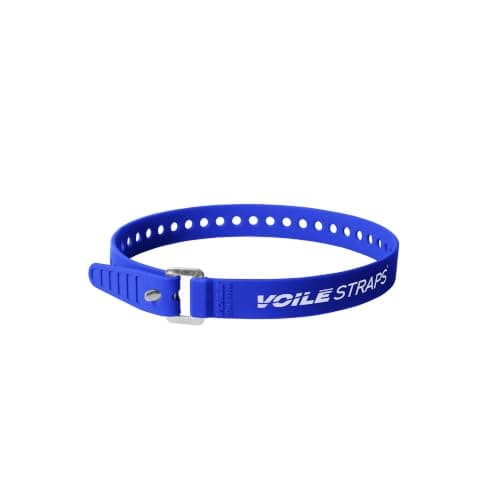
The three jobs a strap does
Worth laying out, because the third one is the reason experienced skiers carry them and the reason this page exists at all.
- 1. Carrying. Skis clipped base to base and strapped at tip and tail become one rigid object you can shoulder, instead of two that slide apart in a parking lot. The carrying guide covers the technique, which is free.
- 2. Securing. A load on a roof bar, a board in a trunk, a pair of poles to a pack. A strap that holds tension in the cold is doing something a bungee cord is not - the rack page is the proper answer for a roof, and a strap is the supplement.
- 3. Getting off the mountain. The one nobody buys for and everybody is glad of: a strap will hold a delaminating boot cuff together, splint a snapped pole, lash a failed binding closed enough to ski down slowly, or keep a loose boot sole on. None of that is a repair. All of it is the difference between skiing down and walking down.
Who each of these is for, and who should skip it
- One adult, one pair of skis: the 20 in. The length that covers the most jobs. Buy one, keep it in the jacket.
- A family, or more than one pair of skis: the 3-pack. Because the real problem is not cost, it is that the only strap you own is in the other car.
- Kids' skis and poles: the 15 in, as a second strap rather than a first.
- Skip all of them if you only ever drive with skis inside the car. A ski sleeve or a bag is the better spend - ski bags, and the empty weight nobody checks.
- Skip them as a rack substitute. Straps are not a mounting system and nothing published here suggests they are.
What this page ranks on, and the number nobody publishes
- 1. Published length. The only figure that decides what a strap can go around. 15 in and 20 in are the two standard lengths with the aluminum buckle.
- 2. Buckle material. Aluminum against plastic, and it is the real durability difference: a plastic buckle on a cold strap is the part that snaps. Voile publishes aluminum.
- 3. Body material. Stretch polyurethane with a UV-inhibiting additive, which is what keeps tension where a nylon strap goes slack and what stops a strap left on a roof rack perishing over a summer.
- 4. Not load rating, because none is published. We looked for a breaking strength or working load from Voile and could not find one on a page we could reach; the usable-circumference figures that retailers quote disagree with each other, so this page does not quote any of them. If you need a rated tie-down for a highway load, buy a rated tie-down.
The three, compared
| 20 in | 3-Pack | 15 in | |
|---|---|---|---|
| Published length | 20 in | Not stated per strap | 15 in |
| Buckle | Aluminum | Aluminum | Aluminum |
| Body | Stretch polyurethane | UV-resistant polyurethane | Stretch polyurethane |
| Adult skis at tip and tail | Yes | Yes | Too short |
| Kids' skis or poles | Too much tail | Yes | Yes |
| Board to a roof bar | Yes | Yes | No |
| Load rating published | Not published | Not published | Not published |
| Count | 1 | 3 | 1 |
| Relative price | Low | Lowest per strap, marginally | Lowest |
There is not much between them, and that is the finding: these are the same strap in two lengths and two pack sizes. The decision is length first, count second, and the only wrong answer is buying one 15 in strap and expecting it to carry adult skis.
The picks
Voile Strap, 20 in Aluminum Buckle
The pick, and the single most useful length. Published as a 20 in stretch polyurethane strap with a heat-treated aluminum buckle. Twenty inches is enough to wrap a pair of adult skis with the brakes interlocked, enough to go around a snowboard and a roof bar together, and still short enough to tension properly on something smaller.
The aluminum buckle is the part worth paying attention to. Plastic buckles go brittle in genuine cold - a buckle you tension at 10F with gloves on is being asked to do something a cheap one fails at, usually at the least convenient moment. And the stretch polyurethane body is what keeps the strap tight: a nylon strap tensioned in a warm garage is slack by the time the car reaches the hill, where a rubber strap pulls back as the load settles.
Honest cons. No load rating or breaking strength published, so it cannot be compared numerically with anything - and it is not a rated tie-down. No MSRP, no warranty term, and no spec page from Voile we could reach. At 20 in it is too long for very small loads and too short for a fat board plus a thick rack bar. And it is not a substitute for a rack.
Voile Straps 3-Pack, Aluminum Buckle
The honest family answer, and the only reason to pick it over singles is the count rather than the saving. Published as three aluminum-buckle straps in UV-resistant polyurethane.
One strap is never the number you need. A two-adult household has two pairs of skis to carry, the strap that was in the jacket last trip is in the other jacket, and the one in the car is under the boot bags. Three means one per car and one spare, which is the configuration that actually gets used.
The UV-resistance point is published for a reason: the failure mode for a strap is not snapping under load, it is perishing in sunlight on a roof rack across a summer. If yours live outside, this is the detail that matters.
Honest cons. The per-strap price is only marginally below buying them individually, so this is a convenience purchase rather than a value one. The pack's length is not stated as clearly as the singles are, which on a page whose only real spec is length is a genuine gap. Same missing load rating and warranty. And three straps is more than a one-pair household will ever use.
Voile Strap, 15 in Aluminum Buckle, and why it carries the skip
The short one: same published aluminum buckle and polyurethane body, five inches shorter, and the cheapest item in this round. It is genuinely the right strap for a junior ski pair, where a 20 in strap has so much tail left over that it flaps, and for strapping poles to the side of a pack.
It carries the skip because as a first strap it is the wrong choice - it will not reach around adult skis and a rack bar, which is the job most people are buying for. Buy it second. If you are kitting out a child, the kids' ski roundup is where the rest of that list lives.
Honest cons, beyond the length: easy to lose, which is the real argument for the multi-pack over singles. No load rating, MSRP or warranty published. And no reachable spec page from Voile for any of these.
If the strap is going on a car
One thing to be clear about, because it is a safety matter rather than a gear preference: a strap is not a rack. Nothing Voile publishes claims it is, and a load held to a roof by rubber straps alone is a load that can leave the roof.
- Use a proper carrier for a roof load. Car ski racks, and the part nobody checks before buying one and roof boxes, and the published ski length nobody checks.
- Use straps as the supplement. Bundling a pair of skis into one unit before it goes into the carrier, or stopping a board sliding in a trunk.
- Inside the car beats on top of it for most families on most trips - warmer bindings, no wind noise, no fuel penalty, and no load to check at every stop.
- If you are flying, this is a different problem. Getting ski gear to the mountain without losing a day to it.
The repairs a strap actually gets you out of
Not a maintenance list - a list of things that have ended other people's ski days. A strap in a jacket pocket turns several of them into a slow run down.
- A boot buckle or power strap that tears off. Wrap the cuff, tension it, ski down carefully. This is the most common one.
- A delaminating boot sole. Hold it together well enough to walk and to clip into a binding, then see why sole condition matters to the binding.
- A snapped pole. Splint it against the lower section. Ugly and it works.
- A pack strap or a zipper pull that fails. Not elegant, but it gets the bag to the car.
- What a strap cannot fix: anything structural on a binding. If a binding has moved or a screw has lifted, that is a shop job and skiing on it is not worth the risk - bindings, explained without the shop jargon.
For the repairs that happen at home rather than on the hill, the gear repair kits page covers tears, seams and zippers, and the maintenance schedule says when to check what.
Every pick, with the working
Each entry shows the published inputs, the axis scores they produce, and what you give up. The order is the computed order, not a commercial one, and the arithmetic is open underneath each score.
1 · Carrying skis, and the one repair that gets you off the hill
Voile Strap, 20 in Aluminum Buckle
The pick, and the one length that does the most jobs: 20 inches wraps a pair of skis at the tip and tail, a snowboard to a roof bar, or a broken binding back together well enough to get down. Voile publishes the length and the aluminum buckle; it does not publish a load rating, which is the honest limit of what we can tell you about a strap that costs nine dollars.
- Published price
- Not published
- Cost per day on snow
- Not published
- Amortized over
- 3 seasons (15 days)
- Certified to
- Not published
- Published sizes
- Published lengths include 15 in and 20 in with the aluminum buckle
- Warranty
- No term published on the product page
Voile lists these per length and colorway without a published MSRP we could read, so the cost-per-day axis is not scored.
What it gets right
- Published 20 in length, which is the span that fits skis, a board and a roof bar
- Published aluminum buckle rather than plastic - the part that fails in the cold on cheap straps
- Stretch polyurethane body, which holds tension when a nylon strap has gone slack
- Cheap enough to own three, which is how people actually use them
What you give up
- No load rating or breaking strength published, so it cannot be compared numerically
- No MSRP, no warranty term and no reachable spec page from Voile
- 20 in is too long for small items and too short for a fat board plus a rack bar
- Not a substitute for a rack: this is a carry and a repair strap, not a mounting system
The working behind the 0.9
- Cost per day on snow: not scored
- No manufacturer-published price, so this axis is not scored.
- Published protection: not scored
- This category carries no protective standard.
- Size availability: 1.7
- 2 published sizes (1.7 of 8.5); no continuous adjuster published (+0); range: Published lengths include 15 in and 20 in with the aluminum buckle
- Warranty and support: 0.0
- no published term (0 of 6); no published crash replacement (+0); no published repair route (+0)
Axes with unpublished inputs are dropped and the remaining weights re-normalized, so a product is not punished for a manufacturer’s silence. Specifications compiled October 11, 2026 from Voile published 20 in aluminum-buckle strap listing.
2 · A family with more than one pair of skis to carry
Voile Straps 3-Pack, Aluminum Buckle
The honest answer for a family, because one strap is never the number you need. Published as three aluminum-buckle straps in UV-resistant polyurethane - one for each pair of skis in the car, or one in each jacket. The per-strap price is barely below buying singles, so buy this for the convenience of not running out rather than for the saving.
- Published price
- Not published
- Cost per day on snow
- Not published
- Amortized over
- 3 seasons (15 days)
- Certified to
- Not published
- Published sizes
- Published as a 3-pack with aluminum buckles
- Warranty
- No term published on the product page
Voile lists the multi-pack without a published MSRP we could read, so the cost-per-day axis is not scored.
What it gets right
- Three straps in one purchase, which is the number a two-adult household actually uses
- Published UV-resistant polyurethane, which is the failure mode on a strap left on a roof rack
- Same published aluminum buckle as the singles
- Removes the 'I only have one and it is in the other car' problem
What you give up
- Per-strap price is only marginally below buying them individually
- No load rating, MSRP or warranty term published
- The pack length is not stated as clearly as the singles are
- Three straps is more than a one-ski-pair household needs
The working behind the 0.0
- Cost per day on snow: not scored
- No manufacturer-published price, so this axis is not scored.
- Published protection: not scored
- This category carries no protective standard.
- Size availability: 0.0
- 1 published size (0.0 of 8.5); no continuous adjuster published (+0); range: Published as a 3-pack with aluminum buckles
- Warranty and support: 0.0
- no published term (0 of 6); no published crash replacement (+0); no published repair route (+0)
Axes with unpublished inputs are dropped and the remaining weights re-normalized, so a product is not punished for a manufacturer’s silence. Specifications compiled October 11, 2026 from Voile published 3-pack listing.
3 · Kids' skis, poles, and anything too small for the 20 in to tension properly
Voile Strap, 15 in Aluminum Buckle
Skip this one. Skip it as your only strap. At 15 in it tensions beautifully around small loads - a child's skis, a pair of poles, a bundle of tools - and it is too short for the job most people buy a strap for, which is adult skis plus a roof bar. Buy the 20 in first and make this the second one. On its own it is the strap you will find in the car and not be able to use.
The short one, and the better buy for a child's skis or for strapping poles to a pack. Same published aluminum buckle and stretch polyurethane body as the 20 inch, eight inches shorter and fifty cents cheaper. If you are buying one strap, buy the 20; if you are buying two, make the second one this.
- Published price
- Not published
- Cost per day on snow
- Not published
- Amortized over
- 3 seasons (15 days)
- Certified to
- Not published
- Published sizes
- Published lengths include 15 in and 20 in with the aluminum buckle
- Warranty
- No term published on the product page
Voile lists these per length and colorway without a published MSRP we could read, so the cost-per-day axis is not scored.
What it gets right
- Published 15 in length, which tensions properly around small-diameter loads
- Same published aluminum buckle and polyurethane body as the longer strap
- The right length for a junior ski pair, where a 20 in strap has too much tail
- Cheapest item in this round
What you give up
- Too short for adult skis plus a roof bar, which is the job most people buy a strap for
- No load rating, MSRP or warranty term published
- Easy to lose, which is the real argument for the multi-pack
- No reachable spec page from Voile
The working behind the 0.9
- Cost per day on snow: not scored
- No manufacturer-published price, so this axis is not scored.
- Published protection: not scored
- This category carries no protective standard.
- Size availability: 1.7
- 2 published sizes (1.7 of 8.5); no continuous adjuster published (+0); range: Published lengths include 15 in and 20 in with the aluminum buckle
- Warranty and support: 0.0
- no published term (0 of 6); no published crash replacement (+0); no published repair route (+0)
Axes with unpublished inputs are dropped and the remaining weights re-normalized, so a product is not punished for a manufacturer’s silence. Specifications compiled October 11, 2026 from Voile published 15 in aluminum-buckle strap listing.
Prices last verified October 19, 2026. Prices move constantly; the figure on Amazon at the moment you click is the real one.
Questions people actually ask
What length ski strap should I buy?
20 inches, if you are buying one. That length wraps a pair of adult skis at tip and tail, goes around a board and a roof bar together, and still tensions on smaller loads. The 15 inch is the right size for a child’s skis or a pair of poles, but it will not reach around adult skis plus a rack bar - so it is a second strap rather than a first.
Are Voile straps worth it over a bungee cord?
For holding tension in cold, yes. Stretch polyurethane pulls back as a load settles where a nylon strap or bungee goes slack, and the published aluminum buckle does not go brittle the way a plastic one does at 10F. They are also the only item in a jacket pocket that can splint a snapped pole or hold a torn boot cuff together well enough to ski down.
How do you carry skis without a strap?
Clip them base to base with the brakes interlocked, then rest them on your shoulder with the tips forward and angled down. It costs nothing, it keeps one hand free for a lift pass, and it is the technique worth learning before buying anything. A strap makes it tidier and stops the skis sliding apart; it does not make it possible.
Can you use ski straps to tie skis to a roof?
Not on their own. A strap is not a rack and nothing the maker publishes claims it is - a load held to a roof by rubber straps alone can come off. Use a proper carrier or box for a roof load, and use straps to bundle the skis into one unit before they go in. For most families, carrying skis inside the car is the better answer anyway.
How many ski straps do I need?
Two per pair of skis if you want tip and tail, and at least one more than you think, because the strap you own is reliably in the other jacket. A household with two pairs of skis is the case the 3-pack exists for - the per-strap saving is small, but running out is the actual failure mode.
What is the load rating of a Voile strap?
Not published, as far as we could find. Voile states the length, the stretch polyurethane body and the heat-treated aluminum buckle, but no breaking strength or working load on any page we could reach, and the usable-circumference figures different retailers quote contradict each other. If you need a rated tie-down for a highway load, buy a rated tie-down instead.