The winter car kit for a ski trip, and the parking lot nobody plans for
The drive is the part of a ski trip most likely to go wrong, and the parking lot is where most people get hurt. Both are solved by a box in the trunk you assemble once.
By Sawyer V. · Published
We have not tested this gear. Everything below is compiled from published specifications and published safety standards, and the arithmetic is public so you can check it. This page carries affiliate links: if you buy through one we earn a commission at no extra cost to you, and it does not change the order of the picks. Full disclosure.
The short answer
Three categories, packed once and left in the trunk all winter: getting unstuck (shovel, traction boards or mats, a scraper that actually reaches), staying warm if you stop (blankets, spare hats and gloves, hand warmers, food and water), and the parking lot (traction devices for your feet, a mat to change on, and a bag for wet gear). The last category is the one families skip and the one they use every single trip.
| # | Pick | Best for | Score | Price |
|---|---|---|---|---|
| 1 | Yaktrax Walk Traction Device Icy parking lots, sidewalks and the walk from the car to the lodge | $1.50 a dayon snow | 6.0/10 | $18.60 - View on Amazon |
| 2 | HotHands Hand Warmers A backup in a pocket, and the one cold day a season nobody planned for | Not publishedon snow | 0.0/10 | $24.25 - View on Amazon |
| 3 | Dakine Boot Locker 69L Boot Bag Carrying boots, helmet and layers as one checked or trunk item | Not publishedon snow | 0.0/10 | $68.99 - View on Amazon |
Prices last verified October 19, 2026. Prices move constantly; the figure on Amazon at the moment you click is the real one.
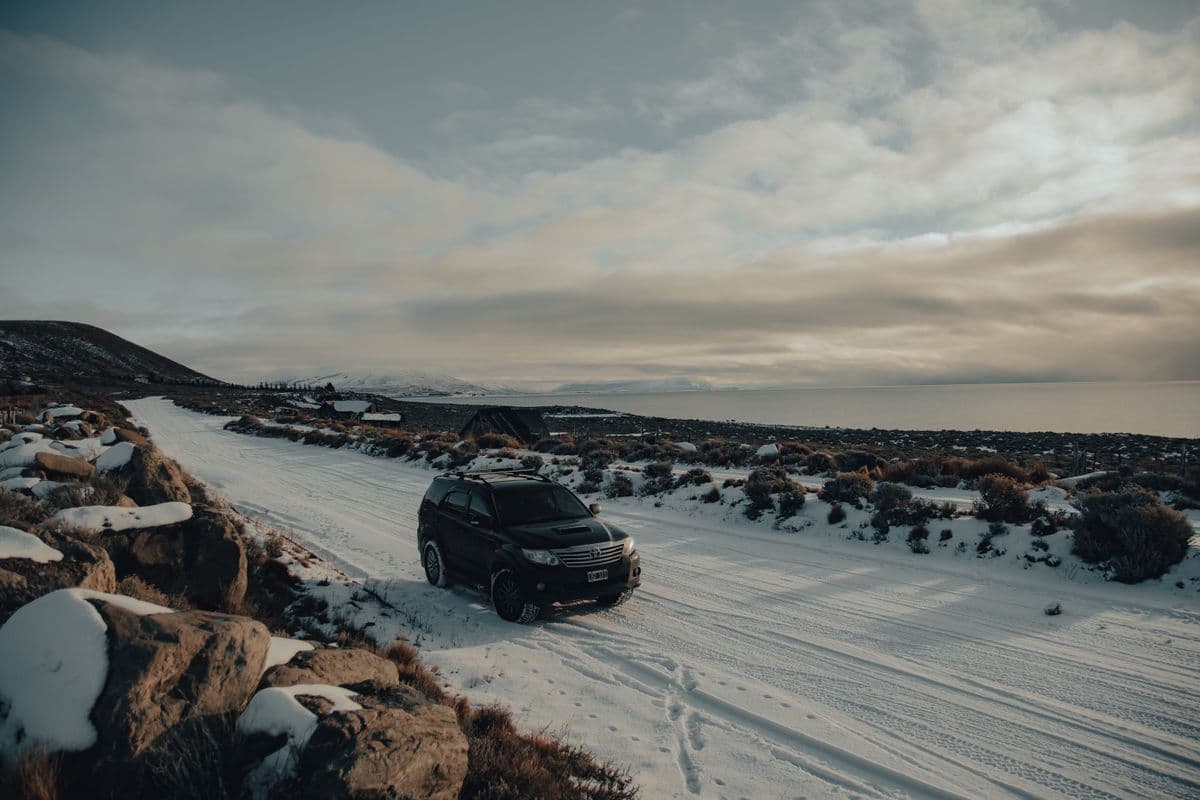
The two risks of a ski drive
Mountain driving in winter has a specific shape. You leave a town where the roads are clear, gain altitude into conditions that can change within a few miles, and arrive at a parking lot that has been packed, melted and refrozen by hundreds of cars.
The two things that go wrong are getting stuck or delayed - a closure, a chain control, a car off the road ahead - and the walk across the lot, which is where an enormous share of ski-trip injuries actually happen, in unbuckled boots, carrying skis, on polished ice.
A kit assembled once in November handles both for the rest of the season.
Category one: getting moving again
- A folding shovel. For clearing around tires and the exhaust pipe, which is the part people forget - a blocked exhaust with the engine running is genuinely dangerous if you are sheltering in the car.
- Traction mats or a bag of cat litter. Either gets a spinning wheel onto something with grip.
- A proper snow brush and scraper with a long handle, long enough to reach the middle of a roof. Clearing the roof is not vanity - a sheet of snow sliding onto your windshield at speed is a genuine hazard, and it is illegal in some places.
- Chains or cables if your route requires them, plus gloves you do not mind ruining and a mat to kneel on. Practice fitting them once in a driveway rather than learning in a chain control line.
- A tow strap and jumper cables or a jump pack. Cold kills marginal batteries, and a ski lot at 4 p.m. is full of cars that have sat all day at altitude.
Category two: if you stop moving
This is the part that feels excessive until the one time a road closes. The scenario to pack for is not a crash; it is sitting still for three hours in a line of traffic while it gets dark.
| Item | Why | Note |
|---|---|---|
| Blankets, one per person | The engine may need to be off | Wool or synthetic, not cotton |
| Spare hats and gloves | The ones you are wearing may be soaked from skiing | Keep them in a dry bag, separate from ski gear |
| Hand warmers | Immediate heat with no power draw | HotHands publishes duration per packet |
| Food and water | Children get cold faster when they are hungry | Keep water inside the cabin, not the trunk, so it does not freeze |
| Phone power bank | Navigation and calls drain a phone fast in cold | Cold batteries lose capacity quickly |
| Headlamp | Hands free for anything outside the car | Better than a phone flashlight |
Keep a full tank on the drive up. An idling engine with a clear exhaust is the simplest heat source available, and running low is what turns an inconvenience into a problem.
Category three: the parking lot kit
The category with the highest use-per-trip, and the one nobody packs on their first season.
- Traction devices for your feet. The single best item in this whole kit. A resort lot refreezes every afternoon, and walking it in ski boots carrying gear is the most dangerous thing most skiers do all day. The Yaktrax Walk publishes 1.2 mm steel coils and four size bands, folds into a pocket, and costs less than a resort lunch. The full traction comparison.
- A boot bag with a hard base. The Dakine Boot Locker publishes 69 L and is designed to be stood on and changed out of, which is exactly what a tailgate change needs.
- A cheap foam mat or old towel to stand on while changing. Bare feet or socks on a frozen lot is how a day starts badly.
- A dry bag or plastic tub for wet gear on the way home, so soaked outerwear is not sitting on upholstery for three hours.
- A second pair of shoes for the drive home. Driving in ski boots is unsafe and driving in soaked boots is miserable.
Carrying the gear itself
Two decisions people get wrong on their first drive: how the skis travel, and what happens to wet gear on the way home.
Skis inside the car is free and works if the seats fold; a roof box is for families who do this several times a season rather than once. Roof boxes compared on published capacity, and racks against boxes against inside covers the wider choice.
For the way home, wet gear in a sealed bag is how a car smells for a week. Better: a plastic tub that can be carried straight into the house, and boots out of the bag to dry rather than sealed in. The drying routine.
Extra items with children
- A full change of clothes each, not just gloves. A child who is soaked and cold on the drive home is a child who remembers the trip badly.
- Snacks that survive being frozen. Chocolate bars go rock hard; dried fruit and nuts do not.
- Plastic bags for wet boots, to keep car footwells usable.
- Entertainment for a delay. A road closure with bored children is its own kind of emergency.
- A thermos. Something hot at the car after skiing does more for morale than anything else in this list.
Where the kit lives, and what that changes
Packing is half of it; placement is the other half, because several items in this list are useless in the wrong part of the car.
- Keep water and the power bank in the cabin, not the trunk. Bottles freeze in an unheated trunk overnight, and cold batteries lose capacity fast.
- Keep the scraper and the traction devices reachable without unloading skis. A brush buried under a week of luggage is a brush you will not use, and cleats you have to dig out will stay in the bag while you walk the ice.
- One box, not loose items. Loose gear migrates under seats and becomes a projectile in a hard stop. A plastic tub with a lid stays put and can be lifted out in one motion.
- Nothing heavy loose in the cabin. A shovel behind the rear seats is fine; a shovel on the back seat is not.
The end-of-season job is a five-minute one: pull the tub out, dry anything damp, replace the used hand warmers and the eaten snacks, and put it back in November with nothing missing.
Before you leave home
- Check the forecast and the road status, including chain controls, which are posted by the state or the resort.
- Check tire tread and pressure. Cold air drops pressure, and tread is what makes winter tires work.
- Top up washer fluid with a winter-rated mix. Road salt spray is relentless and summer fluid freezes on the glass.
- Tell someone your route if you are driving somewhere remote in bad weather.
- Leave earlier than you think. The first-chair rush is also when the roads are worst and the lot is fullest.
If you are flying in and renting a car
Most of this kit does not fit in a suitcase, which is the situation for anyone flying to their ski trip. What travels and what does not:
- Pack the small, high-value items: traction devices for your feet, hand warmers, a headlamp and a power bank. All four are light, cheap to check, and the ones you will actually use.
- Buy locally on arrival if you need a scraper or a shovel - a supermarket near the resort has both for the price of a coffee, and it beats paying a rental desk.
- Ask the rental company two questions: whether the car has winter or all-season tires, and whether the rental agreement permits fitting chains. Some prohibit it outright, which matters if your route has a chain control.
- Confirm a scraper and a brush are in the car before leaving the lot. Airport rentals in mild climates frequently have neither.
The short version
Build it once: a shovel, traction mats, a long scraper, blankets, spare hats and gloves, hand warmers, food, water and a power bank in one box - plus traction devices for your feet, a mat to change on and a tub for wet gear. Leave it in the trunk all winter. The parking-lot half gets used every trip; the rest gets used once and justifies itself.
Every pick, with the working
Each entry shows the published inputs, the axis scores they produce, and what you give up. The order is the computed order, not a commercial one, and the arithmetic is open underneath each score.
1 · Icy parking lots, sidewalks and the walk from the car to the lodge
Yaktrax Walk Traction Device
The cheapest thing on this site that meaningfully reduces the odds of falling in a resort parking lot. Yaktrax publishes 1.2 mm steel coils on a polyelastomer band and four size bands in real shoe sizes, and states the intended terrain as packed snow, slush and mixed conditions - which is exactly where a family walks in ski boots.
- Published price
- $22.49
- Cost per day on snow
- $1.50 a day
- Amortized over
- 3 seasons (15 days)
- Certified to
- Not published
- Published sizes
- Four bands from women's 2.5-6 / men's 1-4.5 up to women's 13-15 / men's 11.5-13.5
- Warranty
- 90-day replacement of defective parts
What it gets right
- 1.2 mm high-strength steel coils published, with 70 percent recycled content
- Four published size bands stated in women's and men's shoe sizes rather than S/M/L
- No spikes, so it can be worn on the hard floors of a lodge without gouging them
- Packs flat into a jacket pocket and costs less than a resort lunch
What you give up
- Coils, not spikes: grip on hard blue ice is nothing like a spiked device
- The elastomer band is the part that fails, and the warranty is 90 days
- Yaktrax publishes no cold-temperature rating for this model, only for the Pro
The working behind the 6.0
- Cost per day on snow: 10.0
- $22.49 over 3 seasons at 5 days each = 15 days = $1.50 a day
- Published protection: not scored
- This category carries no protective standard.
- Size availability: 5.1
- 4 published sizes (5.1 of 8.5); no continuous adjuster published (+0); range: Four bands from women's 2.5-6 / men's 1-4.5 up to women's 13-15 / men's 11.5-13.5
- Warranty and support: 0.0
- no published term (0 of 6); no published crash replacement (+0); no published repair route (+0)
Axes with unpublished inputs are dropped and the remaining weights re-normalized, so a product is not punished for a manufacturer’s silence. Specifications compiled September 23, 2026 from Yaktrax published Walk specifications.
2 · A backup in a pocket, and the one cold day a season nobody planned for
HotHands Hand Warmers
HotHands publishes up to 10 hours of continuous warmth, which is longer than any lift-served day. It is the cheapest fix on this site for cold hands and it is also the one that runs out, which is the argument for fixing the glove instead.
- Published price
- Not published
- Cost per day on snow
- Not published
- Amortized over
- 3 seasons (15 days)
- Certified to
- Not published
- Published sizes
- One size, single use
- Warranty
- No term published; the product is single use
HotHands publishes no MSRP and the product is sold in pack sizes that vary widely, so the cost-per-day axis is not scored.
What it gets right
- Published up to 10 hours of continuous warmth, longer than a resort day
- Air activated, with nothing to charge and nothing to break
- Small enough that a spare pair lives permanently in a jacket pocket
What you give up
- Single use, so the cost repeats on every cold day
- No published MSRP, so cost per day cannot be computed
- It treats the symptom; a glove that fits treats the cause
The working behind the 0.0
- Cost per day on snow: not scored
- No manufacturer-published price, so this axis is not scored.
- Published protection: not scored
- This category carries no protective standard.
- Size availability: not scored
- Sold in one size, so size availability does not apply.
- Warranty and support: 0.0
- no published term (0 of 6); no published crash replacement (+0); no published repair route (+0)
Axes with unpublished inputs are dropped and the remaining weights re-normalized, so a product is not punished for a manufacturer’s silence. Specifications compiled September 7, 2026 from HotHands published specifications.
3 · Carrying boots, helmet and layers as one checked or trunk item
Dakine Boot Locker 69L Boot Bag
A published 69 L with a tarp-lined lower compartment for boots and a separate upper one for everything else. The separation is the product: wet boots and a dry fleece sharing one undivided bag is how a car smells for a week.
- Published price
- Not published
- Cost per day on snow
- Not published
- Amortized over
- 3 seasons (15 days)
- Certified to
- Not published
- Published sizes
- One size, 69 L, published at 51 x 38 x 36 cm
- Weight
- 1100 g
- Warranty
- No term published on the product page
Dakine publishes no single MSRP across colorways for this bag, so the cost-per-day axis is not scored.
What it gets right
- Published 69 L, or 4,200 cubic inches, at 51 x 38 x 36 cm, inside a normal airline checked allowance
- Tarp-lined lower boot compartment published as separate from the upper one
- 600D polyester published, a heavier fabric than most soft luggage
- 1.1 kg empty, so almost all of an airline weight allowance is left for gear
What you give up
- No published warranty term
- No single published price across colorways
- Big enough that it invites packing straight past an airline weight limit
The working behind the 0.0
- Cost per day on snow: not scored
- No manufacturer-published price, so this axis is not scored.
- Published protection: not scored
- This category carries no protective standard.
- Size availability: not scored
- Sold in one size, so size availability does not apply.
- Warranty and support: 0.0
- no published term (0 of 6); no published crash replacement (+0); no published repair route (+0)
Axes with unpublished inputs are dropped and the remaining weights re-normalized, so a product is not punished for a manufacturer’s silence. Specifications compiled September 7, 2026 from Dakine published specifications.
Prices last verified October 19, 2026. Prices move constantly; the figure on Amazon at the moment you click is the real one.
Questions people actually ask
What should I keep in the car for a ski trip?
A folding shovel, traction mats, a long-handled brush and scraper, blankets, spare hats and gloves, hand warmers, food, water and a power bank. Then the parking-lot items most people forget: traction devices for your feet, a mat to change on and a tub for wet gear.
Do I need ice cleats for a ski trip?
They are the highest-value item in the kit. Resort lots get packed, melted and refrozen daily, and people cross them in unbuckled ski boots carrying gear - which is where a lot of ski-trip injuries happen. Coil devices fold into a pocket and cost less than lunch.
Should I leave ski boots in the car overnight?
No. Cold plastic is stiffer and smaller, so they are much harder to put on, and cold liners leave your feet behind for the whole morning. Bring boots inside the night before and put them on last before heading out.
How should wet ski gear travel home?
In a plastic tub or dry bag you can carry straight into the house, with boots out of the bag rather than sealed in. Wet gear sealed in a warm car for hours is how a car smells for a week and how liners start to go bad.
What do I need for chain controls?
Chains or cables that fit your tires, gloves you do not mind ruining, a mat to kneel on and a headlamp. Practice fitting them once in a driveway - learning in a line in the dark, in traffic, is the worst possible time.