Sled or snow tube: which one suits the hill you actually have
A tube is faster, warmer and completely unsteerable. On the wrong hill that combination is the problem, and on the right one it is the entire point.
By Sawyer V. · Published
We have not tested this gear. Everything below is compiled from published specifications and published safety standards, and the arithmetic is public so you can check it. This page carries affiliate links: if you buy through one we earn a commission at no extra cost to you, and it does not change the order of the picks. Full disclosure.
The short answer
Snow tube if you have a long, wide, obstacle-free hill with a big runout: it is the fastest and most comfortable ride, and it cannot be steered or stopped. Sled if the hill is short, narrow, has trees or a road anywhere near the bottom, or if you want more than one rider under control. On a small backyard slope, a saucer is the one that still works - and the hill, not the gear, is what actually decides whether this is safe.
| # | Pick | Best for | Score | Price |
|---|---|---|---|---|
| 1 | Slippery Racer Grande XL Snow Tube An adult and a child riding together on a groomed tubing hill | Not publishedon snow | 0.0/10 | $174.52 - View on Amazon |
| 2 | Flexible Flyer Winter Trek 3-Person Snow Sled Three riders together on a gentle open slope | Not publishedon snow | 0.0/10 | $99.00 - View on Amazon |
| 3 | Slippery Racer Downhill Pro Saucer Disc Sled One child on a wide, open hill with a long clear runout | Not publishedon snow | 0.0/10 | $27.99 - View on Amazon |
Prices last verified October 19, 2026. Prices move constantly; the figure on Amazon at the moment you click is the real one.
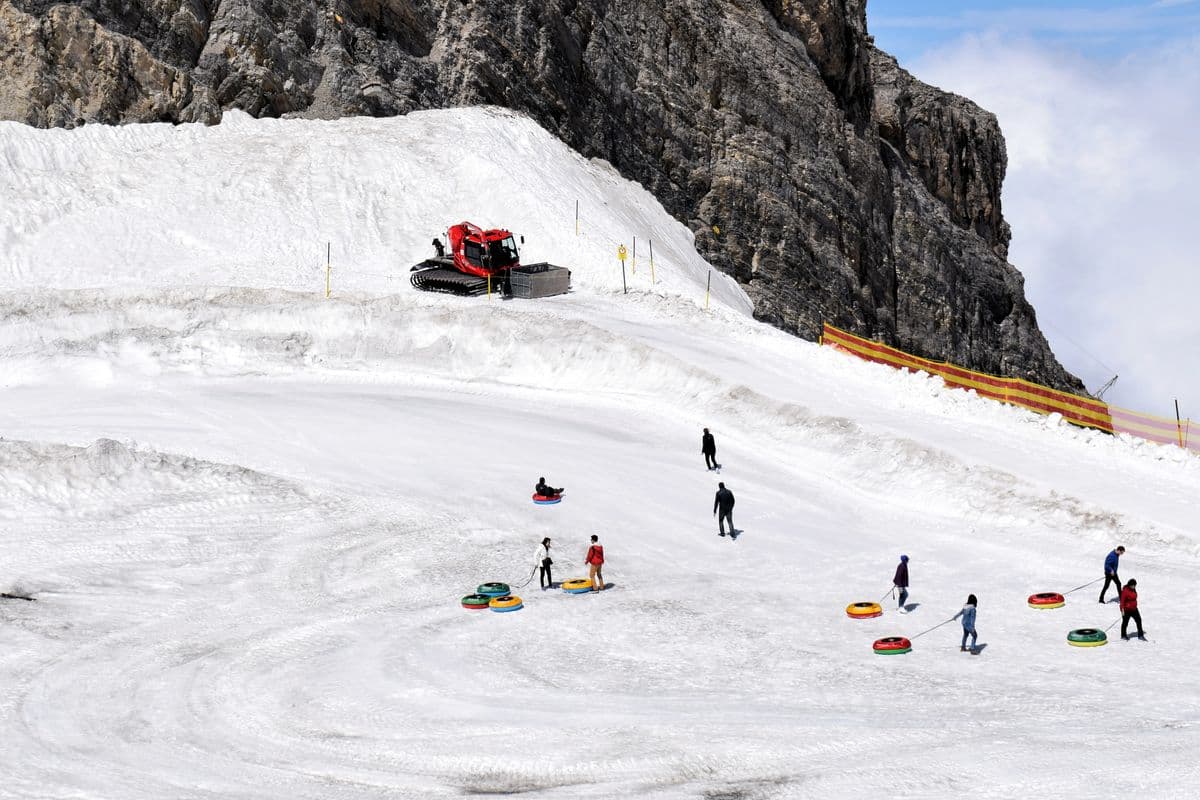
The hill decides, not the gear
Start here, because it is the part that matters and the part nobody checks. Sledding injuries almost always come from the same three things: hitting something at the bottom, hitting something on the way down, or riding into a road or a parking lot.
So before buying anything, look at the hill and answer three questions. Is there a long clear runout at the bottom, with no fence, tree, road or pond? Is the slope free of obstacles, not just at the bottom but along the sides? And is the surface snow rather than ice? A tube on an icy hill is a projectile, and speed with no steering is only survivable if there is nothing to hit.
The sledding safety page covers helmets, hill selection and the rules that keep this fun, and every recommendation below assumes it.
Tube against sled
| Snow tube | Plastic sled or toboggan | Saucer | |
|---|---|---|---|
| Speed | Fastest - very low friction | Moderate and predictable | Fast for its size, spins constantly |
| Steering | None at all | Limited, by leaning and dragging a foot | None |
| Comfort | Best - inflated and off the snow | Hard plastic, feels every bump | Hard, and you sit in the snow |
| Riders | One, or two on a large tube | One to three depending on deck length | One |
| Hill needed | Long, wide, clear runout | Works on a modest slope | Works on a very short slope |
| Storage and transport | Bulky; deflates on some models | Bulky and rigid | Small, light, a child can carry it |
The tube: fastest, warmest, least controllable
A tube sits you above the snow on an inflated cushion, which is warmer and dramatically more comfortable than sitting on plastic, and its contact patch is small and slick, which is why it is fast.
The Slippery Racer Grande XL publishes a 42 in inflated diameter - big enough for genuine tandem riding rather than nominally two-person - with a nylon canvas cover carrying a published cold-resistant treatment, which is what stops a cheap tube splitting at low temperatures, and a slick-coated polyethylene hard base.
Honest limits: you cannot steer it, you cannot stop it, and it will spin so that you arrive at the bottom backward. It needs a real runout, and it needs a hill without obstacles. It is also the most awkward thing here to transport and to get back up the hill.
The sled: the family default
A long plastic sled or toboggan is the most versatile choice and the one that works on the widest range of hills. It is slower than a tube, which is a feature rather than a flaw, and it can be nudged off line by leaning or by dragging a boot.
The Flexible Flyer Winter Trek publishes a 300 lb combined capacity across three riders on a 66 in deck - long enough for two children and an adult, which is what makes it useful for a family with a child too young to go down alone.
Honest limits: hard plastic transmits every bump, it is cold to sit on, and a long deck is unwieldy to carry back up a hill by a small child.
The saucer: the one for a small hill
The Slippery Racer Downhill Pro publishes a 26 in diameter, one-piece injection-molded polyethylene and molded hand grips, and that is close to the whole specification - because there is almost nothing to a disc: no moving parts and nothing to inflate. On a short backyard slope where a tube would not build speed and a long sled would not fit, a saucer still works.
Honest limits: it spins uncontrollably, it holds one rider, and you sit directly in the snow - so waterproof pants are not optional. The ski pants roundup covers what keeps a sledding afternoon going, and snow gear for non-skiers covers the rest of the kit.
Where to go, and what to look at first
Most families sled on whatever hill is nearest, which is how gear choice ends up mattering more than it should. Two minutes of looking makes a bigger difference than any purchase on this page.
- Walk the runout before the first run. Stand at the bottom and look back up. Anything you would not want to hit at fifteen miles an hour - a fence, a bench, a culvert, a parking lot - rules the hill out for a tube and may rule it out entirely.
- Check the surface. Fresh snow is slow and forgiving; refrozen afternoon crust is fast and hard. The same hill is a different proposition at 10 a.m. and 4 p.m.
- Look for a separate climb lane. Collisions between riders coming down and children walking up are the most common sledding injury, and the fix is a rule rather than equipment: walk up the edge, never the middle.
- Prefer a groomed tubing park for tubes. Lanes, a tow and a flat runout are what a tube is actually designed around, and it removes the hill-choice problem entirely. The snow tubing page covers what those cost and what to expect.
Matching the choice to the age of the child
| Age | What works | What to avoid |
|---|---|---|
| Under 4 | An adult-controlled sled with the child in front | Anything they ride alone, and tubes entirely |
| 4 to 7 | A saucer or small sled on a short slope | Long fast hills and tandem riding |
| 8 and up | Sled or tube, depending entirely on the hill | Headfirst, stacking riders, and hills near roads |
The consistent thread is that the hill, not the age, sets the ceiling - and that a helmet belongs on every child on every one of those rows.
Why cheap sleds crack, and what to look for
The failure everyone has seen: a plastic sled that splits down the middle on the third run of a cold morning. It is a materials problem, and it is predictable.
- Cold makes plastic brittle. Thin, low-grade polyethylene that flexes fine at 40F cracks at 10F, especially where the deck bends over a bump with a rider on it. This is why the cheapest sleds fail on exactly the coldest, best sledding days.
- Look for a stated cold-resistant treatment or material. The Slippery Racer tube publishes a cold-resistant treatment on its cover for this reason, and it is the specification worth paying for in this category.
- Thickness and ribbing beat size. A ribbed or double-walled deck distributes load; a flat thin sheet concentrates it into a crease that becomes a crack.
- Never store a sled outdoors in sun. UV degrades polyethylene, which is why the sled that lived against the garage wall all summer breaks in December.
The bit nobody plans for: getting back up
Every run down is a climb back up, and with children that climb is the whole afternoon. It is worth choosing gear with this in mind, because it is what actually decides how long everyone lasts.
| Carrying it | Who can manage it | |
|---|---|---|
| Snow tube | Bulky, catches wind, awkward for a child | An adult, or a big child on a short hill |
| Long sled | Heavy and unwieldy, but tows on a rope | An adult towing; children can drag it |
| Saucer | Light, flat, easy to carry or drag | A small child, unaided |
Two practical notes: a tow rope or strap turns a long sled from a carry into a drag, and traction on your own feet makes the climb enormously easier on a packed, icy run-up - the ice cleat picks cover that for a fraction of the price of any sled here.
What published capacity actually means
Capacity figures are a structural limit, not a recommendation. A 300 lb sled with three riders on it is heavier, faster and far harder to influence than the same sled with one child aboard - and a pile-up at the bottom involves three people rather than one.
Which to buy
- Long clear hill, older children and adults: the tube. It is the most fun thing here, on the only kind of hill where it is appropriate.
- Mixed ages, ordinary local hill: the long sled. One purchase covers an adult with a toddler and two children racing.
- Short slope, small children, limited storage: the saucer. Cheap enough to buy two.
- Icy, steep, or anything near a road: none of them. That is the day for ice cleats and a walk instead.
The kids sled roundup and the snow tube roundup compare the field within each category on published capacities and materials.
Every pick, with the working
Each entry shows the published inputs, the axis scores they produce, and what you give up. The order is the computed order, not a commercial one, and the arithmetic is open underneath each score.
1 · An adult and a child riding together on a groomed tubing hill
Slippery Racer Grande XL Snow Tube
A published 42 inch inflated diameter with a heavy nylon canvas cover, an IceVex cold-resistant treatment and a slick-coated polyethylene hard base. It is published as suitable for adult and child tandem riding, which is the use case most families actually have, and the maker publishes no maximum rider weight at all.
- Published price
- Not published
- Cost per day on snow
- Not published
- Amortized over
- 3 seasons (15 days)
- Certified to
- Not published
- Published sizes
- One size, 42 in inflated diameter
- Warranty
- No term published on the product page
What it gets right
- 42 in published diameter, big enough for tandem riding rather than nominally two-person
- Nylon canvas cover with a published cold-resistant treatment, which is what stops a cheap tube splitting at low temperatures
- Slick-coated polyethylene hard base published, rather than bare vinyl
- Double-reinforced webbed grip handles and a pulley tow rope published
What you give up
- The maker publishes no maximum rider weight, which is the figure you most want
- Inflatable, so it needs a pump and it is the one sled that can go flat on the hill
- No published warranty term
- A tube has no steering and no brake, which is a real limit on any hill with obstacles
The working behind the 0.0
- Cost per day on snow: not scored
- No manufacturer-published price, so this axis is not scored.
- Published protection: not scored
- Sleds carry no US protective standard, which is itself worth knowing.
- Size availability: not scored
- Sold in one size, so size availability does not apply.
- Warranty and support: 0.0
- no published term (0 of 6); no published crash replacement (+0); no published repair route (+0)
Axes with unpublished inputs are dropped and the remaining weights re-normalized, so a product is not punished for a manufacturer’s silence. Specifications compiled September 12, 2026 from Slippery Racer published Grande XL specifications.
2 · Three riders together on a gentle open slope
Flexible Flyer Winter Trek 3-Person Snow Sled
5.5 feet long with a published 300 lb combined capacity for three riders, which is the sled for the family that all wants to go at once. It is also the one that is hardest to steer, and that is worth knowing before the first run.
- Published price
- Not published
- Cost per day on snow
- Not published
- Amortized over
- 3 seasons (15 days)
- Certified to
- Not published
- Published sizes
- One size, 66 x 20 in
- Warranty
- No term published
Flexible Flyer publishes no MSRP we could read.
What it gets right
- Published 300 lb combined capacity across three riders
- 66 in deck, long enough for two children and an adult
What you give up
- No published MSRP
- A long toboggan with three riders is genuinely difficult to steer or stop, which rules out crowded or tree-lined hills
The working behind the 0.0
- Cost per day on snow: not scored
- No manufacturer-published price, so this axis is not scored.
- Published protection: not scored
- Sleds carry no US protective standard, which is itself worth knowing.
- Size availability: not scored
- Sold in one size, so size availability does not apply.
- Warranty and support: 0.0
- no published term (0 of 6); no published crash replacement (+0); no published repair route (+0)
Axes with unpublished inputs are dropped and the remaining weights re-normalized, so a product is not punished for a manufacturer’s silence. Specifications compiled September 3, 2026 from Flexible Flyer published product specification.
3 · One child on a wide, open hill with a long clear runout
Slippery Racer Downhill Pro Saucer Disc Sled
A 26-inch disc, which is the fastest and least steerable shape there is. That is the whole trade: children love it and it goes where the hill sends it, so the hill has to be chosen carefully. Unlike most saucers it publishes molded hand grips, so there is at least something to hold.
- Published price
- Not published
- Cost per day on snow
- Not published
- Amortized over
- 3 seasons (15 days)
- Certified to
- Not published
- Published sizes
- One size, 26 in diameter
- Warranty
- No term published
Slippery Racer publishes no MSRP we could read.
What it gets right
- Published 26 in diameter in one-piece injection-molded polyethylene, with nothing to inflate or assemble
- Molded hand grips published, which a bare disc does not give you
- Coated with the maker's published IceVex cold-resistant treatment
What you give up
- No published MSRP
- No published rider weight limit, so there is no figure to check an adult against
- A saucer spins and cannot be steered, so it needs an open hill with no trees or fences
The working behind the 0.0
- Cost per day on snow: not scored
- No manufacturer-published price, so this axis is not scored.
- Published protection: not scored
- Sleds carry no US protective standard, which is itself worth knowing.
- Size availability: not scored
- Sold in one size, so size availability does not apply.
- Warranty and support: 0.0
- no published term (0 of 6); no published crash replacement (+0); no published repair route (+0)
Axes with unpublished inputs are dropped and the remaining weights re-normalized, so a product is not punished for a manufacturer’s silence. Specifications compiled October 12, 2026 from Slippery Racer published Downhill Pro specifications.
Prices last verified October 19, 2026. Prices move constantly; the figure on Amazon at the moment you click is the real one.
Questions people actually ask
Is a snow tube better than a sled?
It is faster and much more comfortable, and it cannot be steered or stopped. On a long, wide hill with a clear runout that is the whole appeal. On a short or obstructed hill, a sled is the better and safer choice because it is slower and can be nudged off line.
Can you steer a snow tube?
No. A tube has a round, low-friction contact patch and will spin freely, so you often arrive at the bottom facing backward. That is why hill choice matters more with a tube than with any other sledding gear: there must be nothing to hit and room to run out.
What size snow tube should I buy?
Check the published inflated diameter rather than the marketing description. A 42 inch tube is genuinely large enough for two riders; smaller tubes described as two-person often are not. Bigger tubes are also faster, which brings you back to whether your hill suits one.
How many kids can ride one sled?
Published capacity is a structural limit, not a recommendation. One rider per sled for children is the sensible rule, with multi-rider capacity reserved for an adult taking a small child down. And never headfirst - that is what turns a minor collision into a serious injury.
What should kids wear for sledding?
Waterproof pants above everything, because sledding means sitting in snow repeatedly, a helmet - a ski or bike helmet is fine - and waterproof gloves. Snow boots rather than sneakers, and a spare pair of gloves in the car, because wet gloves end the afternoon.