The ski binding DIN chart, and why you cannot use it alone
The chart is real, it is published in an international standard, and reading your number off it is still not the same as having a binding set. Here is the difference.
By Sawyer V. · Published
We have not tested this gear. Everything below is compiled from published specifications and published safety standards, and the arithmetic is public so you can check it. This page carries affiliate links: if you buy through one we earn a commission at no extra cost to you, and it does not change the order of the picks. Full disclosure.
The short answer
A DIN chart converts five inputs - weight, height, age, boot sole length and skier type - into a release value, under the published procedure in ISO 11088. The number matters when buying because every binding publishes a DIN range, and yours must sit comfortably inside it rather than at either extreme. You can look your value up; you cannot set or verify it without a shop and a release-test machine.
| # | Pick | Best for | Score | Price |
|---|---|---|---|---|
| 1 | Rossignol Experience 78 Carbon skis with Xpress bindings Someone certain they will ski more than about six days a season | $23.20 a dayon snow | 2.3/10 | $579.95 - View on Amazon |
| 2 | Rossignol Experience 76 skis with Xpress 10 bindings A smaller adult or a tall teenager on groomed runs | $18.00 a dayon snow | 2.3/10 | $479.95 - View on Amazon |
| 3 | K2 Disruption 75 Women's Skis A beginner who wants a women's-specific construction | $18.00 a dayon snow | 1.4/10 | $389.99 - View on Amazon |
Prices last verified October 19, 2026. Prices move constantly; the figure on Amazon at the moment you click is the real one.
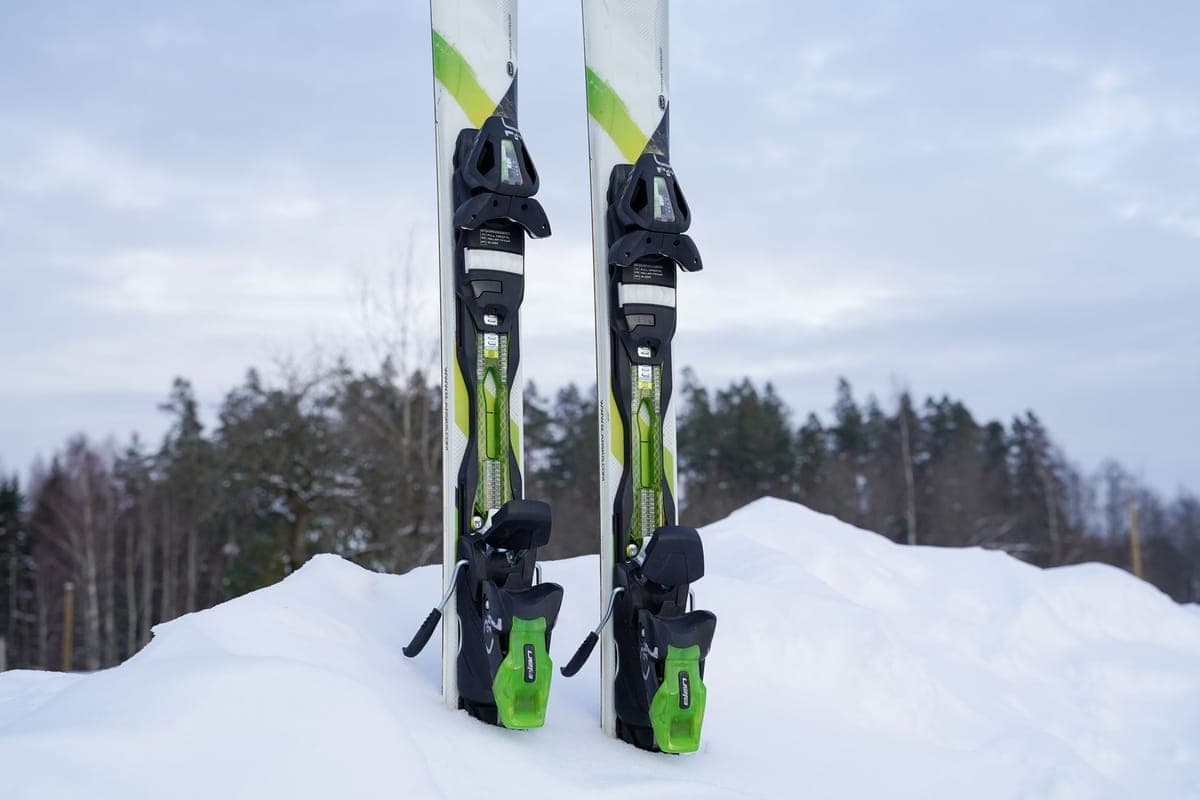
What the chart actually is
DIN is a release value on a standardized scale, and despite the name it is now governed internationally: ISO 11088 specifies the assembly, adjustment and inspection of the alpine ski, binding and boot system, and it is written for the shop rather than for the manufacturer. The chart is the lookup table inside that procedure.
What it is not is a difficulty setting or a preference. It is the threshold of twisting or forward force at which the binding lets your boot go - a fuse rather than a clamp. The bindings page covers the mechanism; this page is about the number.
The five inputs
| Input | Why it matters | Getting it wrong |
|---|---|---|
| Weight | The main driver: force scales with the mass being decelerated | Understating it produces a setting that releases too easily |
| Height | Leverage - a taller skier applies more torque through a longer limb | Minor effect, but it is a real input |
| Age | Bone strength differs at both ends of the range, so the value is lowered for the young and the old | Skipping the age band is common and it changes the result |
| Boot sole length | The lever arm between toe and heel pieces, in millimeters, printed on the boot | A new or borrowed boot means the whole calculation is redone |
| Skier type | Self-declared, from cautious to aggressive | The one people falsify, and it raises the release value |
Skier types, and the honest answer
The three types describe intent rather than ability, and the definitions are deliberately conservative.
- Type 1. Cautious skiing on gentle terrain at moderate speed. Produces the lowest release value, meaning the binding lets go soonest.
- Type 2. Moderate skiing across varied terrain and speed. The default for most recreational skiers.
- Type 3. Aggressive skiing on steeper terrain at higher speed. Produces the highest value, meaning the binding holds on longest.
A beginner should declare Type 1, and it is worth saying why plainly: a higher release value means the binding holds on longer before letting your leg go. In a slow twisting fall - the one beginners actually have - holding on longer is not the outcome you want. Inflating the type out of embarrassment is the most common self-inflicted problem at a rental counter, and it is exactly what the five counter questions are feeding.
Some shops also offer a "minus" option below Type 1 for very cautious or older skiers, which is a legitimate request rather than an admission of anything.
Why the number matters when you are buying
This is the part that makes a DIN chart a shopping tool rather than trivia. Every binding publishes a DIN range - something like 3 to 10, or 4 to 13 - and your calculated value has to sit comfortably inside it.
- Not at the bottom. A binding running at the very bottom of its range is at the least precise part of its spring travel.
- Not at the top. Same problem, and no headroom if your weight or skiing changes.
- Ideally near the middle. Which is why a light adult and a heavy adult genuinely need different bindings, not just different settings.
This matters most for children and light adults, whose calculated values are low enough to fall below the bottom of many adult bindings. It is a real reason a junior package exists rather than a marketing one. The three skis in this ledger all ship with bindings matched to their intended skier, which is one of the arguments for buying a package - covered on the all-mountain roundup.
Why you still cannot do it yourself
You can look your value up. You cannot verify it, and that gap is the whole point.
The number visible on a binding is an indicator, not a calibration. Springs fatigue with age and use, mechanisms accumulate grit, and two bindings showing the same indicator number can release at meaningfully different actual torques. The only meaningful check is a release test on a machine that measures the real force, which is what a shop appointment is actually buying you.
So the honest use of a DIN chart is: understand the inputs, give the shop accurate answers, sanity-check that the value they set is in the range you expected, and have the test done at the start of each season. The mid-season check covers spotting a drifted indicator.
When it has to be redone
- New boots, or borrowed boots. Boot sole length is an input and it also sets the physical spacing between toe and heel pieces.
- A significant weight change. Weight is the main driver.
- A child, every season. Height, weight and age all move, and all three are inputs. This is one of the strongest arguments for a seasonal lease, where it is included.
- A different skier using the same skis. Sharing skis within a family means resetting them, every time.
- Buying used. And first check the binding is on the current indemnification list, or no shop will touch it - the used-gear page covers that rule.
Snowboards do not have this
Standard alpine snowboard bindings do not release, so there is no release value, no chart and no shop appointment. Both feet are fixed to one board, so the twisting forces that make a ski binding necessary do not arise the same way. What a snowboarder adjusts instead is stance width, binding angles and position - all reversible, all done with a screwdriver.
Every pick, with the working
Each entry shows the published inputs, the axis scores they produce, and what you give up. The order is the computed order, not a commercial one, and the arithmetic is open underneath each score.
1 · Someone certain they will ski more than about six days a season
Rossignol Experience 78 Carbon skis with Xpress bindings
Rossignol lists this ski's skill level as beginner and sells it with bindings mounted, which removes the one step that makes buying skis online go wrong. Six lengths from 138 to 178 cm covers a family from a tall child to a tall adult.
- Published price
- $579.95
- Cost per day on snow
- $23.20 a day
- Amortized over
- 5 seasons (25 days)
- Certified to
- Not published
- Published sizes
- 138, 146, 154, 162, 170 and 178 cm
- Warranty
- No term published on the product page
What it gets right
- Published by Rossignol at beginner skill level, not inferred from a spec sheet
- Sold with Xpress bindings included, so there is one purchase rather than three
- Six published lengths spanning 138-178 cm
What you give up
- $579.95 is $4.64 a day even on a generous five-season, five-days-a-year horizon
- The binding still has to have its release setting adjusted by a shop for the skier's height, weight and boot sole length, which is not something to skip
- Boots are not included, and boots matter more than skis for a beginner
The working behind the 2.3
- Cost per day on snow: 0.0
- $579.95 over 5 seasons at 5 days each = 25 days = $23.20 a day
- Published protection: not scored
- Skis carry no protective standard of their own. The binding release setting does, and a shop sets it.
- Size availability: 8.5
- 6 published sizes (8.5 of 8.5); no continuous adjuster published (+0); range: 138, 146, 154, 162, 170 and 178 cm
- Warranty and support: 0.0
- no published term (0 of 6); no published crash replacement (+0); no published repair route (+0)
Axes with unpublished inputs are dropped and the remaining weights re-normalized, so a product is not punished for a manufacturer’s silence. Specifications compiled September 3, 2026 from Rossignol published specifications.
2 · A smaller adult or a tall teenager on groomed runs
Rossignol Experience 76 skis with Xpress 10 bindings
The narrower, cheaper sibling of the 78, at $449.95 with bindings, and the shortest published length here at 136 cm. Six lengths starting that short is what makes it work for a smaller adult or a tall teenager.
- Published price
- $449.95
- Cost per day on snow
- $18.00 a day
- Amortized over
- 5 seasons (25 days)
- Certified to
- Not published
- Published sizes
- 136, 144, 152, 160, 168 and 176 cm
- Warranty
- No term published on the product page
What it gets right
- $449.95 with Xpress 10 bindings included, $130 under the 78
- Six lengths from 136 cm, the shortest adult ski here
- A 76 mm waist is narrow, which makes edge-to-edge turns quicker to learn
What you give up
- A narrow ski is less forgiving in soft snow than a wider one
- The binding release setting still needs a shop, as with any ski
The working behind the 2.3
- Cost per day on snow: 0.0
- $449.95 over 5 seasons at 5 days each = 25 days = $18.00 a day
- Published protection: not scored
- Skis carry no protective standard of their own. The binding release setting does, and a shop sets it.
- Size availability: 8.5
- 6 published sizes (8.5 of 8.5); no continuous adjuster published (+0); range: 136, 144, 152, 160, 168 and 176 cm
- Warranty and support: 0.0
- no published term (0 of 6); no published crash replacement (+0); no published repair route (+0)
Axes with unpublished inputs are dropped and the remaining weights re-normalized, so a product is not punished for a manufacturer’s silence. Specifications compiled September 3, 2026 from Rossignol published specifications.
3 · A beginner who wants a women's-specific construction
K2 Disruption 75 Women's Skis
A women's-specific beginner ski at the same $449.95 as the Rossignol 76, in four lengths from 142 cm. Fewer lengths than the Rossignol, which is the one real difference between them on published figures.
- Published price
- $449.95
- Cost per day on snow
- $18.00 a day
- Amortized over
- 5 seasons (25 days)
- Certified to
- Not published
- Published sizes
- 142, 149, 156 and 163 cm
- Warranty
- No term published on the product page
What it gets right
- $449.95 published, matching the comparable Rossignol
- Women's-specific construction and mounting position published by K2
What you give up
- Four published lengths against the Rossignol's six, so the fit band is coarser
- Nothing shorter than 142 cm, which rules out smaller adults
The working behind the 1.4
- Cost per day on snow: 0.0
- $449.95 over 5 seasons at 5 days each = 25 days = $18.00 a day
- Published protection: not scored
- Skis carry no protective standard of their own. The binding release setting does, and a shop sets it.
- Size availability: 5.1
- 4 published sizes (5.1 of 8.5); no continuous adjuster published (+0); range: 142, 149, 156 and 163 cm
- Warranty and support: 0.0
- no published term (0 of 6); no published crash replacement (+0); no published repair route (+0)
Axes with unpublished inputs are dropped and the remaining weights re-normalized, so a product is not punished for a manufacturer’s silence. Specifications compiled September 3, 2026 from K2 published specifications.
Prices last verified October 19, 2026. Prices move constantly; the figure on Amazon at the moment you click is the real one.
Questions people actually ask
What is a DIN setting on ski bindings?
A release value on a standardized scale: the threshold of twisting or forward force at which the binding lets your boot go. It is calculated from weight, height, age, boot sole length and declared skier type under the published ISO 11088 procedure, not chosen by preference.
Can I set my own DIN setting?
You can turn the screw and you should not. The visible number is an indicator rather than a calibration - springs fatigue and mechanisms accumulate grit, so two bindings showing the same number can release at different actual torques. The only meaningful check is a shop release test.
Where do I find my boot sole length?
Printed on the boot itself, usually on the side of the heel or inside the cuff, as a three-digit number in millimeters. It is one of the five inputs to the release calculation and it is the reason a new or borrowed boot means the whole thing is recalculated.
What skier type should a beginner choose?
Type 1 - cautious skiing on gentle terrain. A higher type raises the release value, meaning the binding holds on longer before letting your leg go, which is the wrong direction for the slow twisting falls beginners actually have. Inflating it out of embarrassment is a common and costly mistake.
Does my DIN number affect which bindings I can buy?
Yes, and this is the practical use of knowing it. Every binding publishes a DIN range, and your value should sit near the middle of it rather than at either extreme. Light adults and children frequently calculate below the bottom of adult bindings, which is why junior packages exist.