Ski bindings, explained without the shop jargon
A binding has one job: hold your boot until holding it would hurt you, then let go. Everything about buying, mounting and setting one follows from that single sentence.
By Sawyer V. · Published
We have not tested this gear. Everything below is compiled from published specifications and published safety standards, and the arithmetic is public so you can check it. This page carries affiliate links: if you buy through one we earn a commission at no extra cost to you, and it does not change the order of the picks. Full disclosure.
The short answer
A binding holds your boot to the ski and releases it when the twisting or forward force passes a set threshold. That threshold is the release value, often called DIN, and it is calculated from your height, weight, age, boot sole length and skier type under the published procedure in ISO 11088. A shop calculates and tests it. It is the one setup job on a ski that you should never do at home, and the reason a used ski with an unsupported binding can be unusable.
| # | Pick | Best for | Score | Price |
|---|---|---|---|---|
| 1 | Rossignol Experience 78 Carbon skis with Xpress bindings Someone certain they will ski more than about six days a season | $23.20 a dayon snow | 2.3/10 | $579.95 - View on Amazon |
| 2 | Rossignol Experience 76 skis with Xpress 10 bindings A smaller adult or a tall teenager on groomed runs | $18.00 a dayon snow | 2.3/10 | $479.95 - View on Amazon |
| 3 | K2 Disruption 75 Women's Skis A beginner who wants a women's-specific construction | $18.00 a dayon snow | 1.4/10 | $389.99 - View on Amazon |
Prices last verified October 20, 2026. Prices move constantly; the figure on Amazon at the moment you click is the real one.
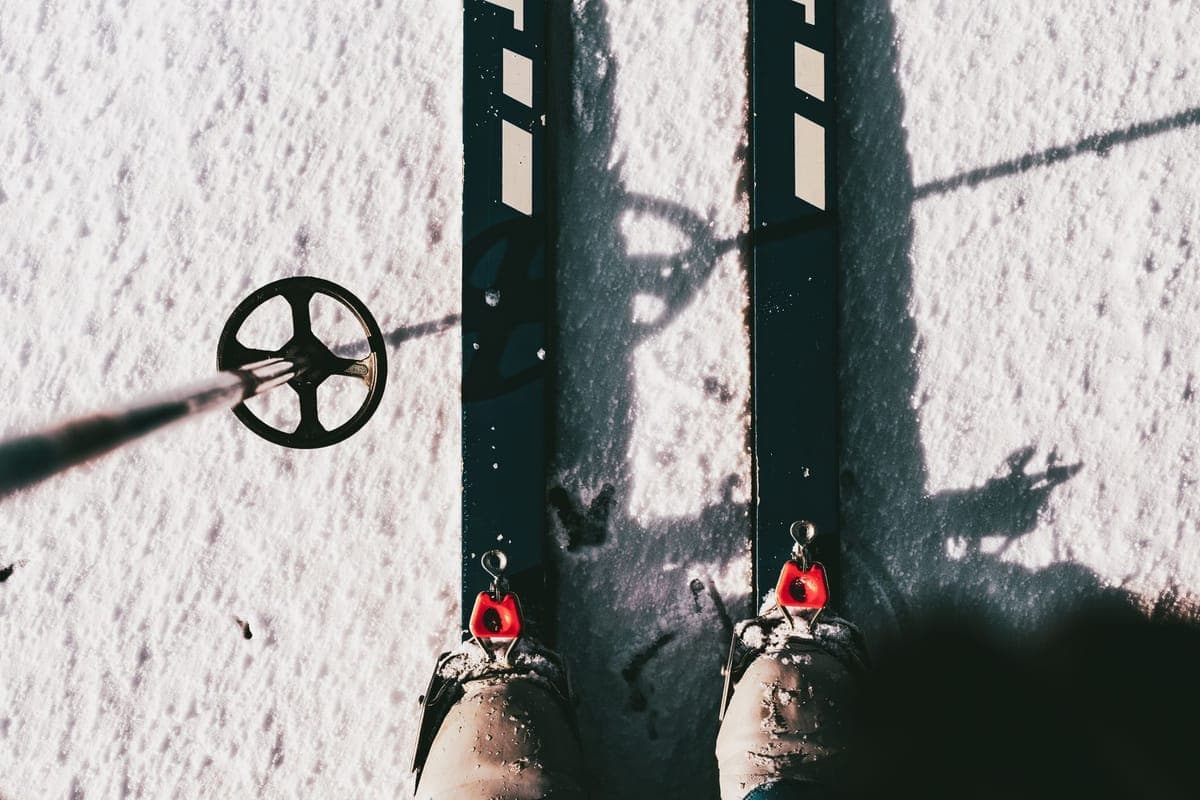
What a binding is actually for
It is easy to think of a binding as a clamp. It is closer to a fuse. Its job is to hold your boot firmly through everything normal skiing throws at it, and then to let go at the point where continuing to hold would transfer the force into your leg instead. That is the entire design brief, and every part of the mechanism exists to serve it.
A conventional alpine binding releases in two directions. The toe piece releases sideways, for a twisting fall, which is the classic knee-and-ankle scenario. The heel piece releases upward, for a forward fall over the tips. Both have their own adjustment, and both are set from the same calculated value.
Where the release number comes from
The number people call DIN is a release value on a standardized scale. It is not chosen by preference and it is not a difficulty setting. It comes out of a published procedure: ISO 11088 covers the assembly, adjustment and inspection of the alpine ski, binding and boot system, and it is written for the shop rather than for the manufacturer.
| Input | Why it matters |
|---|---|
| Weight | The main driver: force scales with the mass being decelerated |
| Height | Leverage. A taller skier applies more torque through a longer limb |
| Age | Bone strength changes at both ends of the range, so the setting is lowered for the young and the old |
| Boot sole length | The lever arm between the toe and heel pieces, and the reason a boot swap means a recalculation |
| Skier type | Self-declared, from cautious to aggressive; raises or lowers the value |
Two of those are worth dwelling on. Boot sole length is the reason a rental shop recalculates when you swap boots mid-trip, and the reason a binding set for one family member is not set for another. That is exactly what the rental counter is doing when it asks the five questions.
Skier type is the one people falsify. Declaring yourself more aggressive than you are raises the release value, which means the binding holds on longer before letting go. For a beginner that is the wrong direction, and it is not a small effect.
Mounting: integrated systems against flat mounts
There are two ways a binding gets attached to a ski, and it matters more when buying than most people realize.
Integrated or system bindings
The ski ships with a rail or plate already fitted and a binding designed for it. The binding slides along the rail and is adjusted for boot sole length with a screwdriver in seconds. This is what most beginner and family packages use: the Rossignol skis in this ledger are published with Xpress bindings included, which is the single thing that removes the step where buying skis online goes wrong.
The advantages are real. No drilling, fast boot length adjustment, and the ski arrives ready for a shop to set and test rather than to mount from scratch. The limitation is that you generally cannot fit a different brand of binding later, and when the binding drops off its indemnification list, replacing it may mean replacing the ski.
Flat mount
A bare ski, drilled and screwed by a shop for a specific binding and a specific boot. More flexible, more expensive, and the normal arrangement above beginner level. Every remount leaves holes, and there is a practical limit to how many times a ski can be redrilled.
For a first setup, integrated is almost always the right answer, and the beginner ski roundup is built around packages for that reason.
Why this decides whether used skis are worth buying
Binding manufacturers publish an indemnification list each year: the models they will stand behind if a shop mounts, adjusts or tests them. A shop working on a binding that is not on the current list carries the liability itself if that binding fails to release, so most simply decline. Models typically stay listed for roughly eight to twelve years, and can drop off sooner.
The consequence is blunt: a cheap pair of used skis whose bindings are off the list cannot be set up for you by a shop, and setting them up yourself is not a reasonable substitute. Get the binding make, model and year before you buy anything secondhand and call a local shop first. The used-gear page covers the rest of the item list.
Brakes, and the one measurement that has to match
The two arms that stick down behind the heel are the brake, and they stop a released ski from sliding down the mountain. The brake width has to be at least as wide as the ski at its waist, and not so much wider that the arms drag in a turn.
In practice this only comes up if you buy a ski and a binding separately, or if you move a binding from an old ski to a wider new one. On a package with bindings included it is already matched. It is worth knowing because it is the most common reason a shop says a binding you already own will not fit the ski you just bought.
The checks worth doing yourself
Setting the release value is a shop job. Everything below is not, and takes two minutes in a garage.
- Step in and out of each ski before a trip. Both should click in cleanly and release with the lever. A binding that fights you at home will fight you in a parking lot in the cold.
- Check the boot sole for wear. The toe and heel of a ski boot are what the binding grips. Rounded, chipped or heavily worn soles change how the binding behaves, and many boots have replaceable sole blocks.
- Clear the ice. Packed snow under the heel or in the toe piece is the everyday reason a boot will not click in. Scrape it with a pole basket rather than forcing it.
- Look at the indicator numbers on both skis. They should match each other. If one has drifted, that is a shop visit rather than a screwdriver.
- Get a release test at the start of each season. This is cheap, quick, and the only way to know the mechanism still does what the number claims.
The number the shop enters, and the one thing on a binding you should never set yourself, is the release value. The DIN chart page shows how it is calculated from weight, height, age, boot sole length and skier type, so you can check the setting on your own skis is at least in the right region.
What to actually buy
For a first ski setup, buy a package with bindings included and budget for a shop to set and test them. That is one purchase and one appointment rather than three purchases and a mounting bill. The skis in this ledger publish six lengths from 136 to 178 cm across two Rossignol models and four lengths from 142 to 163 cm on the K2, all sold with bindings.
Then remember the order of importance. Boots matter more than skis for a beginner, and the ski size chart settles length before anything else. If you are not yet sure how much you will ski, a seasonal lease includes the binding setup in the price and is usually the cheaper way to find out.
Every pick, with the working
Each entry shows the published inputs, the axis scores they produce, and what you give up. The order is the computed order, not a commercial one, and the arithmetic is open underneath each score.
1 · Someone certain they will ski more than about six days a season
Rossignol Experience 78 Carbon skis with Xpress bindings
Rossignol lists this ski's skill level as beginner and sells it with bindings mounted, which removes the one step that makes buying skis online go wrong. Six lengths from 138 to 178 cm covers a family from a tall child to a tall adult.
- Published price
- $579.95
- Cost per day on snow
- $23.20 a day
- Amortized over
- 5 seasons (25 days)
- Certified to
- Not published
- Published sizes
- 138, 146, 154, 162, 170 and 178 cm
- Warranty
- No term published on the product page
What it gets right
- Published by Rossignol at beginner skill level, not inferred from a spec sheet
- Sold with Xpress bindings included, so there is one purchase rather than three
- Six published lengths spanning 138-178 cm
What you give up
- $579.95 is $4.64 a day even on a generous five-season, five-days-a-year horizon
- The binding still has to have its release setting adjusted by a shop for the skier's height, weight and boot sole length, which is not something to skip
- Boots are not included, and boots matter more than skis for a beginner
The working behind the 2.3
- Cost per day on snow: 0.0
- $579.95 over 5 seasons at 5 days each = 25 days = $23.20 a day
- Published protection: not scored
- Skis carry no protective standard of their own. The binding release setting does, and a shop sets it.
- Size availability: 8.5
- 6 published sizes (8.5 of 8.5); no continuous adjuster published (+0); range: 138, 146, 154, 162, 170 and 178 cm
- Warranty and support: 0.0
- no published term (0 of 6); no published crash replacement (+0); no published repair route (+0)
Axes with unpublished inputs are dropped and the remaining weights re-normalized, so a product is not punished for a manufacturer’s silence. Specifications compiled September 3, 2026 from Rossignol published specifications.
2 · A smaller adult or a tall teenager on groomed runs
Rossignol Experience 76 skis with Xpress 10 bindings
The narrower, cheaper sibling of the 78, at $449.95 with bindings, and the shortest published length here at 136 cm. Six lengths starting that short is what makes it work for a smaller adult or a tall teenager.
- Published price
- $449.95
- Cost per day on snow
- $18.00 a day
- Amortized over
- 5 seasons (25 days)
- Certified to
- Not published
- Published sizes
- 136, 144, 152, 160, 168 and 176 cm
- Warranty
- No term published on the product page
What it gets right
- $449.95 with Xpress 10 bindings included, $130 under the 78
- Six lengths from 136 cm, the shortest adult ski here
- A 76 mm waist is narrow, which makes edge-to-edge turns quicker to learn
What you give up
- A narrow ski is less forgiving in soft snow than a wider one
- The binding release setting still needs a shop, as with any ski
The working behind the 2.3
- Cost per day on snow: 0.0
- $449.95 over 5 seasons at 5 days each = 25 days = $18.00 a day
- Published protection: not scored
- Skis carry no protective standard of their own. The binding release setting does, and a shop sets it.
- Size availability: 8.5
- 6 published sizes (8.5 of 8.5); no continuous adjuster published (+0); range: 136, 144, 152, 160, 168 and 176 cm
- Warranty and support: 0.0
- no published term (0 of 6); no published crash replacement (+0); no published repair route (+0)
Axes with unpublished inputs are dropped and the remaining weights re-normalized, so a product is not punished for a manufacturer’s silence. Specifications compiled September 3, 2026 from Rossignol published specifications.
3 · A beginner who wants a women's-specific construction
K2 Disruption 75 Women's Skis
A women's-specific beginner ski at the same $449.95 as the Rossignol 76, in four lengths from 142 cm. Fewer lengths than the Rossignol, which is the one real difference between them on published figures.
- Published price
- $449.95
- Cost per day on snow
- $18.00 a day
- Amortized over
- 5 seasons (25 days)
- Certified to
- Not published
- Published sizes
- 142, 149, 156 and 163 cm
- Warranty
- No term published on the product page
What it gets right
- $449.95 published, matching the comparable Rossignol
- Women's-specific construction and mounting position published by K2
What you give up
- Four published lengths against the Rossignol's six, so the fit band is coarser
- Nothing shorter than 142 cm, which rules out smaller adults
The working behind the 1.4
- Cost per day on snow: 0.0
- $449.95 over 5 seasons at 5 days each = 25 days = $18.00 a day
- Published protection: not scored
- Skis carry no protective standard of their own. The binding release setting does, and a shop sets it.
- Size availability: 5.1
- 4 published sizes (5.1 of 8.5); no continuous adjuster published (+0); range: 142, 149, 156 and 163 cm
- Warranty and support: 0.0
- no published term (0 of 6); no published crash replacement (+0); no published repair route (+0)
Axes with unpublished inputs are dropped and the remaining weights re-normalized, so a product is not punished for a manufacturer’s silence. Specifications compiled September 3, 2026 from K2 published specifications.
Prices last verified October 20, 2026. Prices move constantly; the figure on Amazon at the moment you click is the real one.
Questions people actually ask
What does DIN mean on a ski binding?
It is the release value: the threshold of twisting or forward force at which the binding lets the boot go. It is calculated from your height, weight, age, boot sole length and declared skier type under the published ISO 11088 procedure, not chosen by preference.
Can I adjust my own ski bindings?
You can turn the screw, and you should not. The visible indicator is not a calibration: springs fatigue and mechanisms age, so the only meaningful check is a shop release test on a machine that measures actual torque. Boot length adjustment on a rail system is simpler, but the release setting should still be tested.
Do I need to reset bindings for a different boot?
Yes. Boot sole length is one of the inputs to the release calculation and it also sets the physical spacing between the toe and heel pieces. A new or borrowed boot means a recalculation and a re-test, which is why rental shops redo it when they swap a boot mid-trip.
Why will a shop not adjust old bindings?
Because manufacturers publish an annual indemnification list of the models they will stand behind, and a shop that services a binding off that list takes the liability itself. Models typically stay listed for roughly eight to twelve years. Check the binding make, model and year before buying used skis.
What is the difference between system and flat-mount bindings?
A system or integrated binding slides on a rail the ski ships with and adjusts for boot length in seconds without drilling. A flat mount is drilled and screwed by a shop for a specific binding and boot. Integrated is normal on beginner packages and is the simpler purchase; flat mount is more flexible and more expensive.
Sources
- ISO 11088:2023, alpine ski/binding/boot system, assembly, adjustment and inspection
- Ski binding indemnification: why shops decline to service older bindings, and typical listing lifespan
- Rossignol published Experience 78 Carbon lengths, skill level and included Xpress bindings
- K2 published Disruption 75 lengths and construction