Ski bindings, ranked on the two numbers that decide whether one fits you
A binding is the only piece of ski gear with a legal release setting. Three compared on the published DIN range and the sole standards each one accepts - and one of them does not publish a DIN range at all.
By Sawyer V. · Published
We have not tested this gear. Everything below is compiled from published specifications and published safety standards, and the arithmetic is public so you can check it. This page carries affiliate links: if you buy through one we earn a commission at no extra cost to you, and it does not change the order of the picks. Full disclosure.
The short answer
Buy on two published figures. First the DIN range, which has to bracket the release value a shop calculates for you with room at both ends - the Marker Squire 11 publishes 3.0 to 11.0, which Marker maps to 65 to 240 lb of skier and covers almost everyone. Second the boot sole standard your boots actually have. And the part no listing says loudly enough: a shop must mount and set a binding. You are buying hardware, not a finished setup.
| # | Pick | Best for | Score | Price |
|---|---|---|---|---|
| 1 | Marker Squire 11 Ski Bindings Almost any recreational skier, which is the point of a 3-to-11 range | $10.00 a dayon snow | 2.6/10 | $174.99 - View on Amazon |
| 2 | Tyrolia Attack 14 GW Ski Bindings A ski outside the usual waist range, or a boot you are not certain about | Not publishedon snow | 3.4/10 | $251.10 - View on Amazon |
| 3 | Marker Jester 16 Ski Bindings A heavy, aggressive skier whose shop-calculated release value is genuinely above 6 | Not publishedon snow | 0.0/10 | $281.99 - View on Amazon |
Prices last verified November 5, 2026. Prices move constantly; the figure on Amazon at the moment you click is the real one.
The DIN range, and why the number is not the point
Every alpine binding publishes a range - 3 to 11, 4 to 13, 6 to 16. The number people fixate on is the top of that range, and the number that actually matters is the bottom.
Your release value is calculated from your height, weight, boot sole length, age and skier type, using a procedure published in an international standard. The DIN chart page walks through the five inputs. For a large share of recreational skiers that calculation lands somewhere between 4 and 8. A binding that starts at 6 cannot be set to 5, and no amount of wanting it to will change that.
The sole standard, which is where buying separately goes wrong
Ski boots come with soles built to published norms, and bindings do not accept all of them. The short version: ISO 5355 is the traditional flat alpine sole, ISO 23223 is the GripWalk sole with the rockered rubber tread, and a touring sole under ISO 9523 is a third thing again. The sole standards page explains which marking means what, and it is the page to read before you buy a boot and a binding in separate transactions.
What matters here is how a maker tells you. Marker publishes a Boot Type field reading “Alpine, GripWalk”. Tyrolia goes further and publishes the standard numbers themselves. One of those is checkable against the stamp on your boot; the other asks you to trust a logo.
Brake width, the third number
The brake is the pair of sprung arms that drop and stop a released ski sliding off down the hill. It is sized in millimeters and it has to clear the waist of the ski it is mounted on - too narrow and it will not go on, too wide and the arms drag in a hard turn.
Nobody on this page publishes a rule for how much wider than the waist to go. We looked, on all three maker sites, and found brake widths listed as options with no guidance attached. Your ski publishes a waist measurement; the shop mounting the binding will pick the brake from it, and that conversation is worth having before you order rather than after.
What this page ranks on
- 1. Published DIN range. It has to bracket your calculated value with room at both ends. This is the first filter and it eliminates more bindings than anything else.
- 2. Published sole compatibility. Which norms the binding accepts, stated in a way you can check against your boot.
- 3. Published brake widths. More options means it fits more skis.
- 4. Published weight. You lift it with every step of every traverse. Only one of these publishes a figure.
- 5. What the maker will not tell you. Warranty terms and certification references are absent across all three, which is worth saying out loud rather than quietly omitting.
The three, compared
| Marker Squire 11 | Tyrolia Attack 14 GW | Marker Jester 16 | |
|---|---|---|---|
| Published DIN range | 3.0 - 11.0 | Not published | 6.0 - 16.0 |
| Skier weight band | 65-240 lb (29.5-109 kg) | Not published | 130 lb and up |
| Sole standards accepted | Alpine, GripWalk | ISO 5355 Type A and ISO 23223 Type A | Not published for this model |
| Published brake widths | 90, 100, 110 mm | 85, 95, 110, 130, 150 mm | Not published |
| Published weight | 820 g | Not published | Not published |
| Stand height | 24 mm | Not published | Not published |
| Published price | $249.99 | 235 euros, no US price | No US price published |
| Warranty term | Not published | Not published | Not published |
| Certification named | Not published | Not published | Not published |
That table has more blanks than a specification-led category ought to, and the pattern in them is the finding. Bindings are the one piece of ski equipment with a genuine safety function and a legally-set number on the side - and not one of these three names the standard it is certified to, or publishes a warranty term.
The picks
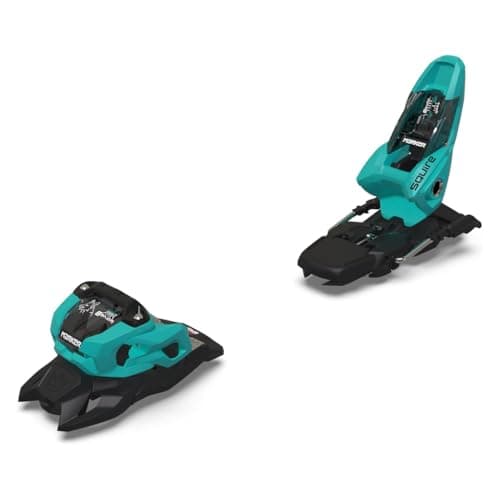
Marker Squire 11
The pick, on the range. Marker publishes 3.0 to 11.0 and - unusually - publishes the skier weight band that goes with it: 65 to 240 lb. Put those together and it is hard to construct a recreational skier this binding cannot be set for.
It also publishes the things the others do not. 820 g the pair. A 24 mm stand height, which is how far your boot sits above the ski and therefore how much leverage you have over an edge. A Boot Type field reading Alpine, GripWalk, so both common sole standards work. And three brake widths - 90, 100 and 110 mm - which covers a carving ski through to a mid-fat all-mountain ski.
Honest cons. Marker names no certification standard on the page - it publishes the DIN range but no ISO reference behind it - and publishes no warranty term. Its own page contradicts itself slightly, listing three brake widths in the size selector and a single 90 in the Brake Width field. And like everything here, it is hardware: a shop mounts it and sets it.
Tyrolia Attack 14 GW
The one to buy when compatibility is the thing you are unsure about, because Tyrolia writes it in the language of the standards rather than in logos: compatible with adult Alpine boots (ISO 5355 Type A) and adult Walk boots (ISO 23223 Type A). That is a sentence you can hold against the stamp on your own boot sole and get a yes or a no.
It publishes the widest brake range on this page too - 85, 95, 110, 130 and 150 mm - which means it fits skis from a narrow carver to a genuinely fat powder ski, and the adjustable AFD underfoot is the part that physically moves to accommodate the two sole shapes.
Honest cons, and the first is serious. Tyrolia publishes no DIN range on this product page. On a page whose first criterion is whether the range brackets your release value, a binding that does not publish a range cannot be checked at all before you buy - you are relying on the shop to tell you afterwards. It also publishes no weight, no warranty and no certification, and it is priced in euros on Tyrolia’s own store, so there is no US figure to compute a cost per day from.
Marker Jester 16
Marked as the skip above, and the reason is one published number: the range starts at 6. Marker’s own size chart lists the Jester 16 at DIN 6.0 to 16.0 and puts the matching skier band at 130 lb and up.
That is not a binding that is merely more than you need. A release value is calculated, not chosen, and if yours comes out at 5 then this binding cannot legally be set for you - there is no setting there. Most women, lighter men and every child fall outside it.
It is on this page because it is genuinely right for the skier at the top of the chart, and because it is the binding people buy on the assumption that a bigger number is a better binding. Honest cons beyond the range: Marker publishes no standalone product page for this model that we could read, so its brake widths, weight and stand height are simply unavailable, and there is no published US price.
What you are actually buying, and what you are not
This is the part that separates bindings from every other product on this site. A binding arrives as hardware. It is not usable until a shop has drilled and mounted it to your ski, set the release value from your measurements, and run a release test on a calibrated machine.
So budget for that. A mount and set is a shop service with a real price, and it is not optional - an unmounted binding is a paperweight and a wrongly set one is worse than no binding at all. The bindings explainer covers what the shop is actually doing and why the release test is the step that matters.
One more reason a shop is in this transaction
If the plan is to put a new binding on an older ski, or to have an older binding checked rather than replaced, expect the shop to have opinions. Shop technicians work from a list of models they will mount and test, and they decline the ones that have aged out of it - a binding is a set of springs, springs fatigue, and a release value that was correct six seasons ago is a number nobody can vouch for now. The explainer covers why the release test is the only meaningful check, and why reading a setting off the side of a binding tells you what it was set to rather than what it does.
That is also the honest answer to the secondhand question. A used ski with bindings already on it is worth buying only if a shop will agree to test them, and that is a question to settle before money changes hands rather than after.
When you should not buy a binding at all
Most beginner and intermediate skis are sold as a system: the ski arrives with a binding already matched and mounted on a rail, needing only a shop to set and test it. If that is what you are buying, there is no binding decision to make and this page is not for you.
- Buying a complete setup as a beginner? Take the system ski. The beginner ski picks are all system skis, and the matching is done for you.
- Replacing a binding on a ski you already own? This page is for you - but check the ski has enough undrilled material left for a new mount pattern, which is a question for the shop and not for the internet.
- Bought skis flat, or secondhand without bindings? Also you. Match the brake to the ski waist and the DIN range to your calculated value, in that order.
The package-versus-separates comparison covers the money side of that decision properly.
Who should buy what
- Almost everyone replacing or adding a binding: the Marker Squire 11. A published 3 to 11 range covers the overwhelming majority of calculated release values, and it is the only one here with a published US price.
- Unusual ski waist, or an uncertain boot sole: the Tyrolia Attack 14 GW, for five brake widths and compatibility published by standard number - accepting that you cannot check its DIN range before buying.
- A shop has told you your release value is above 6: the Jester 16 becomes the right tool rather than the wrong one.
- Buying a first complete setup: none of these. Buy a system ski and let the maker do the matching.
Every pick, with the working
Each entry shows the published inputs, the axis scores they produce, and what you give up. The order is the computed order, not a commercial one, and the arithmetic is open underneath each score.
1 · Almost any recreational skier, which is the point of a 3-to-11 range
Marker Squire 11 Ski Bindings
The one to buy for most skiing, because the published DIN range of 3.0 to 11.0 brackets almost every recreational setting with room at both ends. Marker publishes it as 65 to 240 lb of skier, as Alpine and GripWalk compatible, and at 820 g the pair - and it is the cheapest binding here.
- Published price
- $249.99
- Cost per day on snow
- $10.00 a day
- Amortized over
- 5 seasons (25 days)
- Certified to
- Not published
- Published sizes
- Published brake widths of 90, 100 and 110 mm
- Weight
- 820 g
- Warranty
- No term published on the product page
What it gets right
- Published DIN 3.0 to 11.0, which covers Marker's own stated 65-240 lb skier range - most people land mid-range rather than at an extreme
- Boot Type published as Alpine and GripWalk, so it takes both sole standards rather than one
- 820 g the pair published, and a published 24 mm stand height
- Three published brake widths - 90, 100 and 110 mm - which covers skis from carvers to mid-fat
- Cheapest binding on this page, and the only one with a published US price
What you give up
- No DIN certification standard named on the product page - Marker publishes the range but not an ISO 9462 reference
- No published warranty term
- Marker's own Size and Brake Width fields disagree on this page: the size selector lists 90, 100 and 110 mm while the Brake Width field reads 90
- A shop still has to mount it and set the release value - this is not a binding you fit yourself
The working behind the 2.6
- Cost per day on snow: 3.7
- $249.99 over 5 seasons at 5 days each = 25 days = $10.00 a day
- Published protection: not scored
- Bindings carry no consumer-facing protective standard. A snowboard binding has no release function at all, and a ski binding release value is set by a shop rather than published by a maker.
- Size availability: 3.4
- 3 published sizes (3.4 of 8.5); no continuous adjuster published (+0); range: Published brake widths of 90, 100 and 110 mm
- Warranty and support: 0.0
- no published term (0 of 6); no published crash replacement (+0); no published repair route (+0)
Axes with unpublished inputs are dropped and the remaining weights re-normalized, so a product is not punished for a manufacturer’s silence. Specifications compiled November 2, 2026 from Marker published Squire 11 specifications, plus Marker's own DIN size chart on the same page.
2 · A ski outside the usual waist range, or a boot you are not certain about
Tyrolia Attack 14 GW Ski Bindings
The clearest published answer to the compatibility question, and the widest brake range here. Tyrolia states it in the exact language of the standards - compatible with adult Alpine boots (ISO 5355 Type A) and adult Walk boots (ISO 23223 Type A) - which is the sentence most makers replace with a logo. Five published brake widths from 85 to 150 mm fit almost any ski.
- Published price
- Not published
- Cost per day on snow
- Not published
- Amortized over
- 5 seasons (25 days)
- Certified to
- Not published
- Published sizes
- Published brake widths of 85, 95, 110, 130 and 150 mm
- Warranty
- No term published on the product page
Tyrolia publishes this at 235 euros on its own European store and we could find no US published price, so the cost-per-day axis is not scored. The live Amazon price is what a US buyer pays.
What it gets right
- Publishes sole compatibility by standard number - ISO 5355 Type A alpine AND ISO 23223 Type A GripWalk - rather than by logo
- Five published brake widths, 85 to 150 mm, the widest span on this page
- An adjustable AFD, which is the part that has to move for the two sole standards to both work
What you give up
- Tyrolia publishes NO DIN range on this product page, which is the single most important figure when choosing a binding and the one thing this page ranks on first
- No published weight, no published warranty term and no certification standard named
- Priced in euros on Tyrolia's own store, so there is no US published price to compute a cost per day from
- A shop still has to mount it and set the release value
The working behind the 3.4
- Cost per day on snow: not scored
- No manufacturer-published price, so this axis is not scored.
- Published protection: not scored
- Bindings carry no consumer-facing protective standard. A snowboard binding has no release function at all, and a ski binding release value is set by a shop rather than published by a maker.
- Size availability: 6.8
- 5 published sizes (6.8 of 8.5); no continuous adjuster published (+0); range: Published brake widths of 85, 95, 110, 130 and 150 mm
- Warranty and support: 0.0
- no published term (0 of 6); no published crash replacement (+0); no published repair route (+0)
Axes with unpublished inputs are dropped and the remaining weights re-normalized, so a product is not punished for a manufacturer’s silence. Specifications compiled November 2, 2026 from Tyrolia published Attack 14 GW specifications.
3 · A heavy, aggressive skier whose shop-calculated release value is genuinely above 6
Marker Jester 16 Ski Bindings
Skip this one. Skip it unless a shop has already told you your release value is above 6. Marker's own size chart publishes this binding at DIN 6.0 to 16.0 for skiers 130 lb and up, and a range that starts at 6 cannot be wound down - so for most women, lighter men and every child it is not an expensive binding, it is an unusable one. The failure is quiet, too: you buy it, a shop mounts it, and only at the release test does anyone discover the number you need is below the range.
A race-and-freeride release range sold to people who do not need it. Marker's own size chart publishes the Jester 16 at DIN 6.0 to 16.0 for skiers 130 lb and up - which means the binding cannot be set below 6 at all. If your release value is 5, this binding is not merely overkill, it is unusable.
- Published price
- Not published
- Cost per day on snow
- Not published
- Amortized over
- 5 seasons (25 days)
- Certified to
- Not published
- Published sizes
- Brake widths not published for this model on any Marker page we could read
- Warranty
- No term published
Marker's current catalog carries a Jester X 16 MWerks product page at $489.99 but no standalone Jester 16 page we could read, so no published price is recorded for this model. Marker's DIN size chart does list the Jester 16 by name.
What it gets right
- Published DIN 6.0 to 16.0, which is a genuine requirement for heavy or aggressive skiers at the top of the chart
- Marker publishes the matching skier weight band plainly: 130 lb and up
What you give up
- The published range STARTS at 6, so it cannot be set for most women, lighter men or any child - Marker's own chart puts the floor at 130 lb
- Marker publishes no standalone product page for this model that we could read, so brake widths, weight and stand height are all unavailable
- No published US price, no published warranty term, no certification standard named
- Dearer than the Squire on the live listing while publishing less
The working behind the 0.0
- Cost per day on snow: not scored
- No manufacturer-published price, so this axis is not scored.
- Published protection: not scored
- Bindings carry no consumer-facing protective standard. A snowboard binding has no release function at all, and a ski binding release value is set by a shop rather than published by a maker.
- Size availability: not scored
- Sold in one size, so size availability does not apply.
- Warranty and support: 0.0
- no published term (0 of 6); no published crash replacement (+0); no published repair route (+0)
Axes with unpublished inputs are dropped and the remaining weights re-normalized, so a product is not punished for a manufacturer’s silence. Specifications compiled November 2, 2026 from Marker published DIN size chart, which lists the Jester 16 at DIN 6-16 for skiers 130 lb and up.
Prices last verified November 5, 2026. Prices move constantly; the figure on Amazon at the moment you click is the real one.
Questions people actually ask
What DIN range do I need in a ski binding?
One that brackets the release value a shop calculates for you, with room at both ends. Most recreational skiers land somewhere between 4 and 8, which a 3-to-11 binding covers comfortably. The number to check is the bottom of the range rather than the top: a binding that starts at 6 cannot be set to 5, and no adjustment will change that.
Can I set my own ski bindings?
No. A binding has to be mounted to the ski, adjusted to your exact boot sole length, set to a calculated release value and then tested on a calibrated machine. That is a shop procedure with a published international standard behind it. Buying a binding online is buying hardware, not a finished setup.
Will any ski boot fit any binding?
No, and this is the most common expensive mistake when buying boots and skis separately. Boot soles are built to published norms - ISO 5355 for traditional alpine, ISO 23223 for GripWalk, ISO 9523 for touring - and bindings do not accept all of them. Check the binding publishes compatibility with the sole standard stamped on your boot before you buy either one.
What brake width do I need?
Wide enough to clear the waist of the ski you are mounting it on, without being so wide that the arms drag in a turn. Not one of the three makers on this page publishes a rule for how much wider to go, so this is a question for the shop doing the mount - take the ski's published waist measurement to that conversation.
Do I need to buy bindings if I am buying my first skis?
Usually not. Beginner and intermediate skis are generally sold as systems with a matched binding already on a rail, needing only a shop to set and test it. Buying a binding separately makes sense when you are replacing one, or when you have bought skis flat or secondhand without bindings.
Why do bindings not publish a warranty?
We do not know, and we think it is worth asking. Not one of the three bindings on this page publishes a warranty term or names the certification standard it is built to, on a product whose entire purpose is to release your leg before it breaks. The ranges and the compatibility are published; the rest is not.
Sources
- Marker published Squire 11 specifications - DIN 3.0-11.0, Boot Type Alpine and GripWalk, 820 g, 24 mm stand height, 90/100/110 mm brakes, $249.99 - and Marker's own DIN size chart on the same page, which lists the Squire 11 at 65-240 lb and the Jester 16 at DIN 6-16 for 130 lb and up
- Tyrolia published Attack 14 GW specifications - brake widths 85/95/110/130/150 mm and compatibility with adult Alpine boots (ISO 5355 Type A) and adult Walk boots (ISO 23223 Type A); no DIN range, weight or warranty published