Snowshoeing with kids, and how far they will actually go
It is the cheapest way to get a family onto snow and the easiest to get wrong, because the distance a child can walk in snow is roughly a third of what a parent expects.
By Sawyer V. · Published
We have not tested this gear. Everything below is compiled from published specifications and published safety standards, and the arithmetic is public so you can check it. This page carries affiliate links: if you buy through one we earn a commission at no extra cost to you, and it does not change the order of the picks. Full disclosure.
The short answer
Most children can snowshoe from around four or five, and the limit is attention rather than technique - if they can walk, they can snowshoe within minutes. Size by the maker’s published load limit, not by age: the MSR Tyker publishes an 80 lb limit and the MSR Shift Youth 125 lb. Plan a mile or less, pick a flat loop, and bring far more snacks than seems reasonable. Warm dry hands and a short route decide whether they ask to go again.
| # | Pick | Best for | Score | Price |
|---|---|---|---|---|
| 1 | MSR Tyker Kids Snowshoes A child of roughly 4 to 8, in whatever boots they already own | $5.66 a dayon snow | 6.0/10 | $84.95 - View on Amazon |
| 2 | Tubbs Snowglow Youth Snowshoes The child who does not want to go snowshoeing | $4.00 a dayon snow | 5.2/10 | $39.85 - View on Amazon |
| 3 | MSR Shift Youth Snowshoes A preteen who will outgrow anything smaller within a season | $8.66 a dayon snow | 4.6/10 | $129.95 - View on Amazon |
Prices last verified October 19, 2026. Prices move constantly; the figure on Amazon at the moment you click is the real one.
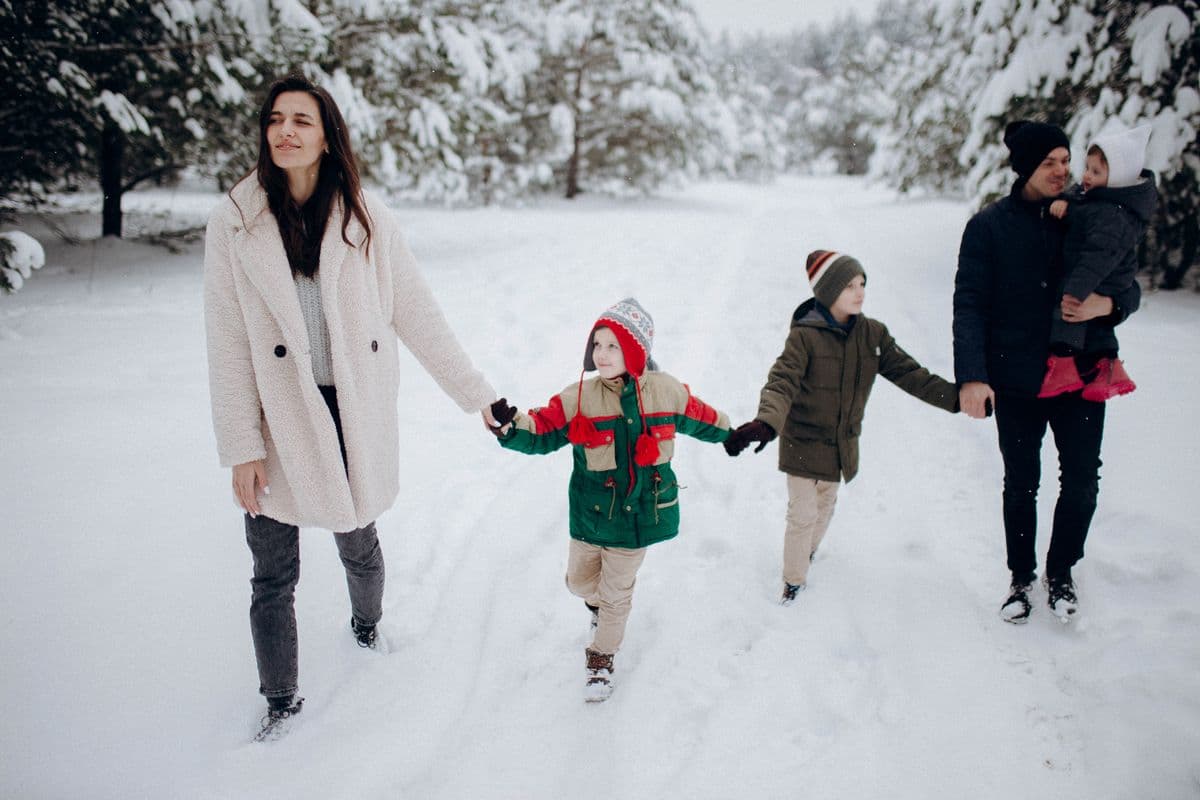
Why this works better than skiing for young children
Snowshoeing asks almost nothing of a child technically. There is no lift to negotiate, no equipment strapped to both feet that prevents walking, no instructor, no lift ticket, and no consequence to stopping whenever they feel like it. A child who wants to sit down and make a snowball can do exactly that and then carry on.
That matters because the thing that ruins winter outings for small children is being stuck - on a chairlift, halfway down a run, in a lift line. Snowshoeing has no stuck. It also costs a fraction of a lift ticket, works on any snow-covered public land, and uses the winter boots they already own.
Snowshoes against cross-country skis covers the same argument for a whole family.
What age, realistically
| Age | What works | What to expect |
|---|---|---|
| Under 3 | Carried, in a pack, or pulled on a sled | They are passengers; dress them for sitting still, which is warmer than walking |
| 3 to 4 | Very short flat loops, snowshoes optional | Fifteen to thirty minutes, with a sled as backup |
| 5 to 7 | Their own snowshoes on a flat trail | Half a mile to a mile, with stops |
| 8 to 12 | Real trails with gentle hills | One to three miles if the route is interesting |
The single most useful planning rule: a child in snow covers roughly a third of the distance they would on a dry trail, at half the speed, and their enthusiasm runs out before their legs do. Plan the route you think is too short.
Sizing by published load, not by age
Snowshoes are sized by the weight they have to float, and children’s models publish that figure exactly like adult ones. Use the number.
- MSR Tyker publishes an 80 lb load limit - the small end, for roughly ages 4 to 8 depending on the child.
- MSR Shift Youth publishes 125 lb, which covers the years between a small child and an adult and takes many children through to their teens.
- Tubbs Snowglow Youth is the small, light, easy-entry option for the youngest walkers.
Include what they are carrying and wearing in the number - a soaked jacket and a full water bottle are real weight on a 50 lb child. The kids’ snowshoe roundup compares the field on those published limits, and the sizing guide has the method in full.
The binding is what parents actually deal with
On an adult snowshoe the binding is a minor consideration. On a child’s it is the whole experience, because you will be fastening and refastening it with cold hands while the child stands in the snow losing interest.
- Look for a published easy-entry or single-pull system. Anything that takes two hands and three straps per foot will be done four times before you reach the trail.
- Check it works with the boots they own, not with a theoretical boot. Bulky winter boots are exactly what these are designed for, but fit varies.
- Practice indoors once. Two minutes on a carpet saves ten in a parking lot.
Dress them for working, then for stopping
This is the part that most often goes wrong, because snowshoeing is aerobic and then suddenly is not. A child overheats walking, sweats into a base layer, then stops for a snack and gets genuinely cold within minutes.
- No cotton, anywhere. A cotton base layer that gets damp is what turns a rest stop into a crisis. The kids layering system.
- A layer that comes off, and a pack to put it in. Yours, not theirs.
- Waterproof pants, always. They will sit down, fall over and dig. Kids’ pants compared.
- Mittens, and a spare pair. Wet hands end more family outings than cold weather does. The kids’ glove picks.
- Tall boots or gaiters. Snow comes down the top of a boot on every deep step, and wet socks are the other common ending.
Teaching them to walk in them
There is almost nothing to teach, which is the appeal, but three things save the first hour.
- Wider stance than walking. The frames are wider than feet, so a normal gait means standing on your own snowshoe and falling over. Ten minutes of exaggerated wide steps on flat ground fixes it.
- Turning is a wide arc, not a pivot. Small children instinctively try to spin on the spot and cross the tails. Walking a big circle is easier than explaining it.
- Falling over is fine and funny. Getting up is the actual skill - roll to the side, get the snowshoes underneath, then stand. Practice it deliberately once while nobody is tired, because the first real fall will come when everyone is.
Poles are optional for children and often a hindrance - another thing to carry, drop and cry about. Leave them at the car for the first outing; add them later if the child asks.
The trick that keeps them going
Distance is not a motivator for a six-year-old, and neither is a view. What works is anything that makes the walking incidental: following animal tracks and guessing what made them, a snack stop visible ahead as the target, taking turns breaking trail at the front, or a hill worth sliding down at the turnaround point. A sled towed along for a tired child is not cheating; it is the reason you get to finish the walk.
Choosing the route
- Flat and looped beats out-and-back. A loop always feels like progress; turning around feels like defeat, and the walk back is the part they resent.
- Trees over open ground. Wind is what makes children miserable, and woods are sheltered, more interesting and full of animal tracks.
- Pick a destination. A frozen stream, a bridge, a big rock. Children walk much further toward a thing than for a distance.
- Start early in the day, while everyone is fresh and the snow is firm.
- Have a turnaround rule and keep it - the walk out always takes longer than the walk in.
What to carry
An adult carries everything on a family snowshoe trip. The list is short and the snacks are non-negotiable.
- More food than seems sensible, in a pocket rather than a pack so it comes out fast. Cold children get hungry suddenly.
- Water that will not freeze, kept inside a jacket rather than on the outside of a pack. What works in the cold.
- Spare mittens and a spare hat, in a dry bag.
- A foam sit pad, so stops are not on wet snow.
- A headlamp if you are out after mid-afternoon in midwinter.
- Sunscreen and eye protection. Snow reflects UV from below as well as above. Why that matters for children.
What it costs a family to start
The reason snowshoeing gets recommended for families is the entry price relative to skiing. Children’s snowshoes are among the least expensive pieces of winter equipment sold, the boots are the winter boots they already own, and the trail is frequently free or a fraction of a lift ticket.
There is no ticket, no rental line, no lesson booking and no lift, and nothing has to be sized precisely - which together remove most of the friction that makes a first ski day with small children exhausting. Rent a pair for a first outing if a nordic center nearby offers it, and buy once you know they will use them more than twice.
Setting your own expectations
The trip that works is short, warm and ends while everyone is still enjoying it. The trip that produces a child who refuses to go again is the one that was half a mile too long, in wind, with wet hands.
Turn around earlier than you want to. Let them lead and set the pace even though it is slow. Plan for stops rather than tolerating them. And treat the first two or three outings as building appetite rather than covering ground - the distance comes on its own once they have decided this is fun.
Every pick, with the working
Each entry shows the published inputs, the axis scores they produce, and what you give up. The order is the computed order, not a commercial one, and the arithmetic is open underneath each score.
1 · A child of roughly 4 to 8, in whatever boots they already own
MSR Tyker Kids Snowshoes
80 lb of published load and 930 g a pair, with molded traction bars instead of full steel underfoot, which is a deliberate safety decision on a snowshoe a child will step on their own with. The published footwear range covers a snow boot as well as a sneaker.
- Published price
- $84.95
- Cost per day on snow
- $5.66 a day
- Amortized over
- 3 seasons (15 days)
- Certified to
- Not published
- Published sizes
- One size, 6.5 by 17 in, published to fit footwear kids 7.5 to 13.5 and 1 to 4.5 M, up to 80 lb total load
- Weight
- 930 g
- Warranty
- MSR limited lifetime or 3-year warranty depending on the product
What it gets right
- Published 80 lb load limit, so the size decision is a weight rather than an age
- 930 g per pair, light enough that a tired child can still lift their feet
- Kid-friendly molded traction bars rather than aggressive steel underfoot
- Binding published to work on most footwear, not a special boot
What you give up
- 80 lb is outgrown around age eight, and there is no adjustment past it
- Less traction than the adult-derived Shift on hard or steep snow
- MSR publishes its warranty as lifetime or three years without saying which applies here
The working behind the 6.0
- Cost per day on snow: 6.9
- $84.95 over 3 seasons at 5 days each = 15 days = $5.66 a day
- Published protection: not scored
- Snowshoes carry no protective standard.
- Size availability: not scored
- Sold in one size, so size availability does not apply.
- Warranty and support: 4.5
- 3 yr (2.5 of 6); no published crash replacement (+0); repair or replacement parts published (+2)
Axes with unpublished inputs are dropped and the remaining weights re-normalized, so a product is not punished for a manufacturer’s silence. Specifications compiled September 12, 2026 from MSR published specifications.
2 · The child who does not want to go snowshoeing
Tubbs Snowglow Youth Snowshoes
LED lights in the deck that flash with each stride, which is a marketing feature and also the reason a reluctant six-year-old keeps walking. The cheapest snowshoe here by $25, with four published sizes and a single buckle a child can work themselves.
- Published price
- $59.95
- Cost per day on snow
- $4.00 a day
- Amortized over
- 3 seasons (15 days)
- Certified to
- Not published
- Published sizes
- 14, 16, 17 and 22 in, published for ages 4 to 8, with a published weight band of under 50 lb or 40 to 90 lb depending on size
- Warranty
- No term published on the product page
What it gets right
- Cheapest snowshoe in this ledger, with four published sizes
- QuickLock buckle published as a single tightening and locking action
- MotionBright LED lighting published, with a replaceable battery
- Published weight bands per size rather than age alone
What you give up
- Molded traction rails only, with no published steel crampon, so hard snow is a limit
- No published warranty term and no published pair weight
- The lights are the reason it gets used and also one more battery to replace
The working behind the 5.2
- Cost per day on snow: 8.2
- $59.95 over 3 seasons at 5 days each = 15 days = $4.00 a day
- Published protection: not scored
- Snowshoes carry no protective standard.
- Size availability: 5.1
- 4 published sizes (5.1 of 8.5); no continuous adjuster published (+0); range: 14, 16, 17 and 22 in, published for ages 4 to 8, with a published weight band of under 50 lb or 40 to 90 lb depending on size
- Warranty and support: 0.0
- no published term (0 of 6); no published crash replacement (+0); no published repair route (+0)
Axes with unpublished inputs are dropped and the remaining weights re-normalized, so a product is not punished for a manufacturer’s silence. Specifications compiled September 12, 2026 from Tubbs published specifications.
3 · A preteen who will outgrow anything smaller within a season
MSR Shift Youth Snowshoes
125 lb published load and the same steel traction bars and crampons as MSR's adult Evo, in a 19 inch frame. This is the one that carries a child from about eight years old to the point where they can use an adult snowshoe, which is a long time to own one pair.
- Published price
- $129.95
- Cost per day on snow
- $8.66 a day
- Amortized over
- 3 seasons (15 days)
- Certified to
- Not published
- Published sizes
- One size, 7 by 19 in, published to fit US 1 to 7 M (EU 32 to 41), up to 125 lb total load
- Weight
- 1145 g
- Warranty
- MSR limited lifetime or 3-year warranty depending on the product
What it gets right
- Published 125 lb load, the highest of any kids snowshoe here
- Steel traction bars and crampons published, the same as the adult Evo
- Published footwear range of US 1 to 7, so it survives several boot sizes
- Injection-molded deck, published as repairable and built to last
What you give up
- 1,145 g a pair, 215 g heavier than the Tyker, which a smaller child will feel
- Fifty dollars more than the Tyker
- No televator bar published, so long climbs are harder work
The working behind the 4.6
- Cost per day on snow: 4.7
- $129.95 over 3 seasons at 5 days each = 15 days = $8.66 a day
- Published protection: not scored
- Snowshoes carry no protective standard.
- Size availability: not scored
- Sold in one size, so size availability does not apply.
- Warranty and support: 4.5
- 3 yr (2.5 of 6); no published crash replacement (+0); repair or replacement parts published (+2)
Axes with unpublished inputs are dropped and the remaining weights re-normalized, so a product is not punished for a manufacturer’s silence. Specifications compiled September 12, 2026 from MSR published specifications.
Prices last verified October 19, 2026. Prices move constantly; the figure on Amazon at the moment you click is the real one.
Questions people actually ask
What age can kids start snowshoeing?
Most children manage their own snowshoes from around four or five, and the limit is attention rather than skill - if they can walk, they can snowshoe within minutes. Younger children come along carried or pulled on a sled, dressed warmer because they are sitting still.
How do I size kids' snowshoes?
By the maker's published load limit, including clothing and anything they carry - not by age. The MSR Tyker publishes 80 lb and the MSR Shift Youth 125 lb, which between them cover most of childhood. Do not size up for growth; oversized frames clip each other and cause trips.
How far can a child snowshoe?
Plan for roughly a third of what they would walk on a dry trail, and for enthusiasm to run out before their legs do. Half a mile to a mile is a good target for a five to seven-year-old, on a flat loop with a destination and plenty of stops.
Do kids need poles for snowshoeing?
Not on flat ground, and many children find them one more thing to drop. They help on descents and in deeper snow. If you do bring them, adjustable poles with snow baskets are the right type.
What should kids wear snowshoeing?
Non-cotton layers they can shed, waterproof pants, tall boots or gaiters, and mittens with a spare pair. Snowshoeing is aerobic then suddenly stationary, so the failure mode is sweating while walking and chilling at the first stop.