Ski backpacks: what size, what features, and whether you need one
A pack is the accessory most often bought and least often needed. Here is the size that suits a lift-served day, and the three situations where the answer is genuinely no bag.
By Sawyer V. · Published
We have not tested this gear. Everything below is compiled from published specifications and published safety standards, and the arithmetic is public so you can check it. This page carries affiliate links: if you buy through one we earn a commission at no extra cost to you, and it does not change the order of the picks. Full disclosure.
The short answer
For a lift-served resort day, 15 to 20 liters is the size that holds a spare layer, food, water and a phone without becoming something you take off on every chairlift. Four features matter: a fleece-lined goggle pocket, a ski or board carry system, a waist belt you can actually undo on a lift, and a published weight under about a kilogram. If your day starts and ends at a lodge you return to, the honest answer is often no pack at all.
| # | Pick | Best for | Score | Price |
|---|---|---|---|---|
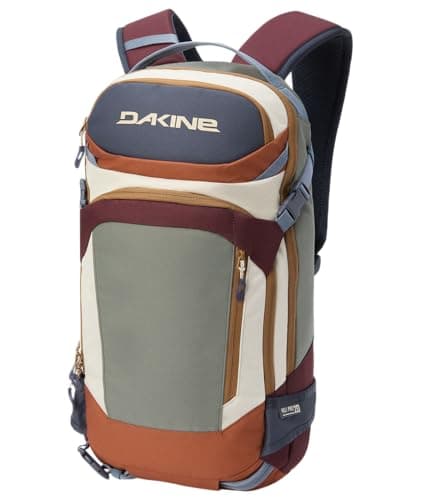
| 1 | Dakine Heli Pro 20L Backpack A resort day pack that also has to carry skis or a board on foot | Not publishedon snow | 0.0/10 | $129.56 - View on Amazon |
| 2 | Dakine Boot Locker 69L Boot Bag Carrying boots, helmet and layers as one checked or trunk item | Not publishedon snow | 0.0/10 | $90.00 - View on Amazon |
Prices last verified October 22, 2026. Prices move constantly; the figure on Amazon at the moment you click is the real one.
Start with whether you need one
A pack is the classic accessory purchase: bought before the first trip, carried empty for a season, then left in the car. Three questions settle it honestly.
- Do you come back to the same lodge at lunch? If yes, a locker or the car does everything a pack does, for free, and you are not wearing it on a chairlift.
- Are you responsible for anyone else? If you are carrying a spare pair of gloves for a child, snacks, and the layer they took off at eleven, that is a pack. This is the single most common legitimate reason to own one.
- Does your day involve walking? Traversing to a different lift base, a cross-country loop, or a snowshoe outing all mean carrying what you need. A pack is not optional there.
If all three answers are no, skip it. Buying a pack because a shop wall suggested one is how a garage fills with gear nobody uses, and the order to spend money in puts it well down the list.
Size, in liters, and what each band is for
Pack capacity is published in liters and occasionally in cubic inches. It is one of the few genuinely comparable numbers in this category, so use it.
| Capacity | What it holds | Right for |
|---|---|---|
| Under 12 L | Water, a snack, a phone, sunscreen | A minimalist adult on a lift-served day |
| 15-20 L | The above plus a spare layer, spare gloves, lunch for two | The default resort day pack, including for a parent |
| 25-30 L | All of that plus a second layer and room for a helmet | Long days, cross-country outings, snowshoeing |
| Over 30 L | Multi-hour touring loads and safety equipment | Backcountry travel, which needs training rather than a bigger bag |
The pack in this ledger publishes 20 L at 55 x 32 x 20 cm and a weight of 860 g, which is the middle of the useful band and the size most people converge on. Bigger is not better here: a large pack invites packing things you carry all day and never open, and it is worse on a lift.
The four features worth paying for
A fleece-lined goggle pocket
The most useful feature in the category and the cheapest for a maker to include. The inner surface of a goggle lens carries its anti-fog treatment, and that treatment is destroyed by contact with anything abrasive. The goggle care page explains why that damage is permanent. A dedicated soft-lined pocket is the difference between a spare goggle that works next season and one that fogs. Check the maker publishes it as fleece-lined rather than just as a pocket.
A ski or snowboard carry system
Straps and sleeves that let the pack take your skis or board while you walk. The published systems differ: diagonal carry runs one ski or a pair across the back, A-frame carry puts one ski on each side, and vertical or horizontal carry is for a board. The pack here publishes diagonal, A-frame, vertical and horizontal options.
Whether you use it depends entirely on your resort. If you park a hundred meters from a lift, you will never touch it. If you walk fifteen minutes from a village, it is the reason you bought the pack, and the alternative is a simple shoulder strap that costs a fraction as much.
A waist belt you can undo wearing gloves
Underrated and worth checking in a shop. A pack rides better with the weight on your hips, but you have to be able to release the belt with one gloved hand before sitting on a chairlift, because a loaded pack between your back and the chair pushes you forward off the seat. If the buckle needs bare fingers, you will stop using the belt, and then you are carrying the weight on your shoulders.
Published weight
A pack you can feel is a pack you take off. Under about a kilogram empty is the band to look for, and the one in this ledger publishes 860 g. Many packs publish no weight at all, which on this site counts against them, because a figure that is not published cannot be compared.
What actually goes in it
- Water, in an insulated bottle rather than a bladder. Bladder tubes freeze, which is the subject of its own page.
- Food. Anything that survives being sat on and does not freeze into a brick.
- One spare layer. A light mid layer, not a second jacket. Which layer, and why.
- A spare pair of gloves per child. The single highest-value thing in the bag. Sizing method here.
- Sunscreen and lip balm. Altitude and reflected light burn faster than people expect.
- A phone, in an inside jacket pocket rather than the pack. Cold kills batteries; the reason is here.
Wearing one on a chairlift
Two habits, learned the hard way by everybody. Take the pack off before you sit down and hold it on your lap, or at minimum release the waist belt and let it sit loose. And never leave a strap dangling near the seat, because a loose strap catching on a chair as you get off is the one genuinely dangerous thing about wearing a pack at a resort.
The verdict
If you are a parent, buy a 15 to 20 L pack with a fleece-lined goggle pocket, a glove-friendly waist buckle and a published weight, and expect the gloves you carry for your children to justify it on the first trip. If you are an adult skiing lift-served days and returning to a lodge, save the money and put it toward a bag that solves the actual carrying problem, which happens between the car and the lodge rather than on the mountain.
Every pick, with the working
Each entry shows the published inputs, the axis scores they produce, and what you give up. The order is the computed order, not a commercial one, and the arithmetic is open underneath each score.
1 · A resort day pack that also has to carry skis or a board on foot
Dakine Heli Pro 20L Backpack
The only pack here that publishes its dimensions, its weight and both ski and snowboard carry systems, which is the whole specification that matters on a day pack. 20 L holds a layer, lunch and water without becoming a thing you take off on every lift.
- Published price
- Not published
- Cost per day on snow
- Not published
- Amortized over
- 3 seasons (15 days)
- Certified to
- Not published
- Published sizes
- One size, 20 L, published at 55 x 32 x 20 cm
- Weight
- 860 g
- Warranty
- No term published on the product page
Dakine publishes no single MSRP for this pack across colorways, so the cost-per-day axis is not scored.
What it gets right
- Published 20 L at 55 x 32 x 20 cm, so it can be checked against a locker or an overhead bin before buying
- Publishes diagonal and A-frame ski carry plus vertical and horizontal snowboard carry
- Large fleece-lined goggle pocket published, which is what stops an inner lens getting scratched
- 860 g published, light enough to forget you are wearing it
- 100% recycled polyester body and lining published
What you give up
- No published warranty term
- No single published price, so cost per day cannot be computed in advance
- 20 L is generous for a lift-served day and small for a full day away from a resort
The working behind the 0.0
- Cost per day on snow: not scored
- No manufacturer-published price, so this axis is not scored.
- Published protection: not scored
- This category carries no protective standard.
- Size availability: not scored
- Sold in one size, so size availability does not apply.
- Warranty and support: 0.0
- no published term (0 of 6); no published crash replacement (+0); no published repair route (+0)
Axes with unpublished inputs are dropped and the remaining weights re-normalized, so a product is not punished for a manufacturer’s silence. Specifications compiled September 7, 2026 from Dakine published specifications.
2 · Carrying boots, helmet and layers as one checked or trunk item
Dakine Boot Locker 69L Boot Bag
Skip this one. It is on this page for contrast, not as a candidate. A 69 L boot bag is car and airport luggage; carrying it on a chairlift is not a thing anybody does. If the job is getting gear to the mountain rather than around it, this is the right product and the wrong page.
A published 69 L with a tarp-lined lower compartment for boots and a separate upper one for everything else. The separation is the product: wet boots and a dry fleece sharing one undivided bag is how a car smells for a week.
- Published price
- Not published
- Cost per day on snow
- Not published
- Amortized over
- 3 seasons (15 days)
- Certified to
- Not published
- Published sizes
- One size, 69 L, published at 51 x 38 x 36 cm
- Weight
- 1100 g
- Warranty
- No term published on the product page
Dakine publishes no single MSRP across colorways for this bag, so the cost-per-day axis is not scored.
What it gets right
- Published 69 L, or 4,200 cubic inches, at 51 x 38 x 36 cm, inside a normal airline checked allowance
- Tarp-lined lower boot compartment published as separate from the upper one
- 600D polyester published, a heavier fabric than most soft luggage
- 1.1 kg empty, so almost all of an airline weight allowance is left for gear
What you give up
- No published warranty term
- No single published price across colorways
- Big enough that it invites packing straight past an airline weight limit
The working behind the 0.0
- Cost per day on snow: not scored
- No manufacturer-published price, so this axis is not scored.
- Published protection: not scored
- This category carries no protective standard.
- Size availability: not scored
- Sold in one size, so size availability does not apply.
- Warranty and support: 0.0
- no published term (0 of 6); no published crash replacement (+0); no published repair route (+0)
Axes with unpublished inputs are dropped and the remaining weights re-normalized, so a product is not punished for a manufacturer’s silence. Specifications compiled September 7, 2026 from Dakine published specifications.
Prices last verified October 22, 2026. Prices move constantly; the figure on Amazon at the moment you click is the real one.
Questions people actually ask
What size backpack do I need for skiing?
For a lift-served resort day, 15 to 20 liters. That holds water, food, one spare layer and spare gloves without becoming something you take off on every chairlift. Under 12 liters suits a minimalist adult; 25 to 30 liters suits long days and cross-country outings.
Do I need a backpack for a day at a ski resort?
Often not. If you return to the same lodge at lunch, a locker or the car does the same job for free. The genuine reasons to carry one are being responsible for a child’s spare gloves and layers, or a day that involves walking rather than only riding lifts.
What features matter on a ski backpack?
A fleece-lined goggle pocket, a ski or snowboard carry system if you walk to the lift, a waist buckle you can release wearing gloves, and a published weight under about a kilogram. Everything else is preference.
Can I wear a backpack on a chairlift?
Yes, but take it off and hold it on your lap, or at least release the waist belt. A loaded pack between your back and the chair pushes you forward on the seat. Keep every strap tucked in: a strap catching on the chair as you unload is the real hazard.
Should I use a hydration bladder in a ski pack?
Generally no. The tube freezes, which makes the whole system useless at exactly the moment you want it. An insulated bottle carried inside the pack, rather than in an outside mesh pocket, is the version that still works at the top of a lift.