The best action camera for skiing, and the cold spec only one maker publishes
Every action camera films a ski run. Exactly one of these three publishes an operating temperature, and at minus ten that is the only number that counts.
By Sawyer V. · Published
We have not tested this gear. Everything below is compiled from published specifications and published safety standards, and the arithmetic is public so you can check it. This page carries affiliate links: if you buy through one we earn a commission at no extra cost to you, and it does not change the order of the picks. Full disclosure.
The short answer
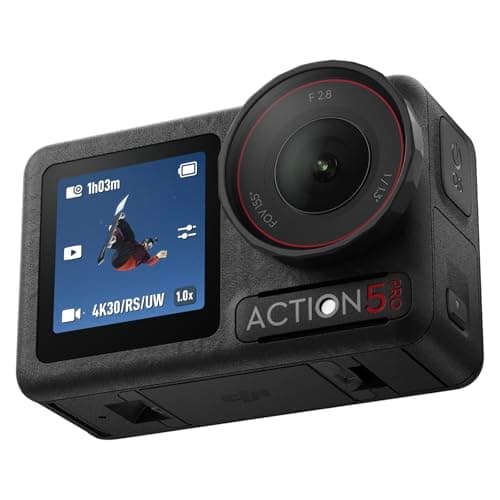
For skiing, buy the DJI Osmo Action 5 Pro. It is the only camera here that publishes an operating temperature - -20C to 45C - which on a January chairlift is the specification that decides whether the others are filming at all. It also publishes the longest run time (240 minutes at 1080p/24fps), the biggest sensor (1/1.3 inch) and the deepest waterproofing (20 m, no case). The GoPro HERO13 Black is the pick if you want the mounting ecosystem and 5.3K60, and publishes 2.5+ hours at 1080p30 from a 1,900 mAh Enduro battery - but publishes no cold rating anywhere we could read. The Insta360 X4 films in 360 and carries this page’s skip note. Prices are live; published figures as of October 17, 2026.
| # | Pick | Best for | Score | Price |
|---|---|---|---|---|
| 1 | DJI Osmo Action 5 Pro (Standard Combo) Cold days, long days, and anyone who would rather not carry three batteries | Not publishedon snow | 0.0/10 | $319.00 - View on Amazon |
| 2 | GoPro HERO13 Black Helmet and chest mounts, and the widest mount ecosystem on the mountain | Not publishedon snow | 0.0/10 | $429.00 - View on Amazon |
| 3 | Insta360 X4 (Standard Bundle) A selfie-stick shot of the whole group, reframed at home | Not publishedon snow | 0.0/10 | $424.99 - View on Amazon |
Prices last verified October 19, 2026. Prices move constantly; the figure on Amazon at the moment you click is the real one.
The specification this category hides
Action cameras are sold on resolution. Every one of them shoots more pixels than anybody watches on a phone, and the difference between 4K and 5.3K is not what decides your ski footage.
What decides it is whether the camera is still running at the top of the third run. Lithium batteries lose usable capacity as they get colder, screens dim, and a camera that films for two hours in a living room films for considerably less on a chairlift in a wind. So the figure to look for is the published operating temperature - and of these three, only DJI publishes one: -20C to 45C.
GoPro publishes neither an operating range nor a cold-weather figure on any page we could read, and publishes its run-time test at 77F (25C), which is a room, not a mountain. Insta360 publishes no temperature either. That absence is not evidence those cameras fail in the cold - plenty of people film all winter on both - but on a page that ranks on published figures, a published cold rating beats an unpublished one.
Who each camera is for, and who should skip all three
- Cold-weather skiing and long days: the DJI Osmo Action 5 Pro. The published -20C rating and 240 published minutes are the two numbers that survive a real ski day.
- Anyone who already owns GoPro mounts: the HERO13 Black. The mount ecosystem is real value, and 5.3K60 is published where DJI tops out at 4K120.
- One parent filming the whole family: the Insta360 X4. Point nothing, capture everything, reframe later - with the skip note attached, because “reframe later” is a job.
- Skip all three if you have a modern phone and ski groomers. A phone in a chest pocket shoots the same lift-line footage; what it cannot do is get wet, get cold, or sit on a helmet. Why a phone dies at 20F and where to carry it is the page that covers that honestly.
- Skip them for a first-timer’s first day. Filming requires spare attention nobody has in week one, and a camera on a helmet is one more thing to drop in a lift queue.
What this page ranks on
- 1. Published operating temperature. The winter specification. One of three publishes it.
- 2. Published run time at a stated resolution. “Up to 4 hours” means nothing without the resolution and the conditions beside it. All three publish both, to their credit.
- 3. Waterproof depth with no housing. Snow is water. A camera that needs a case to survive a face shot is a camera in a case.
- 4. Published weight. It is going on a helmet, and a helmet is a safety device whose fit should not be altered by a brick on the side. Exactly one maker here publishes a weight.
- 5. Lens protection. The failure mode in skiing is not water, it is a scratched lens from ice, a pole or a fall.
- Not megapixels. Resolution ran away from usefulness several generations ago. All three shoot more than any phone screen can show.
The three, compared on published figures
| DJI Osmo Action 5 Pro | GoPro HERO13 Black | Insta360 X4 | |
|---|---|---|---|
| Operating temperature | -20C to 45C | Not published | Not published |
| Max video | 4K/120fps | 5.3K60 | 8K30 (360), 4K60 single lens |
| Stills | 40MP | 27MP | 72MP |
| Sensor | 1/1.3-inch CMOS | Not published | 1/2 inch |
| Battery | 1,950 mAh (7.5 Wh) | 1,900 mAh Enduro | 2,290 mAh |
| Published run time | 240 min at 1080p/24fps | 2.5+ hr at 1080p30; 1.5+ hr at 4K30/5.3K30 | 135 min at 5.7K30 |
| Waterproof, no case | 20 m | 33 ft | 33 ft (10 m) |
| Weight | 146 g | Not published | Not published |
| Stabilization | RockSteady 3.0, HorizonSteady | HyperSmooth 6.0 | FlowState, 360 Horizon Lock |
| Lens guards in box | Not published | Not published | Published as included |
| Warranty term | Not published | Not published | Not published |
Three cameras, and not one of them publishes a warranty term on the pages we could read. For a device that will be mounted on a helmet, dropped on ice and left in a freezing car overnight, that is worth knowing before you spend three hundred dollars.
The picks
DJI Osmo Action 5 Pro
The pick, on the cold rating. DJI publishes an operating temperature of -20C to 45C (-4F to 113F), which is the only statement by any maker here about the conditions this camera is actually bought for.
It backs that with the longest published run time on the page - 240 minutes at 1080p/24fps, quoted at 25C with the screens off and Wi-Fi off - from a published 1,950 mAh (7.5 Wh) battery. Even halved by cold and real-world use, that is a full day of intermittent filming on one battery.
The rest is the best-specified package here on published figures: a 1/1.3-inch sensor (the largest of the three), 4K/120fps, 40MP stills, waterproofing to 20 m with no case, and front and rear screens published at 800 cd/m2, which is the figure that decides whether you can see the screen in snow glare. It is also the only camera here that publishes a weight: 146 g.
Honest cons. DJI publishes a charging temperature of 5C to 40C, so a camera that has been in the car overnight will refuse to charge until it warms up - plan for that on a road trip. No MSRP and no warranty term are published on the specification page. The run time is quoted with the screens off, which is not how most people film. And the mount ecosystem, while good, is smaller than GoPro’s.
GoPro HERO13 Black
The default, and still the right answer if you already own GoPro mounts or want the highest published resolution. GoPro publishes 5.3K60, 4K120, 2.7K120 and 1080p240 video and 27MP photos, with HyperSmooth 6.0 stabilization.
Its run times are published clearly and at stated resolutions, which is more than most of this category manages: more than 2.5 hours at 1080p30 and over 1.5 hours at 4K30 and 5.3K30, from the 1,900 mAh Enduro battery. It is waterproof to 33 ft with no housing, and publishes both mounting fingers and a 1/4-20 thread, which is why every mount ever made fits it.
Honest cons, and they are all absences. No operating temperature is published on any GoPro page we could read, and the run-time footnote states the test was run at 77F (25C) with a 0.6 m/sec wind - a room, not a ski day. No weight, no sensor size, no price and no warranty term appear on those pages either. For a camera this well known, the published specification is surprisingly thin.
Insta360 X4, and why it carries the skip
A genuinely different tool. The X4 films in every direction at once - 8K30 in 360, from a 1/2-inch sensor, with 72MP stills - so nobody has to aim it. On an invisible selfie stick it produces the shot that makes people buy 360 cameras: the whole group, the whole run, framed afterwards.
Insta360 publishes 2,290 mAh and 135 minutes at 5.7K30, waterproofing to 33 ft (10 m) without a case, FlowState stabilization with 360 Horizon Lock, and - the detail that matters most in skiing - lens guards included in the box. Two lenses standing proud of the body is two lenses to scratch on ice.
It carries the skip for the reason above: 360 footage is raw material, not a video. Every clip needs reframing before anyone can watch it, and the honest question to ask before buying is whether that evening will ever happen. Add no published operating temperature and no published weight, and for most families the Action 5 Pro is the better purchase.
Mounting a camera on a ski helmet
The part nobody publishes a specification for, so here is what can honestly be said.
- No helmet maker publishes a certification that covers a camera mount. Helmets on this site are certified as sold - ASTM F2040 and EN 1077 test the helmet, not the helmet plus an adhesive mount and a 150 g camera. Nobody publishes a claim either way, so treat an attachment as outside what was tested.
- A chest mount films better than a helmet mount anyway. Lower, steadier, shows your skis and the slope angle - and keeps the weight off a safety device.
- If it goes on the helmet, put it on top, not the side. A side mount is the one that catches in a fall and torques the helmet.
- Adhesive mounts need warm application. Stick it on indoors the night before; an adhesive pad pressed on in a cold parking lot does not hold.
- Keep the goggle strap route clear. A mount that lifts the strap off the shell is a goggle that moves in a fall - the helmet and goggle fit page explains why that gap matters.
Settings that actually matter on snow
- Shoot 1080p or 4K at 30, not the maximum. Every published run time on this page gets dramatically shorter at the top resolution, and nobody watches ski footage on a cinema screen.
- Turn the screens off between shots. DJI quotes its 240 minutes with screens off; that is not a trick, it is where the power goes.
- Expose for the snow. Bright snow fools automatic exposure into underexposing everything else - the same problem a goggle lens solves for your eyes.
- Film short clips. Thirty seconds of a run is watchable. A whole run is not, and it fills the card and the battery.
- Keep a lens cloth in a zip pocket. A snow-flecked lens ruins every frame, and a glove will not clear it. The same cloth rules apply as to a goggle lens.
Every pick, with the working
Each entry shows the published inputs, the axis scores they produce, and what you give up. The order is the computed order, not a commercial one, and the arithmetic is open underneath each score.
1 · Cold days, long days, and anyone who would rather not carry three batteries
DJI Osmo Action 5 Pro (Standard Combo)
The pick for skiing on the one specification that matters in the cold and that only DJI publishes: an operating temperature of -20C to 45C (-4F to 113F). It also publishes the longest run time here - 240 minutes at 1080p/24fps, measured at 25C - the largest sensor at 1/1.3 inch, and the deepest waterproofing at 20 m with no case.
- Published price
- Not published
- Cost per day on snow
- Not published
- Amortized over
- 3 seasons (15 days)
- Certified to
- Not published
- Published sizes
- One size, published 146 g with front and rear screens
- Weight
- 146 g
- Warranty
- No term published on the specification page
DJI publishes no MSRP on its specification page, so the cost-per-day axis is not scored.
What it gets right
- Published operating temperature of -20C to 45C, the only cold rating published by any camera on this page
- Published 240 minutes of recording at 1080p/24fps, from a 1,950 mAh (7.5 Wh) battery
- 1/1.3-inch CMOS sensor published, the largest here, with 4K/120fps video and 40MP stills
- Waterproof to 20 m with no case published, and 60 m with the case
- Front 1.46-inch and rear 2.5-inch screens published at 800 cd/m2, which is readable in snow glare
- 146 g published, the only weight any maker on this page states
What you give up
- No MSRP or warranty term published on DJI's specification page
- Published charging temperature is 5C to 40C, so a frozen camera will not charge in the car
- The run time is quoted with the screens off and Wi-Fi off, which is not how most people film
- A smaller mount ecosystem than GoPro's
The working behind the 0.0
- Cost per day on snow: not scored
- No manufacturer-published price, so this axis is not scored.
- Published protection: not scored
- This category carries no protective standard.
- Size availability: 0.0
- 1 published size (0.0 of 8.5); no continuous adjuster published (+0); range: One size, published 146 g with front and rear screens
- Warranty and support: 0.0
- no published term (0 of 6); no published crash replacement (+0); no published repair route (+0)
Axes with unpublished inputs are dropped and the remaining weights re-normalized, so a product is not punished for a manufacturer’s silence. Specifications compiled October 17, 2026 from DJI published Osmo Action 5 Pro specifications.
2 · Helmet and chest mounts, and the widest mount ecosystem on the mountain
GoPro HERO13 Black
The default, and the one with the clearest published run times: GoPro states more than 2.5 hours of continuous recording at 1080p30 and over 1.5 hours at 4K30 and 5.3K30, from a 1,900 mAh Enduro battery, waterproof to 33 ft. What it does not publish anywhere we could read is an operating temperature range, which on a January chairlift is the figure that decides whether any of the rest of it happens.
- Published price
- Not published
- Cost per day on snow
- Not published
- Amortized over
- 3 seasons (15 days)
- Certified to
- Not published
- Published sizes
- One size; mounting fingers and a 1/4-20 thread published
- Warranty
- No term published on the pages we could read
GoPro publishes no readable MSRP on its own product page, so the cost-per-day axis is not scored.
What it gets right
- Published 5.3K60, 4K120, 2.7K120 and 1080p240 video, and 27MP photos
- Published run times at a stated resolution: 2.5+ hours at 1080p30, 1.5+ hours at 4K30 and 5.3K30
- 1,900 mAh Enduro battery published, GoPro's cold-weather cell
- Waterproof to 33 ft published, with no housing
- HyperSmooth 6.0 stabilization published
What you give up
- No operating temperature range published on any GoPro page we could read
- No weight, sensor size, price or warranty term published on those pages either
- GoPro publishes its run-time test at 77F (25C), which is not a ski day
- The dearest camera here once a spare battery and a mount are added
The working behind the 0.0
- Cost per day on snow: not scored
- No manufacturer-published price, so this axis is not scored.
- Published protection: not scored
- This category carries no protective standard.
- Size availability: 0.0
- 1 published size (0.0 of 8.5); no continuous adjuster published (+0); range: One size; mounting fingers and a 1/4-20 thread published
- Warranty and support: 0.0
- no published term (0 of 6); no published crash replacement (+0); no published repair route (+0)
Axes with unpublished inputs are dropped and the remaining weights re-normalized, so a product is not punished for a manufacturer’s silence. Specifications compiled October 17, 2026 from GoPro published HERO13 Black specifications.
3 · A selfie-stick shot of the whole group, reframed at home
Insta360 X4 (Standard Bundle)
Skip this one. Skip it unless you will genuinely do the editing. A 360 camera does not produce a video; it produces a sphere that somebody has to reframe afterwards, shot by shot. That is a wonderful tool for one person filming a group, and a folder of unwatched files for everybody else. It also has two lenses standing proud of the body on a device that will meet ice at some point - Insta360 publishes lens guards in the box for exactly that reason - and publishes no operating temperature at all.
The one that films everything at once, which on a ski day is a genuinely different product: 8K 360 capture from a 1/2-inch sensor, reframed afterwards, so nobody has to aim a camera while skiing. Insta360 publishes 2,290 mAh and 135 minutes at 5.7K30, waterproof to 33 ft, and lens guards in the box. No operating temperature is published.
- Published price
- Not published
- Cost per day on snow
- Not published
- Amortized over
- 3 seasons (15 days)
- Certified to
- Not published
- Published sizes
- One size; lens guards published as included in the box
- Warranty
- No term published on the product page
Insta360 publishes no MSRP in the specification table on its product page, so the cost-per-day axis is not scored.
What it gets right
- Published 8K30 360 video, 5.7K60 360, 4K60 single-lens and 72MP photos
- Published 2,290 mAh battery and 135 minutes of recording at 5.7K30
- Waterproof to 33 ft (10 m) published without a case
- Lens guards published as included, which matters: the lenses stand proud and snow is abrasive
- FlowState stabilization and 360 Horizon Lock published
What you give up
- No operating temperature published, the same gap as the GoPro
- No weight, MSRP or warranty term published on the product page
- Two exposed lenses on a camera that will be dropped on ice at some point
- 360 footage has to be reframed before it is watchable, which is a second job after the ski day
The working behind the 0.0
- Cost per day on snow: not scored
- No manufacturer-published price, so this axis is not scored.
- Published protection: not scored
- This category carries no protective standard.
- Size availability: 0.0
- 1 published size (0.0 of 8.5); no continuous adjuster published (+0); range: One size; lens guards published as included in the box
- Warranty and support: 0.0
- no published term (0 of 6); no published crash replacement (+0); no published repair route (+0)
Axes with unpublished inputs are dropped and the remaining weights re-normalized, so a product is not punished for a manufacturer’s silence. Specifications compiled October 17, 2026 from Insta360 published X4 specifications.
Prices last verified October 19, 2026. Prices move constantly; the figure on Amazon at the moment you click is the real one.
Questions people actually ask
Which action camera is best for cold weather?
The DJI Osmo Action 5 Pro, on published figures: it is the only camera here whose maker publishes an operating temperature, at -20C to 45C. Neither GoPro nor Insta360 publishes one on any page we could read. That is a statement about what is published rather than about which camera fails first in the cold, but when one maker commits to a number and two do not, the number is worth paying for.
How long will an action camera record in the cold?
Less than the published figure, always. Makers publish run times at room temperature: DJI quotes 240 minutes at 1080p/24fps measured at 25C, and GoPro quotes more than 2.5 hours at 1080p30 measured at 77F (25C). A lithium battery delivers less usable capacity as it cools, so carry the spare in an inside jacket pocket against a base layer and swap at lunch.
Should I mount a camera on my ski helmet?
A chest mount films better and keeps the weight off the helmet, so start there. If you do use the helmet, mount it on top rather than the side, apply the adhesive indoors the night before, and keep the goggle strap route clear. Note that no helmet maker publishes a certification covering a camera mount: helmets are certified as sold, and an adhesive mount plus camera is outside what was tested.
Is a 360 camera good for skiing?
It is the best tool here for filming other people - one skier with an invisible selfie stick can capture a whole group without aiming anything. The catch is that 360 footage is not a video until somebody reframes every clip. Buy one only if you will genuinely do that editing. Insta360 publishes lens guards in the box, which tells you what happens to exposed 360 lenses in the real world.
Do I need a waterproof case for skiing?
No. All three cameras here publish waterproofing without a housing - 20 m for the DJI, 33 ft for the GoPro and the Insta360 - which covers every face shot, snow burial and lift-line blizzard you will meet. A case is for diving depth, not for snow.
Is an action camera worth it if I only ski once a year?
Probably not. A modern phone in an inside pocket shoots the same groomer footage, and the money is better spent on gear that affects the day itself. Buy a camera when you want the shots a phone cannot take: helmet and chest angles, face shots in snow, and anything where you cannot risk a phone in a glove.
Sources
- DJI published Osmo Action 5 Pro specifications: -20C to 45C operating temperature, 1,950 mAh, 240 min at 1080p/24fps, 20 m waterproof, 146 g
- GoPro published HERO13 Black specifications: 5.3K60, 27MP, waterproof to 33 ft, 1,900 mAh Enduro battery, HyperSmooth 6.0
- Insta360 published X4 specifications: 8K30 360 video, 1/2-inch sensor, 2,290 mAh, 135 min at 5.7K30, waterproof to 33 ft, lens guards included