Snowboard outerwear: what is actually different
A snowboarder sits in the snow all day. Every real difference between snowboard and ski clothing follows from that one fact, and most of them are about the seams.
By Sawyer V. · Published
We have not tested this gear. Everything below is compiled from published specifications and published safety standards, and the arithmetic is public so you can check it. This page carries affiliate links: if you buy through one we earn a commission at no extra cost to you, and it does not change the order of the picks. Full disclosure.
The short answer
Snowboard outerwear is cut longer and looser and pays more attention to the lower seams and the seat, because a snowboarder sits in the snow constantly. If you already own ski outerwear, use it - the differences are real but they are about comfort and seam placement rather than function. When you buy the next one, prioritize fully taped seams over anything else on the spec sheet.
| # | Pick | Best for | Score | Price |
|---|---|---|---|---|
| 1 | Arctix Men's Insulated Snowsports Cargo Pants A cold, dry resort week where the snow does not turn to rain | $2 a dayon snow | 5.2/10 | $64.99 - View on Amazon |
| 2 | Wantdo Men's 3-in-1 Ski Jacket A wet-snow resort at a price that does not assume a season pass | Not publishedon snow | 3.8/10 | $59.97 - View on Amazon |
| 3 | Columbia Whirlibird V Interchange Jacket One jacket that has to work on the mountain and at home | $10 a dayon snow | 3.2/10 | $250.00 - View on Amazon |
Prices last verified October 22, 2026. Prices move constantly; the figure on Amazon at the moment you click is the real one.
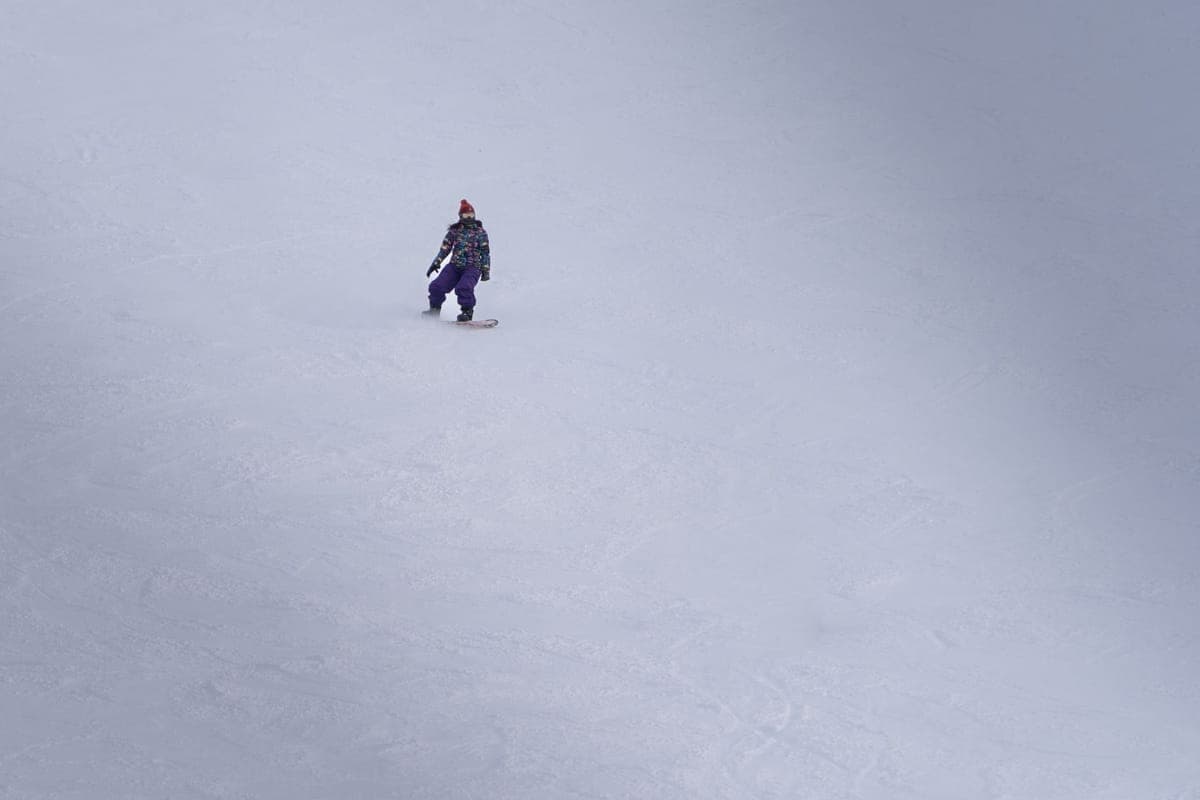
One fact explains all of it
A learning snowboarder sits down to strap in at the top of every run, sits down after every fall, and sits down to rest. Even a confident rider strapping in on a slope spends real time on the ground. A skier, by contrast, clicks in standing up and stays there.
Every difference between snowboard and ski clothing follows from that. The seat and the lower seams get soaked rather than the shoulders. The knees see far more contact. The garment has to allow crouching and sitting cross-legged. And your hands, which a skier keeps on poles, spend the day in the snow.
Seam sealing: the difference that matters
Fabric almost never leaks first; seams do, because a seam is a line of needle holes through the waterproof layer. Makers publish one of three states, and the distinction is worth more to a snowboarder than to a skier.
| Published as | What is taped | Consequence for a snowboarder |
|---|---|---|
| Fully taped | Every seam in the garment | The right answer; the seat and knees are covered |
| Critical seams sealed | Shoulders, hood and upper body only | Exactly the wrong half: the taped seams are the ones you never sit on |
| Not published | No claim either way | Assume untaped and treat it as showerproof |
Read that middle row again, because it is the single most useful thing on this page. Critical-seam sealing is what most family-price outerwear publishes, and it protects the upper body, which is where rain lands on a walk to the shops. For a snowboarder the water is coming from below.
Both Columbia and Arctix publish critical seams sealed on the garments in this ledger, which is honest of them and is fine for a cold dry week. If your riding is a learning slope in March, a published waterproof rating and fully taped seams are worth the premium.
Cut and length
Snowboard jackets are generally cut longer in the body and looser through the chest and arms. That is not only fashion, although some of it is. A longer hem covers you when you crouch, and looser sleeves let you reach forward to strap in without the jacket riding up your back.
The check to run is the same one on the jacket sizing page, with one addition. Do the arms-overhead test, the pole-plant reach and the hood-over-helmet test as usual. Then add a fourth: crouch down to your ankles as if strapping in. The hem should still cover your waistband and the jacket should not pull tight across your back.
Pants: the half that gets wet
This is where the money should go. Snow pants for a snowboarder need three things a ski-focused pair may not prioritize.
- Reinforcement at the seat and knees. A heavier fabric panel where the wear happens. Some makers publish this and many do not.
- Taped lower seams. See above. This is the specification.
- Room to crouch. An articulated knee, or simply enough cut, so that going down onto one knee does not pull the waistband down at the back.
The Arctix pants in this ledger publish a 3,000 mm waterproof rating with 85 g of insulation, and are explicit that it is a coating rather than a membrane and that the seams are critical rather than full. That is a fair description of the family-price end of the market and a good example of the trade-off: the snowboard pants roundup ranks the snowboard-cut options on published waterproof ratings and seam sealing, and the ski pants roundup has the rest.
Bibs are the snowboarder’s answer
A bib is snow pants with a chest panel and shoulder straps, and it removes the gap at the waist entirely. For someone sitting in snow and falling forward, that gap is the single most common route for snow to get inside, and a bib closes it without needing a powder skirt on the jacket. The bibs comparison page has the full argument, and snowboarding is the use case where bibs win most clearly.
Gloves: longer cuffs, and two pairs
A snowboarder’s hands are in the snow constantly, both while strapping in and on every fall. Two consequences. A gauntlet cuff that goes over the jacket sleeve beats a short cuff, because the wrist is the gap that fills with snow. And gloves get wet much faster than they do for a skier, so a second pair is not a luxury.
The glove sizing page covers the measurement and the cuff question, and the protection page covers whether the wrist guards go inside the glove or over it, which changes the size you need.
What goes underneath
Identical to skiing, with one addition: padded shorts, worn over a base layer and under the snow pants. They are not waterproof and do not need to be; the pants over the top do that job, which is another reason snowboard pants are cut with room.
Otherwise the layering system is the same one on the what-to-wear page: a wool or synthetic base layer, a mid layer you can remove, and the shell. Nothing cotton, anywhere. The mid-layer page covers the middle of that sandwich, which is the layer most people get wrong.
The verdict
- Already own ski outerwear? Use it. Add a bib or accept a wetter seat, and add a second pair of gloves.
- Buying new for snowboarding? Prioritize fully taped seams, then a bib, then cut. Ignore the marketing about which sport the garment is labeled for.
- Buying for a child who snowboards? Seam sealing and a second pair of gloves, in that order. The kids snowboard page has the full list.
- Buying for a family that does both? One set of outerwear covers both sports. This is genuinely not a place that needs two wardrobes.
Every pick, with the working
Each entry shows the published inputs, the axis scores they produce, and what you give up. The order is the computed order, not a commercial one, and the arithmetic is open underneath each score.
1 · A cold, dry resort week where the snow does not turn to rain
Arctix Men's Insulated Snowsports Cargo Pants
The only garment in this ledger that publishes an actual waterproof number: a 3,000 mm ThermaLock coating with 85 g of insulation, at fifty dollars. 3,000 mm is the bottom of the useful range, and on a wet spring day you will find out where that bottom is.
- Published price
- $50
- Cost per day on snow
- $2 a day
- Amortized over
- 5 seasons (25 days)
- Certified to
- Not published
- Waterproof rating
- 3,000 mm
- Published sizes
- S through XXL, in 28, 32 and 34 inch inseams
- Warranty
- No term published on the product page
What it gets right
- Publishes a 3,000 mm waterproof rating, which most competitors at this price do not
- 85 g of ThermaTech insulation, warm enough for a beginner standing still on a learning slope
- Three published inseam lengths, which matters more in snow pants than in almost anything else
What you give up
- 3,000 mm is a coating, not a membrane, and heavy wet snow will eventually get through it
- Critical seams only, not fully sealed
The working behind the 5.2
- Cost per day on snow: 9.6
- $50 over 5 seasons at 5 days each = 25 days = $2 a day
- Published protection: 2.0
- 3,000mm waterproof rating (0.0 of 6); critically taped or untaped seams (+0); insulation or shell construction published (+2)
- Size availability: 6.8
- 5 published sizes (6.8 of 8.5); no continuous adjuster published (+0); range: S through XXL, in 28, 32 and 34 inch inseams
- Warranty and support: 0.0
- no published term (0 of 6); no published crash replacement (+0); no published repair route (+0)
Axes with unpublished inputs are dropped and the remaining weights re-normalized, so a product is not punished for a manufacturer’s silence. Specifications compiled September 3, 2026 from Arctix published specifications.
2 · A wet-snow resort at a price that does not assume a season pass
Wantdo Men's 3-in-1 Ski Jacket
Publishes a 10,000 mm waterproof rating, which is a genuine resort-day figure and more than three times what the budget snow pants on this site publish. It is also the only jacket here that names a membrane rather than a coating.
- Published price
- Not published
- Cost per day on snow
- Not published
- Amortized over
- 5 seasons (25 days)
- Certified to
- Not published
- Waterproof rating
- 10,000 mm
- Published sizes
- S through XXL
- Warranty
- No term published on the product page
Wantdo lists this jacket across a price range that varies by colorway and size rather than publishing a single MSRP, so the cost-per-day axis is not scored.
What it gets right
- Publishes 10,000 mm, a number most brands at any price decline to state
- Names a microporous TPU membrane rather than a surface coating
- Three-in-one construction with a zip-out fleece liner
What you give up
- No single published price, so cost per day cannot be computed in advance
- Seam construction is not published, and seams leak before fabric does
The working behind the 3.8
- Cost per day on snow: not scored
- No manufacturer-published price, so this axis is not scored.
- Published protection: 4.5
- 10,000mm waterproof rating (2.5 of 6); seam sealing not published (+0); insulation or shell construction published (+2)
- Size availability: 6.8
- 5 published sizes (6.8 of 8.5); no continuous adjuster published (+0); range: S through XXL
- Warranty and support: 0.0
- no published term (0 of 6); no published crash replacement (+0); no published repair route (+0)
Axes with unpublished inputs are dropped and the remaining weights re-normalized, so a product is not punished for a manufacturer’s silence. Specifications compiled September 3, 2026 from Wantdo published specifications.
3 · One jacket that has to work on the mountain and at home
Columbia Whirlibird V Interchange Jacket
Two jackets in one: a waterproof shell and a zip-out insulated liner that each work alone. For a family that skis one week a year and spends the other fifty-one weeks in a cold parking lot, that is genuinely two purchases avoided.
- Published price
- $250
- Cost per day on snow
- $10 a day
- Amortized over
- 5 seasons (25 days)
- Certified to
- Not published
- Waterproof rating
- Not published
- Published sizes
- S through XXL
- Warranty
- No term published on the product page
What it gets right
- Three-in-one construction, so the shell and the liner are each usable on their own
- Omni-Tech waterproof-breathable fabric with critical seams sealed
- Sold in five sizes with regular, big and tall variants
What you give up
- Columbia publishes no hydrostatic-head figure, so its waterproofing cannot be compared numerically against a rated jacket
- Critical seams are sealed rather than every seam
- $250 is the most expensive item in this ledger apart from the skis
The working behind the 3.2
- Cost per day on snow: 3.7
- $250 over 5 seasons at 5 days each = 25 days = $10 a day
- Published protection: 2.0
- no published waterproof rating (0 of 6); critically taped or untaped seams (+0); insulation or shell construction published (+2)
- Size availability: 6.8
- 5 published sizes (6.8 of 8.5); no continuous adjuster published (+0); range: S through XXL
- Warranty and support: 0.0
- no published term (0 of 6); no published crash replacement (+0); no published repair route (+0)
Axes with unpublished inputs are dropped and the remaining weights re-normalized, so a product is not punished for a manufacturer’s silence. Specifications compiled September 3, 2026 from Columbia published specifications.
Prices last verified October 22, 2026. Prices move constantly; the figure on Amazon at the moment you click is the real one.
Questions people actually ask
Can I wear a ski jacket for snowboarding?
Yes. The differences are cut and seam placement rather than function: snowboard outerwear is generally longer and looser and pays more attention to the lower seams, because a snowboarder sits in the snow far more. If you already own ski outerwear, use it and apply the difference to the next purchase.
Why is snowboard clothing baggier?
Partly style and partly function: a longer hem covers you when you crouch to strap in, and looser sleeves let you reach forward without the jacket riding up your back. Do not size up on top of that, though - extra volume lets warm air circulate away and makes you colder.
Do snowboarders need waterproof pants?
More than skiers do. A snowboarder sits in the snow to strap in, after every fall and to rest, so the seat and lower seams are what gets soaked. Look for fully taped seams rather than critical seams sealed, since critical sealing covers the upper body you never sit on.
Are bibs better than pants for snowboarding?
For snowboarding, usually yes. A bib removes the gap at the waist entirely, and that gap is the most common route for snow to get inside when you are sitting and falling forward. It also means you do not need to rely on a powder skirt in the jacket.
What do you wear under snowboard pants?
A wool or synthetic base layer, and padded shorts if you are learning. The shorts are not waterproof and do not need to be, since the pants over the top do that job. Nothing cotton anywhere, because cotton holds sweat against the skin and stays cold all day.