Snowboard pants, and the two published numbers that decide which one keeps you dry
A snowboarder spends a large part of the day sitting in snow. That single fact changes which specification matters, and it is the one most pants pages never mention.
By Sawyer V. · Published
We have not tested this gear. Everything below is compiled from published specifications and published safety standards, and the arithmetic is public so you can check it. This page carries affiliate links: if you buy through one we earn a commission at no extra cost to you, and it does not change the order of the picks. Full disclosure.
The short answer
Buy the Burton Reserve 2L. It publishes the two figures that decide this category - a 20,000 mm waterproof rating and fully taped seams - at the same money as shell pants publishing half that number, with mesh-lined thigh vents and a boot gaiter. The 686 Standard Shell is the honest floor at 10,000 mm and critically taped seams, which is enough for cold dry snow and not much more. Buy the 686 Hot Lap Bib instead if you sit down a lot: 15,000 mm, fully taped, 40 g of published insulation and no waistband for snow to get past. The 686 GORE-TEX pant is the best-built thing here and carries this page’s skip note. Prices are live; published figures as of October 19, 2026.
| # | Pick | Best for | Score | Price |
|---|---|---|---|---|
| 1 | Burton Reserve 2L Pants A rider who sits in snow between runs and wants the rating without the price | Not publishedon snow | 5.9/10 | $125.95 - View on Amazon |
| 2 | 686 Men's Standard Shell Pant A first season, a spring setup, or anyone riding mostly cold dry snow | $5.20 a dayon snow | 5.9/10 | $124.95 - View on Amazon |
| 3 | 686 Men's Hot Lap Insulated Bib Anyone who spends the day strapping in on the snow rather than standing on it | $11.60 a dayon snow | 4.9/10 | $289.95 - View on Amazon |
| 4 | 686 Men's GORE-TEX Shell Pant Thirty-plus days a season, or wet coastal snow that defeats house membranes | $14.00 a dayon snow | 2.9/10 | $339.95 - View on Amazon |
Prices last verified October 19, 2026. Prices move constantly; the figure on Amazon at the moment you click is the real one.
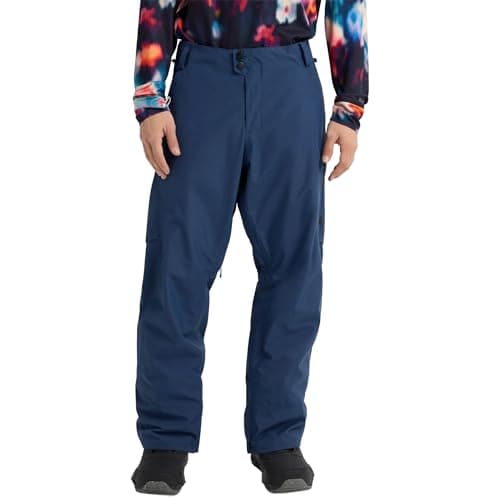
The thing that makes snowboard pants different
A skier stands up almost all day. A snowboarder sits down to strap in at the top of every run, sits on the snow to unstrap, sits while waiting for the rest of the group, and falls onto hips and backside far more often while learning.
That is not a style observation, it is a specification one. Sitting puts body weight on wet snow through a single layer of fabric, and water goes through fabric under pressure far faster than it goes through fabric in a breeze. It is also why the seat and the knees are where snowboard pants wet out first, why the waistband is where snow gets in, and why the two figures below matter more on a board than they do on skis.
The cut follows from the same thing - longer, looser, cut to sit and to bend at the knee without riding up. Why snowboard outerwear is cut differently is the guide that covers the shape; this page is which pant to actually buy.
The two numbers, and the one that is quietly hedged
1. The waterproof rating, in millimeters. It is a hydrostatic head figure: how tall a column of water the fabric holds back before it leaks. Makers publish it as 10K, 15K, 20K or a raw millimeter number, and on this page it ranges from 10,000 mm to 20,000 mm. What the millimeter rating actually measures covers the test, including why the number is not a promise about a whole garment.
2. Seam sealing, and this is where the hedge lives. Fabric is only half a pant; the needle holes at every seam are the other half. Makers use two phrases and they are not the same thing:
- Fully taped means every seam is sealed. Two pants on this page publish it.
- Critically taped means the seams in the high-exposure areas are sealed and the rest are not. It is cheaper, it is honest when stated, and on a garment you sit down in it matters more than it would on a jacket.
A pant publishing 20,000 mm and fully taped is a genuinely different garment from one publishing 10,000 mm and critically taped, even when the price is similar - which on this page it is.
Who each of these is for, and who should skip them all
- Most riders: the Burton Reserve 2L. The highest published rating here that is not a Gore-Tex price, with fully taped seams and vents.
- A first season, or cold dry snow: the 686 Standard Shell. Ten thousand millimeters and critically taped seams is a floor that works, published plainly as a no-frills shell.
- Anyone who sits down a lot, learners included: the 686 Hot Lap Bib. No waistband, fully taped seams, and the only published insulation weight on the page.
- Thirty days a season, or wet coastal snow: the 686 GORE-TEX - with the skip note attached, because almost nobody reading this page is that rider.
- Skip all four if you already own ski pants that work. The cut is different and the snowboard-specific details are real, but a 20,000 mm ski pant keeps you exactly as dry as a 20,000 mm snowboard pant. The ski pants roundup is the same arithmetic on a different cut.
- Skip them for a child. Children grow out of outerwear faster than they wear it out, and the sizing logic is different - kids’ snow pants are a separate purchase.
What this page ranks on
- 1. Published waterproof rating. A figure or nothing. Three of these four publish a millimeter number; the Gore-Tex pant publishes a certified membrane instead, which is a different and arguably stronger claim.
- 2. Seam sealing, as the maker words it. Fully taped beats critically taped, and the distinction is published on every page we read.
- 3. Published insulation, where there is any. A weight in grams, not the word “warm”. Exactly one of these publishes one.
- 4. Boot gaiters and vents. The two details that separate a snow pant from a waterproof trouser. All four publish a gaiter; one publishes vents.
- 5. Published size and inseam range. A pant that does not exist in your inseam is not a pant for you, and this is where cheap options quietly fail tall and short riders.
- Not fit adjectives. Baggy, relaxed, regular and slim mean different things at every brand. Where a maker publishes a named fit we quote it; where it does not, we say so rather than inventing a shape.
The four, compared
| Burton Reserve 2L | 686 Standard Shell | 686 Hot Lap Bib | 686 GORE-TEX | |
|---|---|---|---|---|
| Waterproof rating | 20,000 mm | 10,000 mm (infiDRY 10K) | 15,000 mm (infiDRY 15K) | GORE-TEX, no mm published |
| Seam sealing | Fully taped | Critically taped Bemis | Fully taped Bemis | Fully taped GORE-TEX seams |
| Membrane | DRYRIDE 2-layer | infiDRY 2-layer | infiDRY 2-layer | GORE-TEX 2-layer, bluesign approved |
| Insulation | None published (shell) | None published (shell) | 40 g infiLOFT polyfill | None published (shell) |
| Vents | Mesh-lined thigh vents | Not published | Not published | Not published |
| Boot gaiter | Published, water resistant | Published, with lace hook | Published, with lace hook | Published, with Lycra panel |
| DWR finish | Not published | PFAS free | PFAS free | PFAS free |
| Published fit | Regular fit and length | Not published | Not published | Not published |
| Sizes published | 5 (XS-XL) | 15 size/inseam options | 15 size/inseam options | 15 size/inseam options |
| Maker's published price | Not published | $129.95 | $289.95 | $349.95 (Core Shell) |
Read the first two rows together. The Burton publishes double the waterproof rating of the 686 Standard Shell and the better of the two seam treatments, and the two pants sit within a few dollars of each other on live prices. That is the whole decision for most riders, and it is the reason the order on this page is what it is.
The picks
Burton Reserve 2L Pants
The pick. The retailer spec sheet publishes a 20,000 mm waterproof rating with fully taped seams over a DRYRIDE 2-layer 100% recycled polyester plain weave, in a published regular fit and length across five sizes.
Twenty thousand millimeters is the band where sitting in wet snow stops being a timer. Below about 10,000 mm, body weight on a slushy chairlift seat or a wet unstrapping spot pushes water through eventually; at 20,000 mm with every seam sealed, the limit is the fabric wetting out on the surface rather than leaking through, and that is a DWR problem you can re-proof rather than a garment problem you cannot.
It also publishes the feature this category most often omits: mesh-lined no-snag thigh vents. Spring laps, hiking a park feature or a warm afternoon are when a waterproof pant turns into a sauna, and vents are the only fix that does not involve taking the pant off. The water-resistant boot gaiter, zippered microfleece handwarmer pockets and cargo pockets with hook-and-loop closures are all published too.
Honest cons. Burton publishes no readable spec page of its own - every figure here comes from a retailer sheet, which is a weaker source than a maker’s page and is flagged as such on the product row. There is no insulation, so this needs a base layer under it below about 20F. No breathability figure is published beside the waterproof rating, and no warranty term appears on the sheet we read.
686 Men’s Standard Shell Pant
The floor, and an honest one. 686 publishes 2-layer infiDRY 10K fabric at 10,000 mm, critically taped Bemis seams, a PFAS-free DWR finish, and a boot gaiter with a boot lace hook. Its own product page calls it a no-frills shell pant, which is the correct description and more candor than most of this aisle manages.
Ten thousand millimeters genuinely works in cold dry snow - the interior West in January, a cold Midwest hill, any day where the snow bounces off rather than soaks in. It is also the right first pant: a beginner falls constantly, and falling in a pant you paid a hundred dollars for is a better experience than falling in one you paid three hundred and fifty for.
The 15 published size and inseam combinations are the quiet win here. A pant that exists in your inseam fits over a boot properly, and that is worth more than a rating you will not reach.
Honest cons. Critically taped is not fully taped, and on a garment you sit down in that is the compromise to understand rather than the one to ignore. 10,000 mm is the entry band: a spring day spent sitting in wet snow will find its limit. No insulation, no published breathability figure, no warranty term.
686 Men’s Hot Lap Insulated Bib
The bib, and the most completely specified garment on this page. 686 publishes 2-layer infiDRY 15K at 15,000 mm, fully taped Bemis seams, and 40 g of infiLOFT polyfill insulation through the body - a real insulation weight, which almost nothing in this category gives you.
The bib cut is the reason to buy it rather than a pant. There is no waistband, so there is no gap for snow to get into when you sit down to strap in, fall backward, or tip into a tree well. On a snowboard that happens dozens of times a day, which is why this is the shape the site recommends for learners - snow pants against bibs covers the trade in full.
Forty grams is light insulation, and that is the right amount here. It takes the edge off a cold chairlift without turning a hiking lap into a sweat, and it leaves the base layer doing the real work - which base layer bottoms, by published fabric weight.
Honest cons. It is the second dearest thing here. Forty grams is not an answer to genuinely severe cold - it is a mild and moderate day bib. A bib is slower in a lodge bathroom than a pant, and warmer than most people want in spring. No breathability figure or warranty term published.
686 Men’s GORE-TEX Shell Pant, and why it carries the skip
The best-built garment on this page, and the wrong purchase for most people reading it. 686 publishes a 2-layer bluesign-approved GORE-TEX construction in 100% recycled polyester, with fully taped GORE-TEX seams, a PFAS-free DWR and a boot gaiter with a Lycra stretch panel.
What you are buying is certification rather than a number. Every other membrane here is a house membrane - DRYRIDE is Burton’s, infiDRY is 686’s - tested by the brand that sells it. GORE-TEX is certified by a third party to its own construction standard, and GORE publishes a guarantee that you stay dry for the life of the garment. On a page that ranks on what makers publish, that is the strongest claim available.
It carries the skip because of who reads this site. For a family riding four or five days a winter, the Burton publishes 20,000 mm and fully taped seams for well under half the money, and the difference between those two pants will not show up in a season. Buy the GORE-TEX pant when you have worn a cheaper one out, when you ride thirty-plus days, or when your local snow is the wet coastal kind that defeats house membranes by February.
Honest cons, beyond the price. 686 publishes no millimeter rating for it - GORE certifies rather than rates, so it cannot be compared numerically with the three pants above. No insulation. And the Amazon listing drops the model word 686 uses on its own page, so check the colorway against 686’s Core Shell when it arrives.
Shell or insulated, for a snowboarder
Three of the four here are shells. That is not an accident of this page; it is where the category has gone, and for good reason.
- A shell plus a base layer is more adjustable than a fixed amount of insulation sewn in. You cannot take insulation out at noon in April.
- A snowboarder generates heat in bursts - strapping, skating the flats, hiking a feature - and insulation that suits a chairlift cooks you on a traverse. Lifts and flat ground is the page about that exact workload.
- Light insulation, like the 40 g bib, is the useful middle for people who are cold on lifts and do not want to think about layering.
- Heavy insulation belongs in the base layer, where you can change it - the shell-against-insulated comparison is the full argument.
Fit, inseam and the boot gaiter
- Length is the measurement that goes wrong. A snowboard pant is cut to sit over the boot with the gaiter inside it. Too short and it rides above the boot cuff when you bend your knees; too long and you stand on the hem with a sharp edge nearby. The 686 pants publish fifteen size and inseam combinations for exactly this reason.
- The boot gaiter goes inside the boot, not over it. All four of these publish a gaiter; it is the elasticated inner cuff that seals around the boot and stops snow traveling up your leg. Wearing it outside the boot defeats it entirely.
- Baggy is a fit, not a size. Buy your waist size in a baggy cut rather than sizing up in a regular one - a too-big waist slides down when you sit, which is the problem bibs exist to solve.
- Check the knees bend before the tags come off. Squat all the way down in the shop or the living room. A pant that pulls tight across the knee at the bottom of a squat will pull tight every time you strap in.
- Pockets you can reach while seated. Thigh cargo pockets work when you are sitting; back pockets do not.
Making the rating last
Every waterproof rating on this page degrades the same way, and it is not the membrane that fails first.
- The DWR on the outside wets out long before the membrane leaks. When the face fabric soaks up water and looks dark, the pant feels like it is leaking and is not - it has stopped shedding.
- Wash them, do not avoid washing them. Dirt and body oils kill water repellency faster than use does. The wash and re-proof roundup covers which product does which job, and washing ski clothing covers the method.
- Re-proof when water stops beading, not on a schedule.
- Repair tears early. A small hole in a taped-seam pant is a five-minute job - the repair kits page covers tape and patches.
- Hang them to dry rather than tumbling them hot, and store them dry - end-of-season storage is the twenty-minute version.
Every pick, with the working
Each entry shows the published inputs, the axis scores they produce, and what you give up. The order is the computed order, not a commercial one, and the arithmetic is open underneath each score.
1 · A rider who sits in snow between runs and wants the rating without the price
Burton Reserve 2L Pants
The pick, on the single number this category is decided by: a published 20,000 mm waterproof rating with fully taped seams, at the same money as shell pants publishing half that. DRYRIDE 2-layer recycled polyester, mesh-lined thigh vents and a boot gaiter - which is the whole specification a snowboarder actually needs from a pant.
- Published price
- Not published
- Cost per day on snow
- Not published
- Amortized over
- 5 seasons (25 days)
- Certified to
- Not published
- Waterproof rating
- 20,000 mm
- Published sizes
- XS through XL in a published regular fit and length
- Warranty
- No term published on the spec sheet
Burton blocks automated reads of its own product pages, so no maker MSRP is quoted here and the cost-per-day axis is not scored. The figures below are from the retailer spec sheet cited on the row.
What it gets right
- Published 20,000 mm waterproof rating, the highest on this page outside the Gore-Tex pant
- Fully taped seams published - not critically taped, which is the cheaper half-measure
- Mesh-lined no-snag thigh vents published, the feature that saves a spring afternoon
- DRYRIDE 2-layer 100% recycled polyester plain weave published, with a water-resistant boot gaiter
- Published regular fit and length in five sizes, so the cut is stated rather than guessed at
What you give up
- Burton publishes no readable spec page of its own, so every figure here comes from a retailer sheet
- No insulation: this is a shell, and it needs a base layer underneath below about 20F
- No breathability figure published alongside the waterproof rating on the sheet we read
- No warranty term published on that sheet either
The working behind the 5.9
- Cost per day on snow: not scored
- No manufacturer-published price, so this axis is not scored.
- Published protection: 10.0
- 20,000mm waterproof rating (6.0 of 6); fully sealed seams published (+2); insulation or shell construction published (+2)
- Size availability: 6.8
- 5 published sizes (6.8 of 8.5); no continuous adjuster published (+0); range: XS through XL in a published regular fit and length
- Warranty and support: 0.0
- no published term (0 of 6); no published crash replacement (+0); no published repair route (+0)
Axes with unpublished inputs are dropped and the remaining weights re-normalized, so a product is not punished for a manufacturer’s silence. Specifications compiled October 19, 2026 from Retailer spec sheet for the Burton Reserve 2L Pants.
2 · A first season, a spring setup, or anyone riding mostly cold dry snow
686 Men's Standard Shell Pant
The cheapest honest snowboard pant here, and 686 publishes exactly what you are buying: 2-layer infiDRY 10K fabric at 10,000 mm, critically taped Bemis seams, a PFAS-free DWR finish and a boot gaiter with a lace hook. The maker's own description calls it a no-frills shell, which is the correct framing - it is a floor, not a ceiling.
- Published price
- $129.95
- Cost per day on snow
- $5.20 a day
- Amortized over
- 5 seasons (25 days)
- Certified to
- Not published
- Waterproof rating
- 10,000 mm
- Published sizes
- Published across 15 size and inseam combinations
- Warranty
- No term published on the product page
What it gets right
- Published 10,000 mm waterproofing on a 2-layer infiDRY shell, stated as a figure rather than a word
- Critically taped Bemis seams published, which covers the seams that actually get wet
- PFAS-free DWR published, so the finish is named rather than implied
- Boot gaiter and boot lace hook published - the two details that keep snow out of a boot
- 15 published size and inseam combinations, the widest fit range on this page
What you give up
- Critically taped is not fully taped: the seams away from the high-exposure areas are not sealed
- 10,000 mm is the entry band - a day of sitting in wet spring snow will find its limit
- No insulation published, so it is a base-layer-underneath pant below about 20F
- No breathability figure and no warranty term published
The working behind the 5.9
- Cost per day on snow: 7.3
- $129.95 over 5 seasons at 5 days each = 25 days = $5.20 a day
- Published protection: 6.5
- 10,000mm waterproof rating (2.5 of 6); fully sealed seams published (+2); insulation or shell construction published (+2)
- Size availability: 8.5
- 15 published sizes (8.5 of 8.5); no continuous adjuster published (+0); range: Published across 15 size and inseam combinations
- Warranty and support: 0.0
- no published term (0 of 6); no published crash replacement (+0); no published repair route (+0)
Axes with unpublished inputs are dropped and the remaining weights re-normalized, so a product is not punished for a manufacturer’s silence. Specifications compiled October 19, 2026 from 686 published Standard Shell Pant specifications.
3 · Anyone who spends the day strapping in on the snow rather than standing on it
686 Men's Hot Lap Insulated Bib
The bib, and the only garment on this page that publishes both a waterproof rating and an insulation weight: 2-layer infiDRY 15K at 15,000 mm, fully taped Bemis seams, and 40 g of infiLOFT polyfill through the body. A bib has no waistband to let snow in when you sit down, which on a snowboard is most of the day.
- Published price
- $289.95
- Cost per day on snow
- $11.60 a day
- Amortized over
- 5 seasons (25 days)
- Certified to
- Not published
- Waterproof rating
- 15,000 mm
- Published sizes
- Published across 15 size and inseam combinations
- Warranty
- No term published on the product page
What it gets right
- Published 15,000 mm waterproofing, between the entry shells and the Gore-Tex pant
- Fully taped Bemis seams published, not critically taped
- 40 g infiLOFT insulation published through the body - a real number, which this category rarely gives
- The bib cut removes the waistband gap entirely, which is the point of buying one
- Boot gaiter and lace hook published, with adjustable straps
What you give up
- The dearest way to stay dry here apart from the Gore-Tex pant
- 40 g of insulation is light: it is a mild-day bib, not an answer to -20F
- A bib is slower in a lodge bathroom and warmer than most people want in spring
- No breathability figure and no warranty term published
The working behind the 4.9
- Cost per day on snow: 2.5
- $289.95 over 5 seasons at 5 days each = 25 days = $11.60 a day
- Published protection: 8.2
- 15,000mm waterproof rating (4.2 of 6); fully sealed seams published (+2); insulation or shell construction published (+2)
- Size availability: 10.0
- 15 published sizes (8.5 of 8.5); continuous in-size adjuster published (+1.5); range: Published across 15 size and inseam combinations
- Warranty and support: 0.0
- no published term (0 of 6); no published crash replacement (+0); no published repair route (+0)
Axes with unpublished inputs are dropped and the remaining weights re-normalized, so a product is not punished for a manufacturer’s silence. Specifications compiled October 19, 2026 from 686 published Hot Lap Insulated Bib specifications.
4 · Thirty-plus days a season, or wet coastal snow that defeats house membranes
686 Men's GORE-TEX Shell Pant
Skip this one. Skip it unless you ride thirty days a season or live where the snow falls wet. It is the best-constructed pant on this page - a third-party certified membrane, fully taped GORE-TEX seams and GORE's own stay-dry guarantee - and for a family that rides four days a year it is money spent on a margin you will not reach. The Burton publishes 20,000 mm and fully taped seams for well under half of it. Buy the GORE-TEX pant when you have worn out a cheaper one, not before.
The only pant here with a third-party certified membrane rather than a house one: 2-layer bluesign-approved GORE-TEX with fully taped GORE-TEX seams, and GORE's own published guarantee that you stay dry for the life of the garment. It is also two and a half times the price of the pant that solves most people's problem.
- Published price
- $349.95
- Cost per day on snow
- $14.00 a day
- Amortized over
- 5 seasons (25 days)
- Certified to
- GORE-TEX, bluesign approved fabric
- Waterproof rating
- Not published
- Published sizes
- Published across 15 size and inseam combinations
- Warranty
- No term published by 686; GORE-TEX publishes its own guarantee for the life of the garment
686 publishes $349.95 for the men's GORE-TEX Core Shell Pant, which is the pant this listing sells; the listing itself carries the shorter name.
What it gets right
- GORE-TEX membrane published, which is certified by a third party rather than named by the brand
- Fully taped GORE-TEX seams published, to GORE's own construction standard
- bluesign-approved 100% recycled polyester face fabric and a PFAS-free DWR, both published
- Boot gaiter with a Lycra stretch panel and a lace hook published
- GORE publishes a stay-dry guarantee for the life of the garment, which no house membrane here matches
What you give up
- 686 publishes no millimeter rating for GORE-TEX, because GORE certifies to its own standard instead - so it cannot be compared numerically with the pants above
- Two and a half times the price of the Burton, which publishes 20,000 mm and fully taped seams
- No insulation: a shell, and priced as though it were more
- The Amazon listing drops the model word 686 uses on its own page, so check the colorway against 686's Core Shell when it arrives
The working behind the 2.9
- Cost per day on snow: 0.7
- $349.95 over 5 seasons at 5 days each = 25 days = $14.00 a day
- Published protection: 4.0
- no published waterproof rating (0 of 6); fully sealed seams published (+2); insulation or shell construction published (+2)
- Size availability: 8.5
- 15 published sizes (8.5 of 8.5); no continuous adjuster published (+0); range: Published across 15 size and inseam combinations
- Warranty and support: 0.0
- no published term (0 of 6); no published crash replacement (+0); no published repair route (+0)
Axes with unpublished inputs are dropped and the remaining weights re-normalized, so a product is not punished for a manufacturer’s silence. Specifications compiled October 19, 2026 from 686 published GORE-TEX Core Shell Pant specifications.
Prices last verified October 19, 2026. Prices move constantly; the figure on Amazon at the moment you click is the real one.
Questions people actually ask
What waterproof rating do snowboard pants need?
Ten thousand millimeters is a workable floor for cold dry snow, and 15,000 to 20,000 mm is the band worth paying for if you ride wet snow or sit down a lot - which on a snowboard you do. The Burton on this page publishes 20,000 mm with fully taped seams at close to the price of a 10,000 mm shell, which is why it is the pick. Read the seam line next to the rating: a high number with only critically taped seams is a hedged claim.
What is the difference between fully taped and critically taped seams?
Fully taped means every seam is sealed. Critically taped means only the seams in the most exposed areas are, and the rest are left unsealed to save cost. On a jacket the difference is modest; on a pant you sit down in, the seat and knee seams are exactly the ones under pressure against wet snow, so it matters more. All four products here publish which treatment they use.
Are snowboard pants different from ski pants?
In cut, yes: longer, looser, and shaped to sit and bend at the knee rather than to stand. In waterproofing, no - a 20,000 mm ski pant keeps you exactly as dry as a 20,000 mm snowboard pant. The snowboard outerwear fit guide covers the shape difference, and the ski pants roundup is the same arithmetic on the other cut.
Should a snowboarder buy bibs instead of pants?
If you are learning, probably yes. A bib has no waistband, so there is no gap for snow when you sit down to strap in or fall backward - and a learner does both constantly. The trade is convenience in a lodge bathroom and a little more warmth than some people want in spring. Snow pants against bibs covers it properly.
Do I need insulated snowboard pants?
Usually not. A shell over a base layer adapts to the day, and a snowboarder’s heat output swings wildly between sitting on a lift and skating across flats. Light insulation - the 40 g bib here - is the useful middle for people who are cold on chairlifts. Heavy insulation is better bought as a base layer you can change.
Is GORE-TEX worth it for snowboard pants?
For thirty-plus days a season or wet coastal snow, yes: it is certified by a third party rather than rated by the brand selling it, and GORE guarantees you stay dry for the life of the garment. For a family riding four or five days a winter it is not - the Burton here publishes 20,000 mm and fully taped seams for well under half the money, which is why the GORE-TEX pant carries this page’s skip note.
Sources
- Retailer spec sheet for the Burton Reserve 2L Pants: 20,000 mm waterproof rating, fully taped seams, DRYRIDE 2-layer recycled polyester, mesh-lined thigh vents, water-resistant boot gaiter, regular fit
- 686 published Standard Shell Pant specifications: 2-layer infiDRY 10K at 10,000 mm, critically taped Bemis seams, PFAS-free DWR, boot gaiter and lace hook
- 686 published Hot Lap Insulated Bib specifications: 2-layer infiDRY 15K at 15,000 mm, fully taped Bemis seams, 40 g infiLOFT polyfill insulation, boot gaiter and lace hook
- 686 published GORE-TEX Core Shell Pant specifications: 2-layer bluesign-approved GORE-TEX, fully taped GORE-TEX seams, PFAS-free DWR, boot gaiter with Lycra stretch panel