Breaking in snowboard boots, and fixing the heel lift that ruins them
Snowboard boots are softer and friendlier than ski boots, which is exactly why people buy them too big and then wonder why their toes hurt on toe-side turns.
By Sawyer V. · Published
We have not tested this gear. Everything below is compiled from published specifications and published safety standards, and the arithmetic is public so you can check it. This page carries affiliate links: if you buy through one we earn a commission at no extra cost to you, and it does not change the order of the picks. Full disclosure.
The short answer
A snowboard boot liner packs out over roughly three to five riding days and loses a meaningful amount of its volume in that time - so buy them snug enough that your toes brush the end when you stand upright. The fault to hunt down is heel lift: if your heel rises inside the boot when you flex forward, you will get toe pain, lost toenails and no control on toe-side turns. Fix it with lacing and a heat-molded liner before deciding the boot is wrong.
| # | Pick | Best for | Score | Price |
|---|---|---|---|---|
| 1 | System APX Lace Snowboard Boots A first pair of snowboard boots for an adult, bought on a budget | $9.33 a dayon snow | 4.9/10 | $139.95 - View on Amazon |
| 2 | Siren Lux Women's Snowboard Boots A woman buying her first pair rather than renting again | $8.66 a dayon snow | 4.7/10 | $169.95 - View on Amazon |
| 3 | System APX Pro Twist Snowboard Boots Anyone who has tried to re-lace a boot with cold wet hands | $12.66 a dayon snow | 4.1/10 | $189.95 - View on Amazon |
Prices last verified October 19, 2026. Prices move constantly; the figure on Amazon at the moment you click is the real one.
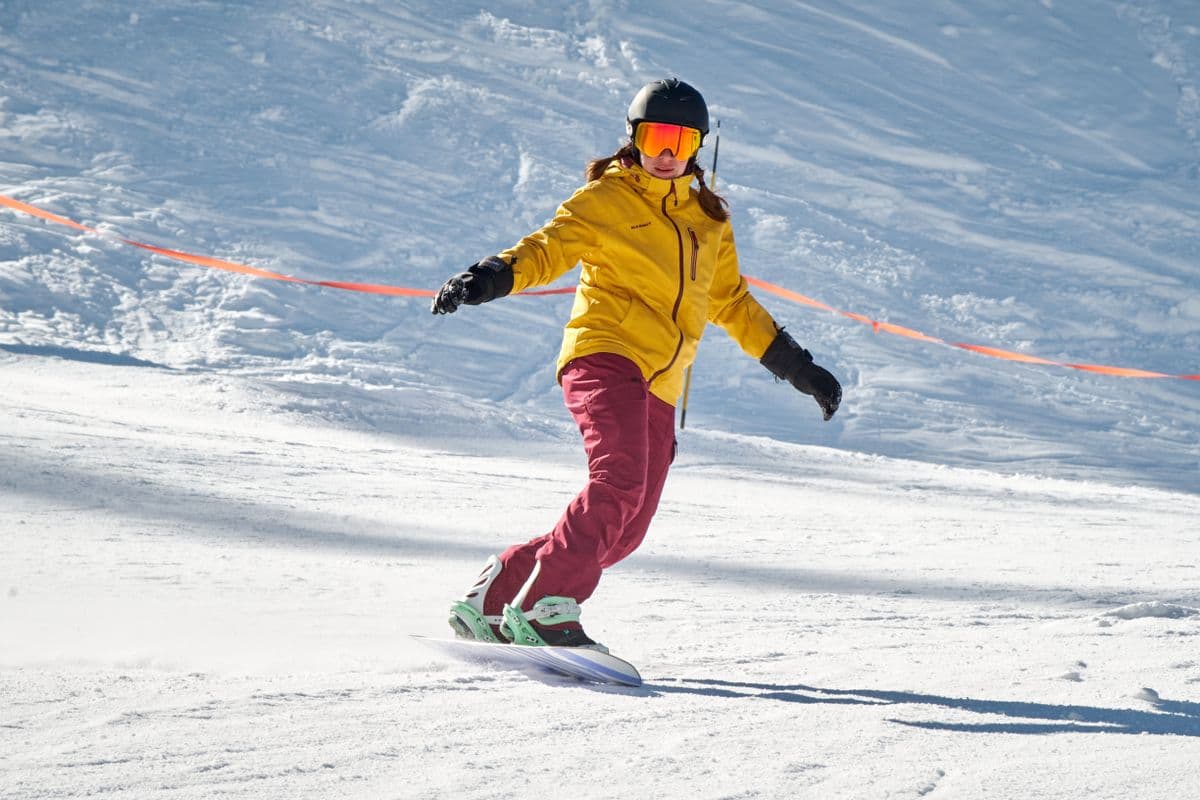
What packing out does to a soft boot
Like a ski boot, a snowboard boot breaks in through the liner rather than the shell - the foam compresses permanently under your pressure points. The difference is that a snowboard boot is soft all the way through, so it packs out further and faster, and the change is more noticeable.
That has one practical consequence worth building your purchase around: a boot that feels comfortable in a shop will be loose within a season. Toes lightly brushing the end when you stand straight, pulling back when you bend your knees into a riding stance, is the fit to aim for. It feels too small. It is not.
| When | What it feels like | What to do |
|---|---|---|
| Day 1 | Snug everywhere, toes brushing the end standing up | Lace in stages, expect to re-tighten after the first run |
| Days 2-3 | Pressure points settling; heel hold improving | Note where it hurts and whether the heel lifts |
| Days 3-5 | Toes clear when knees are bent; boot feels part of your foot | Judge the boot now |
| Season 2 | Noticeably roomier; laces pulled tighter each time | Consider a heat-mold or a footbed before new boots |
Heel lift: the fault that matters most
Stand in the boots, laced as you would ride, and bend your knees hard forward. Your heel should stay planted. If it lifts inside the boot, you have heel lift, and it causes most of the problems people blame on other things: toes jammed into the end on every toe-side turn, bruised nails, arch cramp, and a board that responds late because your foot moves before the boot does.
Three fixes, in order:
- Lace the ankle separately from the forefoot. The single biggest win. Most people tighten the whole boot evenly, which clamps the toes and leaves the ankle loose. Boots designed for this make it easy - the Siren Lux publishes a Quicklace liner inside traditional outer laces so forefoot and ankle tension are set independently, and the System APX Lace publishes a heel-locking loop, which is the specific hardware fix for a lifting heel.
- Heat-mold the liner. The System APX boots and the Siren Lux all publish Thermofit heat-moldable liners, which means a shop can shape the liner around your heel and ankle in about twenty minutes rather than waiting five days for it to happen unevenly.
- Add a J-bar or a footbed. A J-shaped foam pad either side of the Achilles, or a supportive footbed that stops the foot sliding forward. Cheap, and often decisive.
Socks, in one line
One thin pair, over the calf, merino. The same rule as skiing, for the same reason: a thick sock takes up space your circulation needs, and two pairs slide against each other and blister.
How much they actually pack out
Enough that a boot bought to feel comfortable will feel loose within a season, and enough that riders who bought a size up at the shop are usually the ones complaining about heel lift by February. That is the whole argument for buying snug: you are choosing the boot you will have in a month rather than the one that feels pleasant in the shop.
If an older pair has packed out past the point where lacing fixes it, a heat-moldable liner can be re-molded once more, and a footbed takes up volume without changing the shell. Both are cheaper than boots.
Get the size right before you start breaking anything in
Break-in cannot rescue a boot that is the wrong size, and snowboard boots are sized differently enough from street shoes to catch people out.
- Use Mondopoint if the maker publishes it - the length of your foot in centimeters - rather than assuming your sneaker size transfers. Measure standing, in the sock you will ride in.
- Expect to go down, not up. Plenty of riders take a half or full size smaller than their shoe size, because a shoe is sized with room and a snowboard boot is not.
- Check the shell length against the board. A boot that is long for your foot is also long on the board, which brings back the toe drag problem - the wide board page covers how boot length decides board width.
- Match the binding size to the boot. A boot swimming in an oversized binding cannot transmit anything, and straps cranked to compensate create pressure points that feel exactly like a boot fault.
The boot sizing and fit guide has the measuring method in full. Do that first; everything on this page assumes the size is right.
Lacing systems and how each behaves in break-in
- Traditional laces. Most adjustable, slowest, and the ones that let you set forefoot and ankle separately with the most precision. They also stretch and need re-tightening after the first run of the day, every day.
- Dial or twist closures. The System APX Pro Twist publishes a twist-dial closure with a cable through reinforced eyelets - adjustable in seconds with gloves on, which is what matters on a chairlift as the liner packs out through the day.
- Speed-lace systems. Fast, usually zoned, and a middle ground.
The lacing systems comparison goes through the trade-offs properly. For break-in specifically, any system that lets you re-tension mid-day is worth more than one that does not, because a packing-out liner is a moving target.
The first five days, practically
- Wear them indoors first. An hour at home with the boots laced as you would ride finds hot spots before a lift ticket is involved.
- One thin sock. Same rule as skiing: a thick sock takes up space your circulation needs and makes cold feet worse, not better. The sock picks apply to snowboarding unchanged.
- Re-tighten after the first run. Liners compress when they warm up. The boot you laced in the parking lot is looser by the top of the first lift.
- Loosen on the lift, tighten at the top. Circulation comes back, feet stay warm, and the boot is properly tensioned when it matters.
- Dry the liners every night, with air. A damp liner packs out unevenly and starts the next day cold. The boot dryer roundup covers convection drying, and the liner care page covers what heat does to foam.
Normal, and not normal
Normal: snug pressure across the whole foot, toes brushing the end when standing, tired feet after day one, wanting to unlace at lunch.
Not normal: numbness, a burning point over the instep or outside of the foot, cramp in the arch, a bruised toenail, or a heel that lifts however you lace it. Those do not break in. Numbness in particular is usually over-tightening at the instep - loosen the forefoot and tighten the ankle instead.
One thing that is not the boot
If your boots feel fine walking and awful strapped in, look at the bindings. Straps cranked to compensate for a loose boot create pressure points that feel exactly like a boot problem, and a highback rotated wrong puts your ankle at an angle the boot never intended. The stance and binding setup page covers getting that right, and the bindings guide covers matching binding size to boot size in the first place.
The short version
Buy them snug, give them three to five days, and spend that time diagnosing heel lift rather than hoping. Lace the ankle and forefoot separately, get the liner heat-molded if it publishes that it can be, and dry it with air every night. If the heel still lifts after all that, the boot is the wrong shape for your foot - and no amount of riding will change that.
Every pick, with the working
Each entry shows the published inputs, the axis scores they produce, and what you give up. The order is the computed order, not a commercial one, and the arithmetic is open underneath each score.
1 · A first pair of snowboard boots for an adult, bought on a budget
System APX Lace Snowboard Boots
The cheapest boot here that publishes a heat-moldable liner and a three-year warranty, and traditional laces are the closure a beginner can actually diagnose: if it is loose in one place you tighten that place. The published heel-locking loop is the detail that matters, because heel lift is what stops a beginner steering.
- Published price
- $139.95
- Cost per day on snow
- $9.33 a day
- Amortized over
- 3 seasons (15 days)
- Certified to
- Not published
- Published sizes
- US 8, 9, 10, 11, 12 and 13
- Warranty
- System 3-year warranty against manufacturer defects
What it gets right
- Three-year published warranty against manufacturer defects, longer than most makers state at any price
- Thermofit heat-moldable liner published, so a shop can shape it to your foot
- Published heel-locking loop, which is the specific fix for a lifting heel
- Laces are repairable anywhere, unlike a failed dial
What you give up
- Six published sizes, all US 8 and up, so smaller feet are not catered for at all
- Laces are slower to adjust with cold hands than a dial, every single time
- No published flex number, only a description
The working behind the 4.9
- Cost per day on snow: 4.2
- $139.95 over 3 seasons at 5 days each = 15 days = $9.33 a day
- Published protection: not scored
- Boots carry no US protective standard, so this axis is not scored. On a winter boot the published temperature rating is the figure that matters; on a snowboard or nordic boot it is the sole standard and the fit.
- Size availability: 8.5
- 6 published sizes (8.5 of 8.5); no continuous adjuster published (+0); range: US 8, 9, 10, 11, 12 and 13
- Warranty and support: 2.5
- 3 yr (2.5 of 6); no published crash replacement (+0); no published repair route (+0)
Axes with unpublished inputs are dropped and the remaining weights re-normalized, so a product is not punished for a manufacturer’s silence. Specifications compiled September 12, 2026 from System published specifications.
2 · A woman buying her first pair rather than renting again
Siren Lux Women's Snowboard Boots
The cheapest boot in this ledger and the only one built on a women's last, with a two-stage closure: a quicklace inner liner inside reinforced traditional outer laces. Two stages is the point, because it sets forefoot and ankle tension separately, which is the adjustment a narrower foot actually needs.
- Published price
- $129.95
- Cost per day on snow
- $8.66 a day
- Amortized over
- 3 seasons (15 days)
- Certified to
- Not published
- Published sizes
- US women's 6, 7, 8, 9 and 10
- Warranty
- Siren 3-year warranty against manufacturer defects
What it gets right
- Quicklace liner inside traditional outer laces, so forefoot and ankle tension are set separately
- Thermofit heat-moldable liner and the same three-year published warranty as the men's range
- Published flex panels in the shell, which is what stops a soft boot bulging at the ankle
- Cheapest snowboard boot here by ten dollars
What you give up
- Five published sizes, US 6 to 10, so smaller and larger feet fall outside it
- No published flex number and no published outsole detail
- Two lacing stages is more to learn on the first morning than one dial
The working behind the 4.7
- Cost per day on snow: 4.7
- $129.95 over 3 seasons at 5 days each = 15 days = $8.66 a day
- Published protection: not scored
- Boots carry no US protective standard, so this axis is not scored. On a winter boot the published temperature rating is the figure that matters; on a snowboard or nordic boot it is the sole standard and the fit.
- Size availability: 6.8
- 5 published sizes (6.8 of 8.5); no continuous adjuster published (+0); range: US women's 6, 7, 8, 9 and 10
- Warranty and support: 2.5
- 3 yr (2.5 of 6); no published crash replacement (+0); no published repair route (+0)
Axes with unpublished inputs are dropped and the remaining weights re-normalized, so a product is not punished for a manufacturer’s silence. Specifications compiled September 12, 2026 from Siren published specifications.
3 · Anyone who has tried to re-lace a boot with cold wet hands
System APX Pro Twist Snowboard Boots
The same boot with a dial instead of laces, for fifty dollars more. That fifty dollars buys one thing and it is a real thing: you can re-tension the boot on a chairlift with gloves on, which is exactly when you discover the boot is too loose.
- Published price
- $189.95
- Cost per day on snow
- $12.66 a day
- Amortized over
- 3 seasons (15 days)
- Certified to
- Not published
- Published sizes
- US 8, 9, 10, 11, 12 and 13
- Warranty
- System 3-year warranty against manufacturer defects
What it gets right
- Twist-dial closure with a cable through reinforced eyelets, adjustable in seconds with gloves on
- Same Thermofit heat-moldable liner and same three-year warranty as the lace version
- A continuous adjuster means the fit can be changed through the day rather than only at the start
What you give up
- A broken dial or cable is a shop repair, where a broken lace is a two-dollar fix in the parking lot
- Fifty dollars more than the lace model for the same shell and liner
- Still only six published sizes, all US 8 and up
The working behind the 4.1
- Cost per day on snow: 1.7
- $189.95 over 3 seasons at 5 days each = 15 days = $12.66 a day
- Published protection: not scored
- Boots carry no US protective standard, so this axis is not scored. On a winter boot the published temperature rating is the figure that matters; on a snowboard or nordic boot it is the sole standard and the fit.
- Size availability: 10.0
- 6 published sizes (8.5 of 8.5); continuous in-size adjuster published (+1.5); range: US 8, 9, 10, 11, 12 and 13
- Warranty and support: 2.5
- 3 yr (2.5 of 6); no published crash replacement (+0); no published repair route (+0)
Axes with unpublished inputs are dropped and the remaining weights re-normalized, so a product is not punished for a manufacturer’s silence. Specifications compiled September 12, 2026 from System published specifications.
Prices last verified October 19, 2026. Prices move constantly; the figure on Amazon at the moment you click is the real one.
Questions people actually ask
How long does it take to break in snowboard boots?
Roughly three to five riding days for the liner to pack out to your foot. Snowboard boots are soft throughout, so they pack out further and faster than ski boots - which is why a boot that feels comfortable in the shop will be loose within a season.
How tight should new snowboard boots be?
Snug enough that your toes brush the end when you stand upright and pull back when you bend your knees into a riding stance. That feels too small in a shop and is correct once the liner has packed out. What must not happen is your heel lifting when you flex forward.
How do I stop heel lift in snowboard boots?
Lace the ankle tighter than the forefoot rather than tightening evenly, use a boot with a heel-lock loop or a separately tensioned liner, and have a heat-moldable liner shaped around your heel. A J-bar or supportive footbed helps. If it still lifts, the boot is the wrong shape for your heel.
Is heat molding snowboard boot liners worth it?
Yes if the boot publishes a heat-moldable liner - it compresses several days of uneven packing out into about twenty minutes and can fix heel hold directly. It will not change a shell that is the wrong size or shape, and liners tolerate only a few heat cycles.
Why do my toes hurt on toe-side turns?
Usually heel lift. If your heel rises when you flex, your foot slides forward and your toes take the load on every toe-side turn - which is also how people lose toenails. Tighten the ankle, not the forefoot, and check the heel hold before blaming the size.