Glove liners, and the fit mistake that makes them colder than nothing
Twenty dollars of thin merino is the cheapest warmth upgrade in skiing - unless you put it inside a glove that already fits, in which case it is a downgrade.
By Sawyer V. · Published
We have not tested this gear. Everything below is compiled from published specifications and published safety standards, and the arithmetic is public so you can check it. This page carries affiliate links: if you buy through one we earn a commission at no extra cost to you, and it does not change the order of the picks. Full disclosure.
The short answer
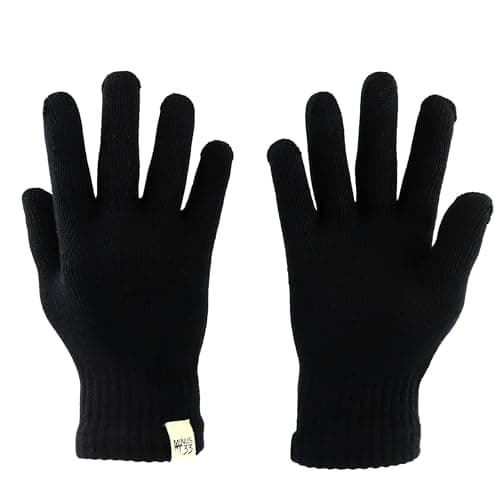
Buy the Minus33 Lightweight Wool Glove Liners. They are the only liner here that publishes what they are made of and what they weigh - 85% merino wool, 10% stretch nylon, 5% elastic, 1.6 oz (45 g), in five sizes - and merino is the right fiber because it keeps insulating when it is damp, which inside a glove it always is. Buy the Smartwool Liner Glove instead if the real job is working a phone: it is the only one here with a published touchscreen thumb and index finger. The Seirus Thermax is the synthetic option and carries this page’s skip note. One rule before any of them: a liner only works in a glove with room for it - inside a snug glove it compresses your hand and makes it colder. Prices are live; published figures as of October 17, 2026.
| # | Pick | Best for | Score | Price |
|---|---|---|---|---|
| 1 | Minus33 Lightweight Wool Glove Liners (Style 3600) Wearing inside a glove or mitten all day, and alone for a lift-pass fumble | $1.33 a dayon snow | 6.5/10 | $19.99 - View on Amazon |
| 2 | Smartwool Liner Glove Taking photographs, checking a trail map and finding a lift pass without bare hands | $1.87 a dayon snow | 5.9/10 | $28.00 - View on Amazon |
| 3 | Seirus Deluxe Thermax Glove Liner Wool-sensitive skin, or a liner that gets washed constantly | $1.33 a dayon snow | 5.1/10 | $19.99 - View on Amazon |
Prices last verified October 19, 2026. Prices move constantly; the figure on Amazon at the moment you click is the real one.
The rule that decides whether a liner works at all
Warmth in a glove comes from air that your hand has heated and the glove has trapped. A liner adds a layer of that air - as long as there is space for it.
Put a liner inside a glove that already fits snugly and you do the opposite: you compress the insulation, squeeze the hand, and slow the blood supply that was doing most of the warming in the first place. The result is a colder hand than the same glove with nothing underneath, which is why so many people try liners once and conclude they do not work.
So the sequence is: buy the glove a size up if you intend to wear a liner, or buy a liner for the mitten rather than the glove, where there is more room. The sizing page has the measurement and the two-finger test, and the format comparison explains why mittens win on warmth.
Who each of these is for, and who should skip them all
- Most skiers: the Minus33 merino. Published fiber content, published weight, five sizes, twenty dollars.
- Anyone who takes photos or checks a map: the Smartwool. The touchscreen fingers are the feature that means the liner is actually worn rather than left in a drawer.
- Itchy skin, or a liner washed every week: the Seirus Thermax. Synthetic, fast drying, cheap - with the skip note on sizing.
- Skip all three if your gloves are snug. See above. Fix the glove first; a liner cannot buy you room you do not have.
- Skip them for small children. Two layers on a four-year-old’s hand is two layers to pull off in a lift queue, and it doubles the chance of a mitten disappearing. A long-cuff mitten solves the actual problem at that age.
What this page ranks on
- 1. Published fiber content. The figure that predicts whether a liner still works damp. Merino does; a thin synthetic does less well. One of three publishes percentages.
- 2. Published weight. A liner has to be thin enough to fit inside a glove with the glove still closing. Forty-five grams for the pair is thin; an unpublished weight is a guess.
- 3. The size run. Liner fit is the whole game, and a two-size product cannot fit most hands the way a five-size one can.
- 4. Touchscreen compatibility. Not a warmth feature, a getting-used feature. The commonest moment a glove comes off is to use a phone.
- 5. Published care. A liner is worn against the skin all day and needs washing far more often than a glove.
The three, compared
| Minus33 Style 3600 | Smartwool Liner Glove | Seirus Deluxe Thermax | |
|---|---|---|---|
| Fiber content | 85% merino, 10% nylon, 5% elastic | Merino and polyester, percentages not published | Thermax synthetic, not published |
| Published weight | 1.6 oz (45 g) | Not published | Not published |
| Sizes published | 5 (XS-XL) | 4 (XS-L, unisex) | 2 (SM/MD, LG/XL) |
| Touchscreen | Not published | Thumb and index finger | Not published |
| Wool source | Australia, published | Responsibly sourced, published | Not applicable |
| Published care | Machine wash cold, lie flat | Not published | Not published |
| Warranty | Not published | Not published | Not published |
| Published price | $19.99 | $28.00 | $19.99 |
Three liners, three different amounts of disclosure, and no warranty term anywhere - which for a twenty-dollar item worn daily is reasonable enough. The row that decides the ranking is the first one: only Minus33 tells you what is actually in the glove.
The picks
Minus33 Lightweight Wool Glove Liners
The pick, on disclosure and on fiber. Minus33 publishes 85 percent merino wool, 10 percent stretch nylon and 5 percent elastic, sourced from Australia, at 1.6 oz (45 g) the pair, in five sizes from XS to XL, as style 3600.
The fiber mix is the right one for the job. Pure merino is warm when damp and pleasant on skin but stretches out and wears through; the nylon and elastic are what keep a thin liner holding its shape over a season of being pulled on and off with cold fingers.
Five sizes matters more here than on almost any other garment, because a liner has to be thin inside something else. Minus33 also publishes the care instructions - machine wash cold, lie flat to dry - which you will use, because a liner worn against the skin all day needs washing far more often than the glove over it.
Honest cons. No touchscreen compatibility published, so the glove still comes off for a phone - which is the single most common reason a liner gets left at home. No warranty term published. Thin merino wears at the fingertips before anything else fails. And it is a layer, not a glove: on its own, below freezing, it is cold.
Smartwool Liner Glove
The one that gets worn, because of the feature Smartwool publishes and the others do not: a touchscreen-compatible thumb and index finger. The moment a glove comes off on a mountain is almost always a phone moment - a map, a photo, a text about where to meet - and a liner that handles that is a liner that stays on.
Smartwool publishes a merino wool and polyester blend for temperature regulation and moisture management, in four unisex sizes, worn alone or under another glove or mitten.
Honest cons. No fiber percentages are published, so there is no way to compare its merino content with the Minus33’s 85 percent - and on a page ranked on published fiber, that is why it is second rather than first. No weight is published either. It is the dearest liner here at a published $28, and no warranty term is published.
Seirus Deluxe Thermax Glove Liner, and why it carries the skip
The synthetic, and a sensible purchase for two specific people: anyone who finds wool itchy against the skin, and anyone who will wash a liner after every outing - Thermax dries faster than merino between days.
Seirus publishes a thin, cut-and-sewn, form-fitting construction rather than a loose knit, which is the right shape for something worn inside a glove, at a published $19.99.
It carries the skip because of the size run. Two unisex sizes - SM/MD and LG/XL - is the coarsest fit on this page, and a liner that is a little too thick or a little too big inside a fitted ski glove compresses the hand and makes it colder, which is the failure mode this whole page is built around. Add no published fiber percentages, no weight and no warranty, and it is third on published information as well as on fit.
Getting the warmth you paid for
- Size the glove for the liner, not the other way round. If you already own gloves that fit, the liner belongs in the mitten or on the days you wear the roomier pair.
- Put it on before your hands are cold. A liner traps heat; it does not generate any. On a cold morning that is a parking-lot job.
- Use it as the glove-off layer. Boot buckles, lift pass, sunscreen, a child’s zipper - all faster with a liner on than with bare hands, and that is half the value.
- Wash it far more often than the glove. It is a base layer for your hand. The glove care page covers drying the shell properly.
- Carry a dry spare liner, not a spare glove. Far cheaper, far smaller in a pocket, and it rescues the afternoon the same way.
Where a liner sits in the cold-hands order
A liner is a cheap step, not a first step. In order of what actually fixes cold hands:
- 1. Dry gloves. A wet glove is the commonest cause of a cold hand and no layer fixes it - the diagnosis page covers the rest.
- 2. A glove that is not too tight. Compression beats insulation every time, in the wrong direction.
- 3. A warmer core. A cold body shuts down the fingers first - a better mid layer frequently fixes hands.
- 4. A liner, or a mitten instead of a glove. Twenty dollars against a hundred - the mittens roundup.
- 5. Heat. Only once the four above are sorted - rechargeable warmers or heated gloves.
Every pick, with the working
Each entry shows the published inputs, the axis scores they produce, and what you give up. The order is the computed order, not a commercial one, and the arithmetic is open underneath each score.
1 · Wearing inside a glove or mitten all day, and alone for a lift-pass fumble
Minus33 Lightweight Wool Glove Liners (Style 3600)
The pick, because it is the only liner here that publishes what it is made of and what it weighs: 85 percent merino wool, 10 percent stretch nylon, 5 percent elastic, 1.6 oz (45 g) the pair, in five sizes. Merino is the right fiber for a liner because it keeps working when it is damp, which after an hour inside a glove it always is.
- Published price
- $19.99
- Cost per day on snow
- $1.33 a day
- Amortized over
- 3 seasons (15 days)
- Certified to
- Not published
- Waterproof rating
- Not published
- Published sizes
- XS through XL
- Weight
- 45 g
- Warranty
- No term published on the product page
What it gets right
- Published fiber content: 85 percent merino wool, 10 percent stretch nylon, 5 percent elastic
- Published weight of 1.6 oz (45 g) and five published sizes, XS to XL
- Merino keeps insulating when damp, which a liner inside a glove always ends up being
- Published as designed for layering under shell gloves, not as a standalone glove
- Machine washable cold, lie flat to dry - published care, which matters on a liner worn every day
What you give up
- No touchscreen compatibility published, unlike the Smartwool
- No warranty term published
- Thin merino wears through at the fingertips faster than a synthetic
- A liner is not a glove: it is a layer, and it is cold on its own below freezing
The working behind the 6.5
- Cost per day on snow: 10.0
- $19.99 over 3 seasons at 5 days each = 15 days = $1.33 a day
- Published protection: not scored
- No waterproof rating or seam construction published.
- Size availability: 6.8
- 5 published sizes (6.8 of 8.5); no continuous adjuster published (+0); range: XS through XL
- Warranty and support: 0.0
- no published term (0 of 6); no published crash replacement (+0); no published repair route (+0)
Axes with unpublished inputs are dropped and the remaining weights re-normalized, so a product is not punished for a manufacturer’s silence. Specifications compiled October 17, 2026 from Minus33 published Style 3600 specifications.
2 · Taking photographs, checking a trail map and finding a lift pass without bare hands
Smartwool Liner Glove
The one to buy if the liner's real job is working a phone with the glove off. Smartwool publishes a touchscreen-compatible thumb and index finger and a merino-plus-polyester blend, in four unisex sizes - and publishes no fiber percentages and no weight, which is why it sits second on a page ranked on published fiber.
- Published price
- $28
- Cost per day on snow
- $1.87 a day
- Amortized over
- 3 seasons (15 days)
- Certified to
- Not published
- Waterproof rating
- Not published
- Published sizes
- XS through L, unisex
- Warranty
- No term published on the product page
What it gets right
- Touchscreen-compatible thumb and index finger published - the one feature that gets a liner used
- Published merino wool and polyester blend, so it still works damp
- Four published unisex sizes, XS to L
- Published as wearable alone or under another glove or mitten
What you give up
- No fiber percentages published, so the merino content cannot be compared with the Minus33
- No weight published either
- The dearest liner here at $28 published
- No warranty term published
The working behind the 5.9
- Cost per day on snow: 9.7
- $28 over 3 seasons at 5 days each = 15 days = $1.87 a day
- Published protection: not scored
- No waterproof rating or seam construction published.
- Size availability: 5.1
- 4 published sizes (5.1 of 8.5); no continuous adjuster published (+0); range: XS through L, unisex
- Warranty and support: 0.0
- no published term (0 of 6); no published crash replacement (+0); no published repair route (+0)
Axes with unpublished inputs are dropped and the remaining weights re-normalized, so a product is not punished for a manufacturer’s silence. Specifications compiled October 17, 2026 from Smartwool published Liner Glove specifications.
3 · Wool-sensitive skin, or a liner that gets washed constantly
Seirus Deluxe Thermax Glove Liner
Skip this one. Skip it if your gloves fit snugly, and that applies to every liner here but to this one most. Seirus publishes just two unisex sizes - SM/MD and LG/XL - so the odds of getting a liner that is thin enough for YOUR glove are the worst on this page, and a liner that compresses the hand inside a fitted glove cuts circulation and makes you colder than wearing nothing underneath. It is a good, cheap, fast-drying synthetic for anyone who finds wool itchy or whose gloves are a size generous. It is the wrong buy for a glove that already fits.
The synthetic alternative, and the right answer for anyone who finds wool itchy or wants a liner that survives being washed every week. Seirus publishes a thin, cut-and-sewn, form-fitting Thermax liner in two unisex sizes - and publishes no fiber percentages, no weight and no warranty, which is the whole reason it is third here.
- Published price
- $19.99
- Cost per day on snow
- $1.33 a day
- Amortized over
- 3 seasons (15 days)
- Certified to
- Not published
- Waterproof rating
- Not published
- Published sizes
- Unisex SM/MD and LG/XL
- Warranty
- No term published on the product page
What it gets right
- Published as thin, cut-and-sewn and form-fitting rather than a loose knit
- Thermax is a synthetic, so it dries faster than merino between days
- Two published unisex sizes covering most hands at $19.99
- The cheapest way to add a layer inside a glove you already own
What you give up
- No fiber percentages, no weight and no warranty published anywhere on the page
- Two sizes only, where the Minus33 publishes five
- Synthetic liners hold odor in a way merino does not
- No touchscreen compatibility published
The working behind the 5.1
- Cost per day on snow: 10.0
- $19.99 over 3 seasons at 5 days each = 15 days = $1.33 a day
- Published protection: not scored
- No waterproof rating or seam construction published.
- Size availability: 1.7
- 2 published sizes (1.7 of 8.5); no continuous adjuster published (+0); range: Unisex SM/MD and LG/XL
- Warranty and support: 0.0
- no published term (0 of 6); no published crash replacement (+0); no published repair route (+0)
Axes with unpublished inputs are dropped and the remaining weights re-normalized, so a product is not punished for a manufacturer’s silence. Specifications compiled October 17, 2026 from Seirus published Deluxe Thermax Glove Liner specifications.
Prices last verified October 19, 2026. Prices move constantly; the figure on Amazon at the moment you click is the real one.
Questions people actually ask
Do glove liners actually make your hands warmer?
Yes, in a glove with room for them, and no in a glove without. A liner adds a trapped-air layer and wicks sweat off the skin; inside a glove that already fits snugly it compresses the insulation and the hand, restricting blood flow and making the hand colder than it would be bare-handed inside the same glove. If you plan to wear liners, buy the gloves a size up - or wear the liner inside a mitten, where there is more room.
Merino or synthetic glove liners?
Merino, for skiing, because a liner is damp within an hour and merino keeps insulating when damp. Minus33 publishes 85 percent merino with 10 percent nylon and 5 percent elastic, which is the mix that survives repeated pulling on and off. Choose synthetic - like the Seirus Thermax - if wool itches you or you want something that dries overnight between back-to-back days.
Can you wear glove liners on their own?
For short jobs, yes: buckling boots, handling a lift pass, sunscreen, a child’s zipper. Below freezing for any length of time, no - these are 45 g of thin fabric, not gloves. The Smartwool publishes a touchscreen thumb and index finger, which makes it the most useful of the three for the glove-off moments.
What size glove liner should I buy?
The size that matches your hand, then check your glove still closes comfortably over it. Minus33 publishes five sizes (XS-XL) and Smartwool four; Seirus publishes two, which is the coarsest fit here. If a liner makes the glove feel tight anywhere, it is the wrong combination - see the glove sizing page.
Are glove liners worth it for kids?
Usually not. Two layers on a small hand means two things to pull off in a lift queue and two things to lose, and children’s gloves are rarely sized with room to spare. The better answer at that age is a mitten with a long cuff that goes under the coat sleeve - the toddler mittens page covers that - plus a dry spare pair in the pack.
How often should you wash glove liners?
Treat them like a base layer for your hands: every few days of use, far more often than the glove. Minus33 publishes machine wash cold with a mild or wool-specific detergent, lie flat to dry, no fabric softener and no bleach. The glove shell is a different job - the glove care page covers it.
Sources
- Minus33 published Style 3600 specifications: 85% merino / 10% stretch nylon / 5% elastic, 1.6 oz (45 g), five sizes, Australian wool
- Smartwool published Liner Glove specifications: touchscreen thumb and index finger, merino and polyester blend, four unisex sizes
- Seirus published Deluxe Thermax Glove Liner specifications: thin Thermax, cut-and-sewn form-fitting construction, two unisex sizes